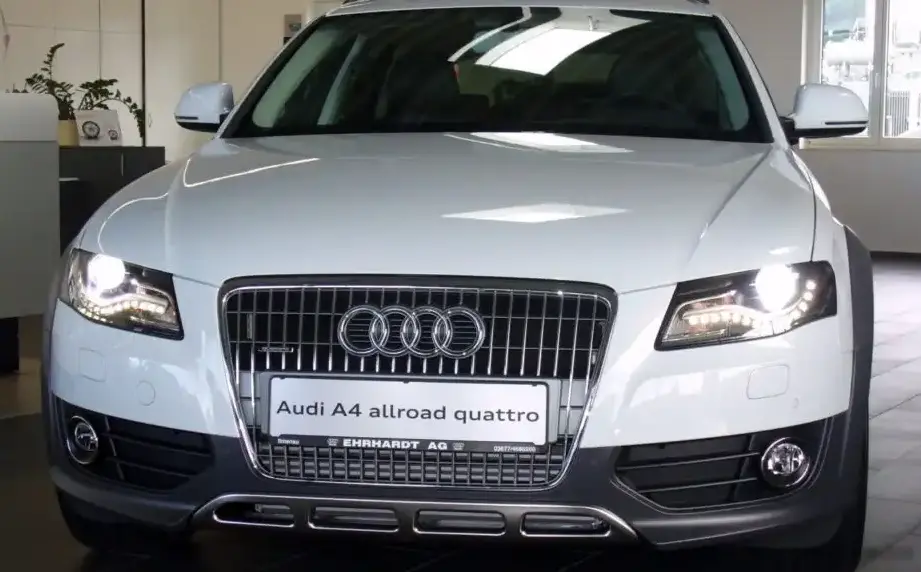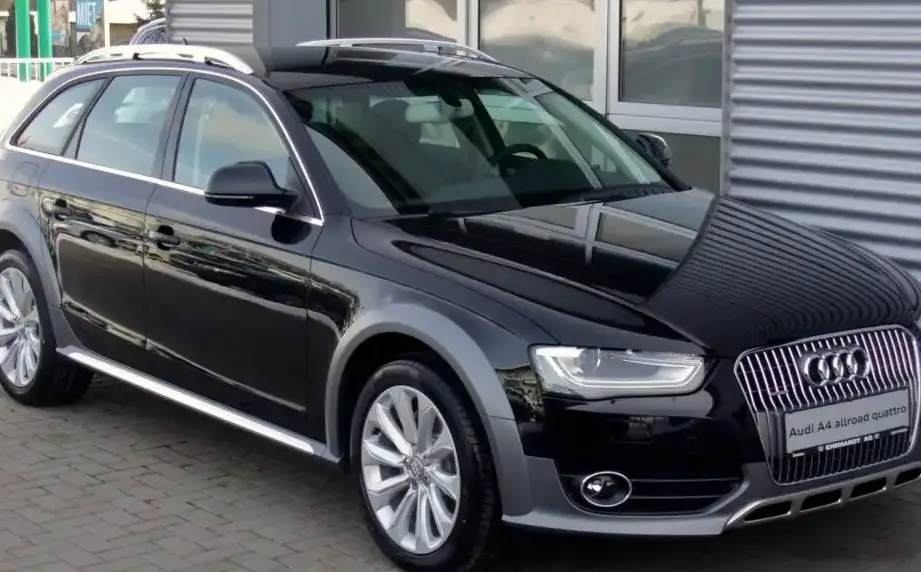
The Audi A4 Avant (B6 8E) 2.0i 20V, produced from 2001 to 2004, represented a key offering in Audi’s compact executive wagon lineup. Positioned as a mid-range variant within the B6 generation (2001-2005), it catered to buyers seeking a balance between performance, practicality, and fuel efficiency. This model combined a 2.0-liter inline-four engine with Audi’s continuously variable transmission (CVT), marketed as Multitronic, offering a smooth and efficient driving experience. The B6 A4 Avant, built on the Volkswagen Group’s B6 platform (shared with the VW Passat and Skoda Superb), aimed to elevate the standard for wagons in the premium segment.
Technical Specifications
| Brand | Audi |
| Model | A4 |
| Generation | A4 Avant (B6 8E) |
| Type (Engine) | 2.0i 20V (130 Hp) Multitronic |
| Start of production | 2001 |
| End of production | 2004 |
| Powertrain Architecture | Internal Combustion engine |
| Body type | Station wagon (estate) |
| Seats | 5 |
| Doors | 5 |
| Fuel consumption (urban) | 10.9 l/100 km (21.6 US mpg, 25.9 UK mpg, 9.2 km/l) |
| Fuel consumption (extra urban) | 6.2 l/100 km (37.9 US mpg, 45.6 UK mpg, 16.1 km/l) |
| Fuel consumption (combined) | 7.9 l/100 km (29.8 US mpg, 35.8 UK mpg, 12.7 km/l) |
| Fuel Type | Petrol (Gasoline) |
| Acceleration 0 – 100 km/h | 10.5 sec |
| Acceleration 0 – 62 mph | 10.5 sec |
| Acceleration 0 – 60 mph | 10 sec |
| Maximum speed | 202 km/h (125.52 mph) |
| Weight-to-power ratio | 10.8 kg/Hp, 92.9 Hp/tonne |
| Weight-to-torque ratio | 7.2 kg/Nm, 139.3 Nm/tonne |
| Power | 130 Hp @ 5700 rpm |
| Power per litre | 65.5 Hp/l |
| Torque | 195 Nm @ 3300 rpm (143.82 lb.-ft. @ 3300 rpm) |
| Engine layout | Front, Longitudinal |
| Engine Model/Code | ALT |
| Engine displacement | 1984 cm3 (121.07 cu. in.) |
| Number of cylinders | 4 |
| Engine configuration | Inline |
| Cylinder Bore | 82.5 mm (3.25 in.) |
| Piston Stroke | 92.8 mm (3.65 in.) |
| Compression ratio | 10.3:1 |
| Number of valves per cylinder | 5 |
| Fuel injection system | Multi-port manifold injection |
| Engine aspiration | Naturally aspirated engine |
| Valvetrain | DOHC |
| Engine oil capacity | 4.2 l (4.44 US qt | 3.7 UK qt) |
| Coolant | 7 l (7.4 US qt | 6.16 UK qt) |
| Kerb Weight | 1400 kg (3086.47 lbs.) |
| Max. weight | 1950 kg (4299.01 lbs.) |
| Max load | 550 kg (1212.54 lbs.) |
| Trunk (boot) space – minimum | 442 l (15.61 cu. ft.) |
| Trunk (boot) space – maximum | 1184 l (41.81 cu. ft.) |
| Fuel tank capacity | 70 l (18.49 US gal | 15.4 UK gal) |
| Length | 4548 mm (179.06 in.) |
| Width | 1772 mm (69.76 in.) |
| Height | 1428 mm (56.22 in.) |
| Wheelbase | 2650 mm (104.33 in.) |
| Front track | 1528 mm (60.16 in.) |
| Rear (Back) track | 1526 mm (60.08 in.) |
| Drag coefficient (Cd) | 0.30 |
| Minimum turning circle | 11.1 m (36.42 ft.) |
| Drivetrain Architecture | ICE, Front wheel drive |
| Number of gears and type of gearbox | automatic transmission Multitronic |
| Front suspension | Independent multi-link suspension |
| Rear suspension | Independent multi-link suspension |
| Front brakes | Ventilated discs |
| Rear brakes | Disc |
| Assisting systems | ABS (Anti-lock braking system) |
| Steering type | Steering rack and pinion |
| Power steering | Hydraulic Steering |
| Tires size | 195/65 R15; 205/55 R16 |
| Wheel rims size | 6.5J x 15; 16 |
INTRODUCTION
The Audi A4 Avant (B6 8E) 2.0i 20V Multitronic, launched in 2001, was a significant model for Audi, representing a blend of practicality and premium features. It occupied a middle ground in the A4 Avant range, offering a more accessible entry point than the higher-performance 3.0-liter V6 models, while still providing a refined driving experience. The “Avant” designation signified Audi’s wagon (estate) body style, appealing to customers needing increased cargo capacity without sacrificing the brand’s reputation for quality and technology. This variant was particularly popular in Europe, where wagons hold a larger market share than in the United States.
Powertrain & Engine Architecture
At the heart of the A4 Avant 2.0i was the ALT engine code, a 1.984-liter (121.07 cubic inches) inline-four cylinder gasoline engine. This engine featured a 20-valve (five valves per cylinder – three intake, two exhaust) dual overhead camshaft (DOHC) configuration. The ALT engine utilized a Bosch Motronic fuel injection system with multi-point injection, delivering fuel directly into the intake ports. The engine’s 10.3:1 compression ratio contributed to its respectable power output. The engine was longitudinally mounted, a characteristic of Audi’s front-wheel-drive and quattro all-wheel-drive platforms. Paired with this engine was Audi’s Multitronic transmission, a continuously variable transmission (CVT). Unlike traditional automatic transmissions with fixed gear ratios, the Multitronic used a chain-driven system to provide a virtually infinite number of gear ratios, optimizing engine efficiency and smoothness. The Multitronic featured a Tiptronic mode, allowing drivers to manually select “gear” ratios for more engaging driving.
Driving Characteristics
The 130 horsepower and 195 Nm (143.82 lb-ft) of torque produced by the 2.0i engine, combined with the Multitronic transmission, resulted in a driving experience focused on smoothness and efficiency rather than outright performance. Acceleration from 0 to 60 mph took approximately 10 seconds, and the top speed was around 125 mph. The Multitronic transmission effectively masked any potential for harsh shifts, providing a seamless power delivery. Compared to the more powerful 3.0-liter V6 A4 Avant, the 2.0i felt noticeably less responsive, particularly during overtaking maneuvers. However, the Multitronic’s ability to keep the engine in its optimal power band helped to mitigate some of this difference. The gear ratios were tuned for fuel economy, making it a good choice for daily commuting and long-distance driving.
Equipment & Trim Levels
The A4 Avant 2.0i Multitronic typically came standard with features such as power windows, power locks, air conditioning, and an AM/FM stereo. Higher trim levels, often denoted by packages like “Sport” or “Premium,” added features like leather upholstery, sunroof, alloy wheels, and upgraded audio systems. Optional extras included navigation systems, heated seats, and parking sensors. Interior upholstery was typically cloth, with leather available as an upgrade. The dashboard layout was typical of the B6 A4, characterized by a clean and functional design with a focus on ergonomics.
Chassis & Braking
The A4 Avant 2.0i utilized an independent multi-link suspension system at both the front and rear, providing a comfortable ride and good handling characteristics. Front brakes were ventilated discs, while rear brakes were solid discs. Anti-lock braking system (ABS) was standard. The suspension was tuned to prioritize comfort over sporty handling, making it well-suited for everyday driving. Stabilizer bars were fitted to both axles to reduce body roll during cornering.
Market Reception & Comparison
The A4 Avant 2.0i Multitronic was generally well-received by automotive critics. It was praised for its smooth ride, comfortable interior, and fuel efficiency. However, some reviewers noted that the engine lacked the punch of its larger counterparts. Compared to the 1.8T models, the 2.0i offered slightly less power but a more linear power delivery. The Multitronic transmission was also a point of discussion, with some drivers appreciating its smoothness while others preferred the more direct feel of a traditional automatic or manual transmission. Fuel economy was a strong point, consistently achieving around 30 mpg in combined driving.
Legacy
The Audi A4 Avant (B6 8E) 2.0i Multitronic has proven to be a relatively reliable vehicle, although the Multitronic transmission requires regular maintenance, including fluid changes, to prevent issues. The ALT engine is known for its durability. Today, these vehicles are readily available on the used car market at affordable prices. They remain a popular choice for buyers seeking a practical and well-built wagon with a premium badge. While not the fastest or most technologically advanced A4 Avant variant, the 2.0i Multitronic offers a compelling combination of value, comfort, and reliability.