Technical Specifications
| Brand | BMW |
| Model | 3 Series |
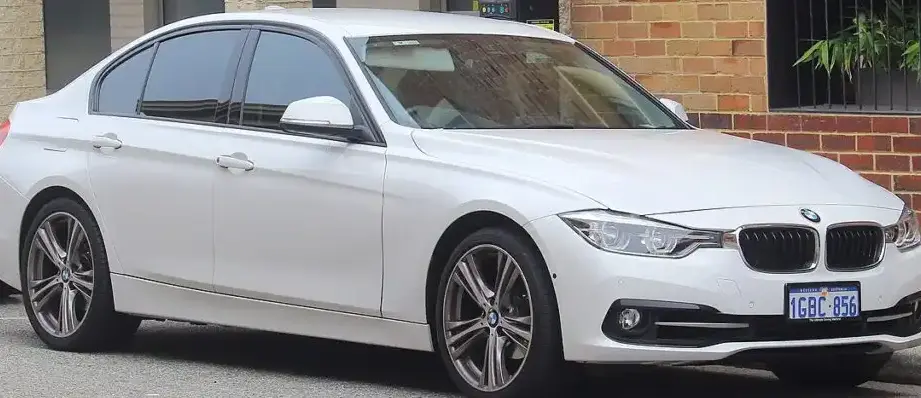
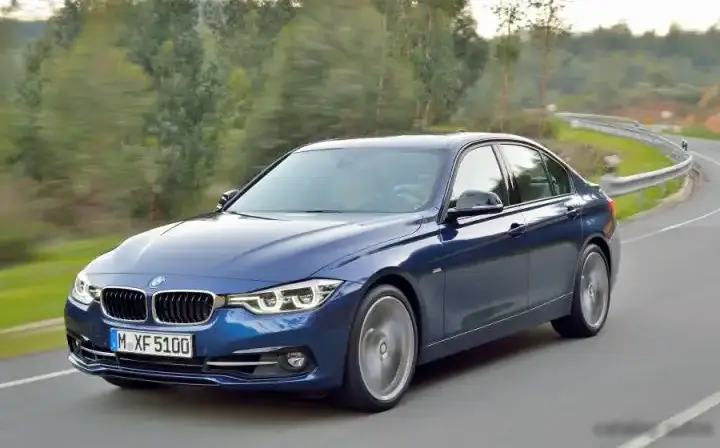
| Generation | 3 Series Sedan (F30 LCI, Facelift 2015) |
| Type (Engine) | 318d (150 Hp) |
| Start of production | 2015 |
| End of production | 2018 |
| Powertrain Architecture | Internal Combustion engine |
| Body type | Sedan |
| Seats | 5 |
| Doors | 4 |
| Fuel consumption (urban) | 5.3-4.9 l/100 km (44.4 – 48 US mpg) |
| Fuel consumption (extra urban) | 3.9-3.5 l/100 km (60.3 – 67.2 US mpg) |
| Fuel consumption (combined) | 4.4-4.0 l/100 km (53.5 – 58.8 US mpg) |
| CO2 emissions | 116-106 g/km |
| Fuel Type | Diesel |
| Acceleration 0 – 100 km/h | 8.6 sec |
| Acceleration 0 – 62 mph | 8.6 sec |
| Acceleration 0 – 60 mph | 8.2 sec |
| Maximum speed | 215 km/h (133.59 mph) |
| Emission standard | Euro 6 |
| Weight-to-power ratio | 9.5 kg/Hp |
| Weight-to-torque ratio | 4.5 kg/Nm |
| Power | 150 Hp @ 4000 rpm |
| Torque | 320 Nm @ 1500-3000 rpm (236.02 lb.-ft.) |
| Engine layout | Front, Longitudinal |
| Engine Model/Code | B47D20A |
| Engine displacement | 1995 cm3 (121.74 cu. in.) |
| Number of cylinders | 4 |
| Engine configuration | Inline |
| Cylinder Bore | 84 mm (3.31 in.) |
| Piston Stroke | 90 mm (3.54 in.) |
| Compression ratio | 16.5:1 |
| Number of valves per cylinder | 4 |
| Fuel injection system | Diesel Commonrail |
| Engine aspiration | Twin-power turbo, Intercooler |
| Engine oil capacity | 5 l (5.28 US qt | 4.4 UK qt) |
| Coolant | 7 l (7.4 US qt | 6.16 UK qt) |
| Kerb Weight | 1430 kg (3152.61 lbs.) |
| Max. weight | 2050 kg (4519.48 lbs.) |
| Max load | 620 kg (1366.87 lbs.) |
| Trunk (boot) space – minimum | 480 l (16.95 cu. ft.) |
| Fuel tank capacity | 57 l (15.06 US gal | 12.54 UK gal) |
| Max. roof load | 75 kg (165.35 lbs.) |
| Permitted trailer load with brakes (12%) | 1600 kg (3527.4 lbs.) |
| Permitted trailer load without brakes | 745 kg (1642.44 lbs.) |
| Permitted towbar download | 75 kg (165.35 lbs.) |
| Length | 4633 mm (182.4 in.) |
| Width | 1811 mm (71.3 in.) |
| Height | 1429 mm (56.26 in.) |
| Wheelbase | 2810 mm (110.63 in.) |
| Front track | 1543 mm (60.75 in.) |
| Rear (Back) track | 1583 mm (62.32 in.) |
| Ride height (ground clearance) | 140 mm (5.51 in.) |
| Drag coefficient (Cd) | 0.26 |
| Minimum turning circle (turning diameter) | 11.3 m (37.07 ft.) |
| Drivetrain Architecture | Rear wheel drive |
| Drive wheel | Rear wheel drive |
| Number of gears and type of gearbox | 6 gears, manual transmission |
| Front suspension | Independent coil spring |
| Rear suspension | Independent multi-link suspension |
| Front brakes | Ventilated discs |
| Rear brakes | Ventilated discs |
| Assisting systems | ABS (Anti-lock braking system) |
| Steering type | Steering rack and pinion |
| Power steering | Electric Steering |
| Tires size | 205/60 R16 92V |
| Wheel rims size | 7.0J x 16 |
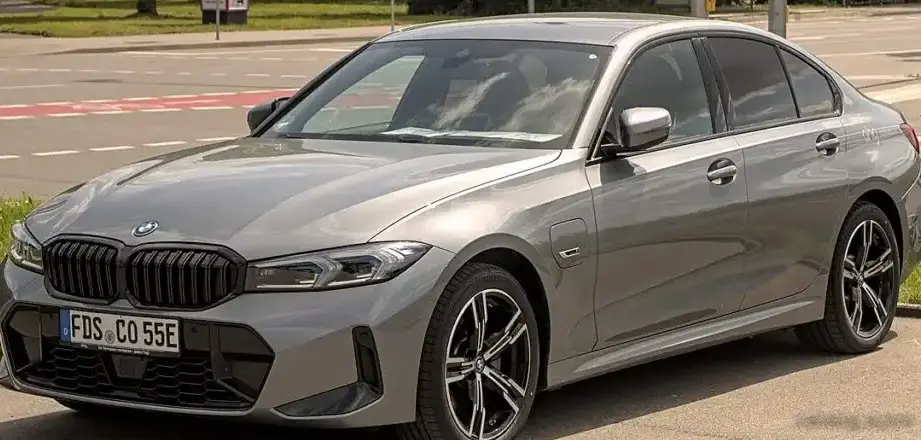
The BMW 3 Series Sedan (F30 LCI) 318d, produced from 2015 to 2018, was a crucial model in BMW’s European lineup. This iteration represents the facelifted version of the sixth-generation 3 Series (F30), internally designated as the LCI (Life Cycle Impulse). Positioned as the entry-level diesel offering within the 3 Series range, the 318d aimed to balance fuel efficiency, reasonable performance, and BMW’s signature driving dynamics. While not officially sold in the United States during this generation, the F30 3 Series was a mainstay in North America with a variety of gasoline engine options. The 318d specifically catered to European markets where diesel engines were favored due to tax incentives and fuel economy regulations.
Powertrain & Engine Architecture
The 318d LCI is powered by the BMW B47D20A, a 2.0-liter inline-four cylinder diesel engine. This engine is part of BMW’s modular engine family, engineered for efficiency and reduced weight. The B47 utilizes a sophisticated common-rail direct injection system, injecting fuel at extremely high pressures for optimized combustion. A single twin-scroll turbocharger with variable geometry turbine (VGT) technology provides boost, delivering both power and torque across a wide rev range. An intercooler further enhances performance by cooling the intake air. The 318d was typically equipped with a six-speed manual transmission, though an optional eight-speed automatic transmission (ZF 8HP) was also available. The automatic transmission offered smoother shifts and improved fuel economy, albeit at a slight cost to driver engagement. The engine’s design prioritized low-end torque and fuel efficiency over outright horsepower.
Driving Characteristics
With 150 horsepower and 320 Nm (236 lb-ft) of torque, the 318d offered a respectable, if not thrilling, driving experience. Acceleration from 0 to 100 km/h (0-62 mph) took approximately 8.6 seconds. The engine’s peak torque was readily available from a low 1500 rpm, providing good responsiveness for daily driving and overtaking. Compared to the more powerful 320d or 330d models, the 318d felt less urgent, especially at higher speeds. The manual transmission provided a more direct connection to the engine, while the optional automatic offered convenience and efficiency. The rear-wheel-drive configuration, a traditional BMW characteristic, contributed to balanced handling and a sporty feel, though traction could be compromised in adverse weather conditions. The suspension was tuned for a comfortable ride, making it well-suited for long journeys.
Equipment & Trim Levels
The 318d LCI came standard with a reasonable array of features. These included automatic climate control, a BMW iDrive infotainment system with a 6.5-inch display (later upgraded to larger screens), power windows, and electrically adjustable mirrors. Interior upholstery was typically cloth, with leather options available as upgrades. Popular optional extras included a sunroof, navigation system, upgraded audio system, parking sensors, and various driver assistance systems such as lane departure warning and collision warning. Trim levels varied by market, generally progressing from a base “SE” model to more luxurious “Sport” or “Luxury” trims, each adding progressively more features and cosmetic enhancements.
Chassis & Braking
The F30 3 Series featured a sophisticated chassis design. The front suspension utilized independent coil springs and struts, while the rear employed a multi-link independent suspension. This setup provided a good balance between ride comfort and handling precision. The 318d typically came equipped with ventilated disc brakes on all four wheels, providing adequate stopping power. Anti-lock Braking System (ABS) and Electronic Stability Control (ESC) were standard safety features. The suspension tuning was generally geared towards comfort, but the 318d still offered a relatively sporty driving experience compared to some of its competitors. The chassis design contributed to the 3 Series’ reputation for balanced handling and driver engagement.
Market Reception & Comparison
The 318d LCI was generally well-received by automotive critics as a practical and efficient option within the 3 Series range. It was praised for its fuel economy, comfortable ride, and BMW’s renowned driving dynamics. However, some critics found the engine to be somewhat underpowered, particularly when compared to the more potent diesel variants like the 320d. Compared to the 320d, the 318d offered lower running costs but sacrificed some performance. The 318d’s fuel economy was a significant selling point, consistently achieving combined figures of around 4.0-4.4 l/100 km (53.5-58.8 US mpg). Reliability was generally good, although diesel particulate filter (DPF) issues could occur with primarily short-distance driving.
Legacy
The BMW 318d (F30 LCI) remains a popular choice in the used car market, particularly in Europe. Its combination of fuel efficiency, practicality, and the BMW brand makes it an appealing option for buyers seeking a comfortable and reliable sedan. The B47 engine, while generally robust, requires regular maintenance, including oil changes and DPF regeneration. The availability of affordable spare parts and a well-established network of BMW service centers contribute to its continued appeal. While not a performance icon, the 318d LCI represents a well-rounded and sensible choice within the F30 3 Series lineup, offering a compelling blend of efficiency and driving pleasure.