Technical Specifications
| Brand | Hyundai |
| Model | i20 |
| Generation | i20 I (PB facelift 2012) |
| Type (Engine) | 1.4 CRDi (90 Hp) |
| Start of production | 2012 |
| End of production | 2014 |
| Powertrain Architecture | Internal Combustion engine |
| Body type | Hatchback |
| Seats | 5 |
| Doors | 5 |
| Fuel consumption (urban) | 4.9 l/100 km (48 US mpg, 57.6 UK mpg, 20.4 km/l) |
| Fuel consumption (extra urban) | 3.6 l/100 km (65.3 US mpg, 78.5 UK mpg, 27.8 km/l) |
| Fuel consumption (combined) | 4.1 l/100 km (57.4 US mpg, 68.9 UK mpg, 24.4 km/l) |
| Fuel Type | Diesel |
| Acceleration 0 – 100 km/h | 13.5 sec |
| Acceleration 0 – 62 mph | 13.5 sec |
| Acceleration 0 – 60 mph | 12.8 sec |
| Maximum speed | 174 km/h (108.12 mph) |
| Emission standard | Euro 5 |
| Weight-to-power ratio | 12.4 kg/Hp, 80.7 Hp/tonne |
| Weight-to-torque ratio | 5.1 kg/Nm, 197.3 Nm/tonne |
| Power | 90 Hp @ 4000 rpm |
| Power per litre | 64.5 Hp/l |
| Torque | 220 Nm @ 1500-2750 rpm (162.26 lb.-ft. @ 1500-2750 rpm) |
| Engine layout | Front, Transverse |
| Engine Model/Code | D4FC |
| Engine displacement | 1396 cm3 (85.19 cu. in.) |
| Number of cylinders | 4 |
| Engine configuration | Inline |
| Cylinder Bore | 75 mm (2.95 in.) |
| Piston Stroke | 79 mm (3.11 in.) |
| Compression ratio | 17:1 |
| Number of valves per cylinder | 4 |
| Fuel injection system | Diesel Commonrail |
| Engine aspiration | Turbocharger, Intercooler |
| Valvetrain | DOHC |
| Engine oil capacity | 5.3 l (5.6 US qt | 4.66 UK qt) |
| Coolant capacity | 6.8 l (7.19 US qt | 5.98 UK qt) |
| Kerb Weight | 1115 kg (2458.15 lbs.) |
| Max. weight | 1650 kg (3637.63 lbs.) |
| Max load | 535 kg (1179.47 lbs.) |
| Trunk (boot) space – minimum | 295 l (10.42 cu. ft.) |
| Trunk (boot) space – maximum | 1060 l (37.43 cu. ft.) |
| Fuel tank capacity | 45 l (11.89 US gal | 9.9 UK gal) |
| Length | 3940 mm (155.12 in.) |
| Width | 1710 mm (67.32 in.) |
| Height | 1490 mm (58.66 in.) |
| Wheelbase | 2525 mm (99.41 in.) |
| Front track | 1503 mm (59.17 in.) |
| Rear track | 1501 mm (59.09 in.) |
| Minimum turning circle | 10.4 m (34.12 ft.) |
| Drivetrain Architecture | Front wheel drive |
| Number of gears | 6 |
| Gearbox type | Manual transmission |
| Front suspension | Independent type McPherson |
| Rear suspension | Independent coil spring |
| Front brakes | Ventilated discs |
| Rear brakes | Disc |
| Assisting systems | ABS (Anti-lock braking system) |
| Steering type | Steering rack and pinion |
| Tires size | 175/70 R14 |
| Wheel rims size | 5.5J x 14 |
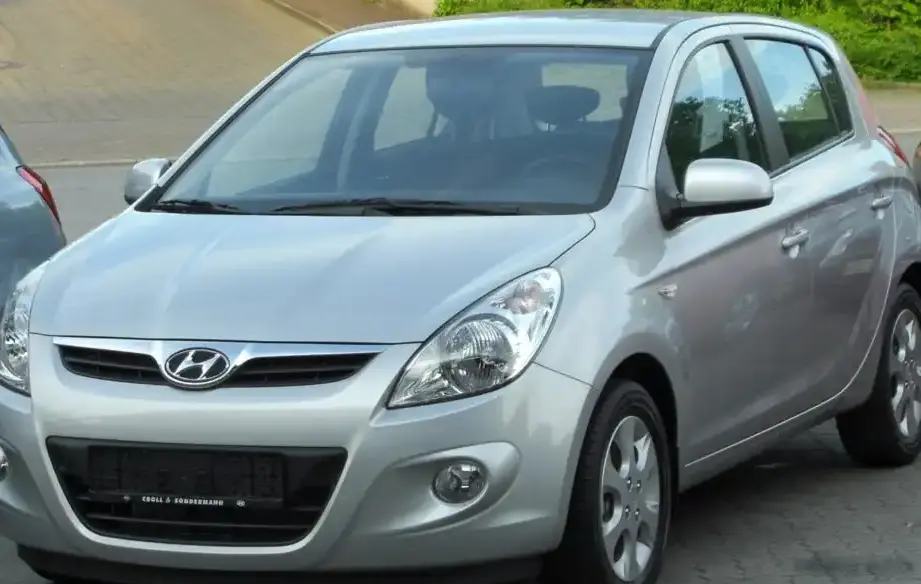
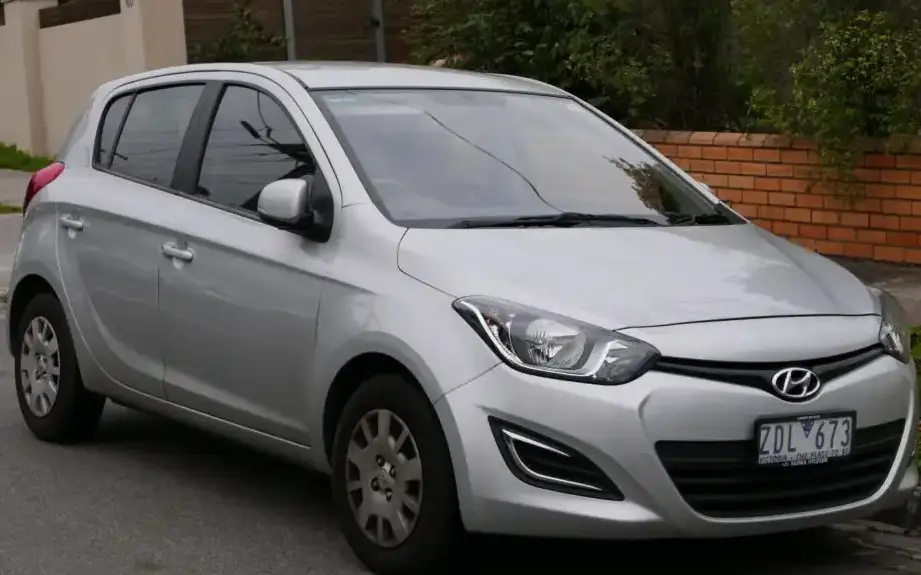
The Hyundai i20 (PB) facelift, introduced in 2012, represented a significant refresh of Hyundai’s subcompact hatchback. This iteration of the i20, sold from 2012 to 2014, aimed to enhance the model’s appeal with revised styling, improved interior quality, and a range of efficient engine options. Among these, the 1.4 CRDi variant producing 90 horsepower was a key offering, particularly in European markets where diesel engines held considerable popularity. Positioned as a fuel-efficient and practical choice, the 1.4 CRDi 90 hp model served as a mid-range option within the i20 lineup, slotting below the more powerful diesel variants and above the base petrol engines.
Powertrain & Engine Architecture
The heart of the i20 1.4 CRDi was the Hyundai D4FC engine, a 1.4-liter inline-four cylinder diesel. This engine utilized a second-generation common-rail direct injection system, delivering fuel at extremely high pressure for optimized combustion. The D4FC featured a turbocharger with an intercooler, boosting power output and improving torque delivery. The engine employed a double overhead camshaft (DOHC) valvetrain with four valves per cylinder, enhancing breathing and contributing to its efficiency. The 90 horsepower output was achieved at 4000 rpm, while peak torque of 220 Nm (162 lb-ft) was available from a low 1500-2750 rpm, providing strong pulling power at everyday driving speeds. The engine was paired with a six-speed manual transmission, chosen for its balance of fuel economy and driver engagement. While an automatic transmission was offered on other i20 variants, it wasn’t typically paired with this specific 90 hp diesel engine.
Driving Characteristics
The 1.4 CRDi 90 hp i20 offered a practical and economical driving experience. Acceleration, while not sporty, was adequate for urban and highway driving, with a 0-60 mph time of around 12.8 seconds. The engine’s strong low-end torque made it easy to navigate city streets and execute overtaking maneuvers. The six-speed manual transmission allowed drivers to keep the engine in its optimal power band, maximizing efficiency and responsiveness. Compared to the more powerful 1.6 CRDi variants, the 1.4 CRDi felt less urgent in its acceleration, but it compensated with superior fuel economy. The gear ratios were tuned for efficiency, prioritizing fuel savings over outright performance. The steering was light and precise, making the i20 easy to maneuver, but lacked the feedback desired by more enthusiastic drivers.
Equipment & Trim Levels
The i20 1.4 CRDi 90 hp typically came equipped with a reasonable level of standard features. These included air conditioning, power steering, electric front windows, a radio with USB connectivity, and ABS brakes. Higher trim levels, such as the Style or Comfort variants, added features like alloy wheels, rear electric windows, a trip computer, and upgraded interior trim. Optional extras included a panoramic sunroof, parking sensors, and a more advanced audio system. Interior upholstery was typically cloth, with a focus on durability and practicality. The dashboard layout was functional and straightforward, prioritizing ease of use over stylistic flair.
Chassis & Braking
The i20’s chassis featured an independent McPherson strut suspension at the front and an independent coil spring suspension at the rear, providing a comfortable ride quality. The suspension was tuned for everyday driving conditions, prioritizing comfort over sporty handling. Front brakes were ventilated discs, offering good stopping power, while rear brakes were solid discs. ABS (Anti-lock Braking System) was standard, enhancing safety during emergency braking situations. The i20’s weight-to-power ratio of 12.4 kg/hp contributed to its reasonable handling characteristics. Stabilizer bars were fitted to both the front and rear axles to reduce body roll during cornering.
Market Reception & Comparison
The Hyundai i20 1.4 CRDi 90 hp was generally well-received by automotive critics as a practical and fuel-efficient supermini. It was praised for its comfortable ride, spacious interior, and competitive price point. However, some reviewers noted that the engine lacked the refinement and performance of some of its rivals. Compared to the petrol-powered i20 variants, the 1.4 CRDi offered significantly better fuel economy, making it an attractive option for drivers covering long distances. Against competitors like the Ford Fiesta, Volkswagen Polo, and Renault Clio, the i20 offered a compelling value proposition, often undercutting them on price while providing a similar level of equipment. Reliability was generally good, with few reported issues with the D4FC engine or the i20’s mechanical components.
Legacy
The Hyundai i20 1.4 CRDi 90 hp has proven to be a reliable and durable vehicle in the used car market. The D4FC engine, while not known for being particularly exciting, is generally considered robust and capable of high mileage with proper maintenance. Common issues are relatively minor, often related to wear and tear on components like the turbocharger or fuel injectors. Today, these i20s represent an affordable and economical option for buyers seeking a practical and fuel-efficient city car. Their relatively low running costs and proven reliability continue to make them a popular choice among budget-conscious drivers.