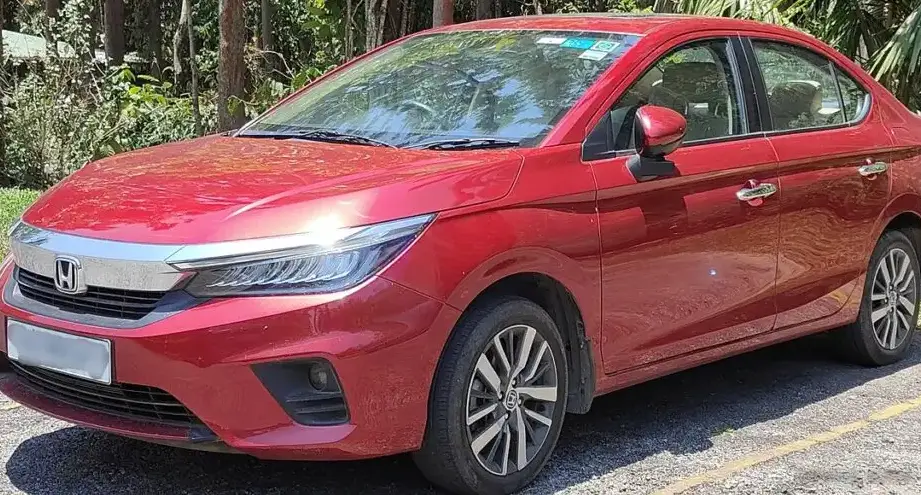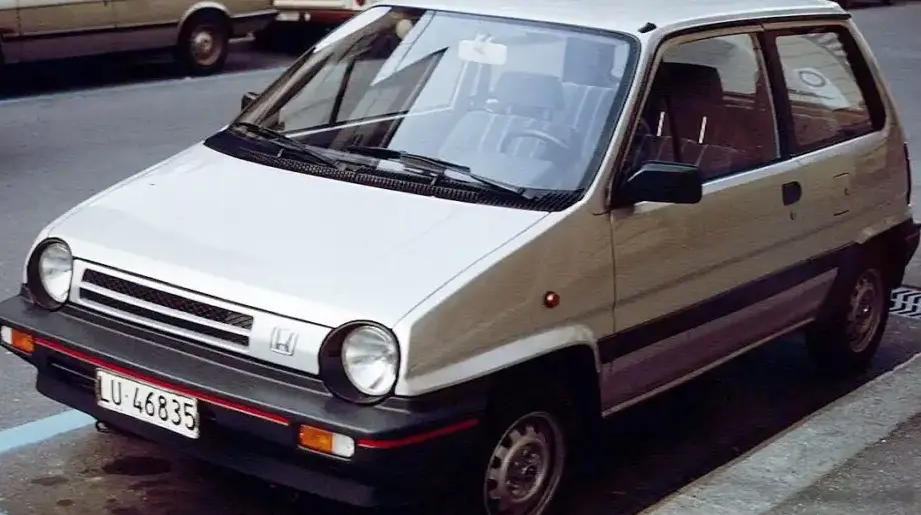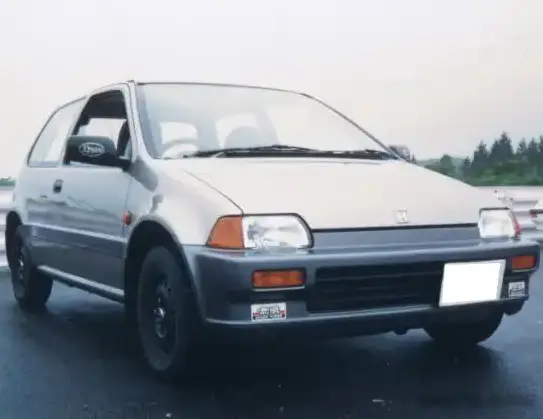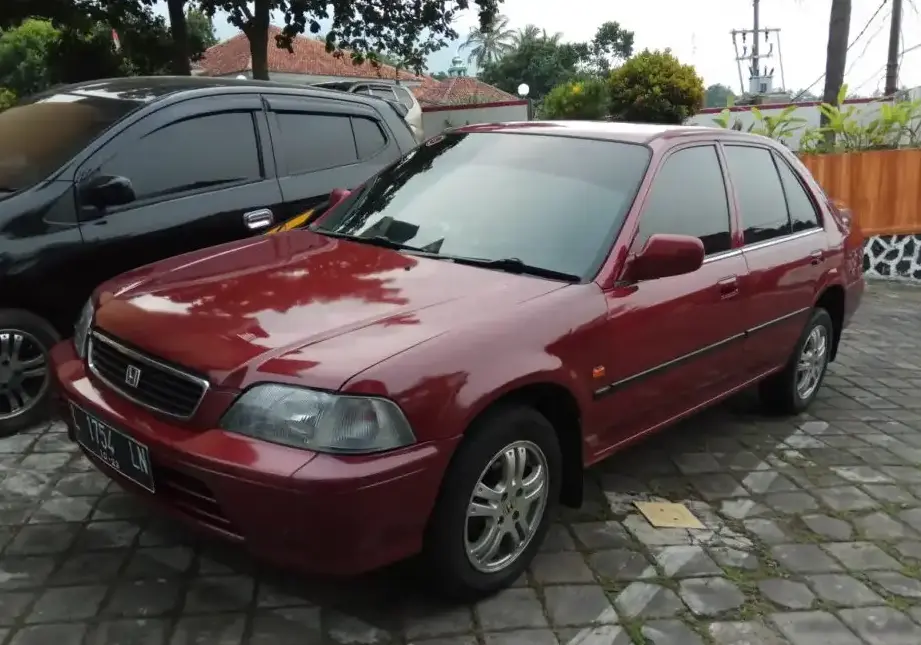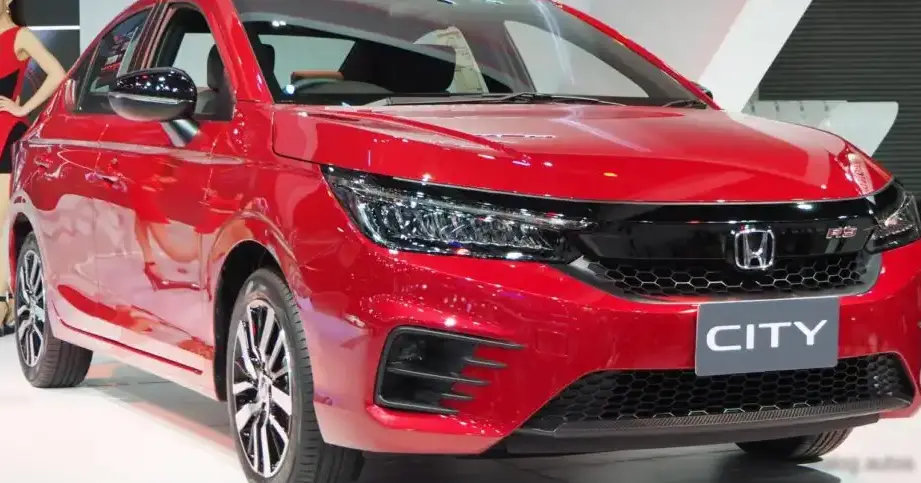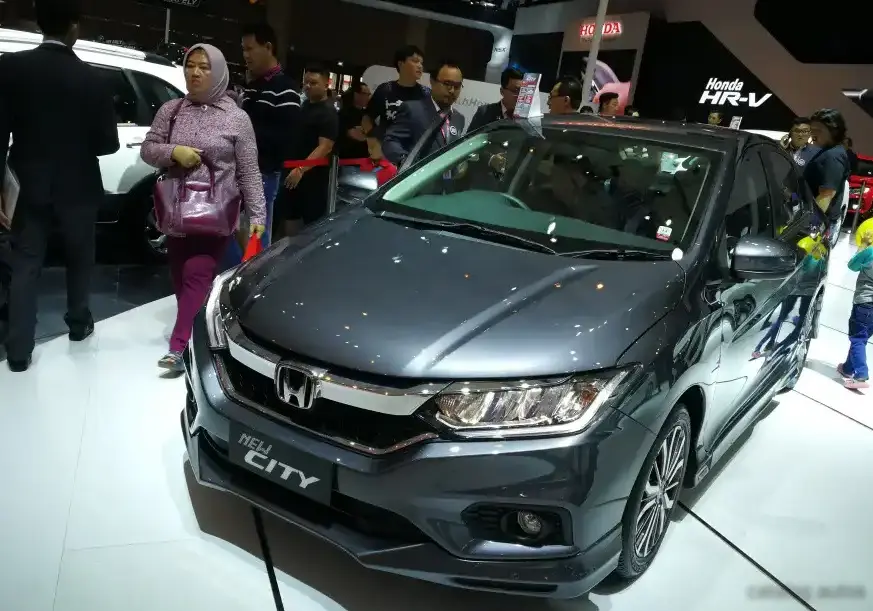
The Honda City VI (facelift, introduced in 2017) 1.5i, producing 119 horsepower, represented a significant iteration of Honda’s globally successful compact sedan. Produced from 2017 to 2019, this variant played a crucial role in the City’s sixth generation (internally designated GM2/GM3), particularly in markets across Asia, South America, and parts of Europe. The facelift brought styling updates and refinements to the already popular City, aiming to maintain its competitive edge in the crowded B-segment sedan market. This 1.5i trim served as a core offering, balancing affordability with a reasonable level of equipment and performance.
Technical Specifications
| Brand | Honda |
| Model | City |
| Generation | City VI (facelift 2017) |
| Type (Engine) | 1.5i (119 Hp) |
| Start of production | 2017 |
| End of production | 2019 |
| Powertrain Architecture | Internal Combustion engine |
| Body type | Sedan |
| Seats | 5 |
| Doors | 4 |
| Fuel consumption (combined) | 13.5 l/100 km (17.4 US mpg, 20.9 UK mpg, 7.4 km/l) |
| Fuel Type | Petrol (Gasoline) |
| Weight-to-power ratio | 8.9 kg/Hp, 112.5 Hp/tonne |
| Weight-to-torque ratio | 7.3 kg/Nm, 137.1 Nm/tonne |
| Power | 119 Hp @ 6600 rpm |
| Power per litre | 79.5 Hp/l |
| Torque | 145 Nm @ 4600 rpm (106.95 lb.-ft. @ 4600 rpm) |
| Engine layout | Front, Transverse |
| Engine displacement | 1497 cm3 (91.35 cu. in.) |
| Number of cylinders | 4 |
| Engine configuration | Inline |
| Number of valves per cylinder | 4 |
| Fuel injection system | Multi-port manifold injection |
| Engine aspiration | Naturally aspirated engine |
| Valvetrain | SOHC, i-VTEC |
| Engine oil capacity | 3.6 l (3.8 US qt | 3.17 UK qt) |
| Coolant capacity | 4.07 l (4.3 US qt | 3.58 UK qt) |
| Kerb Weight | 1058-1088 kg (2332.49 – 2398.63 lbs.) |
| Max. weight | 1433-1463 kg (3159.22 – 3225.36 lbs.) |
| Max load | 375 kg (826.73 lbs.) |
| Trunk (boot) space – minimum | 510 l (18.01 cu. ft.) |
| Fuel tank capacity | 40 l (10.57 US gal | 8.8 UK gal) |
| Length | 4440 mm (174.8 in.) |
| Width | 1695 mm (66.73 in.) |
| Height | 1495 mm (58.86 in.) |
| Wheelbase | 2600 mm (102.36 in.) |
| Front track | 1475-1490 mm (58.07 – 58.66 in.) |
| Rear (Back) track | 1465-1480 mm (57.68 – 58.27 in.) |
| Minimum turning circle | 10.6 m (34.78 ft.) |
| Drivetrain Architecture | Front wheel drive, Internal Combustion engine |
| Drive wheel | Front wheel drive |
| Number of gears and type of gearbox | 6 gears, manual transmission |
| Front suspension | Independent type McPherson |
| Rear suspension | Torsion |
| Front brakes | Ventilated discs |
| Rear brakes | Drum |
| Assisting systems | ABS (Anti-lock braking system) |
| Steering type | Steering rack and pinion |
| Power steering | Electric Steering |
| Tires size | 175/65 R15; 185/55 R16 |
| Wheel rims size | 5.5J x 15; 6J x 16 |
INTRODUCTION
The 2017 facelift of the Honda City VI, specifically the 1.5i variant, continued the model’s reputation as a practical and reliable compact sedan. Building upon the success of the fifth-generation City, the sixth generation, and its subsequent refresh, aimed to enhance the car’s appeal with updated styling, improved features, and continued focus on fuel efficiency. This particular trim level, with its 1.5-liter engine and 119 horsepower output, was positioned as the mainstream offering, appealing to a broad range of buyers seeking a comfortable and economical daily driver. It was a key model in Honda’s strategy to maintain market share in the highly competitive Southeast Asian and Latin American markets.
Powertrain & Engine Architecture
At the heart of the City 1.5i lies Honda’s SOHC 1.5-liter inline-four cylinder engine, typically identified by engine codes such as L15A. This engine utilizes a multi-point fuel injection system and Honda’s intelligent Variable Valve Timing and Lift Electronic Control (i-VTEC) technology. The i-VTEC system optimizes valve timing and lift based on engine speed and load, improving both fuel efficiency and power output. The engine produces 119 hp at 6600 rpm and 145 Nm (106.95 lb-ft) of torque at 4600 rpm. The engine is transversely mounted, driving the front wheels. The six-speed manual transmission was standard, offering precise shifts and a relatively engaging driving experience. The transmission’s gear ratios were tuned to prioritize fuel economy and smooth acceleration in typical urban driving conditions.
Driving Characteristics
The 1.5i variant of the City VI offered a balanced driving experience. While not overtly sporty, the 119 hp engine provided adequate power for everyday driving, including highway cruising and overtaking. The manual transmission allowed for a greater degree of driver control compared to automatic variants. Acceleration from 0 to 60 mph was estimated to be around 10-11 seconds. The suspension, tuned for comfort, absorbed bumps and imperfections in the road well, providing a relatively smooth ride. Steering was light and precise, making it easy to maneuver in city traffic. Compared to higher-spec City models with more powerful engines, the 1.5i felt less responsive, but its lighter weight contributed to better fuel economy.
Equipment & Trim Levels
The 1.5i trim of the 2017 Honda City VI typically included standard features such as air conditioning, power windows, power door locks, and a basic audio system with USB connectivity. Safety features included dual front airbags and ABS (Anti-lock Braking System). Higher trim levels offered additional features like alloy wheels, a touchscreen infotainment system, a rearview camera, and automatic climate control. Interior upholstery was typically cloth, with a straightforward and functional dashboard layout. Optional extras included upgraded audio systems and various accessory packages.
Chassis & Braking
The City VI utilized a McPherson strut independent suspension system at the front and a torsion beam suspension at the rear. This configuration provided a good balance between ride comfort and handling. The front brakes were ventilated discs, offering good stopping power, while the rear brakes were drums, a cost-saving measure common in this segment. The electric power steering system provided light and easy steering, enhancing maneuverability. Tire sizes varied depending on the trim level, with 175/65 R15 and 185/55 R16 being common options.
Market Reception & Comparison
The Honda City 1.5i (facelift 2017) was generally well-received by automotive critics and consumers alike. It was praised for its reliability, fuel efficiency, and spacious interior. Compared to competitors like the Toyota Vios and Nissan Almera, the City offered a more refined driving experience and a more modern interior. Fuel economy was a key selling point, with the 1.5i achieving around 17.4 US mpg in combined driving conditions. Reliability was also a strong suit, with Honda’s reputation for building durable and long-lasting vehicles.
Legacy
The Honda City VI 1.5i has proven to be a reliable and durable vehicle, maintaining a good reputation in the used car market. The 1.5-liter i-VTEC engine is known for its longevity and relatively low maintenance costs. While not a performance-oriented model, the 1.5i continues to be a popular choice for buyers seeking a practical and economical compact sedan. Its simple design and robust construction contribute to its long-term reliability, making it a sensible choice for those seeking a dependable used car.