Technical Specifications
| Brand | Fiat |
| Model | Panda |
| Generation | Panda III (319) |
| Type (Engine) | 0.9 TwinAir Turbo (85 Hp) START & STOP |
| Start of production | 2011 |
| End of production | 2018 |
| Powertrain Architecture | Internal Combustion engine |
| Body type | Hatchback |
| Seats | 5 |
| Doors | 5 |
| Fuel consumption (urban) | 5 l/100 km (47 US mpg, 56.5 UK mpg, 20 km/l) |
| Fuel consumption (extra urban) | 3.8 l/100 km (61.9 US mpg, 74.3 UK mpg, 26.3 km/l) |
| Fuel consumption (combined) | 4.2 l/100 km (56 US mpg, 67.3 UK mpg, 23.8 km/l) |
| Fuel Type | Petrol (Gasoline) |
| Acceleration 0 – 100 km/h | 11.2 sec |
| Acceleration 0 – 62 mph | 11.2 sec |
| Acceleration 0 – 60 mph | 10.6 sec |
| Maximum speed | 177 km/h (109.98 mph) |
| Emission standard | Euro 5 |
| Weight-to-power ratio | 11.5 kg/Hp, 87.2 Hp/tonne |
| Weight-to-torque ratio | 6.7 kg/Nm, 148.7 Nm/tonne |
| Power | 85 Hp @ 5500 rpm |
| Power per litre | 97.1 Hp/l |
| Torque | 145 Nm @ 1900 rpm (106.95 lb.-ft. @ 1900 rpm) |
| Engine layout | Front, Transverse |
| Engine Model/Code | 312A2000 |
| Engine displacement | 875 cm3 (53.4 cu. in.) |
| Number of cylinders | 2 |
| Engine configuration | Inline |
| Fuel injection system | Direct injection |
| Engine aspiration | Turbocharger, Intercooler |
| Engine oil capacity | 3.2 l (3.38 US qt | 2.82 UK qt) |
| Coolant capacity | 5.3 l (5.6 US qt | 4.66 UK qt) |
| Kerb Weight | 975 kg (2149.51 lbs) |
| Trunk (boot) space – minimum | 225 l (7.95 cu. ft) |
| Fuel tank capacity | 37 l (9.77 US gal | 8.14 UK gal) |
| Length | 3653 mm (143.82 in) |
| Width | 1643 mm (64.69 in) |
| Height | 1551 mm (61.06 in) |
| Wheelbase | 2300 mm (90.55 in) |
| Front track | 1522 mm (59.92 in) |
| Rear track | 1519 mm (59.8 in) |
| Minimum turning circle | 9.3 m (30.51 ft) |
| Drivetrain Architecture | Front wheel drive |
| Number of gears | 5 |
| Gearbox type | Manual transmission |
| Front suspension | Independent type McPherson |
| Rear suspension | Torsion |
| Front brakes | Ventilated discs |
| Rear brakes | Drum |
| Assisting systems | ABS (Anti-lock braking system) |
| Steering type | Steering rack and pinion |
| Power steering | Electric Steering |
| Tires size | 175/65 R14 82T; 185/55 R15 82T |
| Wheel rims size | 14; 15 |
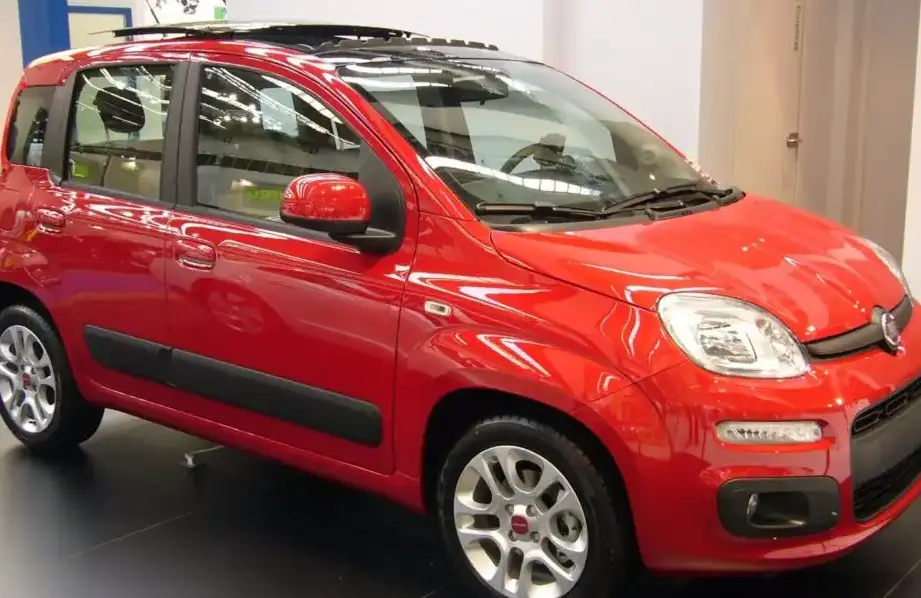
The Fiat Panda III (319) 0.9 TwinAir Turbo, produced from 2011 to 2018, represents a notable evolution of Fiat’s long-running and beloved city car. This variant, powered by the 85 horsepower version of the innovative 0.9-liter TwinAir engine and paired with a five-speed manual transmission, held a significant position within the Panda lineup. It offered a compelling blend of fuel efficiency, agile handling, and relative affordability, making it a popular choice for urban drivers and first-time car buyers, primarily in the European market where compact and economical vehicles are highly valued.
Powertrain & Engine Architecture
At the heart of the Panda III 0.9 TwinAir Turbo lies the 312A2000 engine, a remarkably compact 875cc two-cylinder turbocharged petrol engine. This engine is a testament to downsizing technology, featuring a single overhead camshaft, four valves per cylinder, and direct fuel injection. The addition of a turbocharger, coupled with an intercooler, dramatically increases power output despite the engine’s small displacement. The TwinAir engine is recognized for its unique firing order and relatively high compression ratio, contributing to both its efficiency and responsive nature. The five-speed manual transmission provides precise gear changes and complements the engine’s characteristics. A Start & Stop system, standard on this variant, further enhances fuel economy by automatically shutting down the engine when the vehicle is stationary, such as at traffic lights.
Driving Characteristics
The 0.9 TwinAir Turbo-equipped Panda III delivers a surprisingly spirited driving experience for a vehicle in its class. While 85 horsepower may not seem like a large figure, the turbocharger provides a noticeable boost in torque, making the car feel quicker than its displacement might suggest. Acceleration from 0 to 60 mph takes approximately 10.6 seconds, with a top speed around 109.98 mph. The gear ratios are well-matched for city driving, featuring a relatively short first gear for quick acceleration from a standstill and a fifth gear optimized for comfortable highway cruising. Compared to the base 1.2-liter engine, the TwinAir offers a substantial performance upgrade, while the manual transmission provides a more engaging driving experience than the Dualogic automated manual transmission available on some trim levels. However, it doesn’t quite match the performance of the more expensive and capable Panda 4×4 models.
Equipment & Trim Levels
The 0.9 TwinAir Turbo typically came with a reasonable level of standard equipment. This generally included power steering, ABS brakes, a driver’s airbag, and a basic audio system. Higher trim levels, such as the Lounge, added features like air conditioning, central locking, electric front windows, and a more advanced infotainment system. Optional extras included alloy wheels, a panoramic sunroof, and parking sensors. The interior upholstery was typically cloth, designed for durability and practicality. The dashboard layout was simple and user-friendly, prioritizing functionality over luxurious aesthetics.
Chassis & Braking
The Panda III utilizes a front-wheel-drive layout, coupled with an independent McPherson strut suspension at the front and a torsion beam suspension at the rear. This configuration strikes a good balance between ride comfort and handling agility. The front brakes are ventilated discs, providing adequate stopping power, while the rear brakes are drums – a cost-saving measure common in this segment. The steering is electrically assisted, offering light and precise control. The Panda’s relatively lightweight construction contributes significantly to its nimble handling characteristics.
Market Reception & Comparison
The Fiat Panda III 0.9 TwinAir Turbo was generally well-received by automotive journalists and consumers alike. It was praised for its excellent fuel efficiency, surprisingly engaging driving experience, and overall practicality. Some reviewers did note that the engine could be somewhat noisy, and the interior was fairly basic. When compared to other small city cars of the time, such as the Volkswagen Up! and the Toyota Aygo, the Panda offered a unique combination of character and affordability. Its fuel economy was competitive, and its reliability was generally considered good, although the complex TwinAir engine did require consistent and careful maintenance to ensure longevity.
Legacy
The Fiat Panda III 0.9 TwinAir Turbo continues to be a popular choice in the used car market, particularly for buyers seeking an economical and reliable city car. The TwinAir engine, while requiring regular servicing, has proven to be reasonably durable when properly maintained. The Panda’s simple construction and the widespread availability of spare parts contribute to its affordability and ease of repair. It remains appreciated for its practicality, nimble handling, and distinctive Italian charm, cementing its position as a beloved and enduring icon in the small car segment. Its blend of efficiency and character ensures it will remain a relevant and sought-after vehicle for years to come.