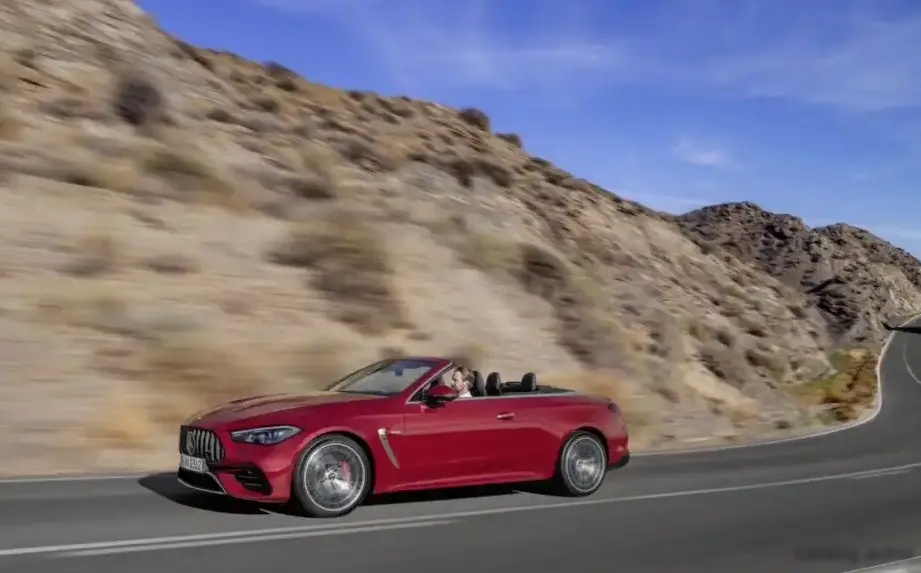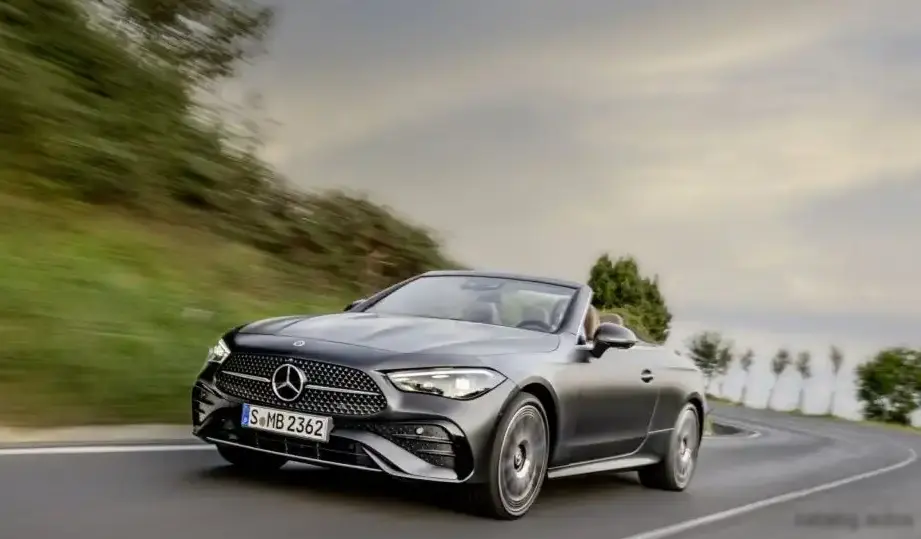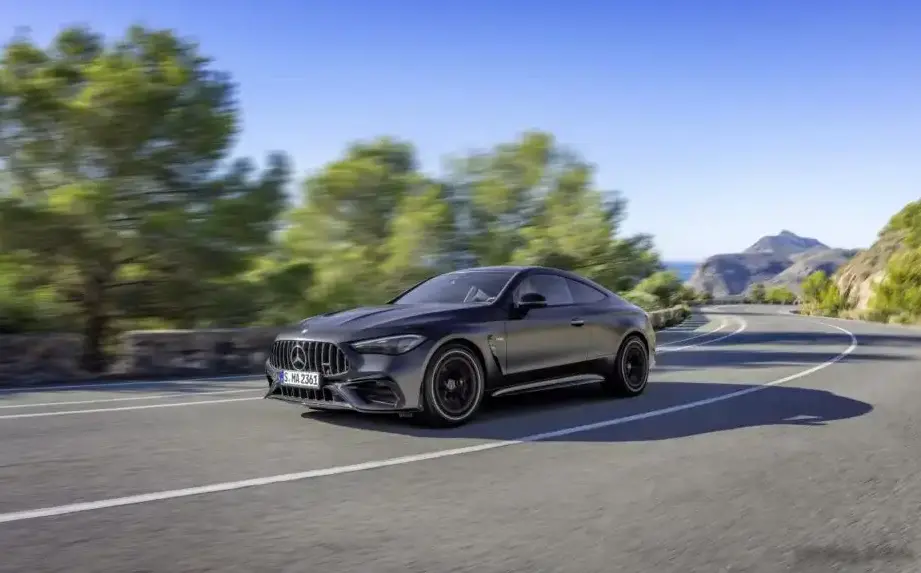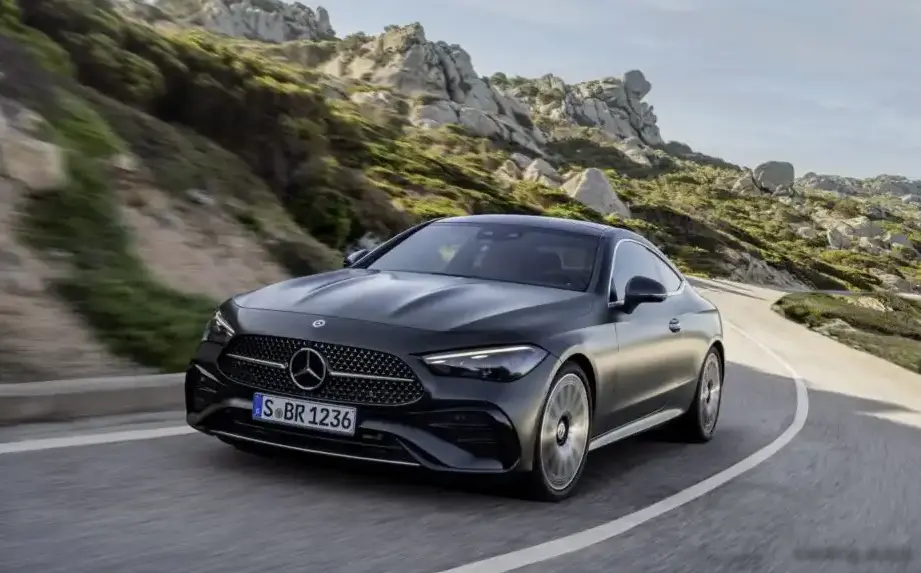
The Mercedes-Benz CLE 300e, introduced in April 2024, represents a significant entry in the premium coupe segment, blending internal combustion engine (ICE) power with plug-in hybrid electric vehicle (PHEV) technology. Positioned as a mid-range offering within the C236 CLE Coupe lineup, it aims to deliver a balance of performance, efficiency, and luxury. The CLE series replaces both the C-Class Coupe and E-Class Coupe, consolidating Mercedes-Benz’s offerings in this market segment. The 300e variant specifically targets buyers seeking reduced emissions and the flexibility of electric driving for shorter commutes, while retaining the range and convenience of a gasoline engine for longer journeys. It is built on the updated Mercedes-Benz platform, incorporating advancements in both powertrain and chassis technology.
Technical Specifications
| Brand | Mercedes-Benz |
| Model | CLE |
| Generation | CLE Coupe (C236) |
| Type | CLE 300e (313 Hp) Plug-in Hybrid 9G-TRONIC |
| Start of production | April, 2024 |
| Powertrain Architecture | PHEV (Plug-in Hybrid Electric Vehicle) |
| Body type | Coupe |
| Seats | 4 |
| Doors | 2 |
| Combined fuel consumption (WLTP) | 0.5-0.7 l/100 km (470.4 – 336 US mpg, 565 – 403.5 UK mpg, 200 – 142.9 km/l) |
| CO2 emissions (WLTP) | 12-16 g/km |
| Fuel Type | Petrol / electricity |
| Acceleration 0 – 100 km/h | 6.3 sec |
| Acceleration 0 – 62 mph | 6.3 sec |
| Acceleration 0 – 60 mph | 6 sec |
| Maximum speed | 236 km/h (146.64 mph) |
| Emission standard | Euro 6e |
| Weight-to-power ratio | 6.7 kg/Hp, 149 Hp/tonne |
| Weight-to-torque ratio | 6.6 kg/Nm, 152.4 Nm/tonne |
| Gross battery capacity | 25.4 kWh |
| Net (usable) battery capacity | 19.53 kWh |
| Battery technology | Lithium-ion (Li-Ion) |
| Battery location | Under the trunk |
| All-electric range (WLTP) | 101-112 km (62.76 – 69.59 mi) |
| Average Energy consumption (WLTP) | 19.1-20.9 kWh/100 km (30.74 – 33.64 kWh/100 mi, 110 – 100 MPGe, 5.2 – 4.8 km/kWh, 3.3 – 3 mi/kWh) |
| Electric motor power | 129 Hp @ 2100 rpm |
| Electric motor Torque | 440 Nm (324.53 lb.-ft.) |
| Electric motor location | Between the combustion engine and the transmission |
| Electric motor type | Synchronous |
| System power | 313 Hp |
| Power | 204 Hp @ 6100 rpm |
| Torque | 320 Nm @ 2000-4000 rpm (236.02 lb.-ft. @ 2000-4000 rpm) |
| Engine layout | Front, Longitudinal |
| Engine Model/Code | M 254 |
| Engine displacement | 1999 cm3 (121.99 cu. in.) |
| Number of cylinders | 4 |
| Engine configuration | Inline |
| Cylinder Bore | 83 mm (3.27 in.) |
| Piston Stroke | 92.4 mm (3.64 in.) |
| Compression ratio | 10:1 |
| Number of valves per cylinder | 4 |
| Fuel injection system | Direct injection |
| Engine aspiration | Twin-scroll turbo, Intercooler |
| Valvetrain | DOHC |
| Engine oil capacity | 5.3 l (5.6 US qt | 4.66 UK qt) |
| Kerb Weight | 2100 kg (4629.71 lbs.) |
| Max. weight | 2580 kg (5687.93 lbs.) |
| Max load | 480 kg (1058.22 lbs.) |
| Trunk (boot) space – minimum | 290 l (10.24 cu. ft.) |
| Fuel tank capacity | 50 l (13.21 US gal | 11 UK gal) |
| Max. roof load | 100 kg (220.46 lbs.) |
| Permitted trailer load with brakes (12%) | 1800 kg (3968.32 lbs.) |
| Permitted trailer load without brakes | 750 kg (1653.47 lbs.) |
| Permitted towbar download | 75 kg (165.35 lbs.) |
| Length | 4850 mm (190.94 in.) |
| Width | 1861 mm (73.27 in.) |
| Width including mirrors | 2042 mm (80.39 in.) |
| Height | 1429 mm (56.26 in.) |
| Wheelbase | 2865 mm (112.8 in.) |
| Front track | 1604 mm (63.15 in.) |
| Rear (Back) track | 1584 mm (62.36 in.) |
| Front overhang | 888 mm (34.96 in.) |
| Rear overhang | 1097 mm (43.19 in.) |
| Minimum turning circle (turning diameter) | 11.2 m (36.75 ft.) |
| Drivetrain Architecture | The Internal combustion engine (ICE) and electric motor drive the rear wheels of the car with the ability to work in full electric or mixed mode. |
| Drive wheel | Rear wheel drive |
| Number of gears and type of gearbox | 9 gears, automatic transmission G-TRONIC |
| Front suspension | Independent multi-link suspension, Transverse stabilizer |
| Rear suspension | Independent multi-link suspension, Transverse stabilizer |
| Front brakes | Ventilated discs |
| Rear brakes | Ventilated discs |
| Assisting systems | ABS (Anti-lock braking system) |
| Steering type | Steering rack and pinion |
| Power steering | Electric Steering |
| Tires size | 245/45 R18 |
| Wheel rims size | 8J x 18 |
Powertrain & Engine Architecture
The CLE 300e utilizes a sophisticated plug-in hybrid powertrain centered around Mercedes-Benz’s M 254 2.0-liter inline-four cylinder gasoline engine. This engine, featuring direct injection and a twin-scroll turbocharger, produces 204 horsepower and 320 Nm (236 lb-ft) of torque. The engine is paired with a 129 horsepower electric motor integrated between the engine and the 9G-TRONIC nine-speed automatic transmission. The electric motor draws power from a 25.4 kWh (gross) / 19.53 kWh (net) lithium-ion battery pack located under the trunk floor. This configuration allows for a combined system output of 313 horsepower and 440 Nm (324 lb-ft) of torque. The 9G-TRONIC transmission is specifically calibrated for hybrid applications, offering smooth and efficient gear changes. The engine management system seamlessly blends power from both sources, optimizing for efficiency or performance as needed.
Driving Characteristics
The CLE 300e delivers a refined driving experience. In electric-only mode, it provides near-silent operation and brisk acceleration for urban driving, with a WLTP-rated range of 101-112 km (63-69 miles). Switching to hybrid mode allows the gasoline engine to take over for longer distances or when more power is required. The combined output provides a 0-60 mph time of around 6 seconds and a top speed of 236 km/h (147 mph). The 9G-TRONIC transmission’s gear ratios are optimized for both fuel efficiency and responsive acceleration. Compared to non-hybrid CLE models, the 300e offers a more immediate torque response due to the electric motor’s instant delivery. While the battery pack adds weight, the overall handling remains balanced and predictable, thanks to the well-tuned suspension.
Equipment & Trim Levels
The CLE 300e typically comes well-equipped as standard. Interior features include premium upholstery, a modern dashboard layout with a large central touchscreen display, and advanced driver-assistance systems. Standard features often include Mercedes-Benz’s MBUX infotainment system, Apple CarPlay and Android Auto integration, and a suite of safety technologies like automatic emergency braking and lane-keeping assist. Optional extras can include upgraded sound systems, leather upholstery, a panoramic sunroof, and more advanced driver-assistance features. Trim levels may vary by market, but generally offer increasing levels of luxury and technology.
Chassis & Braking
The CLE 300e features a sophisticated chassis designed for comfort and handling. It utilizes an independent multi-link suspension system at both the front and rear, with transverse stabilizers to minimize body roll. Ventilated disc brakes are fitted on all four wheels, providing ample stopping power. The car is equipped with ABS (Anti-lock Braking System) and electronic stability control as standard. The suspension tuning is geared towards providing a comfortable ride while maintaining responsive handling characteristics. The added weight of the battery pack is compensated for by optimized suspension settings.
Market Reception & Comparison
The CLE 300e has been generally well-received by automotive critics, who praise its blend of performance, efficiency, and luxury. Its electric range is competitive within its segment, and its fuel economy is significantly better than that of non-hybrid CLE models. Compared to the CLE 450, the 300e offers a more fuel-efficient and environmentally friendly option, albeit with slightly less overall power. Compared to other plug-in hybrid coupes in the premium segment, the CLE 300e stands out with its refined driving experience and advanced technology.
Legacy
The long-term reliability of the CLE 300e’s powertrain remains to be seen, as it is a relatively new model. However, Mercedes-Benz has a strong track record of building durable and reliable vehicles. The M 254 engine has proven to be a robust unit in other applications. The hybrid system components are covered by a comprehensive warranty. On the used car market, the CLE 300e is expected to hold its value well, due to its desirable combination of features and fuel efficiency. Its appeal to environmentally conscious buyers and those seeking a premium driving experience should ensure continued demand in the years to come.