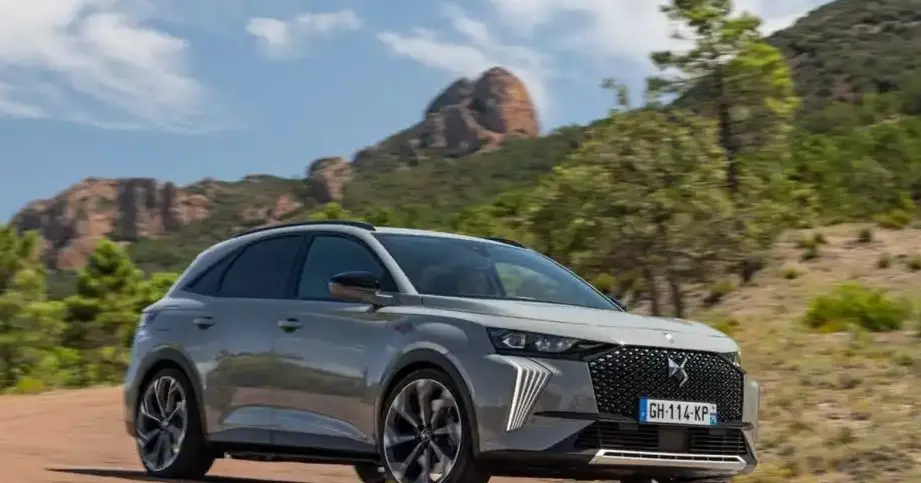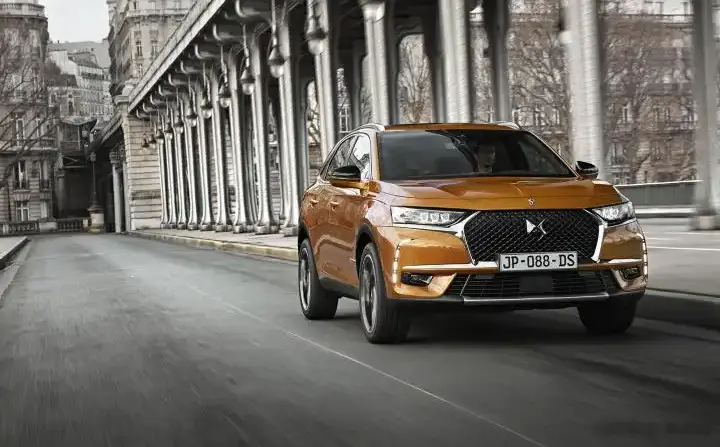
The DS 7 Crossback 1.2 PureTech (130 hp) Automatic, produced from January 2020 to December 2021, represents a key entry point into the DS 7 Crossback range. Positioned as a more accessible option within the lineup, this variant combined a downsized turbocharged gasoline engine with an eight-speed automatic transmission, aiming to balance fuel efficiency with acceptable performance for the compact luxury SUV segment. It was primarily marketed in Europe, where smaller displacement engines are favored due to taxation and fuel costs, and represented DS’s attempt to broaden the appeal of its flagship model.
Technical Specifications
| Brand | DS |
| Model | 7 |
| Generation | 7 Crossback |
| Type (Engine) | 1.2 PureTech (130 Hp) Automatic |
| Start of production | January, 2020 |
| End of production | December, 2021 |
| Powertrain Architecture | Internal Combustion engine |
| Body type | SUV |
| Seats | 5 |
| Doors | 5 |
| Fuel consumption at Low speed (WLTP) | 7.8-8.2 l/100 km (30.2 – 28.7 US mpg, 36.2 – 34.4 UK mpg, 12.8 – 12.2 km/l) |
| Fuel consumption at Medium speed (WLTP) | 6.3-6.8 l/100 km (37.3 – 34.6 US mpg, 44.8 – 41.5 UK mpg, 15.9 – 14.7 km/l) |
| Fuel consumption at high speed (WLTP) | 5.4-5.9 l/100 km (43.6 – 39.9 US mpg, 52.3 – 47.9 UK mpg, 18.5 – 16.9 km/l) |
| Fuel consumption at very high speed (WLTP) | 6.5-7.2 l/100 km (36.2 – 32.7 US mpg, 43.5 – 39.2 UK mpg, 15.4 – 13.9 km/l) |
| Combined fuel consumption (WLTP) | 6.3-6.8 l/100 km (37.3 – 34.6 US mpg, 44.8 – 41.5 UK mpg, 15.9 – 14.7 km/l) |
| CO2 emissions (WLTP) | 143-155 g/km |
| Fuel consumption (economy) – urban (NEDC, WLTP equivalent) | 5.7 l/100 km (41.3 US mpg, 49.6 UK mpg, 17.5 km/l) |
| Fuel consumption (economy) – extra urban (NEDC, WLTP equivalent) | 4.5 l/100 km (52.3 US mpg, 62.8 UK mpg, 22.2 km/l) |
| Fuel consumption (economy) – combined (NEDC, WLTP equivalent) | 5.0 l/100 km (47 US mpg, 56.5 UK mpg, 20 km/l) |
| CO2 emissions (NEDC, WLTP equivalent) | 114 g/km |
| Fuel Type | Petrol (Gasoline) |
| Acceleration 0 – 100 km/h | 9.9 sec |
| Acceleration 0 – 62 mph | 9.9 sec |
| Acceleration 0 – 60 mph | 9.4 sec |
| Maximum speed | 195 km/h (121.17 mph) |
| Emission standard | Euro 6.3 |
| Weight-to-power ratio | 11 kg/Hp, 90.9 Hp/tonne |
| Weight-to-torque ratio | 6.2 kg/Nm, 160.8 Nm/tonne |
| Power | 130 Hp @ 5500 rpm |
| Power per litre | 108.4 Hp/l |
| Torque | 230 Nm @ 1750 rpm (169.64 lb.-ft. @ 1750 rpm) |
| Engine layout | Front, Transverse |
| Engine Model/Code | HNS EB2ADTS |
| Engine displacement | 1199 cm3 (73.17 cu. in.) |
| Number of cylinders | 3 |
| Engine configuration | Inline |
| Cylinder Bore | 75 mm (2.95 in.) |
| Piston Stroke | 90.5 mm (3.56 in.) |
| Number of valves per cylinder | 4 |
| Fuel injection system | Multi-port manifold injection |
| Engine aspiration | Turbocharger, Intercooler |
| Engine oil capacity | 3.5 l (3.7 US qt | 3.08 UK qt) |
| Kerb Weight | 1430 kg (3152.61 lbs.) |
| Max. weight | 2010 kg (4431.29 lbs.) |
| Max load | 580 kg (1278.68 lbs.) |
| Trunk (boot) space – minimum | 555 l (19.6 cu. ft.) |
| Trunk (boot) space – maximum | 1752 l (61.87 cu. ft.) |
| Fuel tank capacity | 62 l (16.38 US gal | 13.64 UK gal) |
| Max. roof load | 80 kg (176.37 lbs.) |
| Permitted trailer load with brakes (12%) | 1290 kg (2843.96 lbs.) |
| Permitted towbar download | 80 kg (176.37 lbs.) |
| Length | 4573 mm (180.04 in.) |
| Width | 1906 mm (75.04 in.) |
| Width including mirrors | 2098 mm (82.6 in.) |
| Height | 1625 mm (63.98 in.) |
| Wheelbase | 2738 mm (107.8 in.) |
| Front track | 1621 mm (63.82 in.) |
| Rear (Back) track | 1598 mm (62.91 in.) |
| Front overhang | 925 mm (36.42 in.) |
| Rear overhang | 910 mm (35.83 in.) |
| Ride height (ground clearance) | 190 mm (7.48 in.) |
| Minimum turning circle (turning diameter) | 10.45 m (34.28 ft.) |
| Drivetrain Architecture | The Internal combustion engine (ICE) drives the front wheels of the vehicle. |
| Drive wheel | Front wheel drive |
| Number of gears and type of gearbox | 8 gears, automatic transmission |
| Front suspension | Independent, type McPherson with coil spring and anti-roll bar |
| Rear suspension | Independent multi-link spring suspension with stabilizer |
| Front brakes | Ventilated discs, 304×28 mm |
| Rear brakes | Disc, 290×12 mm |
| Assisting systems | ABS (Anti-lock braking system) |
| Steering type | Steering rack and pinion |
| Power steering | Electric Steering |
| Tires size | 225/55 R18 102V XL; 235/50 R19 99V |
| Wheel rims size | 18; 19 |
INTRODUCTION
The DS 7 Crossback 1.2 PureTech 130 Automatic, launched in early 2020, was a significant addition to the DS Automobiles lineup. Built on the EMP2 platform (also known as the 1HX0/A3 platform, shared with Peugeot and Citroën models), it aimed to offer a premium SUV experience with a focus on comfort and style. This particular variant, powered by the 1.2-liter three-cylinder PureTech engine and paired with an eight-speed automatic transmission, served as an entry-level option, appealing to buyers seeking a balance between affordability and sophistication. It was intended to attract customers who desired the DS 7 Crossback’s design and features but were less concerned with outright performance.
Powertrain & Engine Architecture
At the heart of the DS 7 Crossback 1.2 PureTech 130 Automatic lies the HNS EB2ADTS engine, a 1.2-liter turbocharged three-cylinder gasoline engine. This engine is part of Peugeot-Citroën’s (Stellantis) PureTech family, known for its efficiency and surprisingly strong output for its size. The engine utilizes multi-point fuel injection and a single-scroll turbocharger with an intercooler to deliver 130 horsepower at 5500 rpm and 230 Nm (169.64 lb-ft) of torque at 1750 rpm. The engine’s aluminum block and cylinder head contribute to its relatively lightweight design. The eight-speed automatic transmission, sourced from Aisin, provides smooth and efficient gear changes. This transmission is known for its responsiveness and contributes to the overall refinement of the driving experience. The gear ratios are tuned for a balance of acceleration and fuel economy, prioritizing comfortable cruising over sporty performance.
Driving Characteristics
The DS 7 Crossback 1.2 PureTech 130 Automatic delivers a comfortable and refined driving experience, albeit not a particularly sporty one. Acceleration from 0 to 60 mph takes approximately 9.4 seconds, and the top speed is 195 km/h (121.17 mph). The engine provides adequate power for everyday driving situations, with the turbocharger providing a noticeable boost in mid-range acceleration. However, it can feel somewhat strained when fully loaded or during aggressive overtaking maneuvers. The eight-speed automatic transmission generally shifts smoothly and intelligently, but occasional hesitation can be observed. Compared to the more powerful DS 7 Crossback variants, such as those equipped with the 1.6 PureTech or diesel engines, the 1.2 PureTech feels less responsive and requires more planning when overtaking. The steering is light and precise, making it easy to maneuver in urban environments.
Equipment & Trim Levels
The DS 7 Crossback 1.2 PureTech 130 Automatic typically came equipped with a generous level of standard equipment. This included features such as a touchscreen infotainment system with Apple CarPlay and Android Auto compatibility, automatic climate control, rear parking sensors, and a suite of safety features including automatic emergency braking and lane departure warning. Interior upholstery was typically cloth, with options for leather upgrades available. Higher trim levels offered additional features such as a panoramic sunroof, premium audio system, and adaptive cruise control. The dashboard design was characterized by a clean and modern aesthetic, with high-quality materials and attention to detail.
Chassis & Braking
The DS 7 Crossback 1.2 PureTech 130 Automatic features a McPherson strut front suspension and a multi-link rear suspension, providing a comfortable and controlled ride. The suspension is tuned to prioritize comfort over sporty handling. Front brakes are ventilated discs measuring 304x28mm, while rear brakes are solid discs measuring 290x12mm. The vehicle is equipped with ABS (Anti-lock Braking System) and electronic stability control as standard safety features. The electric power steering provides a light and precise feel, making it easy to maneuver in tight spaces.
Market Reception & Comparison
The DS 7 Crossback 1.2 PureTech 130 Automatic received generally positive reviews from automotive critics. It was praised for its stylish design, comfortable ride, and well-equipped interior. However, some critics noted that the engine could feel underpowered, particularly when fully loaded. Compared to other trims in the DS 7 Crossback lineup, the 1.2 PureTech offered the most affordable entry point, but at the expense of performance. Fuel economy was generally considered to be good, with combined WLTP figures ranging from 6.3 to 6.8 l/100 km (37.3 – 34.6 US mpg). The 1.2 PureTech variant was primarily targeted at buyers who prioritized comfort and style over outright performance.
Legacy
The DS 7 Crossback 1.2 PureTech 130 Automatic has proven to be a relatively reliable vehicle, with the PureTech engine generally exhibiting good durability. However, some owners have reported issues with the engine’s timing chain, which is a known weakness in some PureTech engines. Regular maintenance and adherence to recommended service intervals are crucial for ensuring the long-term reliability of this powertrain. In the used car market, this variant represents a good value proposition for buyers seeking a stylish and comfortable SUV at an affordable price point. Its fuel efficiency and relatively low running costs make it an attractive option for those seeking a practical and economical vehicle.