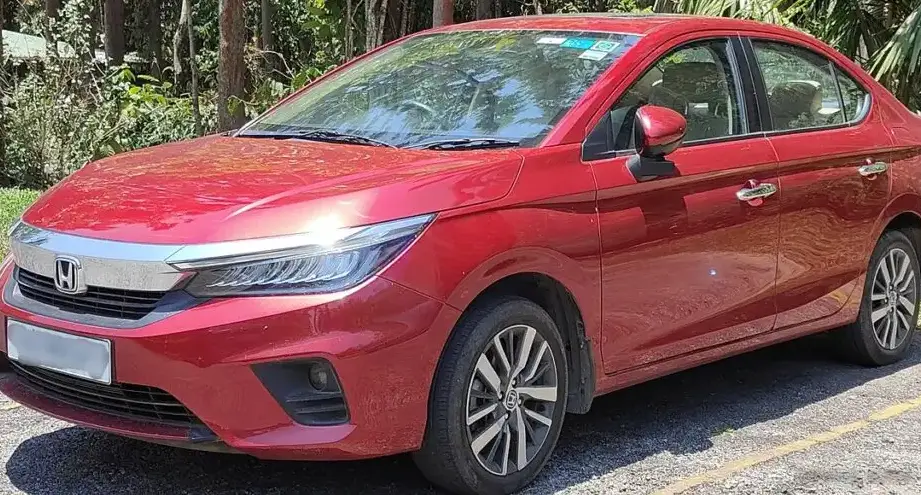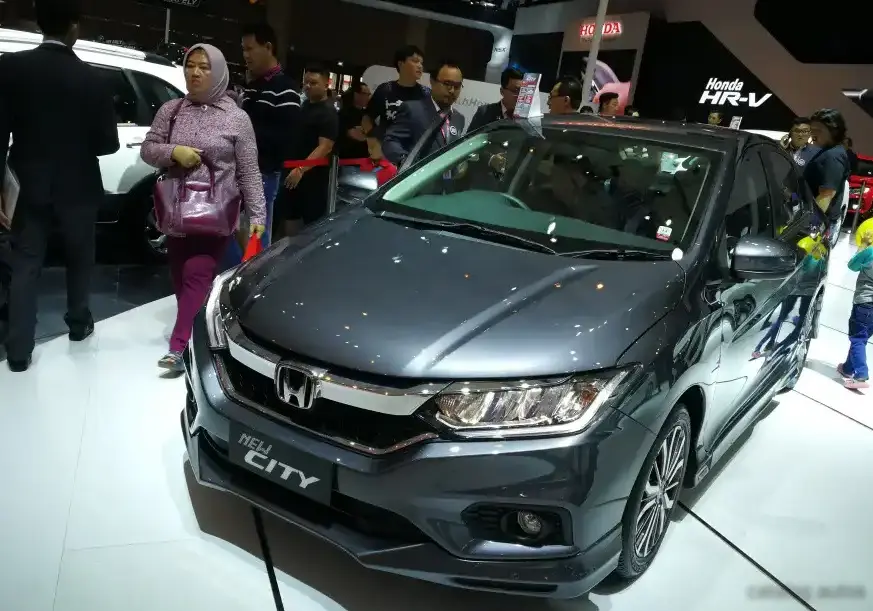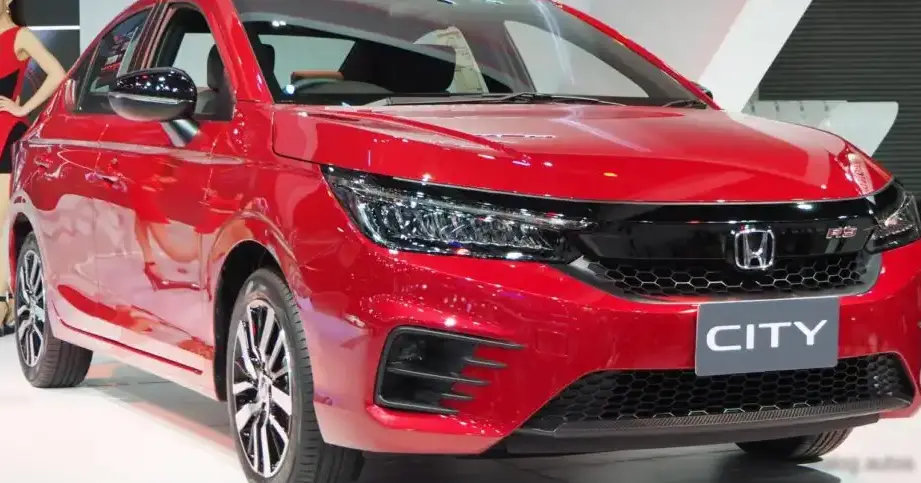
The Honda City VII 1.5 e:HEV, introduced in 2020, represents a significant advancement in the City lineage, particularly in markets outside of North America where the City has long been a popular subcompact sedan. This variant, equipped with Honda’s e:HEV full hybrid system and an e-CVT transmission, was designed to appeal to buyers seeking fuel efficiency and a refined driving experience. It occupies a mid-range position within the City VII lineup, offering a balance between affordability and advanced technology. The City VII platform (internally designated as the GN series) aimed to provide a more spacious and sophisticated package than its predecessors, catering to the evolving needs of modern urban drivers.
Technical Specifications
| Brand | Honda |
| Model | City |
| Generation | City VII |
| Type (Engine) | 1.5 (126 Hp) e:HEV e-CVT |
| Start of production | 2020 |
| Powertrain Architecture | FHEV (Full Hybrid Electric Vehicle) |
| Body type | Sedan |
| Seats | 5 |
| Doors | 4 |
| Fuel consumption (combined) | 3.8 l/100 km (61.9 US mpg, 74.3 UK mpg, 26.3 km/l) |
| CO2 emissions | 90 g/km |
| Fuel Type | Petrol (Gasoline) |
| Weight-to-power ratio | 10.2 kg/Hp, 98.4 Hp/tonne |
| Weight-to-torque ratio | 10.1 kg/Nm, 99.2 Nm/tonne |
| Battery voltage | 172.8 V |
| Battery technology | Lithium-ion (Li-Ion) |
| Battery location | Under the rear seats |
| Electric motor power | 109 Hp @ 3500 rpm |
| Electric motor Torque | 253 Nm @ 0-3000 rpm (186.6 lb.-ft. @ 0-3000 rpm) |
| Electric motor location | Integrated into the transmission |
| Electric motor type | Synchronous |
| System power | 126 Hp |
| Internal combustion engine power | 98 Hp @ 5600-6400 rpm |
| Power per litre | 65.4 Hp/l |
| Engine torque | 127 Nm @ 4500-5000 rpm (93.67 lb.-ft. @ 4500-5000 rpm) |
| Engine layout | Front, Transverse |
| Engine Model/Code | LEB8 |
| Engine displacement | 1498 cm3 (91.41 cu. in.) |
| Number of cylinders | 4 |
| Engine configuration | Inline |
| Number of valves per cylinder | 4 |
| Valvetrain | DOHC with VTC, i-VTEC |
| Engine systems | Start & Stop System |
| Kerb Weight | 1280 kg (2821.92 lbs.) |
| Max. weight | 1655 kg (3648.65 lbs.) |
| Max load | 375 kg (826.73 lbs.) |
| Fuel tank capacity | 40 l (10.57 US gal | 8.8 UK gal) |
| Length | 4549 mm (179.09 in.) |
| Width | 1748 mm (68.82 in.) |
| Height | 1489 mm (58.62 in.) |
| Wheelbase | 2600 mm (102.36 in.) |
| Front track | 1496 mm (58.9 in.) |
| Rear track | 1485 mm (58.46 in.) |
| Minimum turning circle | 10.6 m (34.78 ft.) |
| Drivetrain Architecture | Front wheel drive. FHEV. ICE and electric motor drive front wheels in full electric or mixed mode. Parallel and serial hybrid modes. |
| Number of gears and type of gearbox | automatic transmission e-CVT |
| Front suspension | Independent, McPherson with coil spring and anti-roll bar |
| Rear suspension | Torsion |
| Front brakes | Ventilated discs |
| Rear brakes | Disc |
| Assisting systems | ABS (Anti-lock braking system) |
| Steering type | Steering rack and pinion |
| Power steering | Electric Steering |
| Tires size | 185/55 R16 87H |
| Wheel rims size | 6J x 16 |
Powertrain & Engine Architecture
The heart of the City VII 1.5 e:HEV is Honda’s Intelligent Multi-Mode Drive (i-MMD) hybrid system. This system utilizes a 1.5-liter, four-cylinder LEB8 engine paired with an electric motor and a continuously variable transmission (e-CVT). The LEB8 engine, while producing 98 horsepower, is not directly connected to the wheels in most driving scenarios. Instead, it primarily functions as a generator, powering the electric motor that drives the front wheels. The e-CVT, unlike traditional CVTs, doesn’t rely on a belt and pulley system; it’s essentially a single-speed gearbox optimized for efficiency. The 172.8V lithium-ion battery, located under the rear seats, provides energy to the electric motor, allowing for short periods of all-electric driving. The i-MMD system seamlessly switches between EV mode, hybrid mode, and engine mode, optimizing for fuel efficiency and performance based on driving conditions. The engine features Honda’s i-VTEC variable valve timing and lift electronic control system, enhancing both power and fuel economy.
Driving Characteristics
The 1.5 e:HEV offers a distinctly different driving experience compared to the non-hybrid City variants. The immediate torque delivery from the electric motor provides brisk acceleration from a standstill, making it feel more responsive in urban traffic. While the combined system output is 126 horsepower, the focus is not on outright speed but on smooth, linear acceleration. The e-CVT contributes to a seamless driving experience, eliminating the stepped gear changes of a traditional automatic transmission. Compared to a manual transmission City, the e-CVT prioritizes comfort and ease of use over driver engagement. The hybrid system’s regenerative braking also adds to the smoothness, capturing energy during deceleration and feeding it back into the battery. The weight of the hybrid components does slightly impact handling, making it less agile than lighter City models, but the difference is generally subtle.
Equipment & Trim Levels
The 1.5 e:HEV trim typically included a generous array of standard features. These commonly included automatic climate control, a touchscreen infotainment system with smartphone integration (Apple CarPlay and Android Auto), keyless entry, and a suite of safety features such as ABS, stability control, and multiple airbags. Interior upholstery was typically cloth, with higher trims offering leather options. Optional extras often included a sunroof, upgraded audio system, and advanced driver-assistance systems (ADAS) like adaptive cruise control and lane departure warning. The dashboard layout was modern and functional, with a focus on ease of use. The specific feature set varied depending on the regional market.
Chassis & Braking
The City VII 1.5 e:HEV utilizes a McPherson strut front suspension and a torsion beam rear suspension. This setup provides a comfortable ride quality, well-suited for everyday driving. The torsion beam rear suspension is a cost-effective solution that balances ride comfort and handling. Braking duties are handled by ventilated discs at the front and solid discs at the rear. The ABS system provides enhanced braking performance and stability, particularly in emergency situations. The electric power steering offers light and precise steering feel, making it easy to maneuver in tight spaces. Stabilizer bars are included both front and rear to reduce body roll during cornering.
Market Reception & Comparison
The Honda City VII 1.5 e:HEV was generally well-received by automotive critics, who praised its fuel efficiency, smooth ride, and refined driving experience. Its fuel economy of 3.8 l/100 km (61.9 US mpg) was a significant selling point, particularly in markets with high fuel prices. Compared to the standard 1.5-liter City variants, the e:HEV offered superior fuel economy and a more relaxed driving experience, albeit at a slightly higher price point. The e:HEV was often positioned as a more premium offering, appealing to buyers who prioritized efficiency and comfort over outright performance. Reliability reports have been generally positive, with the hybrid system proving to be durable and dependable.
Legacy
The Honda City VII 1.5 e:HEV represents a pivotal moment in the City’s evolution, showcasing Honda’s commitment to hybrid technology and fuel efficiency. The i-MMD system has become a cornerstone of Honda’s hybrid strategy, and the City VII e:HEV helped to popularize hybrid technology in the subcompact sedan segment. In the used car market, these models hold their value well due to their fuel efficiency and reputation for reliability. The powertrain, while complex, has proven to be robust, and well-maintained examples continue to provide years of dependable service. The City VII 1.5 e:HEV remains a compelling option for buyers seeking an affordable, fuel-efficient, and reliable compact sedan.