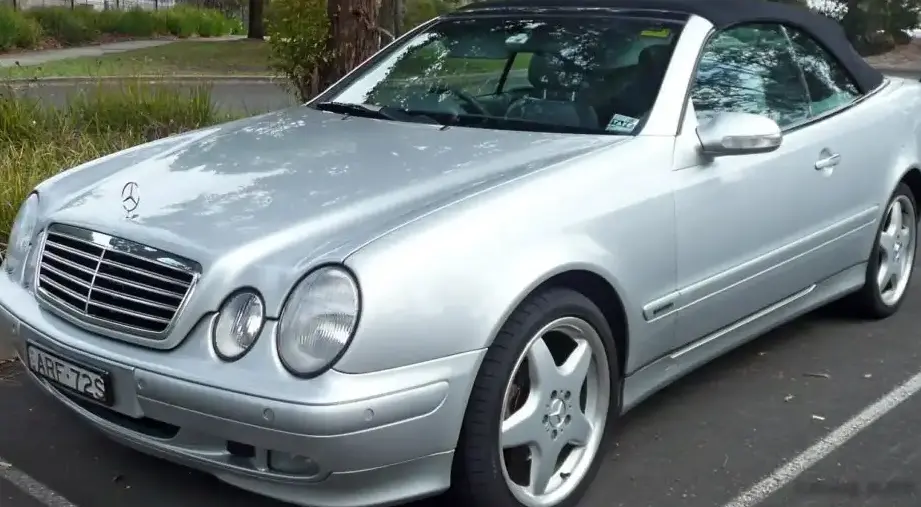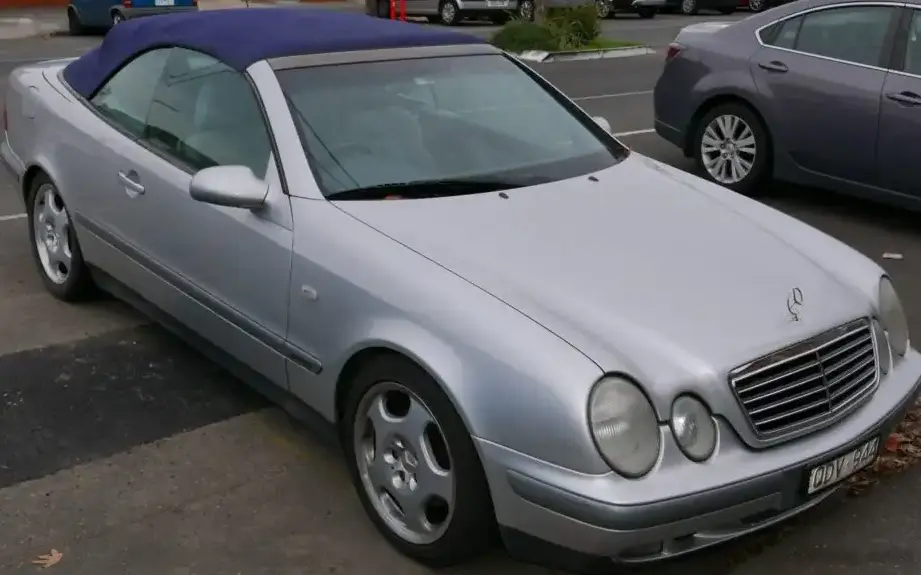
The Mercedes-Benz CLK 200 (A208), produced from May 1998 to August 1999, represented the entry point into the CLK range during the first generation (A208) of this popular coupe and convertible. Positioned as a more accessible alternative to the higher-performance CLK 320 and subsequent AMG models, the CLK 200 offered a blend of Mercedes-Benz luxury and comfort with a focus on fuel efficiency and ease of driving. It was primarily sold in Europe and other markets outside of North America, where the CLK range was offered with different engine options. The CLK (A208) itself was based on the W202 C-Class platform, sharing many components but offering a more sophisticated and stylish package.
Technical Specifications
| Brand | Mercedes-Benz |
| Model | CLK |
| Generation | CLK (A208) |
| Type (Engine) | CLK 200 (136 Hp) 5G-TRONIC |
| Start of production | May, 1998 |
| End of production | August, 1999 |
| Powertrain Architecture | Internal Combustion engine |
| Body type | Cabriolet |
| Seats | 4 |
| Doors | 2 |
| Fuel consumption (urban) | 13.6 l/100 km (17.3 US mpg, 20.8 UK mpg) |
| Fuel consumption (extra urban) | 7.3 l/100 km (32.2 US mpg, 38.7 UK mpg) |
| Fuel consumption (combined) | 9.6 l/100 km (24.5 US mpg, 29.4 UK mpg) |
| CO2 emissions | 229 g/km |
| Fuel Type | Petrol (Gasoline) |
| Acceleration 0 – 100 km/h | 12.5 sec |
| Acceleration 0 – 62 mph | 12.5 sec |
| Acceleration 0 – 60 mph | 11.9 sec |
| Maximum speed | 201 km/h (124.9 mph) |
| Emission standard | Euro 3 |
| Weight-to-power ratio | 11 kg/Hp |
| Weight-to-torque ratio | 7.9 kg/Nm |
| Power | 136 Hp @ 5500 rpm |
| Torque | 190 Nm @ 3700-4500 rpm (140.14 lb.-ft.) |
| Engine layout | Front, Longitudinal |
| Engine Model/Code | M 111.945 |
| Engine displacement | 1998 cm3 (121.93 cu. in.) |
| Number of cylinders | 4 |
| Engine configuration | Inline |
| Cylinder Bore | 89.9 mm (3.54 in.) |
| Piston Stroke | 78.7 mm (3.1 in.) |
| Compression ratio | 10.4:1 |
| Number of valves per cylinder | 4 |
| Fuel injection system | Multi-port manifold injection |
| Engine aspiration | Naturally aspirated |
| Valvetrain | DOHC |
| Engine oil capacity | 5.5 l (5.81 US qt | 4.84 UK qt) |
| Coolant capacity | 8 l (8.45 US qt | 7.04 UK qt) |
| Kerb Weight | 1500 kg (3306.93 lbs.) |
| Max. weight | 1980 kg (4365.15 lbs.) |
| Max load | 480 kg (1058.22 lbs.) |
| Trunk (boot) space – minimum | 237 l (8.37 cu. ft.) |
| Trunk (boot) space – maximum | 350 l (12.36 cu. ft.) |
| Fuel tank capacity | 62 l (16.38 US gal | 13.64 UK gal) |
| Permitted trailer load (braked) | 1500 kg (3306.93 lbs.) |
| Permitted trailer load (unbraked) | 685 kg (1510.17 lbs.) |
| Length | 4567 mm (179.8 in.) |
| Width | 1722 mm (67.8 in.) |
| Width (with mirrors) | 1960 mm (77.17 in.) |
| Height | 1380 mm (54.33 in.) |
| Wheelbase | 2690 mm (105.91 in.) |
| Front track | 1505 mm (59.25 in.) |
| Rear track | 1474 mm (58.03 in.) |
| Front overhang | 860 mm (33.86 in.) |
| Rear overhang | 1017 mm (40.04 in.) |
| Turning circle | 10.7 m (35.1 ft.) |
| Drivetrain | Rear wheel drive |
| Gearbox | 5 gears, automatic transmission 5G-TRONIC |
| Front suspension | Coil spring, Double wishbone, Transverse stabilizer |
| Rear suspension | Independent multi-link suspension, Transverse stabilizer, Coil spring |
| Front brakes | Ventilated discs |
| Rear brakes | Disc |
| Assisting systems | ABS (Anti-lock braking system) |
| Steering type | Cone worm with recirculation balls |
| Power steering | Hydraulic |
| Tires size | 205/55 R 16 |
| Wheel rims size | 7 J x 16 |
Powertrain & Engine Architecture
The CLK 200 was powered by the Mercedes-Benz M111.945 engine, a 1.998-liter (2.0L) inline-four cylinder gasoline engine. This engine featured multi-port fuel injection and a double overhead camshaft (DOHC) valvetrain. The M111 engine family was known for its relatively simple design and robust construction. The 136 horsepower output was achieved at 5500 rpm, with a peak torque of 190 Nm (140 lb-ft) available between 3700 and 4500 rpm. The engine was longitudinally mounted, driving the rear wheels. Paired with the engine was the 5G-TRONIC automatic transmission, a five-speed unit that provided smooth and relatively quick shifts. This transmission was a key component in making the CLK 200 a comfortable and easy-to-drive grand tourer.
Driving Characteristics
The CLK 200 with the 5G-TRONIC transmission offered a relaxed and refined driving experience. Acceleration from 0 to 100 km/h (0-62 mph) took around 12.5 seconds, which was noticeably slower than the CLK 320 or models equipped with a manual transmission. The automatic transmission, while smooth, did contribute to some power loss. The gear ratios were tuned for comfort and fuel economy rather than outright performance. In real-world driving, the CLK 200 felt adequate for everyday use, providing sufficient power for highway cruising and city driving. However, it lacked the punch and responsiveness of its more powerful siblings. The rear-wheel-drive configuration provided a balanced feel, although it wasn’t particularly sporty.
Equipment & Trim Levels
The CLK 200 typically came with a respectable level of standard equipment, reflecting Mercedes-Benz’s commitment to luxury. Standard features included power windows, central locking, air conditioning, and an audio system. Interior upholstery was typically cloth, although leather was available as an option. The dashboard layout was typical of Mercedes-Benz at the time, with a focus on functionality and elegance. Optional extras included automatic climate control, a sunroof, heated seats, and upgraded audio systems. The CLK 200 served as a base model, and many owners opted to add these extras to personalize their vehicles.
Chassis & Braking
The CLK 200 utilized a coil spring and double wishbone suspension setup at the front, with an independent multi-link suspension at the rear. Both ends featured a transverse stabilizer bar to reduce body roll. The braking system consisted of ventilated discs at the front and solid discs at the rear. Anti-lock braking system (ABS) was standard. The suspension was tuned for comfort, providing a smooth ride over most road surfaces. The braking performance was adequate for the vehicle’s weight and power, but not particularly sporty.
Market Reception & Comparison
The CLK 200 was generally well-received by automotive critics as an affordable entry point into the CLK range. It was praised for its comfortable ride, refined interior, and fuel efficiency. However, its relatively modest performance was often criticized, particularly when compared to the CLK 320. Fuel economy was a strong point, with combined figures around 9.6 l/100 km (24.5 US mpg). Compared to the CLK 320, the 200 offered a significantly lower purchase price but sacrificed performance and some luxury features. The CLK 200 appealed to buyers who prioritized comfort and fuel economy over outright speed and handling.
Legacy
The M111 engine, found in the CLK 200, is generally considered a reliable unit, with proper maintenance. The 5G-TRONIC transmission is also known for its durability. Today, the CLK 200 can be found on the used car market at relatively affordable prices. While it may not offer the performance of higher-spec CLK models, it remains a stylish and comfortable coupe or convertible, offering a taste of Mercedes-Benz luxury at a reasonable cost. Common issues with these vehicles, as they age, include wear and tear on suspension components, electrical glitches, and potential oil leaks. However, parts availability is generally good, and the relatively simple engine design makes it relatively easy to maintain.