
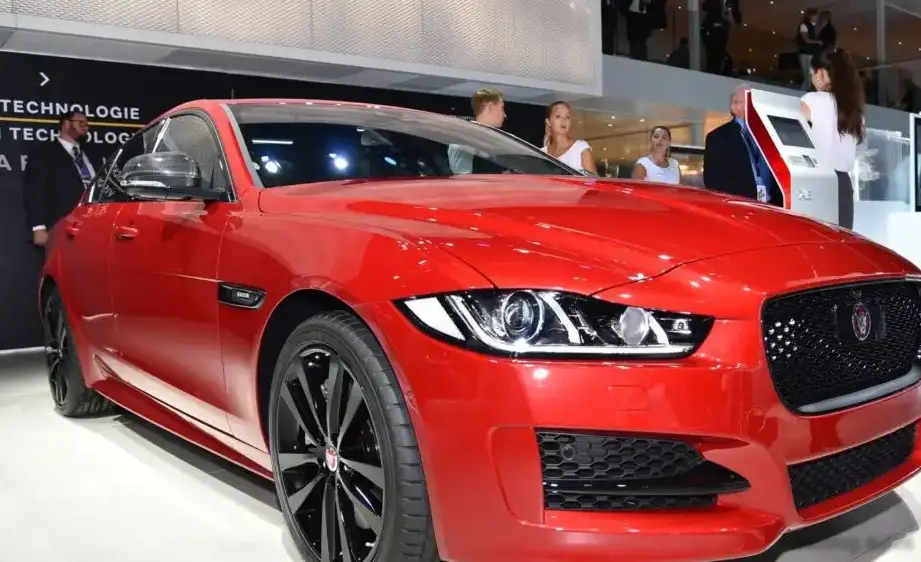
The Jaguar XE 2.0d (163 hp) was a key variant within the first generation (X760) of Jaguar’s compact executive sedan, produced from 2015 to 2018. Positioned as a more fuel-efficient and accessible entry point into the XE lineup, it aimed to compete with established rivals like the BMW 3 Series, Audi A4, and Mercedes-Benz C-Class. This model represented Jaguar’s attempt to broaden its appeal and attract a wider customer base with a blend of British luxury, sporty handling, and improved economy. The 2.0d utilized Jaguar Land Rover’s Ingenium engine family, marking a significant step towards in-house engine development and modularity.
Technical Specifications
| Brand | Jaguar |
| Model | XE |
| Generation | XE (X760) |
| Type (Engine) | 2.0d (163 Hp) |
| Start of production | 2015 |
| End of production | 2018 |
| Powertrain Architecture | Internal Combustion engine |
| Body type | Sedan |
| Seats | 5 |
| Doors | 4 |
| Fuel consumption (urban) | 4.4 l/100 km (53.5 US mpg, 64.2 UK mpg, 22.7 km/l) |
| Fuel consumption (extra urban) | 3.4 l/100 km (69.2 US mpg, 83.1 UK mpg, 29.4 km/l) |
| Fuel consumption (combined) | 3.8 l/100 km (61.9 US mpg, 74.3 UK mpg, 26.3 km/l) |
| CO2 emissions | 99 g/km |
| Fuel Type | Diesel |
| Acceleration 0 – 100 km/h | 8.4 sec |
| Acceleration 0 – 62 mph | 8.4 sec |
| Acceleration 0 – 60 mph | 8 sec (Calculated) |
| Maximum speed | 227 km/h (141.05 mph) |
| Weight-to-power ratio | 9.2 kg/Hp, 108.7 Hp/tonne |
| Weight-to-torque ratio | 3.9 kg/Nm, 253.3 Nm/tonne |
| Power | 163 Hp @ 4000 rpm |
| Power per litre | 81.5 Hp/l |
| Torque | 380 Nm @ 1750-2500 rpm (280.27 lb.-ft. @ 1750-2500 rpm) |
| Engine layout | Front, Longitudinal |
| Engine Model/Code | Ingenium / 204DTD |
| Engine displacement | 1999 cm3 (121.99 cu. in.) |
| Number of cylinders | 4 |
| Engine configuration | Inline |
| Fuel injection system | Diesel Commonrail |
| Engine oil capacity | 6.5 l (6.87 US qt | 5.72 UK qt) |
| Coolant capacity | 6.5 l (6.87 US qt | 5.72 UK qt) |
| Kerb Weight | 1500 kg (3306.93 lbs.) |
| Max. weight | 2100 kg (4629.71 lbs.) |
| Max load | 600 kg (1322.77 lbs.) |
| Trunk (boot) space – minimum | 455 l (16.07 cu. ft.) |
| Fuel tank capacity | 47 l (12.42 US gal | 10.34 UK gal) |
| Length | 4672 mm (183.94 in.) |
| Width | 1850 mm (72.83 in.) |
| Width including mirrors | 2075 mm (81.69 in.) |
| Height | 1416 mm (55.75 in.) |
| Wheelbase | 2835 mm (111.61 in.) |
| Minimum turning circle | 11.66 m (38.25 ft.) |
| Drivetrain Architecture | Rear wheel drive |
| Number of gears | 6 gears, manual transmission |
| Front brakes | Ventilated discs |
| Rear brakes | Disc |
Powertrain & Engine Architecture
The heart of the XE 2.0d was Jaguar Land Rover’s Ingenium engine family. Specifically, this variant employed the 204DTD engine, a 2.0-liter inline-four cylinder diesel. This engine was a significant departure for Jaguar, representing a move towards modular, lightweight engine designs. The Ingenium engines were designed to be highly configurable, allowing for different power outputs and applications across the Jaguar and Land Rover ranges. The 204DTD featured a cast aluminum block, direct injection, and a variable geometry turbocharger. The common rail direct injection system operated at very high pressures (up to 2,200 bar) to optimize fuel atomization and combustion efficiency. The engine also incorporated low-friction technologies to minimize internal losses. The 6-speed manual transmission was standard, providing a balance between fuel economy and driver engagement.
Driving Characteristics
The 163 hp output and manual transmission combination resulted in a driving experience focused on efficiency and usability rather than outright performance. Acceleration from 0-60 mph took around 8 seconds, which was adequate for everyday driving but noticeably slower than the more powerful XE variants like the 2.0t gasoline or the 3.0-liter supercharged models. The engine delivered a respectable amount of torque – 380 Nm (280 lb-ft) – available from a relatively low 1750 rpm, providing good responsiveness for overtaking and merging. The manual gearbox offered a precise shift action, enhancing driver involvement. However, the relatively long gearing, aimed at maximizing fuel economy, meant that the engine could feel strained when pushed hard. Compared to the automatic versions, the manual offered more control and a slightly more engaging driving experience, but at the cost of convenience.
Equipment & Trim Levels
The XE 2.0d typically served as the entry-level trim in the XE range. Standard equipment included air conditioning, a leather-wrapped steering wheel, alloy wheels, and a basic infotainment system with a touchscreen display. Safety features such as ABS, electronic stability control, and multiple airbags were also standard. Higher trim levels, such as SE and HSE, added features like leather upholstery, heated seats, a more advanced infotainment system with navigation, and parking sensors. Optional extras included a panoramic sunroof, premium sound system, and adaptive cruise control. The interior design was generally well-appointed, reflecting Jaguar’s commitment to luxury, although the materials used in the base trim levels were less opulent than those found in the higher-spec models.
Chassis & Braking
The XE’s chassis was a key selling point, utilizing a lightweight aluminum construction to enhance handling and reduce weight. The 2.0d variant featured a MacPherson strut front suspension and a multi-link rear suspension. The suspension setup was tuned to provide a balance between comfort and agility. The front brakes were ventilated discs, while the rear brakes were solid discs. ABS (Anti-lock Braking System) and Electronic Stability Control were standard safety features. The steering was a power-assisted rack and pinion system, offering precise and responsive steering feel. The relatively lower weight of the 2.0d compared to the more powerful variants contributed to its nimble handling characteristics.
Market Reception & Comparison
The XE 2.0d was generally well-received by automotive critics as a practical and efficient entry point into the Jaguar XE range. It was praised for its fuel economy, comfortable ride, and refined interior. However, some critics noted that the 163 hp engine felt underpowered compared to its rivals, particularly when fully loaded or driving on inclines. Compared to the higher-output XE variants, the 2.0d offered significantly better fuel economy – achieving around 62 mpg on the combined cycle – but at the expense of performance. The manual transmission was appreciated by driving enthusiasts, but some buyers preferred the convenience of an automatic gearbox. In terms of reliability, the Ingenium engine proved to be generally robust, although some early models experienced minor software glitches.
Legacy
The Jaguar XE 2.0d (163 hp) played a crucial role in establishing the XE as a credible competitor in the compact executive sedan segment. While not the most powerful or dynamically engaging variant, it offered a compelling combination of fuel efficiency, comfort, and luxury. On the used car market, these models represent a relatively affordable entry point into Jaguar ownership. The Ingenium engine has proven to be a reliable and durable powertrain, and well-maintained examples of the XE 2.0d continue to offer a comfortable and refined driving experience. However, potential buyers should be aware of the possibility of minor software issues and ensure that the vehicle has been regularly serviced according to Jaguar’s recommended maintenance schedule.
