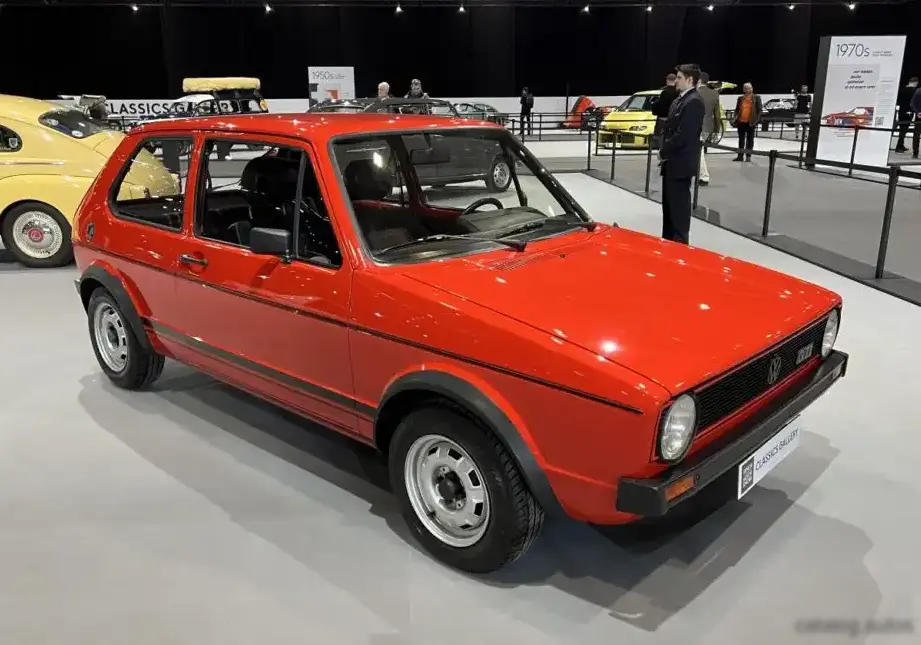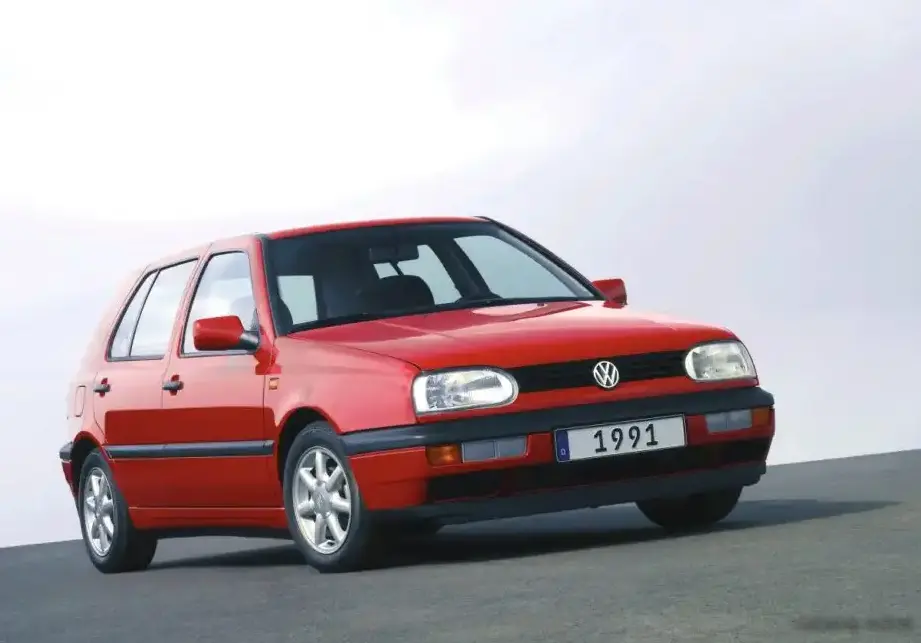
The Volkswagen Golf III 2.9 VR6 Syncro, produced between 1994 and 1997, represents a high-performance variant within the Golf III (Typ 1H) range. Positioned as the flagship model, it combined Volkswagen’s innovative VR6 engine technology with all-wheel drive, offering a unique blend of power and all-weather capability. This model was primarily aimed at the European market, where demand for compact, yet capable, performance cars was strong. The Golf III itself was a significant evolution of the Golf lineage, building upon the success of the MkI and MkII, and establishing the Golf as a dominant force in the compact hatchback segment.
Technical Specifications
| Brand | Volkswagen |
| Model | Golf |
| Generation | Golf III |
| Type (Engine) | 2.9 VR6 Syncro (190 Hp) |
| Start of production | 1994 |
| End of production | 1997 |
| Powertrain Architecture | Internal Combustion engine |
| Body type | Hatchback |
| Seats | 5 |
| Doors | 3-5 |
| Fuel consumption (urban) | 11.8 l/100 km (19.9 US mpg, 23.9 UK mpg, 8.5 km/l) |
| Fuel consumption (extra urban) | 9.6 l/100 km (24.5 US mpg, 29.4 UK mpg, 10.4 km/l) |
| Fuel consumption (combined) | 10.5 l/100 km (22.4 US mpg, 26.9 UK mpg, 9.5 km/l) |
| Fuel Type | Petrol (Gasoline) |
| Acceleration 0 – 100 km/h | 7.5 sec |
| Acceleration 0 – 62 mph | 7.5 sec |
| Acceleration 0 – 60 mph | 7.1 sec |
| Maximum speed | 224 km/h (139.19 mph) |
| Weight-to-power ratio | 7.4 kg/Hp, 134.8 Hp/tonne |
| Weight-to-torque ratio | 5.8 kg/Nm, 173.8 Nm/tonne |
| Power | 190 Hp @ 5800 rpm |
| Power per litre | 66.4 Hp/l |
| Torque | 245 Nm @ 4200 rpm (180.7 lb.-ft. @ 4200 rpm) |
| Engine layout | Front, Transverse |
| Engine Model/Code | ABV |
| Engine displacement | 2861 cm3 (174.59 cu. in.) |
| Number of cylinders | 6 |
| Engine configuration | VR-engine |
| Cylinder Bore | 82 mm (3.23 in.) |
| Piston Stroke | 90.3 mm (3.56 in.) |
| Compression ratio | 10:1 |
| Number of valves per cylinder | 2 |
| Fuel injection system | Multi-port manifold injection |
| Engine aspiration | Naturally aspirated engine |
| Valvetrain | DOHC |
| Engine oil capacity | 5.5 l (5.81 US qt | 4.84 UK qt) |
| Coolant | 10 l (10.57 US qt | 8.8 UK qt) |
| Kerb Weight | 1410 kg (3108.52 lbs.) |
| Max. weight | 1800 kg (3968.32 lbs.) |
| Max load | 390 kg (859.8 lbs.) |
| Trunk (boot) space – minimum | 230 l (8.12 cu. ft.) |
| Trunk (boot) space – maximum | 587 l (20.73 cu. ft.) |
| Fuel tank capacity | 65 l (17.17 US gal | 14.3 UK gal) |
| Length | 4020 mm (158.27 in.) |
| Width | 1695 mm (66.73 in.) |
| Height | 1405 mm (55.31 in.) |
| Wheelbase | 2475 mm (97.44 in.) |
| Front track | 1450 mm (57.09 in.) |
| Rear (Back) track | 1432 mm (56.38 in.) |
| Drive wheel | All wheel drive (4×4) |
| Number of gears and type of gearbox | 5 gears, manual transmission |
| Front suspension | Wishbone |
| Rear suspension | Suspension with traction connecting levers |
| Front brakes | Ventilated discs |
| Rear brakes | Disc |
| Assisting systems | ABS (Anti-lock braking system) |
| Steering type | Steering rack and pinion |
| Power steering | Hydraulic Steering |
| Tires size | 205/50 R15 |
| Wheel rims size | 15 |
INTRODUCTION
The Golf III 2.9 VR6 Syncro was a performance-oriented derivative of the popular Golf III, launched in 1994 and continuing through 1997. It was built on the Volkswagen Group’s 1HX0/A3 platform, shared with models like the SEAT Ibiza, Córdoba, and Škoda Octavia. The Syncro designation indicates the presence of Volkswagen’s all-wheel-drive system, enhancing traction and handling. This variant occupied the top tier of the Golf III lineup, offering a significant step up in performance and refinement compared to the base models with smaller engines. It was a direct response to the growing demand for sporty, yet practical, hatchbacks, particularly in Europe.
Powertrain & Engine Architecture
The heart of the Golf III VR6 Syncro is the ABV engine code 2.9-liter VR6 engine. This engine is notable for its narrow-angle V6 configuration (15 degrees between cylinder banks), which allowed it to be packaged within the engine bay of a compact car. The engine utilizes multi-port fuel injection and a dual overhead camshaft (DOHC) valvetrain, contributing to its responsive power delivery. The ABV engine produced 190 horsepower at 5800 rpm and 245 Nm (180.7 lb-ft) of torque at 4200 rpm. The engine’s characteristics are a relatively flat torque curve, providing good acceleration across a wide range of engine speeds. The engine is paired with a five-speed manual transmission, optimized for the engine’s power band and the all-wheel-drive system. The Syncro system itself is a viscous coupling-based system, automatically distributing torque between the front and rear axles as needed, providing enhanced grip in slippery conditions.
Driving Characteristics
The Golf III VR6 Syncro offered a distinctly engaging driving experience. The 2.9-liter VR6 engine provided brisk acceleration, with a 0-60 mph time of around 7.1 seconds. The all-wheel-drive system significantly improved traction, particularly on wet or loose surfaces, making it a more confident handler than its front-wheel-drive counterparts. Compared to the 1.8-liter and 2.0-liter Golf III models, the VR6 Syncro offered a substantial performance advantage. While the 1.8 and 2.0 liter engines focused on fuel economy and affordability, the VR6 prioritized power and driving enjoyment. The five-speed manual transmission allowed for precise control, and the gear ratios were well-matched to the engine’s torque curve. The Syncro system added a slight weight penalty, but the improved handling and stability more than compensated for it. The steering was precise and well-weighted, providing good feedback to the driver.
Equipment & Trim Levels
The Golf III VR6 Syncro typically came well-equipped, reflecting its position as the range-topping model. Standard features included power windows, central locking, power steering, and ABS anti-lock brakes. Interior upholstery was typically a sporty cloth or optional leather. Dashboard configuration featured a comprehensive instrument cluster with gauges for engine temperature, fuel level, and speedometer. Optional extras included a sunroof, air conditioning, and upgraded audio systems. The exterior styling was relatively understated, with subtle VR6 badging and alloy wheels distinguishing it from the lower trim levels. The interior trim was generally of a higher quality than the base models, with attention paid to detail and comfort.
Chassis & Braking
The Golf III VR6 Syncro featured a robust chassis designed to handle the increased power and all-wheel-drive system. The front suspension utilized a wishbone setup, while the rear suspension employed a torsion beam arrangement with traction connecting levers. The braking system consisted of ventilated discs on the front wheels and solid discs on the rear wheels, providing adequate stopping power. ABS was standard, enhancing braking performance and stability. The Syncro system added additional weight to the vehicle, necessitating slightly stiffer suspension settings to maintain handling balance. Stabilizer bars were fitted to both the front and rear axles to reduce body roll during cornering.
Market Reception & Comparison
The Golf III VR6 Syncro was generally well-received by automotive critics. It was praised for its strong performance, excellent handling, and all-weather capability. However, some critics noted its relatively high price compared to other compact hatchbacks. Fuel economy was also a concern, with the VR6 engine consuming significantly more fuel than the smaller-displacement engines. Compared to other performance hatchbacks of the era, such as the Ford Escort RS Cosworth or the Renault Clio Williams, the Golf VR6 Syncro offered a more refined and practical driving experience. It was a more versatile car, suitable for both daily commuting and spirited driving. The VR6 Syncro’s reliability was generally good, although the complex engine and all-wheel-drive system required more diligent maintenance than the simpler models.
Legacy
The Golf III VR6 Syncro remains a sought-after model among Volkswagen enthusiasts. The ABV engine is known for its durability and tunability, and well-maintained examples are still relatively common on the used car market. However, finding a rust-free example can be challenging, as many Golf IIIs have succumbed to corrosion over the years. The VR6 Syncro’s combination of performance, practicality, and all-wheel-drive capability has cemented its place as a classic Volkswagen, and it continues to be appreciated by those who value a unique and engaging driving experience. Parts availability is generally good, although some specific Syncro components can be difficult to source. The Golf III VR6 Syncro represents a high point in Volkswagen’s engineering prowess, and it remains a testament to the enduring appeal of the Golf lineage.