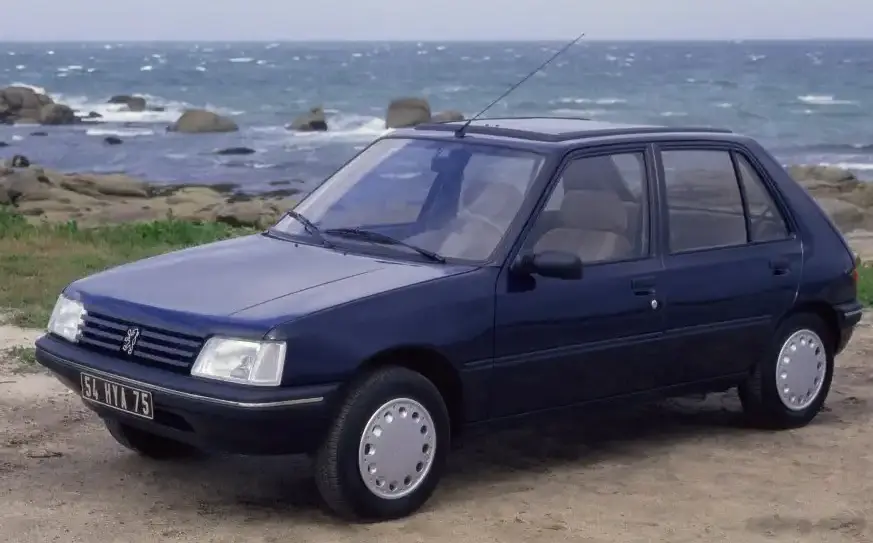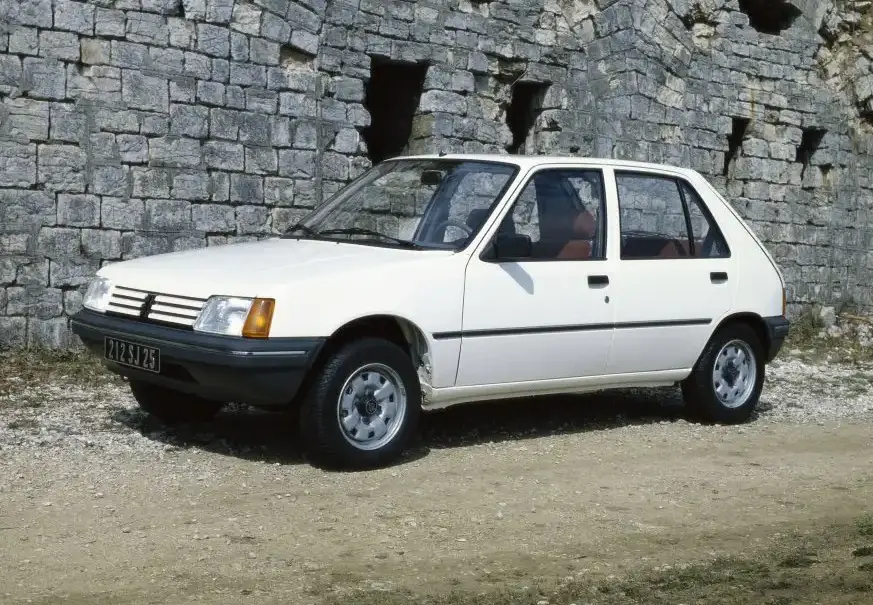
The Peugeot 205, launched in 1983, marked a pivotal shift for the French automaker, moving away from larger, more complex vehicles towards a smaller, more efficient, and affordable hatchback. The 205 I (741A/C) series, produced from 1983 to 1987, quickly established the 205 as a benchmark in the supermini segment, particularly in Europe. Within this initial generation, the 1.1-liter (50 hp) variant served as the entry point to the 205 range, offering basic, economical transportation. It proved popular with first-time car buyers and those prioritizing practicality and low running costs. This model was instrumental in revitalizing Peugeot’s image and laying the foundation for the 205’s enduring success.
Technical Specifications
| Brand | Peugeot |
| Model | 205 |
| Generation | 205 I (741A/C) |
| Type (Engine) | 1.1 (50 Hp) |
| Start of Production | 1983 |
| End of Production | 1987 |
| Powertrain Architecture | Internal Combustion Engine |
| Body Type | Hatchback |
| Doors | 3-5 |
| Fuel Type | Petrol (Gasoline) |
| Power | 50 Hp |
| Engine Model/Code | 109F XW7 |
| Engine Aspiration | Naturally Aspirated |
| Engine Oil Capacity | 4.5 l (4.76 US qt | 3.96 UK qt) |
| Coolant Capacity | 5.8 l (6.13 US qt | 5.1 UK qt) |
Powertrain & Engine Architecture
The 205 1.1’s heart was the 109F XW7 engine, a 1.098-liter (1,100 cc) inline-four cylinder petrol engine. This engine was a relatively simple design, featuring a single overhead camshaft (SOHC) operating two valves per cylinder. Fuel delivery was handled by a single, down-draft carburetor – typically a Solex – a common feature in entry-level cars of the era. This carburetor setup contributed to the engine’s simplicity and affordability, but also limited its performance and fuel efficiency compared to later, fuel-injected versions. The engine produced a modest 50 horsepower at 6000 rpm and 66 lb-ft of torque at 4000 rpm. The engine block was constructed from cast iron for durability, while the cylinder head was aluminum. The 205 1.1 was exclusively offered with a four-speed manual transmission. This transmission was selected for its simplicity and cost-effectiveness, aligning with the vehicle’s overall positioning as an affordable option. The transmission’s gear ratios were optimized for economy rather than rapid acceleration.
Driving Characteristics
The driving experience in the 205 1.1 was defined by its light weight and nimble handling. With a curb weight of around 1,780 lbs (807 kg), the 50 hp engine provided adequate, though not exhilarating, performance. Acceleration from 0 to 60 mph took approximately 16-18 seconds, and the top speed was around 90 mph (145 km/h). The four-speed manual transmission required frequent shifting to maintain momentum, particularly when climbing hills or overtaking. The gear ratios were relatively tall, prioritizing fuel economy over outright acceleration. Steering was light and precise, making the 205 enjoyable to drive in urban environments. The suspension, consisting of independent front suspension with torsion bars and a twist-beam rear axle, provided a comfortable ride, although it could become somewhat unsettled on rough roads. Compared to the more powerful 1.6-liter and GTI versions of the 205, the 1.1 felt significantly slower, but it offered a more forgiving and accessible driving experience, particularly for less experienced drivers.
Equipment & Trim Levels
The 205 1.1 was equipped with a fairly basic level of standard features, reflecting its position as the entry-level model. Standard features typically included cloth upholstery, vinyl floor covering, and a simple dashboard layout. The seats were manually adjustable, and air conditioning, power windows, and central locking were generally unavailable, or offered as extremely rare options. The instrument panel consisted of a speedometer, fuel gauge, and warning lights. A basic AM/FM radio could be added as an optional extra. Interior trim was functional rather than luxurious, with hard plastic surfaces dominating the cabin. The exterior featured steel wheels with hubcaps, black plastic bumpers, and relatively small tires. The 205 1.1 was available in a limited range of solid paint colors.
Chassis & Braking
The 205’s chassis was a monocoque construction, providing a good balance of strength and lightness. The front suspension utilized independent torsion bar springs, offering a relatively comfortable ride and good handling characteristics. The rear suspension employed a simple twist-beam axle, which was cost-effective and space-efficient. Braking was initially provided by drum brakes on all four wheels, although later models often featured front disc brakes. The braking system was adequate for the vehicle’s performance, but lacked the stopping power of the more powerful 205 variants. Steering was a rack-and-pinion system, providing precise and responsive control. The 205 1.1 did not feature a stabilizer bar, contributing to a slightly more pronounced body roll in corners compared to higher-spec models.
Market Reception & Comparison
The Peugeot 205 1.1 was well-received in the European market as an affordable and practical supermini. Critics praised its nimble handling, comfortable ride, and low running costs. However, the engine’s lack of power was often cited as a drawback. Compared to rivals such as the Renault 5, Fiat Uno, and Volkswagen Polo, the 205 1.1 offered a slightly more refined driving experience and a more stylish interior. Fuel economy was a strong point, averaging around 45-50 mpg (5.2-5.7 L/100km). Reliability was generally good, although the carburetor required periodic adjustment and maintenance. The 1.6-liter versions of the 205 offered significantly more performance, but at a higher price point. The diesel-powered 205 models provided even better fuel economy, but were slower and noisier.
Legacy
The Peugeot 205 1.1, while not the most powerful or well-equipped version of the 205, played a vital role in establishing the model’s success. Its affordability and practicality made it a popular choice for a wide range of buyers. Today, the 205 1.1 is a relatively rare sight on the roads, but it remains a popular choice among classic car enthusiasts. The 109F XW7 engine is known for its durability, but parts availability can be a challenge. Well-maintained examples are increasingly sought after as affordable and charming examples of 1980s French automotive design. The 205, in all its variants, is remembered as a landmark vehicle that helped to redefine the supermini segment and cemented Peugeot’s reputation for building stylish and practical cars.