
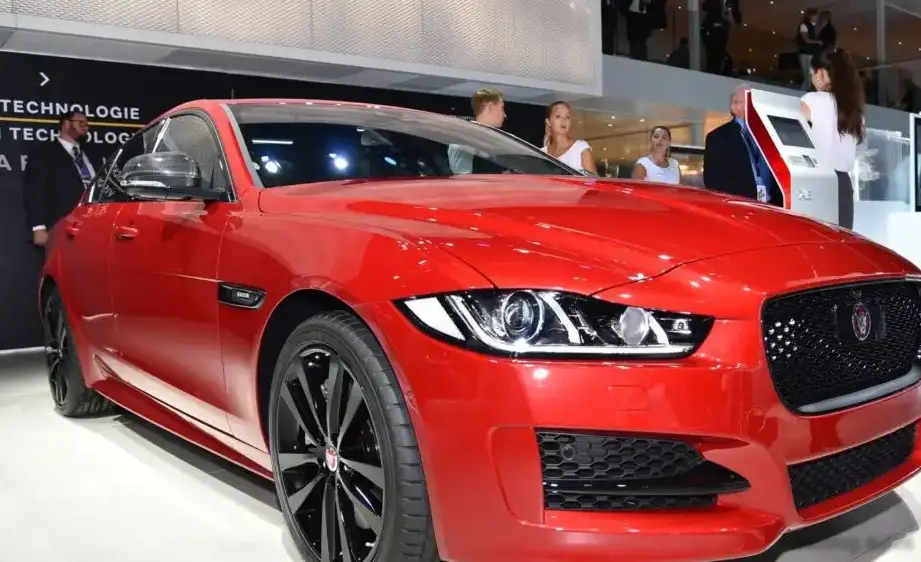
The Jaguar XE 2.0d (180 hp) Automatic, produced between 2015 and 2018, represents a key variant within the first generation (X760) of Jaguar’s entry-level luxury sedan. Introduced as a more fuel-efficient alternative to the petrol-powered models, the 2.0d aimed to broaden the XE’s appeal in the European and global markets, where diesel engines held significant market share. This particular configuration occupied a mid-range position in the XE lineup, offering a balance between performance, economy, and refinement. It served as a stepping stone for buyers who desired the XE’s sophisticated styling and handling characteristics but prioritized lower running costs compared to the higher-output petrol engines or the more powerful diesel options.
Technical Specifications
| Brand | Jaguar |
| Model | XE |
| Generation | XE (X760) |
| Type (Engine) | 2.0d (180 Hp) Automatic |
| Start of production | 2015 |
| End of production | 2018 |
| Powertrain Architecture | Internal Combustion engine |
| Body type | Sedan |
| Seats | 5 |
| Doors | 4 |
| Fuel consumption (urban) | 5.0-5.1 l/100 km (47 – 46.1 US mpg) |
| Fuel consumption (extra urban) | 3.7 l/100 km (63.6 US mpg) |
| Fuel consumption (combined) | 4.2 l/100 km (56 US mpg) |
| CO2 emissions | 109-111 g/km |
| Fuel Type | Diesel |
| Acceleration 0 – 100 km/h | 7.8 sec |
| Acceleration 0 – 62 mph | 7.8 sec |
| Acceleration 0 – 60 mph | 7.4 sec |
| Maximum speed | 225 km/h (139.81 mph) |
| Weight-to-power ratio | 8.7 kg/Hp, 115 Hp/tonne |
| Weight-to-torque ratio | 3.6 kg/Nm, 274.8 Nm/tonne |
| Power | 180 Hp @ 4000 rpm |
| Power per litre | 90 Hp/l |
| Torque | 430 Nm @ 1750-2500 rpm (317.15 lb.-ft. @ 1750-2500 rpm) |
| Engine layout | Front, Longitudinal |
| Engine Model/Code | Ingenium / 204DTD |
| Engine displacement | 1999 cm3 (121.99 cu. in.) |
| Number of cylinders | 4 |
| Engine configuration | Inline |
| Fuel injection system | Diesel Commonrail |
| Engine aspiration | Turbocharger, Intercooler |
| Engine oil capacity | 6.5 l (6.87 US qt | 5.72 UK qt) |
| Coolant capacity | 7 l (7.4 US qt | 6.16 UK qt) |
| Kerb Weight | 1565 kg (3450.23 lbs.) |
| Max. weight | 2235 kg (4927.33 lbs.) |
| Max load | 670 kg (1477.1 lbs.) |
| Trunk (boot) space – minimum | 455 l (16.07 cu. ft.) |
| Fuel tank capacity | 56 l (14.79 US gal | 12.32 UK gal) |
| Length | 4672 mm (183.94 in.) |
| Width | 1850 mm (72.83 in.) |
| Width including mirrors | 2075 mm (81.69 in.) |
| Height | 1416 mm (55.75 in.) |
| Wheelbase | 2835 mm (111.61 in.) |
| Minimum turning circle | 11.66 m (38.25 ft.) |
| Drivetrain Architecture | Rear wheel drive |
| Number of gears | 8 |
| Gearbox type | Automatic transmission |
| Front brakes | Ventilated discs |
| Rear brakes | Disc |
| Assisting systems | ABS (Anti-lock braking system) |
| Steering type | Steering rack and pinion |
Powertrain & Engine Architecture
The heart of the XE 2.0d is Jaguar Land Rover’s Ingenium engine family, specifically the 204DTD code. This 2.0-liter inline-four diesel engine utilizes a sophisticated common-rail direct injection system, delivering fuel at extremely high pressures for optimized combustion. The engine features a single turbocharger with an intercooler, boosting power and torque while managing turbo lag. The Ingenium engines were designed with modularity in mind, allowing for easy upgrades and variations. The 204DTD produces 180 horsepower at 4,000 rpm and a substantial 430 Nm (317 lb-ft) of torque between 1,750 and 2,500 rpm. This broad torque curve is a hallmark of modern diesel engines, providing strong pulling power across a wide range of engine speeds. The engine is longitudinally mounted, driving the rear wheels. The eight-speed automatic transmission, sourced from ZF, is a crucial component of this powertrain. Known for its smooth and quick shifts, the ZF 8HP transmission contributes significantly to the XE’s refined driving experience. The transmission’s gear ratios are tuned to maximize fuel efficiency and provide responsive acceleration.
Driving Characteristics
The XE 2.0d Automatic delivers a comfortable and composed driving experience. While not as overtly sporty as the higher-powered petrol variants, the 2.0d offers ample performance for everyday driving and highway cruising. The 430 Nm of torque provides brisk acceleration, particularly in the mid-range. The eight-speed automatic transmission shifts smoothly and efficiently, contributing to a relaxed driving experience. Compared to the six-speed manual transmission available on some XE models, the automatic prioritizes convenience and ease of use. However, the manual transmission offered a more engaging driving experience for enthusiasts. The 2.0d’s weight distribution, combined with the XE’s well-tuned chassis, results in predictable and balanced handling. The steering is precise and well-weighted, providing good feedback to the driver. The suspension strikes a good balance between comfort and control, absorbing bumps and imperfections in the road while maintaining body control during cornering.
Equipment & Trim Levels
The XE 2.0d Automatic was typically offered in SE, Prestige, and R-Sport trim levels. The base SE trim included standard features such as leather upholstery, automatic climate control, a touchscreen infotainment system, and alloy wheels. The Prestige trim added features like heated front seats, a premium sound system, and parking sensors. The R-Sport trim, positioned as the sportier option, featured unique exterior styling cues, sport seats, and a sport-tuned suspension. Optional extras included a panoramic sunroof, adaptive cruise control, and a head-up display. Interior upholstery options typically included leather in various colors, and dashboard trim could be specified in wood, aluminum, or carbon fiber.
Chassis & Braking
The XE’s chassis is constructed from lightweight aluminum, contributing to its overall agility and efficiency. The front suspension utilizes double wishbones, while the rear suspension employs a multi-link setup. This configuration provides a good balance between ride comfort and handling precision. The XE 2.0d typically featured ventilated front disc brakes and solid disc brakes at the rear. Anti-lock Braking System (ABS) was standard, along with Electronic Stability Control (ESC). The suspension components and stabilizer bar thicknesses were tuned to suit the vehicle’s weight and power output.
Market Reception & Comparison
The Jaguar XE 2.0d Automatic was generally well-received by automotive critics. It was praised for its fuel efficiency, comfortable ride, and refined interior. However, some critics noted that the 2.0d lacked the outright performance of the higher-powered petrol variants. Compared to the XE 2.0i (petrol), the 2.0d offered significantly better fuel economy but slightly slower acceleration. Against the XE 3.0d (more powerful diesel), the 2.0d provided a more affordable entry point into the XE range, albeit with less power and torque. Reliability reports suggest that the Ingenium engine has proven to be generally reliable, although some owners have reported issues with the diesel particulate filter (DPF) system.
Legacy
The Jaguar XE 2.0d Automatic played a significant role in establishing the XE as a credible competitor in the entry-level luxury sedan segment. The Ingenium engine family, introduced with the XE, has become a mainstay of Jaguar Land Rover’s powertrain lineup. In the used car market, the XE 2.0d Automatic represents a good value proposition, offering a blend of luxury, performance, and fuel efficiency. While early models may require attention to the DPF system, the Ingenium engine’s overall reliability makes it a relatively safe purchase. The XE 2.0d remains a popular choice for buyers seeking a stylish and refined diesel-powered sedan.
