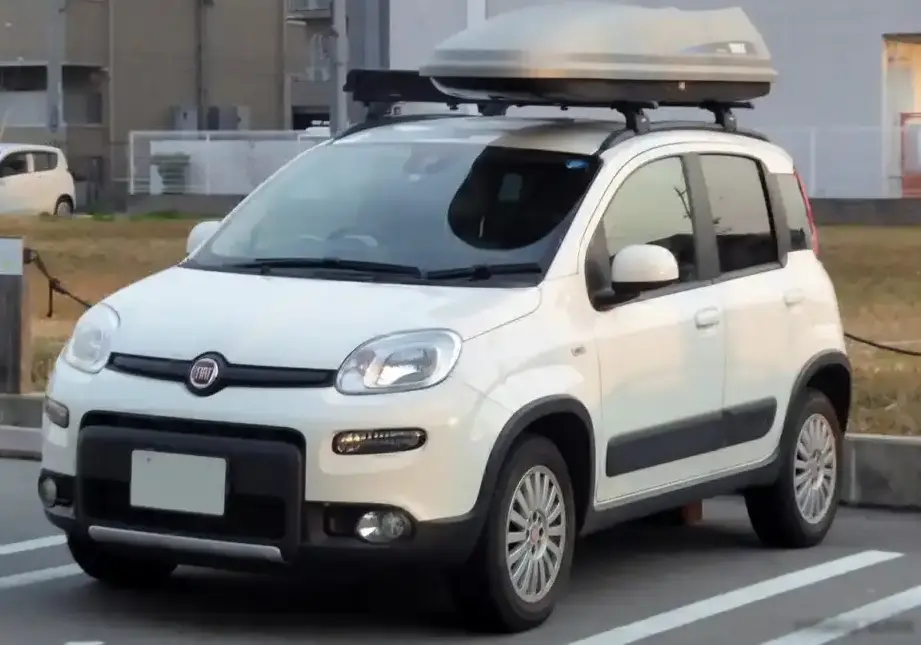
The Fiat Panda III 4×4 1.3 MultiJet 16V (75 hp) Start & Stop, produced between 2011 and 2015, represents a unique offering within the third generation of the iconic Fiat Panda. This variant combined the practicality and affordability of the Panda with a capable four-wheel-drive system and a fuel-efficient diesel engine, making it a popular choice in Europe, particularly in regions with challenging weather conditions or rough terrain. Positioned as a mid-range option within the Panda 4×4 lineup, it offered a balance between cost, performance, and features. It was a direct response to the demand for a small, economical, and versatile vehicle capable of tackling more than just city streets.
Technical Specifications
| Brand | Fiat |
| Model | Panda |
| Generation | Panda III 4×4 |
| Type (Engine) | 1.3 MULTIJET 16V (75 Hp) START & STOP |
| Start of production | 2011 |
| End of production | 2015 |
| Powertrain Architecture | Internal Combustion engine |
| Body type | Hatchback |
| Seats | 4 |
| Doors | 5 |
| Fuel consumption (urban) | 5 l/100 km (47 US mpg, 56.5 UK mpg, 20 km/l) |
| Fuel consumption (extra urban) | 4.6 l/100 km (51.1 US mpg, 61.4 UK mpg, 21.7 km/l) |
| Fuel consumption (combined) | 4.7 l/100 km (50 US mpg, 60.1 UK mpg, 21.3 km/l) |
| Fuel Type | Diesel |
| Acceleration 0 – 100 km/h | 14.5 sec |
| Acceleration 0 – 62 mph | 14.5 sec |
| Acceleration 0 – 60 mph | 13.8 sec |
| Maximum speed | 159 km/h (98.8 mph) |
| Emission standard | Euro 5 |
| Weight-to-power ratio | 14.9 kg/Hp, 67.3 Hp/tonne |
| Weight-to-torque ratio | 5.9 kg/Nm, 170.4 Nm/tonne |
| Power | 75 Hp @ 4000 rpm |
| Power per litre | 60.1 Hp/l |
| Torque | 190 Nm @ 1500 rpm (140.14 lb.-ft. @ 1500 rpm) |
| Engine layout | Front, Transverse |
| Engine Model/Code | 199A9000 |
| Engine displacement | 1248 cm3 (76.16 cu. in.) |
| Number of cylinders | 4 |
| Engine configuration | Inline |
| Fuel injection system | Diesel Commonrail |
| Engine aspiration | Turbocharger, Intercooler |
| Engine oil capacity | 3 l (3.17 US qt | 2.64 UK qt) |
| Coolant capacity | 6.3 l (6.66 US qt | 5.54 UK qt) |
| Kerb Weight | 1115 kg (2458.15 lbs) |
| Trunk (boot) space – minimum | 225 l (7.95 cu. ft) |
| Fuel tank capacity | 35 l (9.25 US gal | 7.7 UK gal) |
| Length | 3686 mm (145.12 in) |
| Width | 1672 mm (65.83 in) |
| Height | 1605 mm (63.19 in) |
| Wheelbase | 2300 mm (90.55 in) |
| Front track | 1411 mm (55.55 in) |
| Rear track | 1408 mm (55.43 in) |
| Minimum turning circle | 9.3 m (30.51 ft) |
| Drive wheel | All wheel drive (4×4) |
| Number of gears | 5 gears, manual transmission |
| Front suspension | Independent type McPherson |
| Rear suspension | Torsion |
| Front brakes | Disc |
| Rear brakes | Disc |
| Assisting systems | ABS (Anti-lock braking system) |
| Steering type | Steering rack and pinion |
| Power steering | Electric Steering |
| Tires size | 175/65 R15 84T |
| Wheel rims size | 15 |
Powertrain & Engine Architecture
The heart of the Panda 4×4 1.3 MultiJet is the 199A9000 engine, a 1.3-liter inline-four cylinder diesel. This engine is a member of Fiat’s MultiJet family, known for its common-rail direct injection and variable geometry turbocharger. The 16-valve cylinder head contributes to improved breathing and efficiency. The MultiJet system allows for multiple injections per combustion cycle, optimizing fuel burn and reducing noise, vibration, and harshness (NVH). The engine produces 75 horsepower at 4000 rpm and 190 Nm (140 lb-ft) of torque at a low 1500 rpm, providing ample low-end grunt for off-road situations. The Start & Stop system, standard on this variant, automatically shuts off the engine when the vehicle is stationary (e.g., at traffic lights) to conserve fuel and reduce emissions. The engine is paired with a five-speed manual transmission, chosen for its simplicity and efficiency. While an automatic transmission wasn’t offered on this specific 4×4 configuration, the manual gearbox’s ratios were tuned to complement the engine’s torque curve, providing usable power across a wide range of speeds.
Driving Characteristics
The 1.3 MultiJet engine, while not exceptionally powerful, provides adequate performance for the Panda 4×4. Acceleration from 0 to 60 mph takes around 13.8 seconds, and the top speed is approximately 98.8 mph. However, the focus isn’t on outright speed but on usability and fuel economy. The engine’s strong low-end torque makes it well-suited for navigating challenging terrain, and the four-wheel-drive system provides excellent traction. The gear ratios are relatively short, allowing the engine to stay within its optimal power band. Compared to the higher-powered Panda 4×4 variants (which were not commonly available with the automatic transmission), this 75 hp version feels less eager to accelerate, but it offers significantly better fuel economy. The driving experience is characterized by a comfortable ride, thanks to the McPherson strut front suspension and torsion beam rear suspension, although it’s not particularly sporty.
Equipment & Trim Levels
The Panda 4×4 1.3 MultiJet 16V Start & Stop typically came equipped with features such as air conditioning, power steering, ABS brakes, and a radio with CD player. Interior upholstery was typically a durable cloth material. Optional extras included alloy wheels, a panoramic sunroof, and upgraded audio systems. The dashboard layout was functional and straightforward, prioritizing ease of use over luxury. The 4×4 system featured a selector switch allowing the driver to engage four-wheel drive when needed, with a default setting for two-wheel drive to maximize fuel efficiency on paved roads. Safety features included driver and passenger airbags.
Chassis & Braking
The Panda 4×4 utilizes a robust chassis designed to withstand the stresses of off-road driving. The front suspension employs independent McPherson struts, while the rear utilizes a torsion beam setup. Brakes are disc brakes on all four wheels, providing adequate stopping power. The four-wheel-drive system is a part-time system, engaging the rear wheels when traction is lost. The vehicle’s relatively light weight (approximately 2458 lbs) contributes to its agility and fuel efficiency. Stabilizer bars were fitted to reduce body roll during cornering, although the Panda 4×4 is not intended as a performance vehicle.
Market Reception & Comparison
The Fiat Panda 4×4 1.3 MultiJet 16V Start & Stop was generally well-received by automotive critics for its practicality, fuel efficiency, and off-road capability. It was praised for being a surprisingly capable vehicle for its size and price. Compared to other small 4x4s, the Panda offered a unique combination of affordability and versatility. Its fuel economy of around 50 US mpg combined was a significant selling point. However, some critics noted that the engine could feel underpowered when fully loaded or driving uphill. Compared to the petrol-powered Panda 4×4 variants, the MultiJet offered superior fuel economy and torque, but at the cost of some refinement.
Legacy
The Fiat Panda 4×4 1.3 MultiJet 16V Start & Stop has proven to be a reliable and durable vehicle. The 1.3 MultiJet engine is known for its longevity, and the four-wheel-drive system is generally robust. On the used car market, these Pandas hold their value relatively well, particularly those that have been well-maintained. They remain a popular choice for those seeking a small, economical, and capable vehicle for navigating challenging conditions. The Panda 4×4 continues to be a testament to Fiat’s ability to create practical and affordable vehicles that appeal to a wide range of customers.