
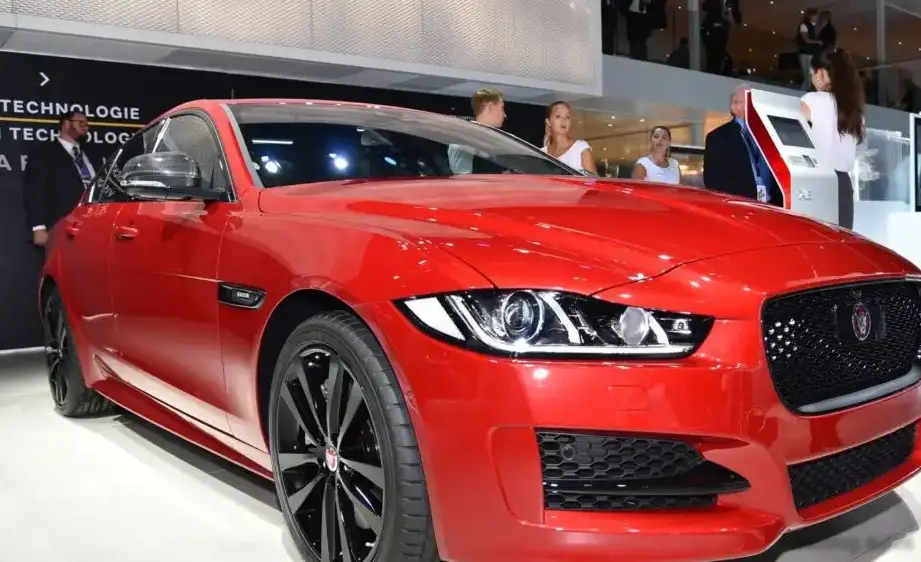
The Jaguar XE (X760) 3.0 V6 AWD Automatic, produced from 2015 to 2017, represented the performance pinnacle of the first-generation XE lineup. Positioned as the flagship model, it aimed to challenge established German rivals in the premium executive car segment. This variant combined a supercharged V6 engine with all-wheel drive and an eight-speed automatic transmission, offering a blend of luxury, performance, and all-weather capability. It was a key component in Jaguar’s attempt to re-establish itself as a major player in the sport sedan market, leveraging British design and engineering prowess.
Technical Specifications
| Brand | Jaguar |
| Model | XE |
| Generation | XE (X760) |
| Type (Engine) | 3.0 V6 (340 Hp) AWD Automatic |
| Start of production | 2015 |
| End of production | 2017 |
| Powertrain Architecture | Internal Combustion engine |
| Body type | Sedan |
| Seats | 5 |
| Doors | 4 |
| Fuel consumption (economy) – urban (EPA) | 11.8 l/100 km (19.9 US mpg, 23.9 UK mpg, 8.5 km/l) |
| Fuel consumption (economy) – extra urban (EPA) | 8.1 l/100 km (29 US mpg, 34.9 UK mpg, 12.3 km/l) |
| Fuel consumption (economy) – combined (EPA) | 10.2 l/100 km (23.1 US mpg, 27.7 UK mpg, 9.8 km/l) |
| Fuel Type | Petrol (Gasoline) |
| Acceleration 0 – 60 mph | 5.1 sec |
| Maximum speed | 193 km/h (119.92 mph) – Electronically limited |
| Weight-to-power ratio | 5.1 kg/Hp, 197.6 Hp/tonne |
| Weight-to-torque ratio | 3.8 kg/Nm, 261.5 Nm/tonne |
| Power | 340 Hp @ 6500 rpm |
| Power per litre | 113.5 Hp/l |
| Torque | 450 Nm @ 4500 rpm (331.9 lb.-ft. @ 4500 rpm) |
| Engine layout | Front, Longitudinal |
| Engine Model/Code | 306PS |
| Engine displacement | 2995 cm3 (182.77 cu. in.) |
| Number of cylinders | 6 |
| Engine configuration | V-engine |
| Cylinder Bore | 84.5 mm (3.33 in.) |
| Piston Stroke | 89 mm (3.5 in.) |
| Compression ratio | 10.5:1 |
| Number of valves per cylinder | 4 |
| Fuel injection system | Direct injection |
| Engine aspiration | Supercharger, Intercooler |
| Valvetrain | DOHC |
| Engine oil capacity | 5.4 l (5.71 US qt | 4.75 UK qt) |
| Coolant | 8.5 l (8.98 US qt | 7.48 UK qt) |
| Kerb Weight | 1721 kg (3794.16 lbs.) |
| Max. weight | 2280 kg (5026.54 lbs.) |
| Max load | 559 kg (1232.38 lbs.) |
| Trunk (boot) space – minimum | 455 l (16.07 cu. ft.) |
| Fuel tank capacity | 63 l (16.64 US gal | 13.86 UK gal) |
| Length | 4672 mm (183.94 in.) |
| Width | 1850 mm (72.83 in.) |
| Width with mirrors folded | 1967 mm (77.44 in.) |
| Width including mirrors | 2075 mm (81.69 in.) |
| Height | 1425 mm (56.1 in.) |
| Wheelbase | 2835 mm (111.61 in.) |
| Front track | 1595-1608 mm (62.8 – 63.31 in.) |
| Rear (Back) track | 1585-1608 mm (62.4 – 63.31 in.) |
| Front overhang | 841 mm (33.11 in.) |
| Rear overhang | 996 mm (39.21 in.) |
| Ride height (ground clearance) | 119 mm (4.69 in.) |
| Drag coefficient (Cd) | 0.32 |
| Minimum turning circle (turning diameter) | 11.2 m (36.75 ft.) |
| Drivetrain Architecture | The Internal combustion engine (ICE) drives the rear wheels permanently, and the front wheels are driven through an electrically or mechanically operated clutch if necessary. |
| Drive wheel | All wheel drive (4×4) |
| Number of gears and type of gearbox | 8 gears, automatic transmission |
| Front suspension | Double wishbone, Transverse stabilizer |
| Rear suspension | Independent multi-link spring suspension with stabilizer |
| Front brakes | Ventilated discs |
| Rear brakes | Ventilated discs |
| Assisting systems | ABS (Anti-lock braking system) |
| Steering type | Steering rack and pinion |
| Power steering | Electric Steering |
| Tires size | Front wheel tires: 225/40 R19; 235/35 R20 Rear wheel tires: 255/35 R19; 265/30 R20 |
| Wheel rims size | Front wheel rims: 7.5J x 19; 8J x 20 Rear wheel rims: 8.5J x 19; 9J x 20 |
INTRODUCTION
The Jaguar XE 3.0 V6 AWD Automatic, launched in 2015, was a crucial model for Jaguar as it entered the highly competitive compact executive sedan segment. Built on the aluminum-intensive iQ[Al] platform (X760), the XE aimed to deliver a dynamic driving experience combined with British luxury. The 3.0 V6 variant sat at the top of the range, offering significantly more power and performance than the four-cylinder options. Production of this specific configuration concluded in 2017, as Jaguar refined the XE lineup and focused on more fuel-efficient powertrains.
Powertrain & Engine Architecture
At the heart of the XE 3.0 V6 was Jaguar’s AJ126 engine, a 2.995-liter supercharged V6. This engine, while technically 3.0 liters, was often marketed as a 3.0-liter due to rounding. The engine featured direct fuel injection and a Roots-type supercharger, delivering 340 horsepower at 6,500 rpm and 450 Nm (331.9 lb-ft) of torque at 4,500 rpm. The engine code is 306PS. The supercharger, mounted centrally in the V, provided instant throttle response and a broad torque curve. The engine utilized a double overhead camshaft (DOHC) valvetrain with four valves per cylinder. The engine was longitudinally mounted, driving all four wheels through an eight-speed automatic transmission manufactured by ZF. This transmission, known for its smooth and quick shifts, was a key contributor to the car’s performance and refinement.
Driving Characteristics
The combination of the supercharged V6 and all-wheel drive resulted in a genuinely quick and engaging driving experience. Acceleration from 0 to 60 mph took just 5.1 seconds, and the electronically limited top speed was 193 km/h (119.92 mph). The all-wheel-drive system, utilizing a multi-plate clutch to distribute torque between the front and rear axles, provided excellent traction in all conditions. The eight-speed automatic transmission offered both fully automatic operation and manual control via paddle shifters. Gear ratios were tuned for a balance of acceleration and fuel efficiency. Compared to the 2.0-liter four-cylinder models, the V6 offered significantly more power and a more responsive feel. While the four-cylinder versions prioritized fuel economy, the V6 prioritized performance and driver engagement.
Equipment & Trim Levels
The 3.0 V6 AWD Automatic typically came with a high level of standard equipment. This included leather upholstery, heated front seats, a premium sound system, a touchscreen infotainment system, and a suite of driver-assistance features such as emergency braking and lane departure warning. Optional extras included adaptive cruise control, a panoramic sunroof, and upgraded interior trim materials. The interior design emphasized luxury and sophistication, with a focus on high-quality materials and craftsmanship. The dashboard layout was clean and modern, with a central touchscreen controlling most vehicle functions.
Chassis & Braking
The XE’s chassis was a key element of its dynamic appeal. The aluminum-intensive construction helped to minimize weight, contributing to the car’s agility. The front suspension featured double wishbones with a transverse stabilizer, while the rear suspension utilized an independent multi-link setup, also with a stabilizer. This suspension configuration provided a good balance of ride comfort and handling precision. Braking duties were handled by ventilated discs on all four wheels, providing ample stopping power. The car was equipped with an anti-lock braking system (ABS) and electronic stability control (ESC) as standard.
Market Reception & Comparison
The Jaguar XE 3.0 V6 AWD Automatic received generally positive reviews from automotive critics. It was praised for its powerful engine, engaging driving dynamics, and luxurious interior. However, some critics noted that the fuel economy was relatively poor compared to the four-cylinder models. Compared to its rivals, such as the BMW 5 Series and the Mercedes-Benz E-Class, the XE offered a more sporting driving experience but lacked the brand recognition and established reputation of its German competitors. The V6 variant was positioned as a direct competitor to the higher-performance versions of those models.
Legacy
The Jaguar XE 3.0 V6 AWD Automatic, while a relatively short-lived model, remains a desirable car on the used market. The supercharged V6 engine is known for its reliability, provided it is properly maintained. Regular oil changes and adherence to the manufacturer’s recommended service schedule are crucial. The ZF eight-speed automatic transmission is also highly regarded for its durability. However, potential buyers should be aware of the higher running costs associated with a larger-displacement engine, including fuel consumption and insurance. Today, the XE 3.0 V6 represents a compelling option for those seeking a stylish, powerful, and engaging sport sedan with a touch of British flair.
