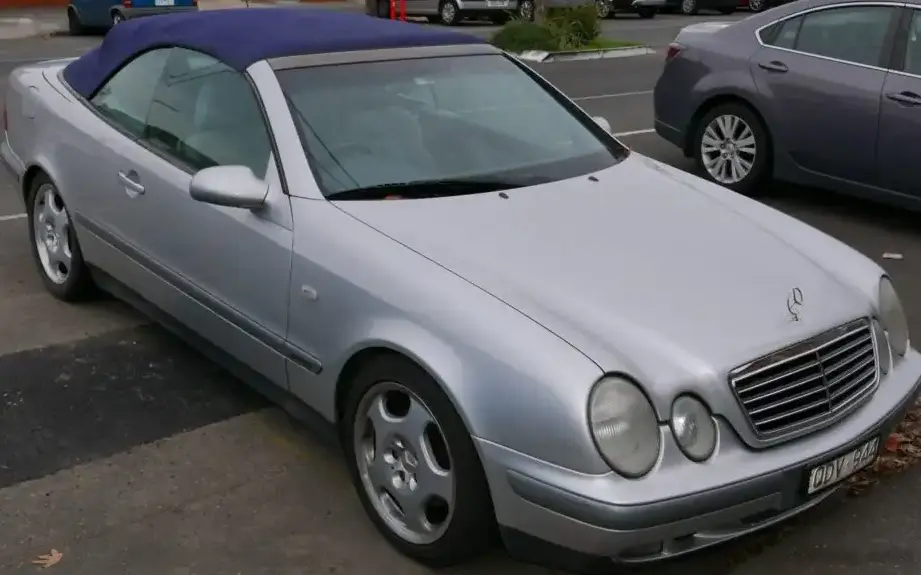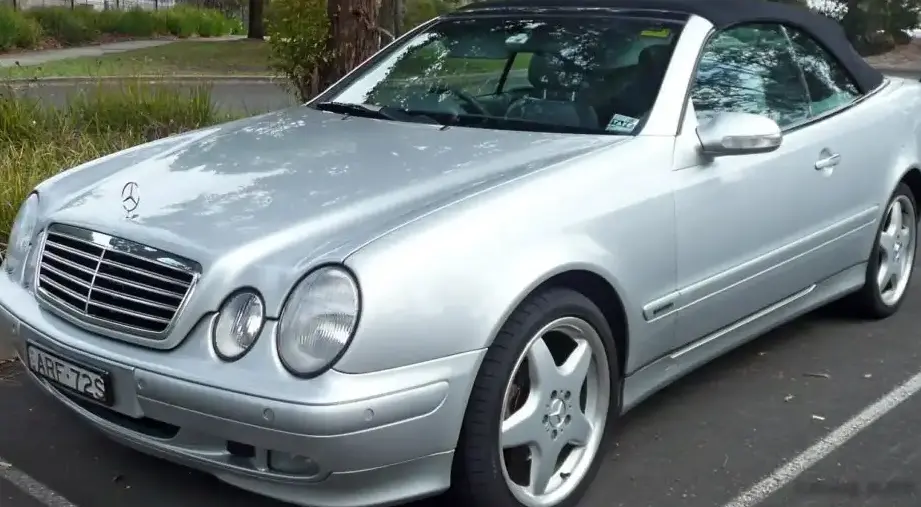
The Mercedes-Benz CLK 200 Kompressor, produced from 2000 to 2003, was a key variant within the A208 CLK facelift range. Positioned as a more accessible entry point into the CLK lineup, it offered a blend of performance and comfort, particularly appealing to buyers seeking a stylish convertible or coupe without the higher price tag of the more powerful models like the CLK 320 or CLK 55 AMG. This model combined a supercharged 2.0-liter inline-four engine with the 5G-TRONIC automatic transmission, creating a unique driving experience within the CLK family.
Technical Specifications
| Brand | Mercedes-Benz |
| Model | CLK |
| Generation | CLK (A208, facelift 1999) |
| Type (Engine) | CLK 200 Kompressor (163 Hp) 5G-TRONIC |
| Start of production | March, 2000 |
| End of production | March, 2003 |
| Powertrain Architecture | Internal Combustion engine |
| Body type | Cabriolet |
| Seats | 4 |
| Doors | 2 |
| Fuel consumption (urban) | 13.6 l/100 km (17.3 US mpg, 20.8 UK mpg) |
| Fuel consumption (extra urban) | 7 l/100 km (33.6 US mpg, 40.4 UK mpg) |
| Fuel consumption (combined) | 9.4 l/100 km (25 US mpg, 30.1 UK mpg) |
| Fuel Type | Petrol (Gasoline) |
| Acceleration 0 – 100 km/h | 10.5 sec |
| Acceleration 0 – 62 mph | 10.5 sec |
| Acceleration 0 – 60 mph | 10 sec |
| Maximum speed | 215 km/h (133.59 mph) |
| Weight-to-power ratio | 9.9 kg/Hp |
| Weight-to-torque ratio | 7 kg/Nm |
| Power | 163 Hp @ 5300 rpm |
| Power per litre | 81.6 Hp/l |
| Torque | 230 Nm @ 2500-4800 rpm (169.64 lb.-ft. @ 2500-4800 rpm) |
| Engine layout | Front, Longitudinal |
| Engine Model/Code | M 111.956 |
| Engine displacement | 1998 cm3 (121.93 cu. in.) |
| Number of cylinders | 4 |
| Engine configuration | Inline |
| Cylinder Bore | 89.9 mm (3.54 in.) |
| Piston Stroke | 78.7 mm (3.1 in.) |
| Compression ratio | 9.5:1 |
| Number of valves per cylinder | 4 |
| Fuel injection system | Multi-port manifold injection |
| Engine aspiration | Supercharger, Intercooler |
| Valvetrain | DOHC |
| Engine oil capacity | 5.5 l (5.81 US qt | 4.84 UK qt) |
| Coolant | 8 l (8.45 US qt | 7.04 UK qt) |
| Kerb Weight | 1615 kg (3560.47 lbs.) |
| Max. weight | 2020 kg (4453.34 lbs.) |
| Max load | 405 kg (892.87 lbs.) |
| Fuel tank capacity | 62 l (16.38 US gal | 13.64 UK gal) |
| Permitted trailer load with brakes (12%) | 1500 kg (3306.93 lbs.) |
| Permitted trailer load without brakes | 750 kg (1653.47 lbs.) |
| Length | 4567 mm (179.8 in.) |
| Width | 1722 mm (67.8 in.) |
| Height | 1380 mm (54.33 in.) |
| Wheelbase | 2690 mm (105.91 in.) |
| Front track | 1505 mm (59.25 in.) |
| Rear track | 1474 mm (58.03 in.) |
| Drag coefficient (Cd) | 0.32 |
| Minimum turning circle | 10.70 m (35.1 ft.) |
| Drivetrain Architecture | Rear wheel drive |
| Drive wheel | Rear wheel drive |
| Number of gears and type of gearbox | 5 gears, automatic transmission G-TRONIC |
| Front suspension | Double wishbone, Transverse stabilizer |
| Rear suspension | Independent multi-link spring suspension with stabilizer |
| Front brakes | Ventilated discs |
| Rear brakes | Disc |
| Assisting systems | ABS (Anti-lock braking system) |
| Steering type | Cone worm with recirculation balls |
| Power steering | Hydraulic Steering |
| Tires size | 205/55 R16 |
| Wheel rims size | 7J x 16 |
INTRODUCTION
The CLK 200 Kompressor, introduced in March 2000 as part of the A208 facelift, represented a significant addition to the CLK range. Built on the 1HX0/A3 platform shared with the C-Class of the same era, the CLK aimed to offer a more stylish and sophisticated alternative. The “Kompressor” designation indicated the presence of a mechanically driven supercharger, enhancing the engine’s power output and responsiveness. Available as both a coupe and a cabriolet, the CLK 200 Kompressor served as an entry-level option, appealing to buyers who desired the CLK’s elegant design and Mercedes-Benz prestige without the expense of the larger, more powerful engines.
Powertrain & Engine Architecture
At the heart of the CLK 200 Kompressor lies the M111.956 engine, a 1.998-liter (2.0L) inline-four cylinder powerplant. This engine is notable for its use of a Lysholm-type supercharger, providing forced induction to boost power and torque. The supercharger, driven by a belt connected to the crankshaft, delivers increased air intake, resulting in improved performance compared to naturally aspirated engines of similar displacement. Fuel delivery is managed by a multi-port fuel injection system, ensuring precise fuel metering for optimal combustion. The engine features a double overhead camshaft (DOHC) valvetrain with four valves per cylinder, contributing to efficient gas exchange and enhanced power delivery. The 5G-TRONIC automatic transmission, a five-speed unit, was the sole transmission option for this variant. This transmission is known for its smooth shifting and adaptive learning capabilities, adjusting shift points based on driving style.
Driving Characteristics
The CLK 200 Kompressor offered a comfortable and refined driving experience. While not a performance powerhouse, the supercharged engine provided adequate power for everyday driving and cruising. Acceleration from 0 to 62 mph (0-100 km/h) took approximately 10.5 seconds, and the car reached a top speed of 133.59 mph (215 km/h). Compared to the manual transmission versions (available in other CLK models), the 5G-TRONIC automatic prioritized smooth operation over outright speed. The automatic transmission’s gear ratios were tuned for fuel efficiency and comfortable cruising, rather than aggressive acceleration. Compared to the CLK 320 with its larger V6 engine, the 200 Kompressor offered a more economical driving experience, but with a noticeable difference in overall performance.
Equipment & Trim Levels
The CLK 200 Kompressor came reasonably well-equipped as standard. Interior features typically included cloth upholstery, power windows, central locking, and an audio system. Air conditioning was also a standard feature. Optional extras included leather upholstery, heated seats, a sunroof (on the coupe), and upgraded audio systems. The dashboard layout was typical of Mercedes-Benz at the time, featuring a classic analog instrument cluster and a center console with controls for the climate control system and audio. The level of standard equipment was generally considered competitive within its price segment.
Chassis & Braking
The CLK 200 Kompressor utilized a double wishbone suspension setup at the front and an independent multi-link suspension at the rear, providing a comfortable ride and good handling characteristics. A transverse stabilizer bar was fitted to both axles to reduce body roll during cornering. The braking system consisted of ventilated discs at the front and solid discs at the rear, providing adequate stopping power for the vehicle’s weight and performance. Anti-lock Braking System (ABS) was standard, enhancing braking safety. The steering system was a cone worm with recirculation balls, offering a balanced feel between precision and ease of use.
Market Reception & Comparison
The CLK 200 Kompressor was generally well-received by automotive critics as an accessible entry point into the CLK range. It was praised for its stylish design, comfortable ride, and relatively fuel-efficient engine. However, some critics noted that the engine lacked the outright performance of the larger-displacement models. Compared to the CLK 320, the 200 Kompressor offered better fuel economy (around 25 US mpg combined) but significantly less power. The 200 Kompressor’s automatic transmission was also sometimes criticized for being less engaging than the available manual transmissions in other CLK variants.
Legacy
The M111 engine, found in the CLK 200 Kompressor, is generally considered a reliable unit when properly maintained. The 5G-TRONIC transmission is also known for its durability, although regular fluid changes are essential. Today, the CLK 200 Kompressor represents an affordable entry point into Mercedes-Benz ownership. While not as sought-after as the higher-performance models, it remains a popular choice for those seeking a stylish and comfortable coupe or cabriolet. Common issues include wear and tear on suspension components and potential oil leaks from the engine. However, parts availability is generally good, and the car’s relatively simple mechanical design makes it relatively easy to maintain.