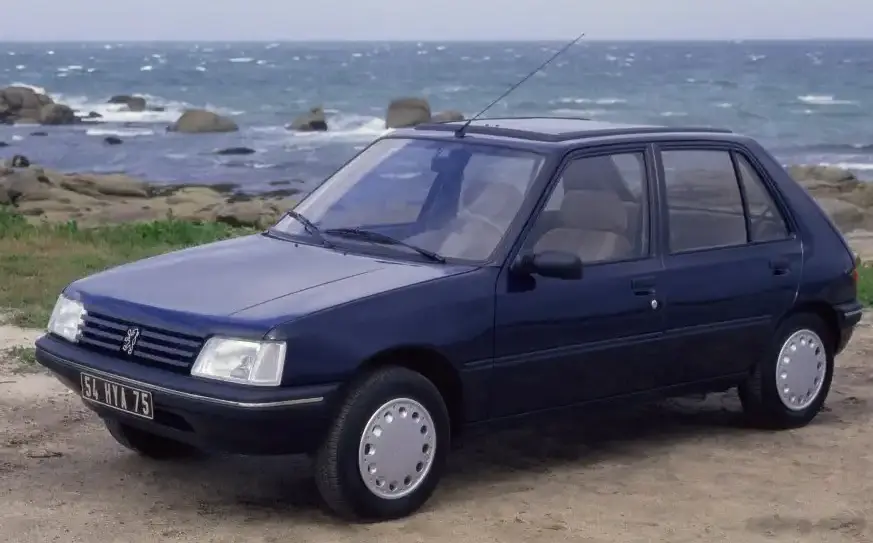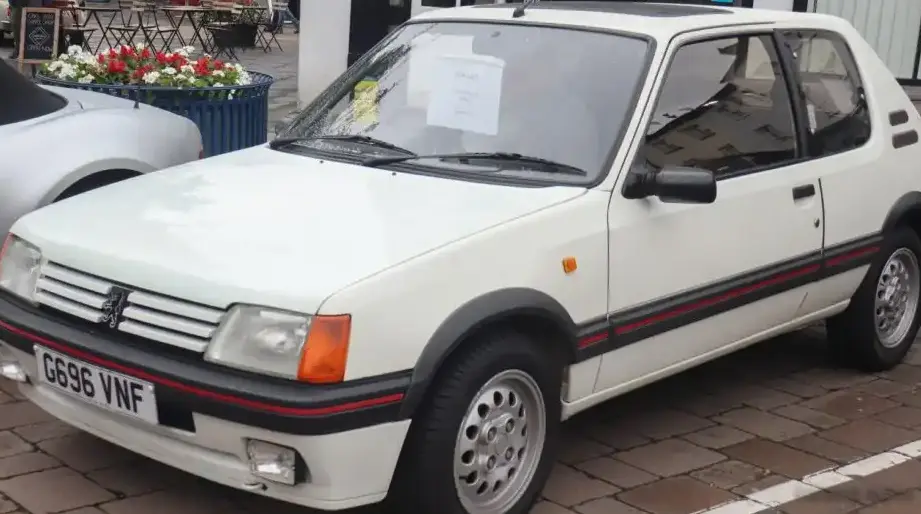
The Peugeot 205 I, specifically the 3-door 1.0-liter (45 hp) variant, was a cornerstone of Peugeot’s success in the early to mid-1980s. Produced from 1983 to 1987, this model represented the entry point into the 205 range, which was designated internally as the 741A/C series. It was designed to replace the aging Peugeot 104 and offered a modern, efficient, and stylish alternative in the supermini segment, primarily aimed at the European market. The 205 quickly became a cultural icon, celebrated for its nimble handling and affordability. This particular 1.0L engine and manual transmission combination was positioned as the most economical and accessible version of the 205, targeting budget-conscious buyers and first-time car owners.
Technical Specifications
| Brand | Peugeot |
| Model | 205 |
| Generation | 205 I (741A/C) 3-door |
| Type (Engine) | 1.0 (45 Hp) |
| Start of production | 1983 |
| End of production | 1987 |
| Powertrain Architecture | Internal Combustion engine |
| Body type | Hatchback |
| Seats | 4 |
| Doors | 3 |
| Fuel consumption (urban) | 6.7 l/100 km (35.1 US mpg, 42.2 UK mpg, 14.9 km/l) |
| Fuel consumption (extra urban) | 4.5 l/100 km (52.3 US mpg, 62.8 UK mpg, 22.2 km/l) |
| Fuel Type | Petrol (Gasoline) |
| Acceleration 0 – 100 km/h | 18.8 sec |
| Acceleration 0 – 62 mph | 18.8 sec |
| Acceleration 0 – 60 mph | 17.9 sec |
| Maximum speed | 143 km/h (88.86 mph) |
| Weight-to-power ratio | 16.5 kg/Hp, 60.6 Hp/tonne |
| Weight-to-torque ratio | 10.9 kg/Nm, 91.6 Nm/tonne |
| Power | 45 Hp @ 6000 rpm |
| Power per litre | 47.2 Hp/l |
| Torque | 68 Nm @ 2750 rpm (50.15 lb.-ft. @ 2750 rpm) |
| Engine layout | Front, Transverse |
| Engine Model/Code | XV8 |
| Engine displacement | 954 cm3 (58.22 cu. in.) |
| Number of cylinders | 4 |
| Engine configuration | Inline |
| Cylinder Bore | 70 mm (2.76 in.) |
| Piston Stroke | 62 mm (2.44 in.) |
| Compression ratio | 9.3:1 |
| Number of valves per cylinder | 2 |
| Fuel injection system | Carburettor |
| Engine aspiration | Naturally aspirated engine |
| Valvetrain | OHV |
| Engine oil capacity | 5 l (5.28 US qt | 4.4 UK qt) |
| Coolant | 6 l (6.34 US qt | 5.28 UK qt) |
| Kerb Weight | 742 kg (1635.83 lbs.) |
| Max. weight | 1160 kg (2557.36 lbs.) |
| Max load | 418 kg (921.53 lbs.) |
| Trunk (boot) space – minimum | 216 l (7.63 cu. ft.) |
| Trunk (boot) space – maximum | 564 l (19.92 cu. ft.) |
| Fuel tank capacity | 50 l (13.21 US gal | 11 UK gal) |
| Permitted trailer load with brakes (12%) | 700 kg (1543.24 lbs.) |
| Length | 3705 mm (145.87 in.) |
| Width | 1572 mm (61.89 in.) |
| Height | 1373 mm (54.06 in.) |
| Wheelbase | 2420 mm (95.28 in.) |
| Front track | 1350 mm (53.15 in.) |
| Rear (Back) track | 1300 mm (51.18 in.) |
| Front overhang | 680 mm (26.77 in.) |
| Rear overhang | 605 mm (23.82 in.) |
| Drag coefficient (Cd) | 0.35 |
| Minimum turning circle (turning diameter) | 10.5 m (34.45 ft.) |
| Drivetrain Architecture | The Internal combustion engine (ICE) drives the front wheels of the vehicle. |
| Drive wheel | Front wheel drive |
| Number of gears and type of gearbox | 4 gears, manual transmission |
| Front suspension | Independent, type McPherson with coil spring and anti-roll bar |
| Rear suspension | Torsion |
| Front brakes | Disc |
| Rear brakes | Drum |
| Steering type | Steering rack and pinion |
| Tires size | 135/80 R13 |
| Wheel rims size | 13 |
Powertrain & Engine Architecture
The heart of this 205 variant was the XV8 engine, a 954cc inline-four cylinder petrol engine. This engine utilized a single overhead valve (OHV) configuration and was fed by a carburetor, a common feature for entry-level cars of the era. The carburetor system, while simple and reliable, was less efficient than fuel injection, contributing to the lower horsepower output. The engine produced 45 horsepower at 6000 rpm and 68 Nm (50.15 lb-ft) of torque at 2750 rpm. The engine was transversely mounted, a space-saving design common in front-wheel-drive vehicles. The transmission was a four-speed manual gearbox, chosen for its simplicity and cost-effectiveness. This combination prioritized fuel economy over outright performance.
Driving Characteristics
The 205 1.0L Automatic offered a decidedly unhurried driving experience. Acceleration was slow, taking approximately 18.8 seconds to reach 62 mph (100 km/h). The gear ratios were optimized for fuel efficiency rather than rapid acceleration. In real-world conditions, the car felt best suited for urban driving and shorter trips. Compared to the more powerful 1.6L and 1.9L versions of the 205, the 1.0L lacked the punch needed for confident highway overtaking. However, its light weight and nimble chassis made it surprisingly enjoyable to drive on winding roads, offering a level of agility that belied its modest power output. The manual transmission provided a more engaging driving experience than the later automatic options.
Equipment & Trim Levels
The base-level 205 1.0L was fairly spartan in its equipment. Standard features typically included cloth upholstery, basic instrumentation (speedometer, fuel gauge, temperature gauge), and manually operated windows and door locks. The interior was functional and durable, prioritizing practicality over luxury. Optional extras included a sunroof, upgraded upholstery, and a basic radio. Trim levels were relatively limited, with the focus being on keeping the price as low as possible. The dashboard layout was simple and straightforward, with all controls within easy reach of the driver.
Chassis & Braking
The 205 featured an independent McPherson strut front suspension and a torsion beam rear suspension. This setup provided a good balance of ride comfort and handling. The front brakes were disc brakes, while the rear brakes were drum brakes – a cost-saving measure common in this segment. The steering was a rack and pinion system, providing precise and responsive steering feel. The relatively light weight of the 1.0L model (742 kg / 1635.83 lbs) contributed to its nimble handling characteristics. Stabilizer bars were typically omitted on the base model to further reduce costs.
Market Reception & Comparison
The Peugeot 205 1.0L was generally well-received by critics as an affordable and economical supermini. It was praised for its handling, fuel efficiency (achieving around 35.1 US mpg in urban driving and 52.3 US mpg on the highway), and stylish design. However, its lack of power was a common criticism. Compared to the 1.6L and 1.9L versions, the 1.0L offered significantly less performance but at a lower purchase price. The 1.9L diesel version provided superior fuel economy but lacked the refinement of the petrol engine. The 1.0L appealed to buyers who prioritized economy and practicality over performance.
Legacy
The Peugeot 205 1.0L, while not the most powerful or luxurious version of the 205, played a crucial role in establishing the model’s popularity. The XV8 engine proved to be relatively reliable, although carburetor maintenance was required. Today, these cars are increasingly sought after by classic car enthusiasts, particularly those looking for an affordable and enjoyable vintage vehicle. Parts availability can be a challenge, but the 205’s simple mechanical design makes it relatively easy to maintain for those with some mechanical aptitude. The 205 1.0L remains a testament to Peugeot’s ability to create a stylish, practical, and affordable car that resonated with a wide range of buyers.