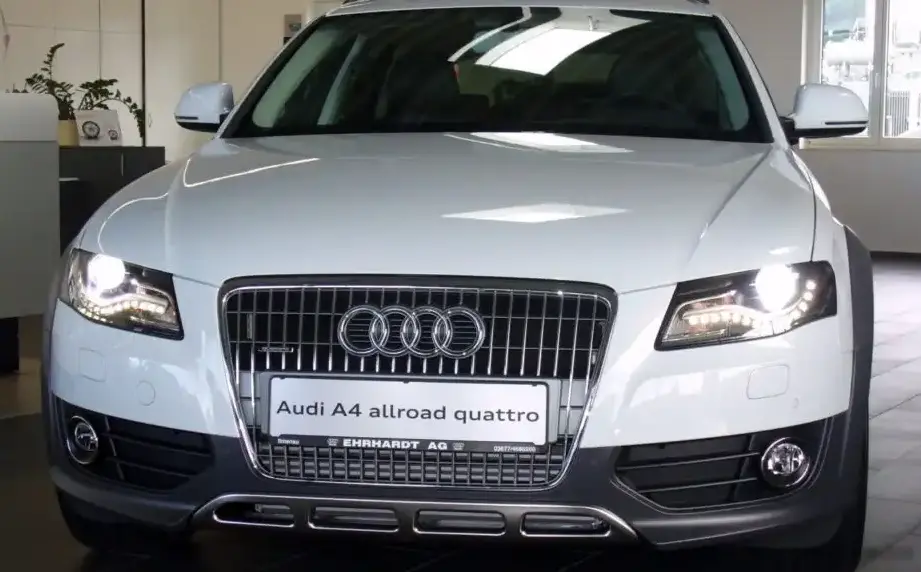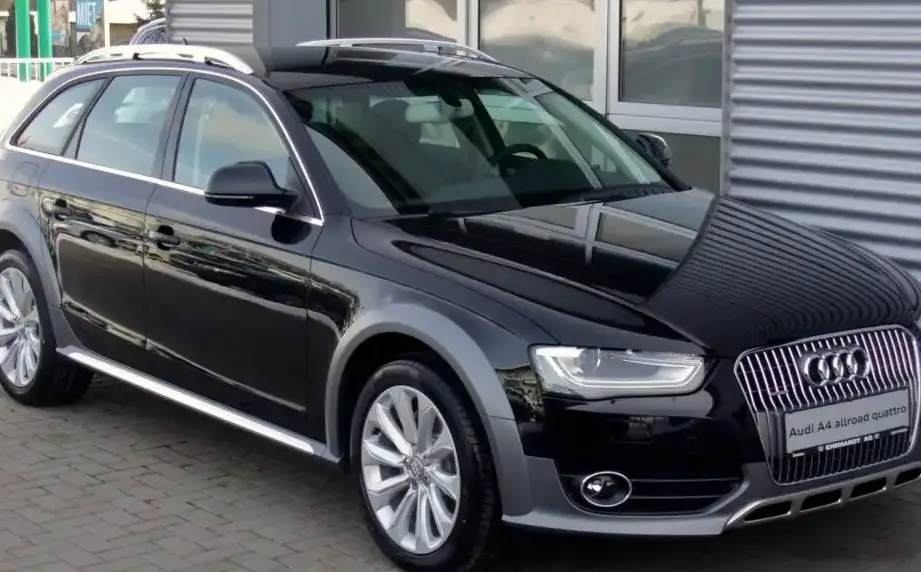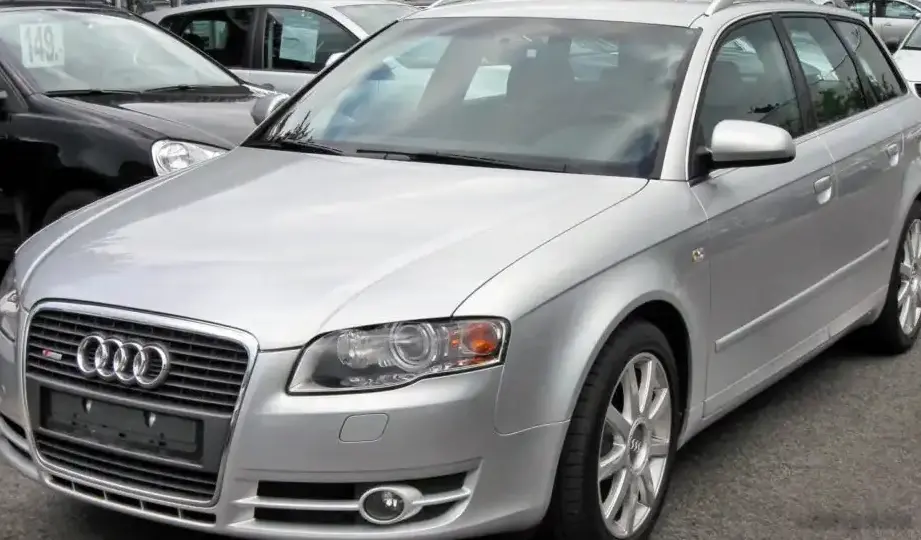
The Audi A4 Avant (B7 8E) 2.0, producing 130 horsepower, was a popular variant of Audi’s second-generation A4 Avant (estate) model, manufactured between 2004 and June 2008. Positioned as a mid-range offering within the B7 lineup, it aimed to balance performance with fuel efficiency and affordability. This model occupied a crucial space in the European market, where wagons (Avants in Audi terminology) were highly sought after, offering a practical alternative to sedans without sacrificing the brand’s premium image. It was a key component of the A4 B7 series, which itself was built on the Volkswagen Group’s 1HX0/A3 platform, shared with models like the VW Golf and Skoda Octavia.
Technical Specifications
| Brand | Audi |
| Model | A4 |
| Generation | A4 Avant (B7 8E) |
| Type (Engine) | 2.0 (130 Hp) |
| Start of production | 2004 |
| End of production | June, 2008 |
| Powertrain Architecture | Internal Combustion engine |
| Body type | Station wagon (estate) |
| Seats | 5 |
| Doors | 5 |
| Fuel consumption (urban) | 11.5 l/100 km (20.5 US mpg, 24.6 UK mpg, 8.7 km/l) |
| Fuel consumption (extra urban) | 6 l/100 km (39.2 US mpg, 47.1 UK mpg, 16.7 km/l) |
| Fuel consumption (combined) | 8 l/100 km (29.4 US mpg, 35.3 UK mpg, 12.5 km/l) |
| CO2 emissions | 192 g/km |
| Fuel Type | Petrol (Gasoline) |
| Acceleration 0 – 100 km/h | 10.1 sec |
| Acceleration 0 – 62 mph | 10.1 sec |
| Acceleration 0 – 60 mph | 9.6 sec |
| Maximum speed | 208 km/h (129.25 mph) |
| Emission standard | Euro 4 |
| Weight-to-power ratio | 10.8 kg/Hp, 92.9 Hp/tonne |
| Weight-to-torque ratio | 7.2 kg/Nm, 139.3 Nm/tonne |
| Power | 130 Hp @ 5700 rpm |
| Power per litre | 65.5 Hp/l |
| Torque | 195 Nm @ 3300 rpm (143.82 lb.-ft. @ 3300 rpm) |
| Engine layout | Front, Longitudinal |
| Engine Model/Code | ALT |
| Engine displacement | 1984 cm3 (121.07 cu. in.) |
| Number of cylinders | 4 |
| Engine configuration | Inline |
| Cylinder Bore | 82.5 mm (3.25 in.) |
| Piston Stroke | 92.8 mm (3.65 in.) |
| Compression ratio | 10.3:1 |
| Number of valves per cylinder | 5 |
| Fuel injection system | Multi-port manifold injection |
| Engine aspiration | Naturally aspirated engine |
| Valvetrain | DOHC |
| Engine oil capacity | 4.2 l (4.44 US qt | 3.7 UK qt) |
| Coolant | 8 l (8.45 US qt | 7.04 UK qt) |
| Kerb Weight | 1400 kg (3086.47 lbs.) |
| Max. weight | 1950 kg (4299.01 lbs.) |
| Max load | 550 kg (1212.54 lbs.) |
| Trunk (boot) space – minimum | 442 l (15.61 cu. ft.) |
| Trunk (boot) space – maximum | 1184 l (41.81 cu. ft.) |
| Fuel tank capacity | 70 l (18.49 US gal | 15.4 UK gal) |
| Max. roof load | 75 kg (165.35 lbs.) |
| Permitted trailer load with brakes (8%) | 1500 kg (3306.93 lbs.) |
| Permitted trailer load with brakes (12%) | 1300 kg (2866.01 lbs.) |
| Permitted trailer load without brakes | 730 kg (1609.37 lbs.) |
| Permitted towbar download | 80 kg (176.37 lbs.) |
| Length | 4586 mm (180.55 in.) |
| Width | 1772 mm (69.76 in.) |
| Width including mirrors | 1937 mm (76.26 in.) |
| Height | 1427 mm (56.18 in.) |
| Wheelbase | 2648 mm (104.25 in.) |
| Front track | 1522 mm (59.92 in.) |
| Rear (Back) track | 1522 mm (59.92 in.) |
| Ride height (ground clearance) | 106 mm (4.17 in.) |
| Drag coefficient (Cd) | 0.30 |
| Minimum turning circle (turning diameter) | 11.1 m (36.42 ft.) |
| Drivetrain Architecture | The Internal combustion engine (ICE) drives the front wheels of the vehicle. |
| Drive wheel | Front wheel drive |
| Number of gears and type of gearbox | 5 gears, manual transmission |
| Front suspension | Independent multi-link suspension |
| Rear suspension | Independent multi-link suspension |
| Front brakes | Ventilated discs |
| Rear brakes | Disc |
| Assisting systems | ABS (Anti-lock braking system) |
| Steering type | Steering rack and pinion |
| Power steering | Hydraulic Steering |
| Tires size | 205/55 R16 |
| Wheel rims size | 7J x 16 |
INTRODUCTION
The Audi A4 Avant (B7 8E) 2.0, with its 130 horsepower output, represented a pragmatic choice for buyers seeking a versatile and refined wagon. Introduced in 2004 as part of the B7 generation, it built upon the success of the B6 model, offering improvements in styling, interior quality, and technology. The Avant body style, Audi’s designation for its station wagons, was particularly popular in Europe, where practicality and cargo space were highly valued. This 2.0-liter variant served as a stepping stone in the A4 range, offering a balance between affordability and the more potent engine options available.
Powertrain & Engine Architecture
At the heart of the A4 Avant 2.0 lay the Audi ALT engine code, a 1.984-liter (121.07 cubic inches) inline-four cylinder gasoline engine. This engine featured a naturally aspirated configuration and utilized a multi-port fuel injection system. The engine’s double overhead camshaft (DOHC) valvetrain, with five valves per cylinder, contributed to its relatively efficient operation. The 130 horsepower peak was achieved at 5700 rpm, while the 195 Nm (143.82 lb-ft) of torque was available at 3300 rpm. The engine was longitudinally mounted, a characteristic of Audi’s front-wheel-drive and quattro all-wheel-drive platforms. The 2.0L engine was paired with a 5-speed manual transmission as standard, offering a direct connection between the engine and the front wheels.
Driving Characteristics
The A4 Avant 2.0, with its 130 hp and manual transmission, provided a comfortable and capable driving experience, though it wasn’t designed for outright performance. Acceleration from 0 to 60 mph took approximately 9.6 seconds, and the top speed was around 129.25 mph. The gear ratios were tuned for fuel efficiency and everyday usability, rather than aggressive acceleration. Compared to the more powerful 1.8T or 3.0-liter V6 variants, the 2.0L felt less responsive, particularly during overtaking maneuvers. However, the engine delivered adequate power for most driving situations, and the manual transmission allowed for a greater degree of driver control. The relatively low weight of the front-wheel-drive configuration contributed to decent handling, although it lacked the surefootedness of the quattro all-wheel-drive models.
Equipment & Trim Levels
The A4 Avant 2.0 typically came equipped with a respectable level of standard features. These included power windows, central locking, air conditioning, and an audio system. Interior upholstery was generally cloth, although leather options were available. The dashboard layout was typical of Audi’s design language at the time, with a focus on ergonomics and a clean, uncluttered appearance. Optional extras included sunroof, upgraded audio systems, alloy wheels, and parking sensors. Trim levels varied depending on the market, but generally, the 2.0L model was positioned as the entry-level Avant, offering a more affordable entry point into the A4 range.
Chassis & Braking
The A4 Avant 2.0 featured an independent multi-link suspension system at both the front and rear, providing a comfortable ride and good handling characteristics. The front suspension utilized coil springs and shock absorbers, while the rear suspension incorporated a more complex multi-link design to optimize wheel control. Braking duties were handled by ventilated discs at the front and solid discs at the rear, equipped with an Anti-lock Braking System (ABS) as standard. The hydraulic power steering provided a responsive and precise steering feel. The car’s curb weight of 1400 kg (3086.47 lbs) influenced the suspension tuning, aiming for a balance between comfort and handling.
Market Reception & Comparison
The Audi A4 Avant 2.0 received generally positive reviews from automotive critics. It was praised for its comfortable ride, refined interior, and practical wagon body style. However, some critics noted that the 130 horsepower engine felt underpowered, particularly when fully loaded or driving uphill. Compared to the 1.8T variant, the 2.0L offered slightly better fuel economy but lacked the extra performance. The 1.9 TDI diesel variant was also a popular alternative, offering superior fuel efficiency and torque, but at the expense of refinement. The A4 Avant 2.0 appealed to buyers who prioritized practicality, comfort, and fuel efficiency over outright performance.
Legacy
The Audi A4 Avant (B7 8E) 2.0 has proven to be a relatively reliable vehicle, with the ALT engine generally considered durable. However, like all cars of this age, it is susceptible to wear and tear. Common issues include oil leaks, failing sensors, and corrosion. In the used car market today, the A4 Avant 2.0 represents an affordable entry point into Audi ownership. Its practicality, comfort, and relatively low running costs make it a popular choice for those seeking a versatile and reliable wagon. While not a performance icon, it remains a well-regarded and capable vehicle that embodies Audi’s commitment to quality and refinement.