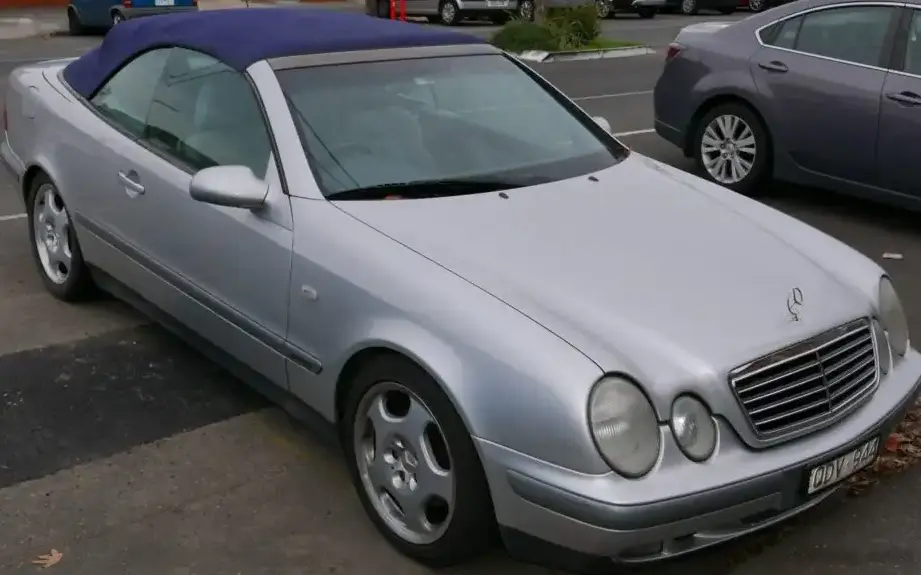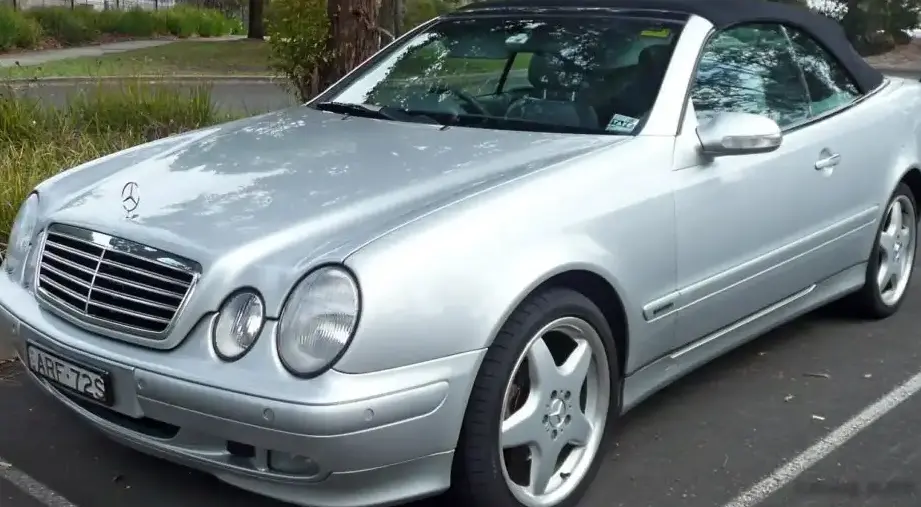
The Mercedes-Benz CLK 200 Kompressor, produced from August 1999 to June 2000, was a variant of the A208 CLK generation following the 1999 facelift. Positioned as a mid-range offering within the CLK lineup, it aimed to provide a balance between performance and affordability, appealing to buyers seeking a comfortable and stylish coupe or convertible with a degree of sporting capability. This model combined a supercharged 2.0-liter inline-four engine with the 5G-TRONIC automatic transmission, offering a different driving experience compared to the manual transmission options and the more powerful CLK 320 variants.
Technical Specifications
| Brand | Mercedes-Benz |
| Model | CLK |
| Generation | CLK (A208, facelift 1999) |
| Type | CLK 200 Kompressor (192 Hp) 5G-TRONIC |
| Start of production | August, 1999 |
| End of production | June, 2000 |
| Powertrain Architecture | Internal Combustion engine |
| Body type | Cabriolet |
| Seats | 4 |
| Doors | 2 |
| Fuel consumption (urban) | 14.6 l/100 km (16.1 US mpg, 19.3 UK mpg, 6.8 km/l) |
| Fuel consumption (extra urban) | 7.8 l/100 km (30.2 US mpg, 36.2 UK mpg, 12.8 km/l) |
| Fuel consumption (combined) | 10.3 l/100 km (22.8 US mpg, 27.4 UK mpg, 9.7 km/l) |
| Fuel Type | Petrol (Gasoline) |
| Acceleration 0 – 100 km/h | 9.2 sec |
| Acceleration 0 – 62 mph | 9.2 sec |
| Acceleration 0 – 60 mph | 8.7 sec |
| Maximum speed | 225 km/h (139.81 mph) |
| Weight-to-power ratio | 8.3 kg/Hp, 120.4 Hp/tonne |
| Weight-to-torque ratio | 5.9 kg/Nm, 169.3 Nm/tonne |
| Power | 192 Hp @ 5300 rpm |
| Power per litre | 96.1 Hp/l |
| Torque | 270 Nm @ 2500-4800 rpm (199.14 lb.-ft. @ 2500-4800 rpm) |
| Engine layout | Front, Longitudinal |
| Engine Model/Code | M 111.944 |
| Engine displacement | 1998 cm3 (121.93 cu. in.) |
| Number of cylinders | 4 |
| Engine configuration | Inline |
| Cylinder Bore | 89.9 mm (3.54 in.) |
| Piston Stroke | 78.7 mm (3.1 in.) |
| Compression ratio | 8.5:1 |
| Number of valves per cylinder | 4 |
| Fuel injection system | Multi-port manifold injection |
| Engine aspiration | Supercharger, Intercooler |
| Valvetrain | DOHC |
| Engine oil capacity | 5.5 l (5.81 US qt | 4.84 UK qt) |
| Coolant | 8 l (8.45 US qt | 7.04 UK qt) |
| Kerb Weight | 1595 kg (3516.37 lbs.) |
| Max. weight | 2000 kg (4409.25 lbs.) |
| Max load | 405 kg (892.87 lbs.) |
| Fuel tank capacity | 62 l (16.38 US gal | 13.64 UK gal) |
| Permitted trailer load with brakes (12%) | 1500 kg (3306.93 lbs.) |
| Permitted trailer load without brakes | 750 kg (1653.47 lbs.) |
| Length | 4567 mm (179.8 in.) |
| Width | 1722 mm (67.8 in.) |
| Height | 1380 mm (54.33 in.) |
| Wheelbase | 2690 mm (105.91 in.) |
| Front track | 1505 mm (59.25 in.) |
| Rear track | 1474 mm (58.03 in.) |
| Minimum turning circle | 10.70 m (35.1 ft.) |
| Drivetrain Architecture | Rear wheel drive |
| Number of gears | 5 |
| Gearbox type | automatic transmission G-TRONIC |
| Front suspension | Double wishbone, Transverse stabilizer |
| Rear suspension | Independent multi-link spring suspension with stabilizer |
| Front brakes | Ventilated discs |
| Rear brakes | Disc |
| Assisting systems | ABS (Anti-lock braking system) |
| Steering type | Cone worm with recirculation balls |
| Power steering | Hydraulic Steering |
| Tires size | 205/55 R16 |
| Wheel rims size | 7J x 16 |
Powertrain & Engine Architecture
The heart of the CLK 200 Kompressor is the M111.944 2.0-liter inline-four engine. This engine is notable for its use of a Lysholm-type mechanical supercharger, which provides increased torque at lower engine speeds compared to naturally aspirated engines. The supercharger, along with an intercooler, helps to mitigate the heat generated by compression, improving efficiency and power output. Fuel delivery is managed by a multi-port fuel injection system. The engine features a double overhead camshaft (DOHC) valvetrain with four valves per cylinder, contributing to its relatively high specific output. The 5G-TRONIC automatic transmission, a five-speed unit, was specifically tuned to complement the engine’s characteristics, offering smooth shifts and responsive performance. This transmission featured adaptive shift programming, adjusting shift points based on driving style.
Driving Characteristics
The CLK 200 Kompressor offered a comfortable and refined driving experience. The supercharger provided a noticeable boost in low-end torque, making it feel more responsive in everyday driving situations than its displacement might suggest. While not a sports car, the 192 horsepower output and the 5G-TRONIC transmission allowed for brisk acceleration, with 0-60 mph times around 8.7 seconds. Compared to the manual transmission versions of the CLK 200, the automatic offered greater convenience, but at the expense of some driver engagement. The higher-output CLK 320 models provided significantly more power and a sportier feel, but also came with a higher price tag and increased running costs. The automatic transmission’s gear ratios were optimized for a balance of acceleration and fuel economy.
Equipment & Trim Levels
The CLK 200 Kompressor typically came equipped with a respectable level of standard features, including automatic climate control, power windows and locks, and a premium audio system. Interior upholstery was generally cloth, with leather options available as an upgrade. The dashboard layout was typical of Mercedes-Benz at the time, featuring a blend of wood trim and metallic accents. Optional extras included a sunroof, heated seats, and upgraded audio systems. The CLK’s interior was designed with comfort and luxury in mind, providing a pleasant environment for both driver and passengers.
Chassis & Braking
The CLK 200 Kompressor utilized a double wishbone suspension setup at the front and an independent multi-link spring suspension at the rear, providing a comfortable ride and good handling characteristics. Stabilizer bars were fitted to both axles to reduce body roll during cornering. The braking system consisted of ventilated discs at the front and solid discs at the rear, coupled with an Anti-lock Braking System (ABS) for enhanced safety. The suspension was tuned to prioritize comfort, but still offered a reasonable level of control and stability.
Market Reception & Comparison
The CLK 200 Kompressor was generally well-received by automotive critics as a capable and refined entry-level luxury coupe/convertible. It was praised for its comfortable ride, stylish design, and the added performance provided by the supercharger. However, some critics noted that the automatic transmission could feel slightly sluggish at times, and that the engine lacked the outright power of the larger CLK 320. Fuel economy was considered reasonable for its class, but not exceptional. Compared to competitors like the BMW 3 Series Convertible and the Audi A4 Cabriolet, the CLK 200 Kompressor offered a more luxurious and comfortable experience, but perhaps lacked the same level of sporting prowess.
Legacy
The M111 engine family, including the 1.8 and 2.0-liter Kompressor variants, proved to be relatively reliable. The 5G-TRONIC transmission, while sophisticated for its time, can require more attentive maintenance as it ages. Today, the CLK 200 Kompressor represents an affordable entry point into Mercedes-Benz ownership. Well-maintained examples are still sought after by enthusiasts who appreciate their classic styling and comfortable driving experience. Common issues include wear and tear on suspension components and potential leaks in the cooling system, but overall, the powertrain is considered durable and long-lasting.