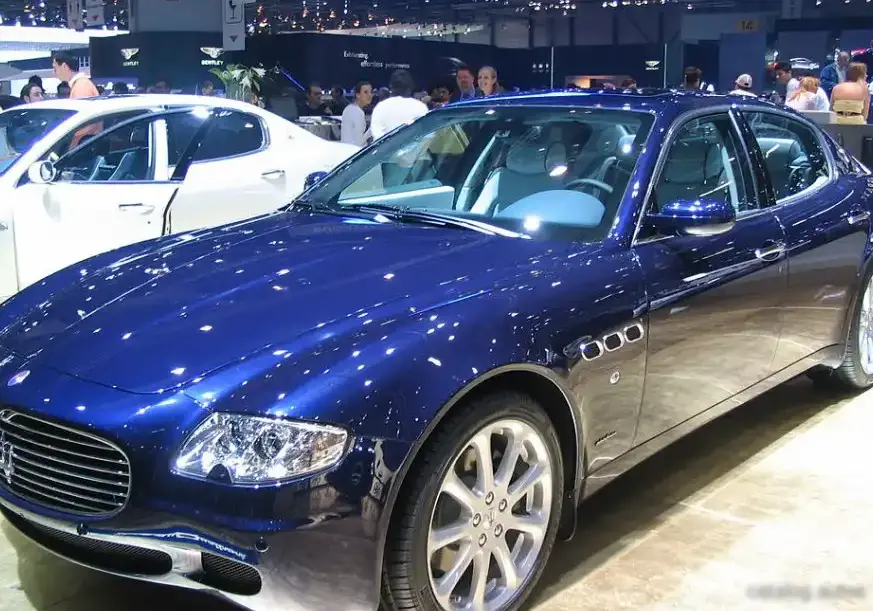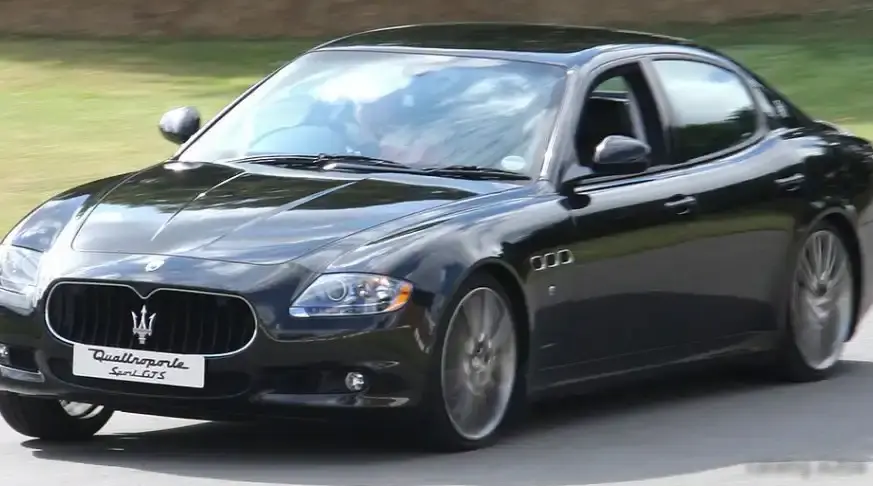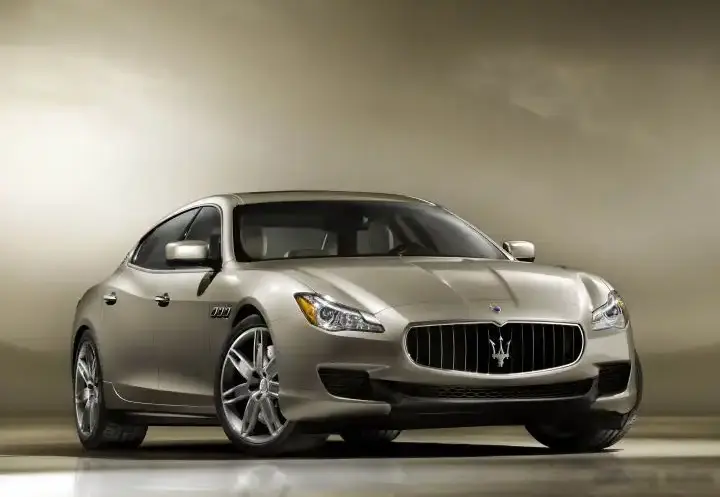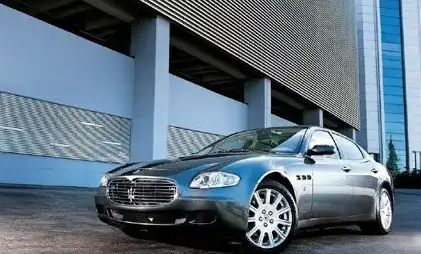
The Maserati Quattroporte V 4.2 i V8 32V, produced between 2003 and 2012, represents a significant chapter in the storied history of Maserati’s flagship sedan. This generation, known internally as the M90 platform, aimed to blend Italian luxury and performance with modern technology. The 4.2-liter V8 variant occupied a central position in the Quattroporte V lineup, offering a compelling combination of power, refinement, and Italian flair. It was positioned as the core model, bridging the gap between the entry-level 4.2 (with slightly less power) and the more performance-focused S models and later, the GTS variants.
Technical Specifications
| Brand | Maserati |
| Model | Quattroporte |
| Generation | Quattroporte V |
| Type (Engine) | 4.2 i V8 32V (400 Hp) |
| Start of production | 2003 |
| End of production | 2012 |
| Powertrain Architecture | Internal Combustion engine |
| Body type | Sedan |
| Seats | 5 |
| Doors | 4 |
| Fuel consumption (urban) | 21.99 l/100 km (10.7 US mpg, 12.8 UK mpg, 4.5 km/l) |
| Fuel consumption (extra urban) | 10.5 l/100 km (22.4 US mpg, 26.9 UK mpg, 9.5 km/l) |
| Fuel consumption (combined) | 14.73 l/100 km (16 US mpg, 19.2 UK mpg, 6.8 km/l) |
| Fuel Type | Petrol (Gasoline) |
| Acceleration 0 – 100 km/h | 5.6 sec |
| Acceleration 0 – 62 mph | 5.6 sec |
| Acceleration 0 – 60 mph | 5.3 sec |
| Maximum speed | 270 km/h (167.77 mph) |
| Weight-to-power ratio | 4.7 kg/Hp, 212.8 Hp/tonne |
| Weight-to-torque ratio | 4.1 kg/Nm, 244.7 Nm/tonne |
| Power | 400 Hp @ 7000 rpm |
| Power per litre | 94.3 Hp/l |
| Torque | 460 Nm @ 4750 rpm (339.28 lb.-ft. @ 4750 rpm) |
| Engine layout | Front, Longitudinal |
| Engine Model/Code | M139A |
| Engine displacement | 4244 cm3 (258.98 cu. in.) |
| Number of cylinders | 8 |
| Engine configuration | V-engine |
| Cylinder Bore | 92 mm (3.62 in.) |
| Piston Stroke | 79.8 mm (3.14 in.) |
| Compression ratio | 11:1 |
| Number of valves per cylinder | 4 |
| Fuel injection system | Multi-port manifold injection |
| Engine aspiration | Naturally aspirated engine |
| Valvetrain | DOHC |
| Engine oil capacity | 9 l (9.51 US qt | 7.92 UK qt) |
| Coolant capacity | 13 l (13.74 US qt | 11.44 UK qt) |
| Kerb Weight | 1880 kg (4144.69 lbs.) |
| Max. weight | 1990 kg (4387.2 lbs.) |
| Max load | 110 kg (242.51 lbs.) |
| Trunk (boot) space – minimum | 450 l (15.89 cu. ft.) |
| Fuel tank capacity | 90 l (23.78 US gal | 19.8 UK gal) |
| Length | 5097 mm (200.67 in.) |
| Width | 1885 mm (74.21 in.) |
| Height | 1438 mm (56.61 in.) |
| Wheelbase | 3064 mm (120.63 in.) |
| Front track | 1582 mm (62.28 in.) |
| Rear (Back) track | 1595 mm (62.8 in.) |
| Minimum turning circle | 12.3 m (40.35 ft.) |
| Drivetrain Architecture | Rear wheel drive |
| Number of gears | 6 |
| Gearbox type | Automatic transmission |
| Front suspension | Double wishbone |
| Rear suspension | Double wishbone |
| Front brakes | Ventilated discs |
| Rear brakes | Ventilated discs |
| Assisting systems | ABS (Anti-lock braking system) |
| Steering type | Steering rack and pinion |
| Tires size | 245/40 R19; 285/35 R19 |
| Wheel rims size | 8.5J x 19; 10.5J x 19 |
INTRODUCTION
The Maserati Quattroporte V 4.2 i V8 32V, launched in 2003, marked a pivotal moment for the brand. It was the first all-new Quattroporte in over a decade, and it represented a concerted effort to modernize Maserati while retaining its core values of luxury, performance, and Italian design. Built on the M90 platform – shared with the fifth-generation Chrysler 300 and Dodge Charger – the Quattroporte successfully blended American engineering with Italian styling and a distinctly European driving experience. The 4.2-liter V8 model served as the mainstay of the range, offering a balance of power and refinement that appealed to a broad spectrum of buyers.
Powertrain & Engine Architecture
At the heart of the Quattroporte V 4.2 i lies the M139A engine, a naturally aspirated 4.2-liter (4244 cc) V8. This engine, derived from a Ferrari design, boasts 32 valves (four per cylinder) and a compression ratio of 11:1. It utilizes a multi-port fuel injection system, delivering a robust 400 horsepower at 7000 rpm and 460 Nm (339.28 lb-ft) of torque at 4750 rpm. The engine’s dual overhead camshafts (DOHC) and sophisticated valvetrain contribute to its smooth power delivery and responsiveness. The engine is longitudinally mounted at the front of the vehicle. The Quattroporte V 4.2 i was exclusively offered with a six-speed automatic transmission, sourced from ZF. This transmission was tuned to provide smooth, yet decisive shifts, complementing the V8’s character. While not known for blistering acceleration compared to modern performance cars, the combination delivered a 0-60 mph time of around 5.3 seconds and a top speed of 167.77 mph.
Driving Characteristics
The driving experience in the Quattroporte V 4.2 i is characterized by a blend of comfort and performance. The six-speed automatic transmission, while not offering the engagement of a manual, provides seamless gear changes and contributes to a relaxed cruising experience. The V8 engine delivers ample power for effortless overtaking and highway cruising. Compared to the later S models with their increased horsepower and sport-tuned suspensions, the 4.2 i prioritizes comfort and refinement. The gear ratios are optimized for mid-range torque, making it a pleasant daily driver. While the suspension is firm enough to provide good body control, it’s not overly harsh, absorbing bumps and imperfections in the road reasonably well. Compared to the diesel variants, the V8 offers a more visceral and engaging driving experience, with a distinctive exhaust note and a more immediate throttle response.
Equipment & Trim Levels
The Quattroporte V 4.2 i came standard with a generous array of features, befitting its luxury status. Standard equipment included leather upholstery, wood trim, automatic climate control, power-adjustable front seats, and a premium audio system. Optional extras included a rear seat entertainment system, upgraded leather options, and various customization choices through Maserati’s “Fuoriserie” program. The interior design emphasized Italian craftsmanship and attention to detail, with high-quality materials and a sophisticated layout. The dashboard featured analog gauges, a central infotainment screen, and a leather-wrapped steering wheel. Trim levels were relatively simple, with most customization occurring through optional packages.
Chassis & Braking
The Quattroporte V 4.2 i utilizes a double wishbone suspension setup at both the front and rear, providing a comfortable ride and good handling characteristics. The car is equipped with ventilated disc brakes on all four wheels, providing ample stopping power. An Anti-lock Braking System (ABS) is standard. The car’s weight distribution is relatively balanced, contributing to its stability and predictability. The steering is a rack and pinion system, offering precise and responsive control. The standard tire size is 245/40 R19 at the front and 285/35 R19 at the rear, mounted on 8.5J and 10.5J alloy wheels, respectively.
Market Reception & Comparison
The Quattroporte V 4.2 i was generally well-received by automotive critics. It was praised for its elegant design, luxurious interior, and powerful V8 engine. However, some critics noted its relatively high fuel consumption and the somewhat dated technology compared to its German rivals. Compared to the 4.2-liter non-V8 models, the V8 offered a significant performance upgrade, justifying its higher price tag. Against competitors like the BMW 7 Series and Mercedes-Benz S-Class, the Quattroporte offered a more distinctive and characterful alternative, albeit with a slightly lower level of technological sophistication. Fuel economy was a common criticism, with combined figures around 16 US mpg.
Legacy
The Maserati Quattroporte V 4.2 i remains a desirable classic car today. The M139A V8 engine is generally considered to be reliable, although regular maintenance is essential. Common issues include oil leaks and occasional electrical gremlins. The ZF six-speed automatic transmission is also known to be durable. The car’s elegant design and luxurious interior continue to appeal to enthusiasts. In the used car market, prices vary depending on condition, mileage, and options, but well-maintained examples command a premium. The Quattroporte V 4.2 i represents a high point in Maserati’s history, successfully blending Italian style and performance with modern engineering.