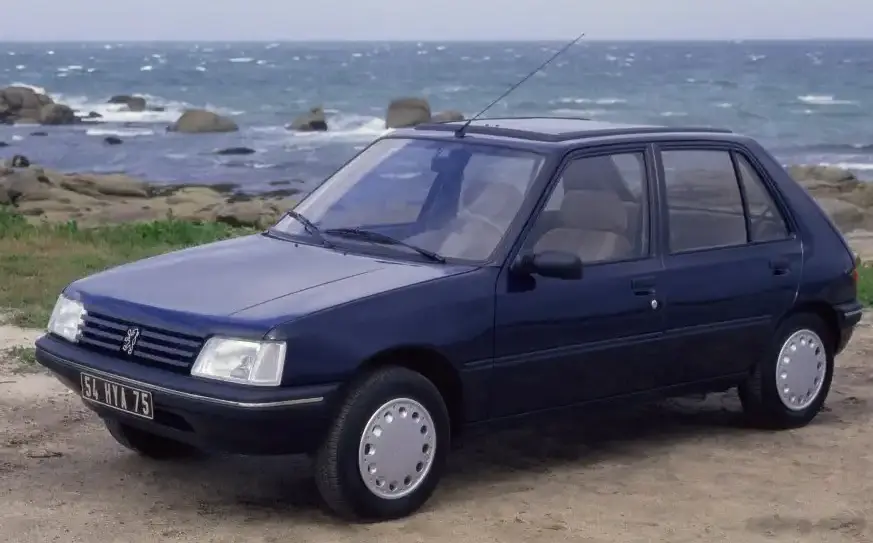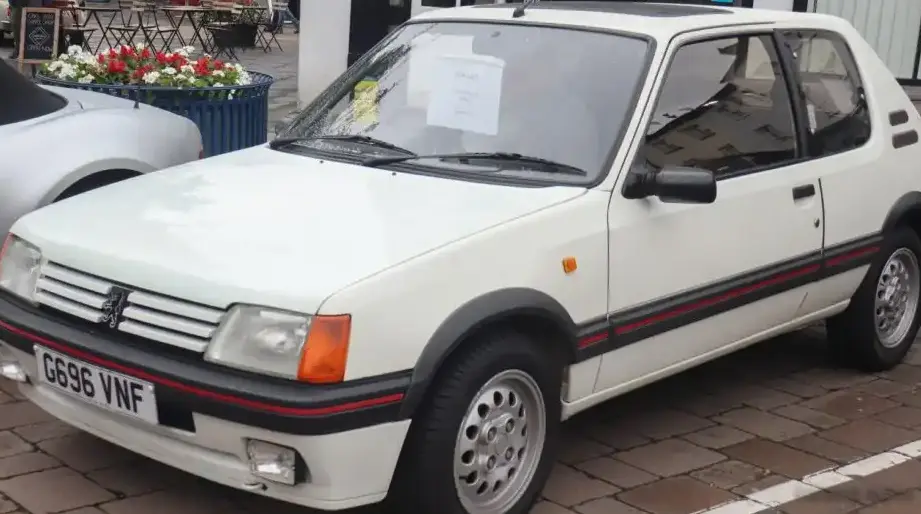
The Peugeot 205 1.4, produced between 1983 and 1987, represented the entry point into the hugely successful 205 range. Part of the 741A/C series, this 3-door hatchback was a mainstay of the European small car market, offering affordable transportation with Peugeot’s reputation for build quality. It served as the foundation for a model line that would become iconic, paving the way for more powerful and sophisticated variants like the GTI and Turbo models. The 1.4-liter engine and manual transmission combination was specifically targeted at buyers prioritizing economy and practicality over outright performance.
Technical Specifications
| Brand | Peugeot |
| Model | 205 |
| Generation | 205 I (741A/C) 3-door |
| Type (Engine) | 1.4 (60 Hp) |
| Start of production | 1983 |
| End of production | 1987 |
| Powertrain Architecture | Internal Combustion engine |
| Body type | Hatchback |
| Seats | 4 |
| Doors | 3 |
| Fuel consumption (urban) | 6.9 l/100 km (34.1 US mpg, 40.9 UK mpg, 14.5 km/l) |
| Fuel consumption (extra urban) | 4.6 l/100 km (51.1 US mpg, 61.4 UK mpg, 21.7 km/l) |
| Fuel Type | Petrol (Gasoline) |
| Acceleration 0 – 100 km/h | 14.8 sec |
| Acceleration 0 – 62 mph | 14.8 sec |
| Acceleration 0 – 60 mph | 14.1 sec |
| Maximum speed | 155 km/h (96.31 mph) |
| Weight-to-power ratio | 13.2 kg/Hp, 75.7 Hp/tonne |
| Weight-to-torque ratio | 7.4 kg/Nm, 134.9 Nm/tonne |
| Power | 60 Hp @ 5000 rpm |
| Power per litre | 44.1 Hp/l |
| Torque | 107 Nm @ 2500 rpm (78.92 lb.-ft. @ 2500 rpm) |
| Engine layout | Front, Transverse |
| Engine Model/Code | XY7 |
| Engine displacement | 1360 cm3 (82.99 cu. in.) |
| Number of cylinders | 4 |
| Engine configuration | Inline |
| Cylinder Bore | 75 mm (2.95 in.) |
| Piston Stroke | 77 mm (3.03 in.) |
| Compression ratio | 9.3:1 |
| Number of valves per cylinder | 2 |
| Fuel injection system | Carburettor |
| Engine aspiration | Naturally aspirated engine |
| Valvetrain | OHV |
| Engine oil capacity | 5 l (5.28 US qt | 4.4 UK qt) |
| Coolant | 5.8 l (6.13 US qt | 5.1 UK qt) |
| Kerb Weight | 793 kg (1748.27 lbs.) |
| Max. weight | 1240 kg (2733.73 lbs.) |
| Max load | 447 kg (985.47 lbs.) |
| Trunk (boot) space – minimum | 216 l (7.63 cu. ft.) |
| Trunk (boot) space – maximum | 564 l (19.92 cu. ft.) |
| Fuel tank capacity | 50 l (13.21 US gal | 11 UK gal) |
| Permitted trailer load with brakes (12%) | 800 kg (1763.7 lbs.) |
| Length | 3705 mm (145.87 in.) |
| Width | 1572 mm (61.89 in.) |
| Height | 1373 mm (54.06 in.) |
| Wheelbase | 2420 mm (95.28 in.) |
| Front track | 1350 mm (53.15 in.) |
| Rear (Back) track | 1300 mm (51.18 in.) |
| Front overhang | 680 mm (26.77 in.) |
| Rear overhang | 605 mm (23.82 in.) |
| Drag coefficient (Cd) | 0.35 |
| Minimum turning circle (turning diameter) | 10.5 m (34.45 ft.) |
| Drivetrain Architecture | The Internal combustion engine (ICE) drives the front wheels of the vehicle. |
| Drive wheel | Front wheel drive |
| Number of gears and type of gearbox | 5 gears, manual transmission |
| Front suspension | Independent, type McPherson with coil spring and anti-roll bar |
| Rear suspension | Torsion |
| Front brakes | Disc |
| Rear brakes | Drum |
| Tires size | 165/70 R14 |
| Wheel rims size | 14 |
Powertrain & Engine Architecture
The heart of the 205 1.4 was the XY7 engine, a 1360cc inline-four cylinder unit. This engine utilized a relatively simple overhead valve (OHV) valvetrain and a single carburetor for fuel delivery. The carburetor system, while common for the era, was less efficient and offered less precise fuel control compared to fuel injection systems found in later models. The engine produced 60 horsepower at 5000 rpm and 107 Nm (78.92 lb-ft) of torque at 2500 rpm. The engine was transversely mounted, a common layout for front-wheel-drive vehicles, contributing to a compact engine bay and improved space utilization. The 5-speed manual transmission was the only gearbox option for this variant, providing a reasonable spread of gears for both urban and highway driving.
Driving Characteristics
The 205 1.4 offered a predictable, if uninspiring, driving experience. Acceleration was modest, taking around 14.8 seconds to reach 62 mph. The engine felt strained at higher revs, and the carburetor-based fuel delivery meant throttle response wasn’t particularly sharp. However, the 205’s lightweight construction (793 kg / 1748 lbs) meant it felt nimble and easy to maneuver in city traffic. The manual gearbox was light and precise, encouraging efficient driving. Compared to the later 1.6-liter and GTI models, the 1.4 lacked the punch and responsiveness that made those versions so popular, but it offered a more economical and accessible entry point into 205 ownership.
Equipment & Trim Levels
The 1.4 model was the base trim level of the 205 range. Standard equipment was fairly basic, reflecting its position as an affordable car. It typically included cloth upholstery, a simple dashboard layout, and basic instrumentation. Features like a radio, central locking, and electric windows were usually optional extras. The interior was functional and durable, prioritizing practicality over luxury. Exterior features were equally understated, with steel wheels, black plastic bumpers, and minimal chrome trim.
Chassis & Braking
The 205 featured an independent McPherson strut front suspension and a torsion beam rear suspension. This setup provided a good balance of ride comfort and handling for a car in its class. The front brakes were discs, offering adequate stopping power, while the rear brakes were drums, a cost-saving measure common in entry-level models. The steering was unassisted, providing a direct and communicative feel, although it required more effort at low speeds. The relatively narrow 165/70 R14 tires contributed to a modest level of grip.
Market Reception & Comparison
The Peugeot 205 1.4 was well-received as a practical and affordable small car. Critics praised its nimble handling, fuel efficiency, and build quality. However, the engine’s lack of power was a common criticism. Compared to rivals like the Renault 5 and Citroën Visa, the 205 1.4 offered a slightly more refined driving experience and a more modern interior. Fuel economy was a strong point, with figures of around 6.9 l/100km (34.1 US mpg) in urban driving and 4.6 l/100km (51.1 US mpg) on the open road. The 1.6-liter version offered a noticeable performance improvement, but at a higher price point. The GTI models were in a different league altogether, catering to a more performance-oriented audience.
Legacy
The Peugeot 205 1.4, while not the most glamorous version of the 205, played a crucial role in establishing the model’s success. Its affordability and practicality made it a popular choice for first-time car buyers and those seeking economical transportation. The XY7 engine proved to be relatively reliable, although carburetor maintenance can be required on older examples. Today, the 205 1.4 is a relatively rare sight on the road, but well-maintained examples are sought after by enthusiasts as a classic and affordable entry point into the world of vintage Peugeots. Its simple mechanicals make it relatively easy to maintain and repair, contributing to its enduring appeal.