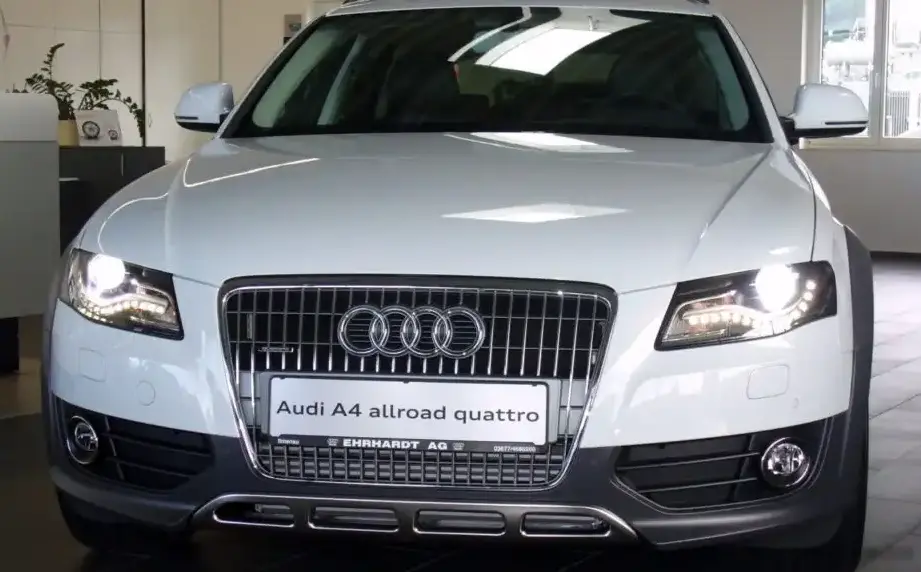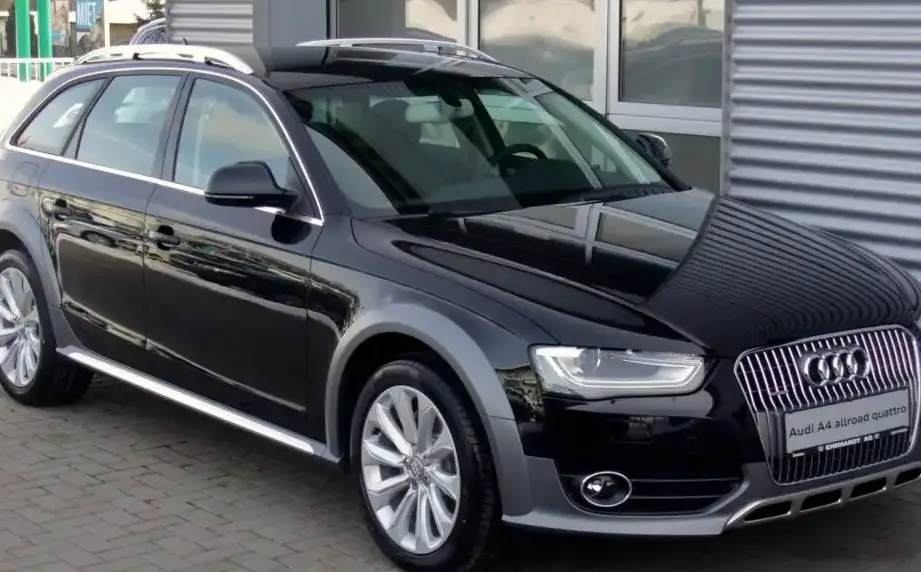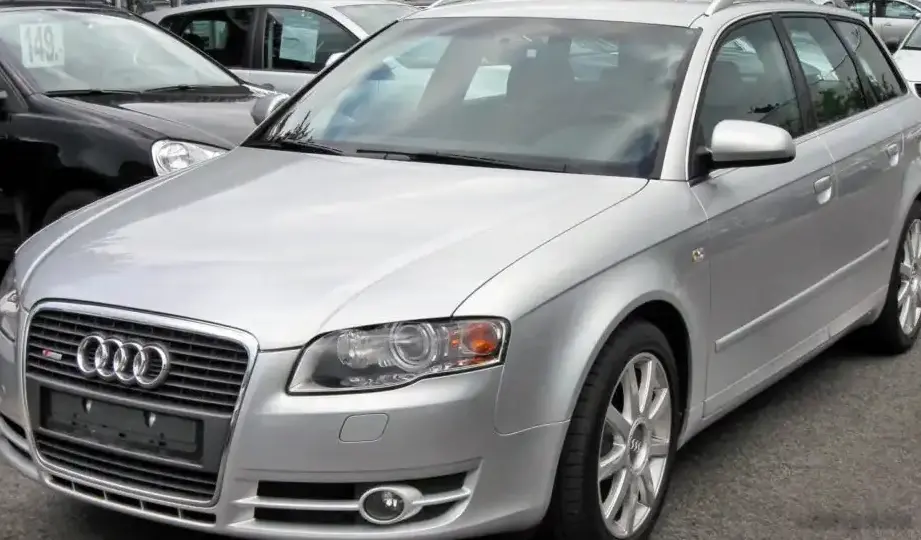
The Audi A4 Avant (B7 8E) 2.0 TDI, produced from August 2004 to June 2008, represents a significant iteration of Audi’s popular compact executive wagon. Positioned as a diesel-powered variant within the B7 A4 range (which spanned 2004-2008), this model aimed to provide a blend of practicality, fuel efficiency, and performance for European buyers. It was built on the Volkswagen Group’s PL46 platform, also known as the B7 platform, shared with models like the Volkswagen Passat and Škoda Superb. The 2.0 TDI variant offered a compelling alternative to the petrol-powered A4s, capitalizing on the growing demand for diesel engines in Europe due to their lower running costs and improved fuel economy.
Technical Specifications
| Brand | Audi |
| Model | A4 |
| Generation | A4 Avant (B7 8E) |
| Type (Engine) | 2.0 TDI (140 Hp) |
| Start of production | August, 2004 |
| End of production | June, 2008 |
| Powertrain Architecture | Internal Combustion engine |
| Body type | Station wagon (estate) |
| Seats | 5 |
| Doors | 5 |
| Fuel consumption (urban) | 7.9 l/100 km (29.8 US mpg, 35.8 UK mpg, 12.7 km/l) |
| Fuel consumption (extra urban) | 4.6 l/100 km (51.1 US mpg, 61.4 UK mpg, 21.7 km/l) |
| Fuel consumption (combined) | 5.8 l/100 km (40.6 US mpg, 48.7 UK mpg, 17.2 km/l) |
| CO2 emissions | 153 g/km |
| Fuel Type | Diesel |
| Acceleration 0 – 100 km/h | 9.9 sec |
| Acceleration 0 – 62 mph | 9.9 sec |
| Acceleration 0 – 60 mph | 9.4 sec |
| Maximum speed | 207 km/h (128.62 mph) |
| Emission standard | Euro 4 |
| Weight-to-power ratio | 10.6 kg/Hp, 94 Hp/tonne |
| Weight-to-torque ratio | 4.7 kg/Nm, 214.8 Nm/tonne |
| Power | 140 Hp @ 4000 rpm |
| Power per litre | 70.5 Hp/l |
| Torque | 320 Nm @ 1750-2500 rpm (236.02 lb.-ft. @ 1750-2500 rpm) |
| Engine layout | Front, Longitudinal |
| Engine Model/Code | EA188 / BLB |
| Engine displacement | 1986 cm3 (121.19 cu. in.) |
| Number of cylinders | 4 |
| Engine configuration | Inline |
| Compression ratio | 19:1 |
| Number of valves per cylinder | 4 |
| Fuel injection system | Pump-nozzle (Unit Injector) |
| Engine aspiration | Turbocharger, Intercooler |
| Valvetrain | OHC |
| Engine oil capacity | 3.8 l (4.02 US qt | 3.34 UK qt) |
| Coolant | 8 l (8.45 US qt | 7.04 UK qt) |
| Kerb Weight | 1490 kg (3284.89 lbs.) |
| Max. weight | 2040 kg (4497.43 lbs.) |
| Max load | 550 kg (1212.54 lbs.) |
| Trunk (boot) space – minimum | 442 l (15.61 cu. ft.) |
| Trunk (boot) space – maximum | 1184 l (41.81 cu. ft.) |
| Fuel tank capacity | 70 l (18.49 US gal | 15.4 UK gal) |
| Max. roof load | 75 kg (165.35 lbs.) |
| Permitted trailer load with brakes (8%) | 1800 kg (3968.32 lbs.) |
| Permitted trailer load with brakes (12%) | 1600 kg (3527.4 lbs.) |
| Permitted trailer load without brakes | 750 kg (1653.47 lbs.) |
| Permitted towbar download | 80 kg (176.37 lbs.) |
| Length | 4586 mm (180.55 in.) |
| Width | 1772 mm (69.76 in.) |
| Width including mirrors | 1937 mm (76.26 in.) |
| Height | 1427 mm (56.18 in.) |
| Wheelbase | 2648 mm (104.25 in.) |
| Front track | 1522 mm (59.92 in.) |
| Rear (Back) track | 1522 mm (59.92 in.) |
| Ride height (ground clearance) | 106 mm (4.17 in.) |
| Drag coefficient (Cd) | 0.29 |
| Minimum turning circle (turning diameter) | 11.1 m (36.42 ft.) |
| Drivetrain Architecture | The Internal combustion engine (ICE) drives the front wheels of the vehicle. |
| Drive wheel | Front wheel drive |
| Number of gears and type of gearbox | 6 gears, manual transmission |
| Front suspension | Independent multi-link suspension |
| Rear suspension | Independent multi-link suspension |
| Front brakes | Ventilated discs |
| Rear brakes | Disc |
| Assisting systems | ABS (Anti-lock braking system) |
| Steering type | Steering rack and pinion |
| Power steering | Hydraulic Steering |
| Tires size | 205/55 R16 |
| Wheel rims size | 7J x 16 |
Powertrain & Engine Architecture
The heart of the A4 Avant 2.0 TDI is the EA188 engine family, specifically the BLB engine code. This 1986cc, four-cylinder diesel engine utilizes a common rail direct injection system, delivering fuel directly into the combustion chamber at extremely high pressure. The BLB engine employs pump-nozzle (Unit Injector) technology, a precursor to the more modern common rail systems. This system, while effective, is known for being slightly noisier than later common rail implementations. The engine features an overhead camshaft (OHC) valvetrain with four valves per cylinder, optimizing gas flow for improved performance. A turbocharger with an intercooler is standard, boosting power and torque output. The intercooler cools the compressed air from the turbocharger, increasing its density and further enhancing combustion efficiency. The engine produces 140 horsepower at 4000 rpm and 320 Nm (236 lb-ft) of torque between 1750 and 2500 rpm. The engine is longitudinally mounted in the front of the vehicle, driving the front wheels.
Driving Characteristics
The 2.0 TDI engine in the A4 Avant provides a respectable level of performance, though it’s not intended to be a sports car. Acceleration from 0 to 100 km/h (0-62 mph) takes approximately 9.9 seconds. The engine’s strong low-end torque makes it well-suited for everyday driving, providing ample power for overtaking and navigating city streets. Compared to the more powerful 1.8T petrol engine or the later 2.0 TDI variants with higher outputs, the 140 hp version feels less urgent. However, it offers significantly better fuel economy. The six-speed manual transmission provides precise gear changes, allowing drivers to make the most of the engine’s powerband. The gear ratios are tuned for a balance of fuel efficiency and drivability, with a relatively long final drive to maximize mileage.
Equipment & Trim Levels
The A4 Avant 2.0 TDI typically came equipped with a reasonable level of standard features. These included power windows, central locking, air conditioning, and an audio system. Interior upholstery was generally cloth, though leather options were available. Trim levels varied by market, but generally, the 2.0 TDI sat in the mid-range of the A4 Avant lineup. Optional extras included sunroof, navigation system, upgraded audio, and parking sensors. The dashboard layout was typical of Audi at the time, with a clean and functional design. Safety features such as ABS and airbags were standard.
Chassis & Braking
The A4 Avant (B7) features an independent multi-link suspension system at both the front and rear, providing a comfortable ride and good handling characteristics. The front suspension utilizes coil springs and shock absorbers, while the rear suspension incorporates a more complex multi-link design to optimize wheel control. Brakes are ventilated discs at the front and solid discs at the rear. ABS (Anti-lock Braking System) is standard. The steering is a rack and pinion system with hydraulic power assistance, providing precise and responsive steering feel.
Market Reception & Comparison
The Audi A4 Avant 2.0 TDI was well-received in the European market, where diesel wagons are highly popular. Critics praised its fuel efficiency, practicality, and comfortable ride. Compared to the petrol-powered A4s, the 2.0 TDI offered significantly lower running costs, making it an attractive option for high-mileage drivers. Compared to other diesel variants in the A4 range, such as the 1.9 TDI, the 2.0 TDI offered a bit more power and refinement, though at a slightly higher price point. The 2.0 TDI was often seen as a sweet spot in the lineup, offering a good balance of performance, economy, and features.
Legacy
The EA188 2.0 TDI engine, including the BLB variant, has proven to be a relatively reliable powertrain, although it is not without its potential issues. The pump-nozzle injection system can be prone to wear and tear over time, potentially leading to increased running costs. However, with regular maintenance and proper care, these engines can last for many years. In the used car market today, the A4 Avant 2.0 TDI remains a popular choice, particularly for those seeking a practical and fuel-efficient wagon. Its reputation for reliability and its comfortable driving experience continue to make it a desirable vehicle.