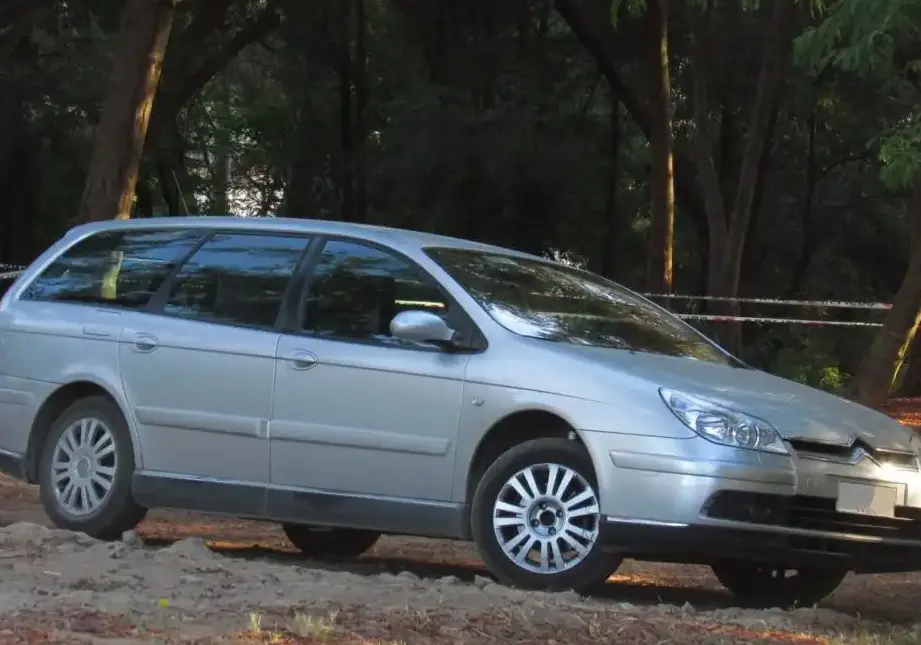
The Citroën C5 I Break (Phase II), specifically the 2.0 HDi 136 hp variant with a Diesel Particulate Filter (FAP), was a popular choice in the European market from 2004 to 2008. Positioned as a mid-range offering within the C5 Break (estate) lineup, it aimed to balance fuel efficiency, practicality, and reasonable performance for family transportation. This model falls within the first generation (X3) of the C5, which was known for its innovative hydropneumatic suspension and comfortable ride. The Phase II update brought styling revisions and refinements to the interior and engine options.
Technical Specifications
| Brand | Citroën |
| Model | C5 |
| Generation | C5 I Break (Phase II, 2004) |
| Type (Engine) | 2.0 HDi (136 Hp) FAP |
| Start of production | 2004 |
| End of production | 2008 |
| Powertrain Architecture | Internal Combustion engine |
| Body type | Station wagon (estate) |
| Seats | 5 |
| Doors | 5 |
| Fuel consumption (urban) | 7.8 l/100 km (30.2 US mpg, 36.2 UK mpg, 12.8 km/l) |
| Fuel consumption (extra urban) | 5 l/100 km (47 US mpg, 56.5 UK mpg, 20 km/l) |
| Fuel consumption (combined) | 6 l/100 km (39.2 US mpg, 47.1 UK mpg, 16.7 km/l) |
| CO2 emissions | 158 g/km |
| Fuel Type | Diesel |
| Acceleration 0 – 100 km/h | 10 sec |
| Acceleration 0 – 62 mph | 10 sec |
| Acceleration 0 – 60 mph | 9.5 sec |
| Maximum speed | 200 km/h (124.27 mph) |
| Emission standard | Euro 4 |
| Weight-to-power ratio | 11.2 kg/Hp, 89.5 Hp/tonne |
| Weight-to-torque ratio | 4.8 kg/Nm, 210.5 Nm/tonne |
| Power | 136 Hp @ 4000 rpm |
| Power per litre | 68.1 Hp/l |
| Torque | 320 Nm @ 2000 rpm (236.02 lb.-ft. @ 2000 rpm) |
| Engine layout | Front, Transverse |
| Engine Model/Code | RHR DW10BTED4 |
| Engine displacement | 1997 cm3 (121.86 cu. in.) |
| Number of cylinders | 4 |
| Engine configuration | Inline |
| Cylinder Bore | 85 mm (3.35 in.) |
| Piston Stroke | 88 mm (3.46 in.) |
| Compression ratio | 17.6:1 |
| Number of valves per cylinder | 4 |
| Fuel injection system | Diesel Commonrail |
| Engine aspiration | Turbocharger, Intercooler |
| Valvetrain | DOHC |
| Engine oil capacity | 5.25 l (5.55 US qt | 4.62 UK qt) |
| Coolant | 10.7 l (11.31 US qt | 9.41 UK qt) |
| Kerb Weight | 1520 kg (3351.03 lbs.) |
| Max. weight | 2120 kg (4673.8 lbs.) |
| Max load | 600 kg (1322.77 lbs.) |
| Trunk (boot) space – minimum | 563 l (19.88 cu. ft.) |
| Trunk (boot) space – maximum | 1658 l (58.55 cu. ft.) |
| Fuel tank capacity | 67 l (17.7 US gal | 14.74 UK gal) |
| Max. roof load | 75 kg (165.35 lbs.) |
| Permitted trailer load with brakes (12%) | 1600 kg (3527.4 lbs.) |
| Permitted trailer load without brakes | 750 kg (1653.47 lbs.) |
| Permitted towbar download | 75 kg (165.35 lbs.) |
| Length | 4839 mm (190.51 in.) |
| Width | 1780 mm (70.08 in.) |
| Height | 1511 mm (59.49 in.) |
| Wheelbase | 2750 mm (108.27 in.) |
| Front track | 1528 mm (60.16 in.) |
| Rear track | 1495 mm (58.86 in.) |
| Front overhang | 1033 mm (40.67 in.) |
| Rear overhang | 1056 mm (41.57 in.) |
| Minimum turning circle | 12.43 m (40.78 ft.) |
| Drivetrain Architecture | Front wheel drive |
| Drive wheel | Front wheel drive |
| Number of gears | 6 gears, manual transmission |
| Front suspension | Independent, type McPherson with coil spring and anti-roll bar |
| Rear suspension | Semi-independent, coil spring |
| Front brakes | Ventilated discs |
| Rear brakes | Disc |
| Assisting systems | ABS (Anti-lock braking system) |
| Tires size | 215/55 R16 |
| Wheel rims size | 16 |
INTRODUCTION
The Citroën C5 I Break (Phase II) 2.0 HDi 136 hp FAP, produced between 2004 and 2008, represented a significant offering in the European mid-size station wagon segment. Built on the PSA Group’s 1HX0 platform (shared with the Peugeot 407 Break), the C5 Break aimed to provide a comfortable and practical vehicle for families. The 2.0 HDi engine, a mainstay of the PSA lineup, was chosen for its balance of power and fuel economy. The inclusion of a Diesel Particulate Filter (FAP) was increasingly common during this period, reflecting growing environmental concerns and stricter emissions regulations. This variant sat comfortably in the middle of the C5 Break range, offering more performance than the lower-powered 1.6 HDi models but remaining more affordable than the flagship 2.2 HDi.
Powertrain & Engine Architecture
The heart of this C5 variant is the DW10BTED4 engine, a 1997cc four-cylinder diesel engine. This engine utilizes a common rail direct injection system, delivering fuel at extremely high pressure for improved combustion efficiency and reduced noise. The RHR engine code specifically denotes a version equipped with a Diesel Particulate Filter (FAP). The engine features a single overhead camshaft (SOHC) design operating four valves per cylinder (DOHC). A turbocharger with an intercooler is employed to boost power output, providing 136 horsepower at 4000 rpm and a substantial 320 Nm (236 lb-ft) of torque at just 2000 rpm. The engine’s robust bottom end and relatively high compression ratio (17.6:1) contribute to its durability and torque delivery. The engine is transversely mounted in the front of the vehicle. The transmission is a 6-speed manual gearbox, chosen for its efficiency and driver engagement.
Driving Characteristics
The 2.0 HDi 136 hp C5 Break offered a relaxed and comfortable driving experience. While not overtly sporty, the engine provided ample torque for everyday driving and overtaking maneuvers. The 6-speed gearbox allowed for efficient cruising on motorways, with relatively low engine speeds at highway speeds. Acceleration from 0-100 km/h (0-62 mph) took around 10 seconds, which was competitive for the segment at the time. Compared to the lower-powered 1.6 HDi, the 2.0 HDi felt noticeably more responsive, particularly when fully loaded. Compared to the more powerful 2.2 HDi, the 2.0 HDi offered a more economical driving experience, albeit with slightly less outright performance. The gear ratios were well-chosen to maximize fuel efficiency and provide smooth acceleration.
Equipment & Trim Levels
The C5 Break 2.0 HDi 136 hp FAP typically came equipped with a reasonable level of standard features. These included air conditioning, power windows, central locking, and an RDS stereo system. Higher trim levels, such as Exclusive, added features like automatic climate control, rain-sensing wipers, rear parking sensors, and upgraded upholstery. Interior upholstery was typically cloth, with leather options available as an extra. The dashboard layout was functional and ergonomically designed, with a focus on ease of use. Optional extras included a navigation system, panoramic sunroof, and xenon headlights.
Chassis & Braking
The C5 Break featured a McPherson strut front suspension with a coil spring and anti-roll bar, providing a comfortable ride and predictable handling. The rear suspension was a semi-independent torsion beam setup, which offered a good balance between comfort and stability. Braking was handled by ventilated discs on the front wheels and solid discs on the rear. Anti-lock Braking System (ABS) was standard. The C5’s suspension was tuned for comfort, prioritizing a smooth ride over sharp handling. The steering was power-assisted, providing light and easy steering feel.
Market Reception & Comparison
The Citroën C5 Break 2.0 HDi 136 hp FAP was generally well-received by automotive critics. It was praised for its comfortable ride, spacious interior, and fuel efficiency. The 2.0 HDi engine was considered a strong performer, offering a good balance of power and economy. Compared to rivals like the Ford Mondeo Estate and Volkswagen Passat Estate, the C5 Break offered a more distinctive and comfortable driving experience. Fuel economy was competitive, averaging around 6 l/100 km (39.2 US mpg) in combined driving. Reliability was generally good, although some owners reported issues with the FAP system requiring regeneration or eventual replacement.
Legacy
The Citroën C5 I Break 2.0 HDi 136 hp FAP remains a relatively common sight on European roads today. The DW10BTED4 engine is known for its durability, although regular maintenance is essential, particularly regarding the FAP system. Used examples are generally affordable, making them an attractive option for buyers seeking a practical and comfortable estate car. The C5 Break’s comfortable ride and spacious interior continue to appeal to families. While newer cars offer more advanced technology and improved fuel economy, the C5 Break 2.0 HDi 136 hp FAP remains a capable and reliable vehicle.