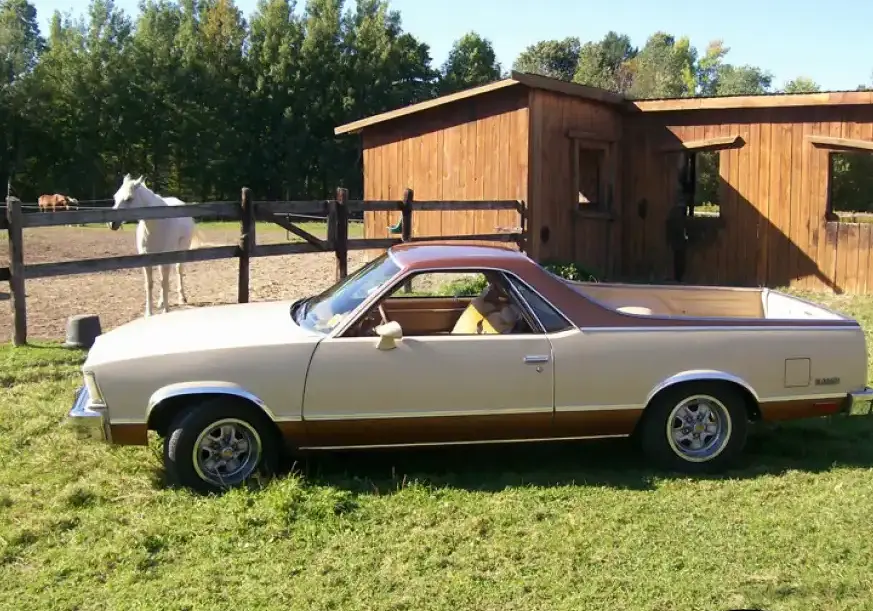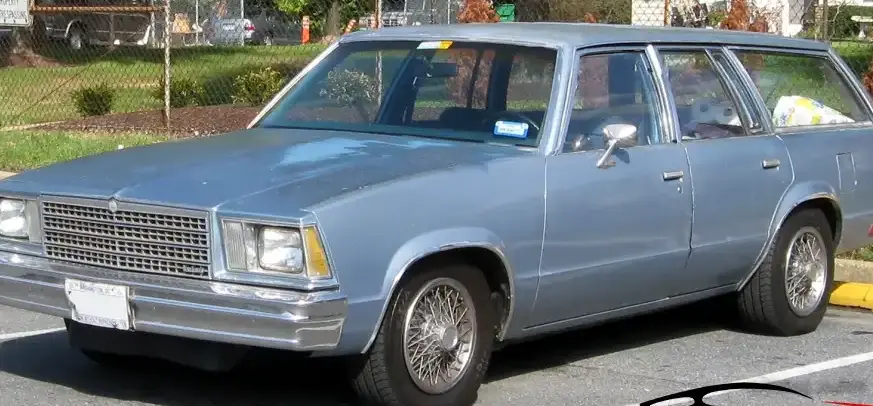
The Chevrolet Malibu IV Station Wagon, produced for the 1980 and 1981 model years, represented Chevrolet’s entry into the increasingly popular station wagon market. Positioned as a family-oriented vehicle, the fourth-generation Malibu offered a spacious interior and practical cargo capacity. The 3.8 V6 with 115 horsepower and a three-speed automatic transmission was a mid-range offering within the Malibu IV lineup, slotting below the more powerful V8 options and above the smaller six-cylinder engines. This configuration aimed to balance affordability with acceptable performance for the average family driver. It was built on the rear-wheel drive A-body platform, a design Chevrolet had utilized for many years.
Technical Specifications
| Brand | Chevrolet |
| Model | Malibu |
| Generation | Malibu IV Station Wagon |
| Type (Engine) | 3.8 V6 (115 Hp) CAT Automatic |
| Start of production | 1980 |
| End of production | 1981 |
| Powertrain Architecture | Internal Combustion engine |
| Body type | Station wagon (estate) |
| Seats | 6 |
| Doors | 5 |
| Fuel Type | Petrol (Gasoline) |
| Weight-to-power ratio | 13.3 kg/Hp, 74.9 Hp/tonne |
| Weight-to-torque ratio | 6.5 kg/Nm, 154.4 Nm/tonne |
| Power | 115 Hp @ 4000 rpm |
| Power per litre | 30.7 Hp/l |
| Torque | 237 Nm @ 2000 rpm, 174.8 lb.-ft. @ 2000 rpm |
| Engine layout | Front, Longitudinal |
| Engine displacement | 3751 cm3, 228.9 cu. in. |
| Number of cylinders | 6 |
| Engine configuration | V-engine |
| Cylinder Bore | 95 mm, 3.74 in. |
| Piston Stroke | 88.4 mm, 3.48 in. |
| Compression ratio | 8.6:1 |
| Number of valves per cylinder | 2 |
| Fuel injection system | Carburettor |
| Engine aspiration | Naturally aspirated engine |
| Valvetrain | OHV |
| Kerb Weight | 1535 kg, 3384.1 lbs |
| Trunk (boot) space – minimum | 1133 l, 40.01 cu. ft |
| Trunk (boot) space – maximum | 2050 l, 72.4 cu. ft |
| Fuel tank capacity | 69 l, 18.23 US gal | 15.18 UK gal |
| Length | 4911 mm, 193.35 in |
| Width | 1816 mm, 71.5 in |
| Height | 1410 mm, 55.51 in |
| Wheelbase | 2745 mm, 108.07 in |
| Front track | 1486 mm, 58.5 in |
| Rear (Back) track | 1467 mm, 57.76 in |
| Front overhang | 915 mm, 36.02 in |
| Rear overhang | 1251 mm, 49.25 in |
| Ride height (ground clearance) | 145 mm, 5.71 in |
| Minimum turning circle (turning diameter) | 13.0 m, 42.65 ft |
| Approach angle | 23° |
| Departure angle | 16° |
| Ramp-over (brakeover) angle | 14° |
| Drivetrain Architecture | The Internal combustion engine (ICE) drives the rear wheels of the vehicle. |
| Drive wheel | Rear wheel drive |
| Number of gears and type of gearbox | 3 gears, automatic transmission |
| Front suspension | Independent, type McPherson with coil spring and anti-roll bar |
| Rear suspension | dependent spring suspension, Transverse stabilizer, Trailing arm |
| Front brakes | Ventilated discs |
| Rear brakes | Drum |
| Steering type | Steering rack and pinion |
| Tires size | 195/75 R14 |
| Wheel rims size | 6.0J x 14 |
Powertrain & Engine Architecture
The heart of this Malibu variant was Chevrolet’s 3.8-liter (229 cubic inch) V6 engine. This engine, internally designated as the 3800, was a staple of GM vehicles for many years. The 1980-1981 version utilized a two-barrel carburetor for fuel delivery, a relatively simple system compared to the fuel injection systems becoming more common at the time. The engine featured an overhead valve (OHV) valvetrain, with two valves per cylinder. The 3.8L V6 produced 115 horsepower at 4000 rpm and 237 Nm (174.8 lb-ft) of torque at 2000 rpm. The torque output was a key characteristic, providing reasonable pulling power for a family wagon. The engine was mounted longitudinally in the front of the vehicle, driving the rear wheels. The transmission was a three-speed automatic, a common choice for buyers prioritizing ease of use over outright performance. This transmission was designed for smooth, comfortable shifts rather than aggressive acceleration.
Driving Characteristics
The 3.8L V6 automatic Malibu station wagon offered a comfortable, if not particularly sporty, driving experience. Acceleration was adequate for merging onto highways and passing slower traffic, but it wasn’t a particularly quick vehicle. The three-speed automatic transmission had relatively wide gear ratios, prioritizing fuel economy and smooth cruising over rapid acceleration. Compared to the available V8 engines, the 3.8L felt noticeably less powerful. However, it offered a significant improvement in fuel economy. The rear-wheel drive configuration provided a balanced feel, but the suspension, while comfortable, wasn’t designed for aggressive cornering. The steering was relatively light and easy to use, making it well-suited for everyday driving.
Equipment & Trim Levels
The 3.8L V6 automatic Malibu station wagon typically came standard with features considered essential for family vehicles of the era. These included cloth upholstery, a basic AM radio, and manual windows and locks. Air conditioning was a popular option, as was power steering. Higher trim levels offered upgrades such as upgraded interior fabrics, a more powerful stereo system, and additional chrome trim. The station wagon body style itself added to the practicality, with a large cargo area accessible through a rear tailgate. The rear seat could be folded down to further increase cargo space.
Chassis & Braking
The Malibu IV station wagon utilized a body-on-frame construction, a common practice for American cars of the time. The front suspension was independent, employing a McPherson strut design with coil springs and an anti-roll bar. The rear suspension was a more traditional solid axle setup with leaf springs and a transverse stabilizer bar. Braking duties were handled by ventilated disc brakes at the front and drum brakes at the rear. The braking system was adequate for normal driving conditions, but it lacked the stopping power of more modern systems. The tires were typically 195/75R14 size, providing a comfortable ride but limited grip.
Market Reception & Comparison
The 3.8L V6 automatic Malibu station wagon was generally well-received by consumers looking for a practical and affordable family vehicle. Critics noted its spacious interior, comfortable ride, and reasonable fuel economy. However, it was often criticized for its lack of performance compared to V8-powered competitors. Compared to the smaller six-cylinder Malibu models, the 3.8L offered a noticeable improvement in power and towing capacity. The V8 models provided significantly more performance, but at a higher price and with lower fuel economy. The Malibu competed with other American station wagons from Ford, Plymouth, and Dodge.
Legacy
The Chevrolet Malibu IV Station Wagon with the 3.8L V6 and automatic transmission has become a relatively common sight in the classic car market. The 3800 V6 engine is known for its durability and reliability, and many examples are still on the road today. However, like all vehicles of this era, they are susceptible to rust and age-related issues. Parts availability is generally good, as many components were shared with other GM vehicles. The Malibu IV station wagon represents a significant era in American automotive history, offering a glimpse into the family vehicles of the late 1970s and early 1980s. While not a high-performance vehicle, it provided a comfortable and practical transportation solution for many families.