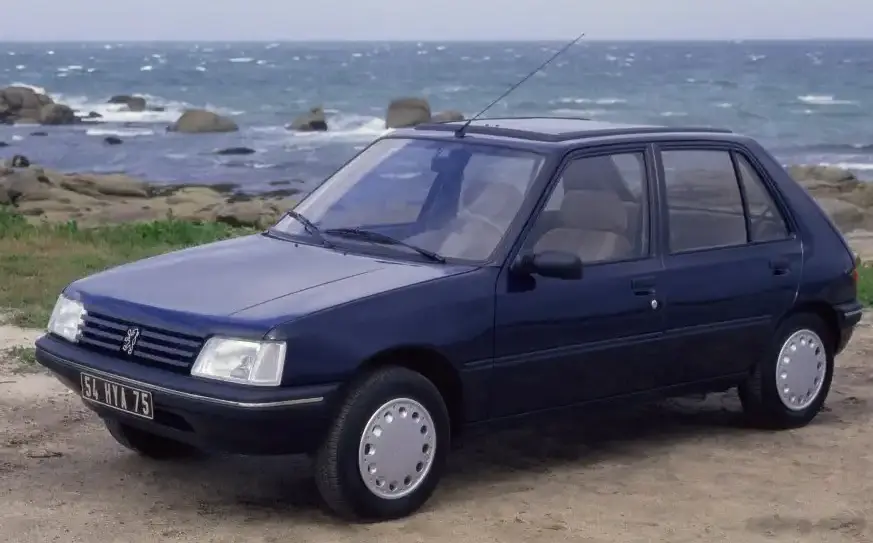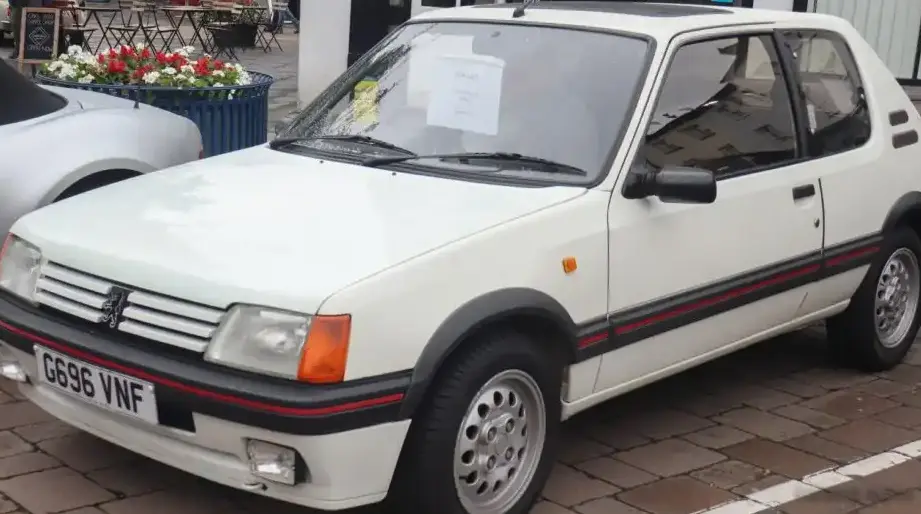
The Peugeot 205 I, specifically the 3-door model powered by the 1.7-liter diesel engine producing 60 horsepower, was a significant offering in the supermini segment during its production run from 1983 to 1987. Falling within the 741A/C series, this variant represented an economical and practical choice for European buyers, particularly those seeking fuel efficiency in a compact package. It was positioned as the entry-level diesel option within the broader 205 range, appealing to a different demographic than the sportier gasoline-powered models. The 205 itself was a landmark vehicle for Peugeot, known for its lightweight construction and nimble handling, and this diesel version continued that tradition with a focus on affordability and low running costs.
Technical Specifications
| Brand | Peugeot |
| Model | 205 |
| Generation | 205 I (741A/C) 3-door |
| Type (Engine) | 1.7 Diesel (60 Hp) |
| Start of production | 1983 |
| End of production | 1987 |
| Powertrain Architecture | Internal Combustion engine |
| Body type | Hatchback |
| Seats | 4 |
| Doors | 3 |
| Fuel consumption (urban) | 5.4 l/100 km (43.6 US mpg, 52.3 UK mpg, 18.5 km/l) |
| Fuel consumption (extra urban) | 3.9 l/100 km (60.3 US mpg, 72.4 UK mpg, 25.6 km/l) |
| Fuel Type | Diesel |
| Acceleration 0 – 100 km/h | 15.1 sec |
| Acceleration 0 – 62 mph | 15.1 sec |
| Acceleration 0 – 60 mph | 14.3 sec |
| Maximum speed | 155 km/h (96.31 mph) |
| Weight-to-power ratio | 13.9 kg/Hp, 71.8 Hp/tonne |
| Weight-to-torque ratio | 7.7 kg/Nm, 129.2 Nm/tonne |
| Power | 60 Hp @ 4600 rpm |
| Power per litre | 33.9 Hp/l |
| Torque | 108 Nm @ 2000 rpm (79.66 lb.-ft. @ 2000 rpm) |
| Engine layout | Front, Transverse |
| Engine Model/Code | XUD7 |
| Engine displacement | 1768 cm3 (107.89 cu. in.) |
| Number of cylinders | 4 |
| Engine configuration | Inline |
| Cylinder Bore | 80 mm (3.15 in.) |
| Piston Stroke | 88 mm (3.46 in.) |
| Compression ratio | 23:1 |
| Number of valves per cylinder | 2 |
| Fuel injection system | Precombustion chamber injection |
| Engine aspiration | Naturally aspirated engine |
| Valvetrain | OHC |
| Engine oil capacity | 4.75 l (5.02 US qt | 4.18 UK qt) |
| Coolant | 8.3 l (8.77 US qt | 7.3 UK qt) |
| Kerb Weight | 836 kg (1843.06 lbs.) |
| Max. weight | 1330 kg (2932.15 lbs.) |
| Max load | 494 kg (1089.08 lbs.) |
| Trunk (boot) space – minimum | 216 l (7.63 cu. ft.) |
| Trunk (boot) space – maximum | 546 l (19.28 cu. ft.) |
| Fuel tank capacity | 50 l (13.21 US gal | 11 UK gal) |
| Permitted trailer load with brakes (12%) | 800 kg (1763.7 lbs.) |
| Length | 3705 mm (145.87 in.) |
| Width | 1572 mm (61.89 in.) |
| Height | 1373 mm (54.06 in.) |
| Wheelbase | 2420 mm (95.28 in.) |
| Front track | 1350 mm (53.15 in.) |
| Rear (Back) track | 1300 mm (51.18 in.) |
| Front overhang | 680 mm (26.77 in.) |
| Rear overhang | 605 mm (23.82 in.) |
| Drag coefficient (Cd) | 0.35 |
| Minimum turning circle (turning diameter) | 10.5 m (34.45 ft.) |
| Drivetrain Architecture | The Internal combustion engine (ICE) drives the front wheels of the vehicle. |
| Drive wheel | Front wheel drive |
| Number of gears and type of gearbox | 5 gears, manual transmission |
| Front suspension | Independent, type McPherson with coil spring and anti-roll bar |
| Rear suspension | Torsion |
| Front brakes | Disc |
| Rear brakes | Drum |
| Steering type | Steering rack and pinion |
| Tires size | 145/70 R13 |
| Wheel rims size | 13 |
Powertrain & Engine Architecture
The heart of this 205 variant is the XUD7 engine, a 1.7-liter inline-four diesel. This engine was a mainstay of Peugeot and Citroën vehicles throughout the 1980s and 1990s, renowned for its durability and fuel efficiency. The XUD7 utilizes precombustion chamber injection, a system common in diesel engines of that era. This system involves injecting fuel into a precombustion chamber connected to the main cylinder, promoting more complete combustion. The engine features an overhead camshaft (OHC) valvetrain operating two valves per cylinder. The 60 horsepower output was achieved at 4600 rpm, while peak torque of 108 Nm (79.66 lb-ft) was delivered at 2000 rpm. The engine was transversely mounted, driving the front wheels through a five-speed manual transmission. This configuration maximized interior space and contributed to the 205’s nimble handling.
Driving Characteristics
The 1.7 Diesel 205 was not designed for outright speed. Its 0-60 mph time of around 14.3 seconds and top speed of 96.31 mph reflect its focus on economy rather than performance. However, the engine’s torque characteristics made it surprisingly usable in everyday driving. The relatively low-revving nature of the diesel meant that most of the available torque was accessible from low engine speeds, providing adequate acceleration for urban and highway driving. Compared to the gasoline-powered 205 models, the diesel offered significantly better fuel economy, but at the expense of performance. The five-speed manual transmission allowed drivers to keep the engine in its optimal power band, maximizing efficiency and minimizing noise. The gear ratios were geared towards economy, with a relatively long final drive.
Equipment & Trim Levels
The 1.7 Diesel 205 typically came with a fairly basic level of equipment, reflecting its position as an entry-level model. Standard features generally included cloth upholstery, a basic dashboard layout, and manual windows and door locks. Optional extras could include upgraded upholstery, a sunroof, and a more sophisticated radio. The interior was functional and durable, prioritizing practicality over luxury. The trim level was often denoted by a simple badge on the rear of the car, with minimal exterior embellishments.
Chassis & Braking
The 205’s chassis was a key element of its success. Its lightweight construction, utilizing a monocoque body, contributed to its agile handling. The front suspension featured independent McPherson struts with coil springs and an anti-roll bar, providing a comfortable ride and good handling characteristics. The rear suspension utilized a torsion beam, a simple and effective design that minimized weight and cost. Braking was provided by disc brakes on the front wheels and drum brakes on the rear. The braking system was adequate for the car’s performance, but lacked the stopping power of more powerful 205 variants.
Market Reception & Comparison
The Peugeot 205 1.7 Diesel was well-received in the European market as an affordable and economical supermini. Critics praised its fuel efficiency and durability, but noted its lack of performance compared to gasoline-powered rivals. Compared to the 1.6-liter gasoline versions, the diesel offered significantly better fuel economy, but acceleration was noticeably slower. The diesel also tended to be more refined than earlier diesel engines, but still lacked the smoothness of its gasoline counterparts. Its reliability was generally considered good, making it a popular choice for fleet operators and private buyers alike.
Legacy
The XUD7 engine, found in this 205 variant, has a reputation for exceptional longevity. Many examples of this engine are still running today, often with high mileage. The 205 1.7 Diesel remains a popular choice among classic car enthusiasts seeking an affordable and reliable vintage vehicle. Parts availability is generally good, and the simple mechanical design makes it relatively easy to maintain. In the used car market, these 205s are valued for their practicality, fuel efficiency, and nostalgic appeal. The 205, in all its forms, is remembered as a pivotal model for Peugeot, establishing the brand as a leader in the supermini segment.