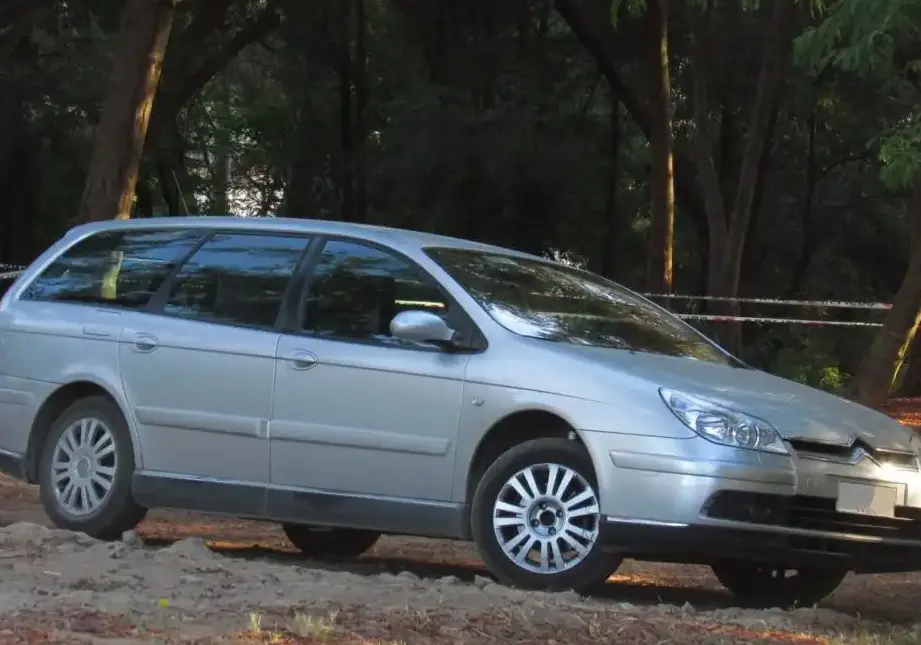
The Citroën C5 I Break (Phase II), specifically the 2.0i 16V (140 hp) automatic variant produced between 2004 and 2008, represents a compelling blend of comfort, practicality, and moderate performance within the large family car segment. This version of the C5 Break, a station wagon (estate) body style, occupied a mid-range position in the lineup, offering a step up from the base engine options while remaining more accessible than the flagship models. It was primarily marketed towards families and individuals seeking a spacious, comfortable vehicle for long journeys, prioritizing ease of driving over outright sportiness. The C5 I generation (produced from 2001-2008) was a significant model for Citroën, showcasing their advancements in hydropneumatic suspension technology and overall refinement.
Technical Specifications
| Brand | Citroen |
| Model | C5 |
| Generation | C5 I Break (Phase II, 2004) |
| Type (Engine) | 2.0i 16V (140 Hp) Automatic |
| Start of production | 2004 |
| End of production | 2008 |
| Powertrain Architecture | Internal Combustion engine |
| Body type | Station wagon (estate) |
| Seats | 5 |
| Doors | 5 |
| Fuel consumption (urban) | 12.4 l/100 km (19 US mpg, 22.8 UK mpg, 8.1 km/l) |
| Fuel consumption (extra urban) | 6.4 l/100 km (36.8 US mpg, 44.1 UK mpg, 15.6 km/l) |
| Fuel consumption (combined) | 8.6 l/100 km (27.4 US mpg, 32.8 UK mpg, 11.6 km/l) |
| Fuel Type | Petrol (Gasoline) |
| Acceleration 0 – 100 km/h | 10.4 sec |
| Acceleration 0 – 62 mph | 10.4 sec |
| Acceleration 0 – 60 mph | 9.9 sec |
| Maximum speed | 203 km/h (126.14 mph) |
| Emission standard | Euro 4 |
| Weight-to-power ratio | 10.6 kg/Hp, 94.7 Hp/tonne |
| Weight-to-torque ratio | 7.4 kg/Nm, 135.2 Nm/tonne |
| Power | 140 Hp @ 6000 rpm |
| Power per litre | 70.1 Hp/l |
| Torque | 200 Nm @ 4000 rpm (147.51 lb.-ft. @ 4000 rpm) |
| Engine layout | Front, Transverse |
| Engine Model/Code | RFJ EW10A |
| Engine displacement | 1997 cm3 (121.86 cu. in.) |
| Number of cylinders | 4 |
| Engine configuration | Inline |
| Cylinder Bore | 85 mm (3.35 in.) |
| Piston Stroke | 88 mm (3.46 in.) |
| Compression ratio | 10.8:1 |
| Number of valves per cylinder | 4 |
| Fuel injection system | Multi-port manifold injection |
| Engine aspiration | Naturally aspirated engine |
| Engine oil capacity | 5 l (5.28 US qt | 4.4 UK qt) |
| Coolant | 9.3 l (9.83 US qt | 8.18 UK qt) |
| Kerb Weight | 1479 kg (3260.64 lbs.) |
| Max. weight | 2079 kg (4583.41 lbs.) |
| Max load | 600 kg (1322.77 lbs.) |
| Trunk (boot) space – minimum | 563 l (19.88 cu. ft.) |
| Trunk (boot) space – maximum | 1658 l (58.55 cu. ft.) |
| Fuel tank capacity | 66 l (17.44 US gal | 14.52 UK gal) |
| Max. roof load | 75 kg (165.35 lbs.) |
| Permitted towbar download | 75 kg (165.35 lbs.) |
| Length | 4839 mm (190.51 in.) |
| Width | 1780 mm (70.08 in.) |
| Height | 1511 mm (59.49 in.) |
| Wheelbase | 2750 mm (108.27 in.) |
| Front track | 1528 mm (60.16 in.) |
| Rear (Back) track | 1495 mm (58.86 in.) |
| Front overhang | 1033 mm (40.67 in.) |
| Rear overhang | 1056 mm (41.57 in.) |
| Minimum turning circle | 12.43 m (40.78 ft.) |
| Drivetrain Architecture | Front wheel drive |
| Drive wheel | Front wheel drive |
| Number of gears | 4 |
| Gearbox type | automatic transmission |
| Front suspension | Independent, type McPherson with coil spring and anti-roll bar |
| Rear suspension | Semi-independent, coil spring |
| Front brakes | Ventilated discs |
| Rear brakes | Disc |
| Assisting systems | ABS (Anti-lock braking system) |
| Steering type | Steering rack and pinion |
| Power steering | Hydraulic Steering |
| Tires size | 215/55 R16 |
| Wheel rims size | 16 |
Powertrain & Engine Architecture
The 2.0i 16V engine, designated RFJ and belonging to the EW10A family, is a naturally aspirated, inline-four cylinder petrol engine. This engine was a common sight in various PSA Group vehicles (Peugeot, Citroën) during the early 2000s. It features a multi-point fuel injection system and a double overhead camshaft (DOHC) valvetrain with four valves per cylinder, contributing to its respectable power output for its displacement. The 140 hp output is achieved at 6000 rpm, while peak torque of 200 Nm (147.51 lb-ft) arrives at 4000 rpm. The engine’s design prioritized smooth operation and reasonable fuel efficiency over outright performance. Paired with this engine is a four-speed automatic transmission. While offering convenience, this transmission isn’t known for its responsiveness or fuel economy compared to more modern automatic gearboxes. The gear ratios are tuned for comfortable cruising rather than rapid acceleration.
Driving Characteristics
The C5 I Break 2.0i Automatic delivers a comfortable and relaxed driving experience. Acceleration is adequate for everyday driving, with a 0-60 mph time of around 9.9 seconds. However, it doesn’t feel particularly quick, especially when compared to manual transmission versions or higher-powered C5 variants. The automatic transmission can sometimes feel hesitant during kickdown, and the limited number of gears means the engine can be working hard at highway speeds. The focus is on providing a smooth ride, thanks to Citroën’s renowned suspension system, which effectively absorbs bumps and imperfections in the road. Steering is light and easy, making it well-suited for urban driving and long journeys.
Equipment & Trim Levels
The 2.0i 16V Automatic trim typically included features such as air conditioning, power windows, central locking, and an RDS radio. Higher trim levels, often denoted by additions like “Exclusive” or “Ambiance,” added features like alloy wheels, automatic headlights and wipers, a trip computer, and upgraded interior trim. Interior upholstery was generally cloth, with leather options available as an extra cost. Safety features included ABS brakes, front airbags, and often side airbags depending on the specific year and trim level.
Chassis & Braking
The C5 I Break features an independent McPherson strut front suspension and a semi-independent torsion beam rear suspension. This setup provides a good balance between comfort and handling. The front brakes are ventilated discs, while the rear brakes are solid discs. ABS (Anti-lock Braking System) is standard, enhancing braking performance and stability. The suspension is tuned for comfort, prioritizing a smooth ride over sporty handling. Stabilizer bars are present at both the front and rear to reduce body roll during cornering.
Market Reception & Comparison
The C5 I Break 2.0i Automatic was generally well-received by critics as a comfortable and practical family car. However, the automatic transmission was often criticized for its lack of responsiveness and its impact on fuel economy. Compared to the 1.8-liter versions, the 2.0i offered noticeably more power and a more relaxed driving experience, particularly when fully loaded. Against competitors like the Ford Mondeo, Volkswagen Passat, and Peugeot 407, the C5 stood out for its unique hydropneumatic suspension, which provided an exceptionally comfortable ride. However, it often lagged behind in terms of performance and overall refinement.
Legacy
The RFJ EW10A engine, while not known for being particularly groundbreaking, proved to be a relatively reliable unit when properly maintained. Common issues include occasional oil leaks and sensor failures. The four-speed automatic transmission, however, is more prone to problems and can be expensive to repair. Today, the C5 I Break 2.0i Automatic represents an affordable and spacious used car option. Its comfortable ride and practical interior make it a good choice for families and individuals seeking a reliable and comfortable vehicle for everyday use. However, potential buyers should be aware of the potential maintenance costs associated with the automatic transmission and ensure the vehicle has been well-maintained throughout its life.