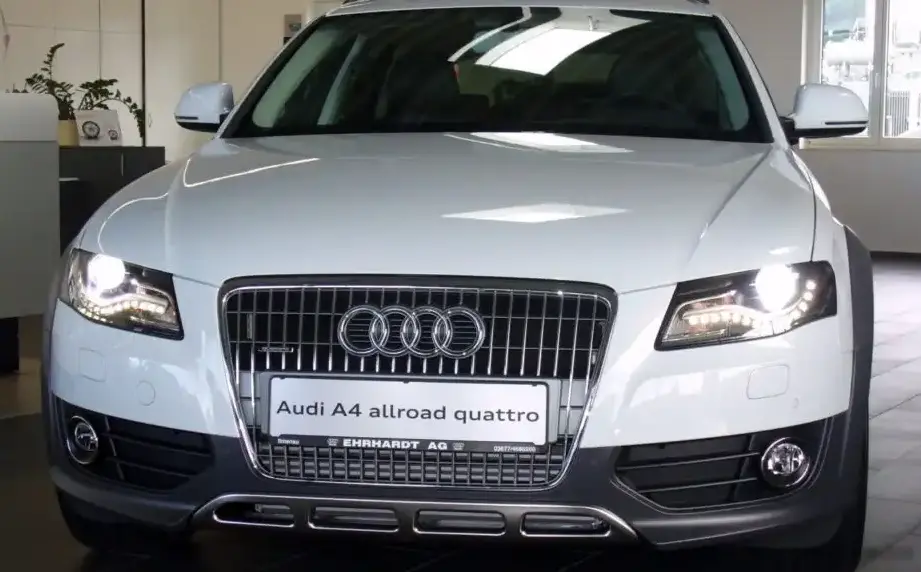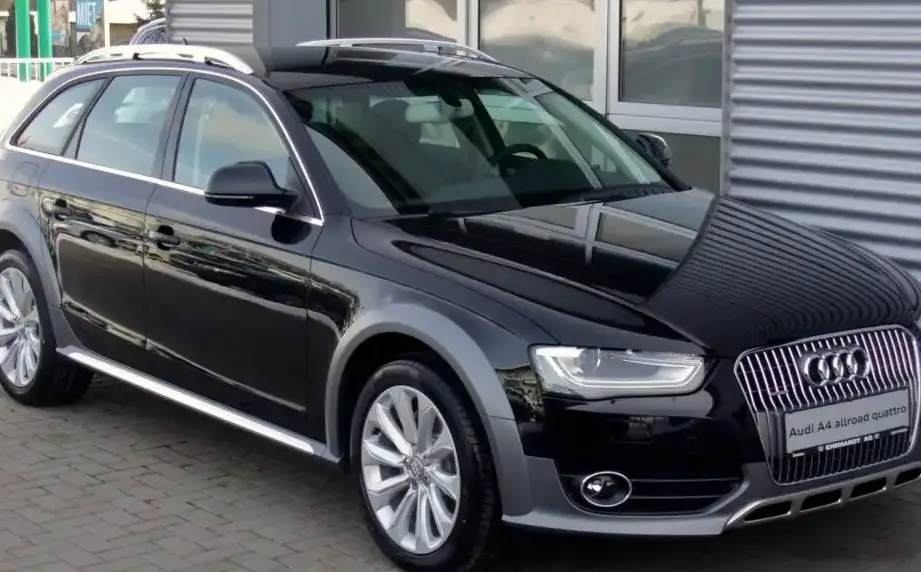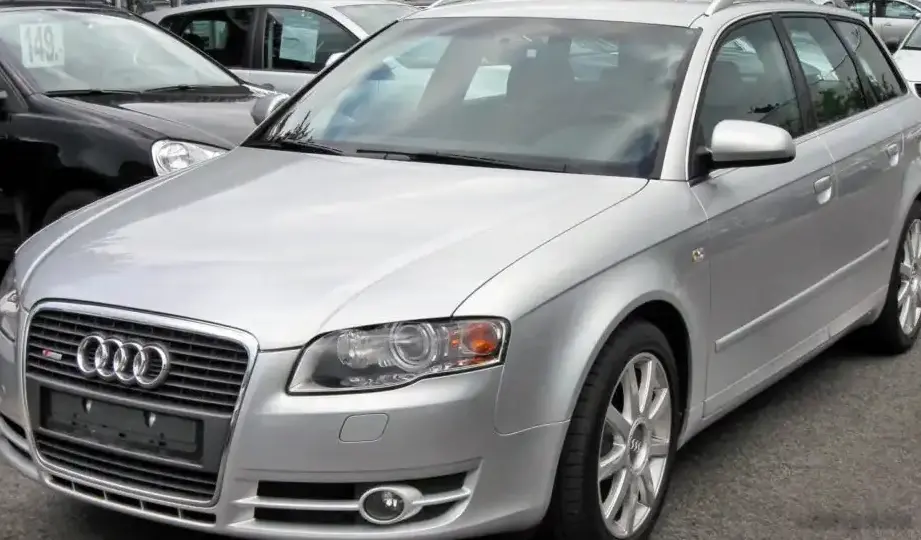
The Audi A4 Avant (B7 8E) 2.0 TFSI Multitronic, produced from August 2004 to June 2008, represents a compelling blend of performance and practicality within the B7 generation A4 Avant lineup. Positioned as a mid-range offering, it bridged the gap between the more economical base engines and the higher-performance S4 models. This variant combined Audi’s advanced 2.0-liter turbocharged direct injection engine with the convenience of a continuously variable transmission (CVT), marketed as Multitronic. The B7 A4 Avant, built on the Volkswagen Group’s B6/B7 platform (shared with models like the VW Passat and Skoda Superb), aimed to refine the already successful B6 series with styling updates and technological enhancements.
Technical Specifications
| Brand | Audi |
| Model | A4 |
| Generation | A4 Avant (B7 8E) |
| Type (Engine) | 2.0 TFSI (200 Hp) Multitronic |
| Start of production | August, 2004 |
| End of production | June, 2008 |
| Powertrain Architecture | Internal Combustion engine |
| Body type | Station wagon (estate) |
| Seats | 5 |
| Doors | 5 |
| Fuel consumption (economy) – urban | 11.2 l/100 km (21 US mpg, 25.2 UK mpg, 8.9 km/l) |
| Fuel consumption (economy) – extra urban | 6.3 l/100 km (37.3 US mpg, 44.8 UK mpg, 15.9 km/l) |
| Fuel consumption (economy) – combined | 8.1 l/100 km (29 US mpg, 34.9 UK mpg, 12.3 km/l) |
| CO2 emissions | 194 g/km |
| Fuel Type | Petrol (Gasoline) |
| Acceleration 0 – 100 km/h | 7.6 sec |
| Acceleration 0 – 62 mph | 7.6 sec |
| Acceleration 0 – 60 mph | 7.2 sec |
| Maximum speed | 230 km/h (142.92 mph) |
| Emission standard | Euro 4 |
| Weight-to-power ratio | 7.6 kg/Hp, 132.5 Hp/tonne |
| Weight-to-torque ratio | 5.4 kg/Nm, 185.4 Nm/tonne |
| Power | 200 Hp @ 5100-6000 rpm |
| Power per litre | 100.8 Hp/l |
| Torque | 280 Nm @ 1800-5000 rpm (206.52 lb.-ft. @ 1800-5000 rpm) |
| Engine layout | Front, Longitudinal |
| Engine Model/Code | BGB, BPG, BWE, BWT |
| Engine displacement | 1984 cm3 (121.07 cu. in.) |
| Number of cylinders | 4 |
| Engine configuration | Inline |
| Cylinder Bore | 82.5 mm (3.25 in.) |
| Piston Stroke | 92.8 mm (3.65 in.) |
| Compression ratio | 10.5:1 |
| Number of valves per cylinder | 4 |
| Fuel injection system | Direct injection |
| Engine aspiration | Turbocharger, Intercooler |
| Valvetrain | DOHC |
| Engine oil capacity | 4.5 l (4.76 US qt | 3.96 UK qt) |
| Coolant | 8 l (8.45 US qt | 7.04 UK qt) |
| Kerb Weight | 1510 kg (3328.98 lbs.) |
| Max. weight | 2060 kg (4541.52 lbs.) |
| Max load | 550 kg (1212.54 lbs.) |
| Trunk (boot) space – minimum | 442 l (15.61 cu. ft.) |
| Trunk (boot) space – maximum | 1184 l (41.81 cu. ft.) |
| Fuel tank capacity | 70 l (18.49 US gal | 15.4 UK gal) |
| Max. roof load | 75 kg (165.35 lbs.) |
| Permitted trailer load with brakes (8%) | 1700 kg (3747.86 lbs.) |
| Permitted trailer load with brakes (12%) | 1500 kg (3306.93 lbs.) |
| Permitted trailer load without brakes | 750 kg (1653.47 lbs.) |
| Permitted towbar download | 80 kg (176.37 lbs.) |
| Length | 4586 mm (180.55 in.) |
| Width | 1772 mm (69.76 in.) |
| Width including mirrors | 1937 mm (76.26 in.) |
| Height | 1427 mm (56.18 in.) |
| Wheelbase | 2648 mm (104.25 in.) |
| Front track | 1522 mm (59.92 in.) |
| Rear (Back) track | 1522 mm (59.92 in.) |
| Ride height (ground clearance) | 106 mm (4.17 in.) |
| Drag coefficient (Cd) | 0.33 |
| Minimum turning circle (turning diameter) | 11.1 m (36.42 ft.) |
| Drivetrain Architecture | The Internal combustion engine (ICE) drives the front wheels of the vehicle. |
| Drive wheel | Front wheel drive |
| Number of gears and type of gearbox | automatic transmission Multitronic |
| Front suspension | Independent multi-link suspension |
| Rear suspension | Independent multi-link suspension |
| Front brakes | Ventilated discs |
| Rear brakes | Disc |
| Assisting systems | ABS (Anti-lock braking system) |
| Steering type | Steering rack and pinion |
| Power steering | Hydraulic Steering |
| Tires size | 215/55 R16 |
| Wheel rims size | 7J x 16 |
Powertrain & Engine Architecture
The heart of the A4 Avant 2.0 TFSI Multitronic is the 1.984-liter inline-four cylinder engine, designated with engine codes like BGB, BPG, BWE, and BWT. This engine utilizes direct fuel injection (FSI) and a turbocharger with an intercooler to deliver a potent 200 horsepower and 280 Nm (206.52 lb-ft) of torque. The direct injection system precisely meters fuel directly into the combustion chamber, enhancing efficiency and power output. The engine features a dual overhead camshaft (DOHC) valvetrain with four valves per cylinder, optimizing airflow for improved performance. The Multitronic transmission is a continuously variable transmission (CVT) that offers seamless gear changes and contributes to fuel efficiency. Unlike traditional automatic transmissions with fixed gear ratios, the Multitronic uses a chain-driven system to provide an infinite number of gear ratios within its operating range.
Driving Characteristics
The 2.0 TFSI Multitronic offered a refined driving experience. While not as overtly sporty as the higher-output models, it provided ample power for everyday driving and overtaking maneuvers. The Multitronic transmission, while smooth, sometimes lacked the immediate responsiveness of a traditional automatic or manual gearbox. The CVT’s tendency to hold a specific engine RPM during acceleration could feel somewhat disconnected to drivers accustomed to conventional transmissions. The gear ratios were optimized for a balance of fuel economy and performance, with a focus on providing smooth, linear acceleration. Compared to the 1.8T models, the 2.0 TFSI offered a noticeable increase in power and torque, resulting in quicker acceleration and improved highway cruising ability.
Equipment & Trim Levels
The A4 Avant 2.0 TFSI Multitronic typically came standard with features such as automatic climate control, power windows and locks, a multi-function steering wheel, and an upgraded audio system. Interior upholstery was generally cloth, with leather options available as an upgrade. Optional extras included sunroof, navigation system, parking sensors, and premium sound systems. Trim levels varied slightly depending on the market, but generally offered packages that bundled popular options together. The Multitronic transmission itself was often considered an upgrade over the standard manual transmission, appealing to buyers prioritizing convenience and ease of use.
Chassis & Braking
The B7 A4 Avant featured an independent multi-link suspension system at both the front and rear, providing a comfortable ride and good handling characteristics. The front suspension utilized coil springs and shock absorbers, while the rear suspension incorporated a more complex multi-link design to optimize wheel control and minimize body roll. Braking duties were handled by ventilated discs at the front and solid discs at the rear, equipped with ABS (Anti-lock Braking System) as standard. The chassis was designed to provide a balance between comfort and handling, with a focus on stability and predictability.
Market Reception & Comparison
The A4 Avant 2.0 TFSI Multitronic was generally well-received by automotive critics. It was praised for its refined engine, comfortable ride, and practical wagon body style. However, some reviewers noted the Multitronic transmission’s lack of responsiveness compared to traditional automatics. Fuel economy was considered competitive for its class, although not class-leading. Compared to the 1.8T models, the 2.0 TFSI offered a significant performance upgrade, justifying the higher price tag for many buyers. Reliability of the Multitronic transmission was a concern for some owners, with reports of occasional issues requiring costly repairs.
Legacy
The Audi A4 Avant (B7 8E) 2.0 TFSI Multitronic remains a popular choice in the used car market. The 2.0 TFSI engine is generally considered reliable, although regular maintenance is crucial. The Multitronic transmission, while offering a smooth driving experience, requires careful attention to fluid changes and potential maintenance. The B7 A4 Avant’s combination of practicality, performance, and Audi’s reputation for quality has ensured its continued appeal to enthusiasts and everyday drivers alike. Finding well-maintained examples with documented service histories is key to ensuring long-term ownership satisfaction.