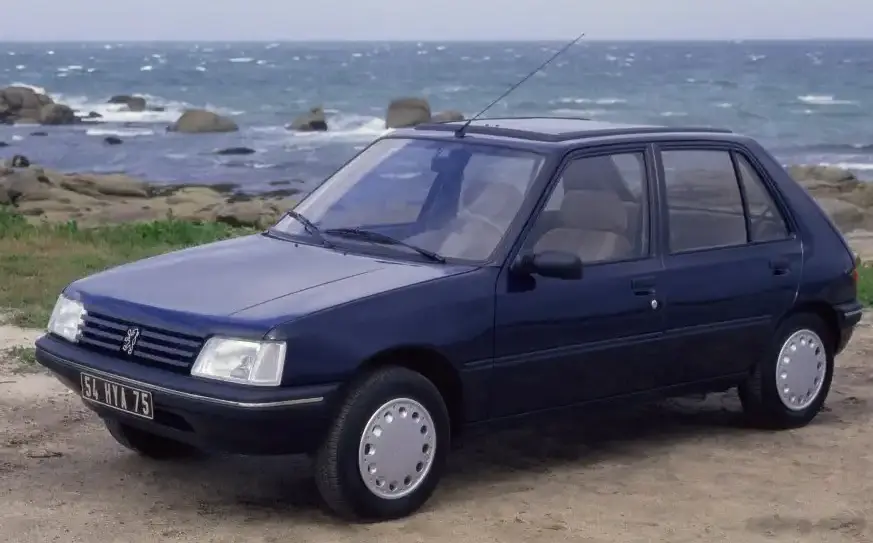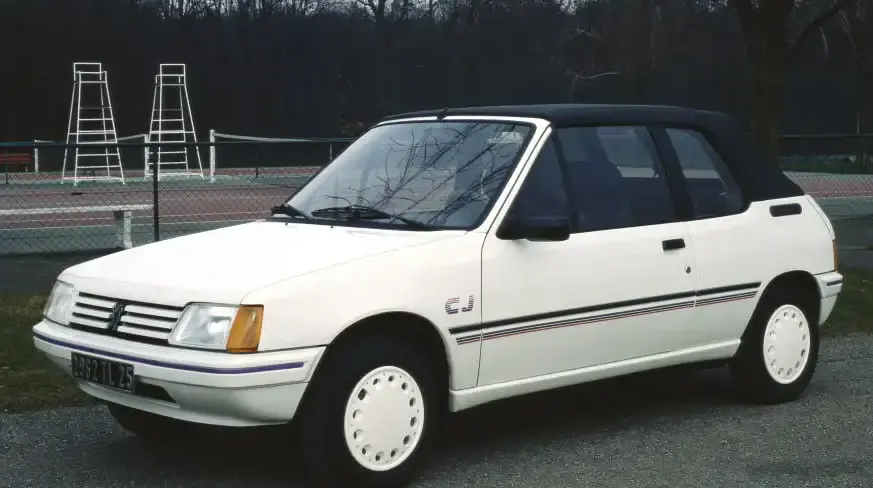
The Peugeot 205 I Cabrio 1.4 CJ (84 hp) was a short-lived but charming variant of the highly successful 205 series, produced between 1988 and 1989. Falling within the 741B/20D chassis code designation for the Cabriolet models, this version occupied the entry-level position in the open-top 205 range. It offered an accessible price point for those desiring the style of a convertible without the performance or expense of the GTI or other higher-spec models. The 205, in general, was a pivotal car for Peugeot, representing a shift towards more modern, lightweight designs and playing a significant role in revitalizing the brand’s image in the late 1980s.
Technical Specifications
| Brand | Peugeot |
| Model | 205 |
| Generation | 205 I Cabrio (741B,20D) |
| Type (Engine) | 1.4 CJ (84 Hp) |
| Start of production | 1988 |
| End of production | 1989 |
| Powertrain Architecture | Internal Combustion engine |
| Body type | Cabriolet |
| Seats | 4 |
| Doors | 2 |
| Fuel consumption (urban) | 8.6 l/100 km (27.4 US mpg) |
| Fuel consumption (extra urban) | 5.4 l/100 km (43.6 US mpg) |
| Fuel Type | Petrol (Gasoline) |
| Acceleration 0 – 100 km/h | 11.4 sec |
| Acceleration 0 – 62 mph | 11.4 sec |
| Acceleration 0 – 60 mph | 10.8 sec |
| Maximum speed | 174 km/h (108.12 mph) |
| Weight-to-power ratio | 10.5 kg/Hp |
| Weight-to-torque ratio | 7.6 kg/Nm |
| Power | 84 Hp @ 6400 rpm |
| Power per litre | 61.8 Hp/l |
| Torque | 116 Nm @ 4000 rpm (85.56 lb.-ft. @ 4000 rpm) |
| Engine layout | Front, Transverse |
| Engine Model/Code | TU3S |
| Engine displacement | 1360 cm3 (82.99 cu. in.) |
| Number of cylinders | 4 |
| Engine configuration | Inline |
| Cylinder Bore | 75 mm (2.95 in.) |
| Piston Stroke | 77 mm (3.03 in.) |
| Compression ratio | 9.3:1 |
| Number of valves per cylinder | 2 |
| Fuel injection system | Carburettor |
| Engine aspiration | Naturally aspirated |
| Valvetrain | OHC |
| Engine oil capacity | 5 l (5.28 US qt | 4.4 UK qt) |
| Coolant capacity | 5.8 l (6.13 US qt | 5.1 UK qt) |
| Kerb Weight | 885 kg (1951.09 lbs.) |
| Max. weight | 1215 kg (2678.62 lbs.) |
| Max load | 330 kg (727.53 lbs.) |
| Trunk (boot) space – minimum | 216 l (7.63 cu. ft.) |
| Trunk (boot) space – maximum | 564 l (19.92 cu. ft.) |
| Fuel tank capacity | 50 l (13.21 US gal | 11 UK gal) |
| Permitted trailer load with brakes (12%) | 900 kg (1984.16 lbs.) |
| Length | 3705 mm (145.87 in.) |
| Width | 1572 mm (61.89 in.) |
| Height | 1375 mm (54.13 in.) |
| Wheelbase | 2420 mm (95.28 in.) |
| Front track | 1364 mm (53.7 in.) |
| Rear track | 1314 mm (51.73 in.) |
| Minimum turning circle | 10.5 m (34.45 ft.) |
| Drivetrain Architecture | Front wheel drive |
| Number of gears | 5 gears, manual transmission |
| Front suspension | Independent, McPherson with coil spring and anti-roll bar |
| Rear suspension | Torsion |
| Front brakes | Disc |
| Rear brakes | Drum |
| Steering type | Steering rack and pinion |
| Tires size | 165/70 R13 |
| Wheel rims size | 13 |
Introduction
The Peugeot 205 I Cabrio 1.4 CJ, produced from 1988 to 1989, represented the most affordable entry point into the 205 Cabriolet range. It was built on the 205 platform (1HX0/A3), known for its lightweight construction and nimble handling. This variant aimed to broaden the appeal of the 205 Cabriolet, offering open-top motoring to a wider audience. While not a performance model, it provided a stylish and practical option for those prioritizing affordability and everyday usability.
Powertrain & Engine Architecture
The heart of the 205 1.4 CJ Cabriolet was the Peugeot TU3S engine, a 1360cc inline-four cylinder unit. This engine, commonly found in various Peugeot and Citroën models of the era, was known for its simplicity and reliability. The “CJ” designation indicated a specific carburetor setup, utilizing a Solex carburetor for fuel delivery. The engine featured a single overhead camshaft (OHC) valvetrain with two valves per cylinder. The TU3S produced 84 horsepower at 6400 rpm and 116 Nm (85.56 lb-ft) of torque at 4000 rpm. The engine was transversely mounted, driving the front wheels. The transmission was a standard five-speed manual gearbox, chosen for its efficiency and cost-effectiveness. This configuration, while not particularly powerful, was well-suited to the lightweight nature of the 205.
Driving Characteristics
The 1.4 CJ Cabriolet offered a relaxed and comfortable driving experience. Acceleration was modest, taking around 11.4 seconds to reach 62 mph (100 km/h), and a top speed of 108 mph (174 km/h) was achievable. Compared to the more potent 1.6 or 1.9 GTI versions, the 1.4 felt noticeably slower, particularly when fully loaded or tackling inclines. The five-speed gearbox was well-matched to the engine’s characteristics, providing adequate ratios for both urban driving and highway cruising. The relatively low weight of the 205 helped to mitigate the lack of outright power, making it feel more agile than its horsepower figure might suggest. The steering was light and precise, contributing to a pleasant and engaging driving experience.
Equipment & Trim Levels
The 1.4 CJ Cabriolet was typically equipped with basic, but functional, features. Standard equipment included cloth upholstery, a simple dashboard layout, and manual windows and door locks. The interior was designed with practicality in mind, rather than luxury. Optional extras included upgraded upholstery, a radio/cassette player, and occasionally, power steering (though this was rare on the base model). The convertible top was manually operated, and while effective at keeping out the elements, it lacked the refinement of more advanced folding roof mechanisms.
Chassis & Braking
The 205 Cabriolet utilized a McPherson strut front suspension with a coil spring and anti-roll bar, providing a good balance of comfort and handling. The rear suspension employed a torsion beam setup, which was simple, lightweight, and effective. Braking was handled by disc brakes on the front wheels and drum brakes on the rear. This configuration was adequate for the car’s weight and performance, but lacked the stopping power of the larger disc brakes found on higher-spec models. The steering was a rack and pinion system, providing precise and responsive control.
Market Reception & Comparison
The 1.4 CJ Cabriolet was generally well-received as an affordable and stylish entry into the convertible market. Critics acknowledged its charming design and nimble handling, but noted its lack of outright performance. Compared to the 1.6 and 1.9 GTI models, the 1.4 offered significantly less power and a more basic level of equipment. However, it also benefited from better fuel economy and lower running costs. The 1.9 TDI diesel Cabriolet, introduced later, offered even better fuel economy but lacked the character of the petrol engine. The 1.4 CJ appealed to buyers who prioritized style and affordability over performance.
Legacy
The Peugeot 205 1.4 CJ Cabriolet, while not the most powerful or well-equipped version of the 205, holds a special place in the hearts of many enthusiasts. The TU3S engine is known for its durability and relative simplicity, making it a relatively easy engine to maintain. Today, these cars are becoming increasingly collectible, particularly well-preserved examples. While rust can be an issue, especially on older examples, the 205 Cabriolet remains a popular choice for those seeking a classic, affordable, and stylish open-top car. Its enduring appeal lies in its combination of charming design, nimble handling, and relatively low running costs.