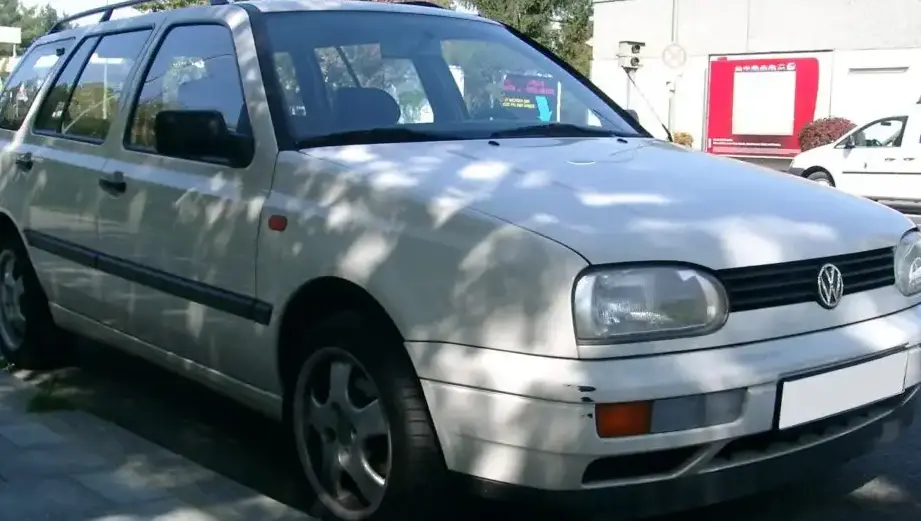
The Volkswagen Golf III Variant 1.9 TDI Syncro, produced between 1995 and 1999, represents a practical and capable iteration of the popular Golf III estate (wagon) model. Positioned as a mid-range offering within the Variant lineup, it combined the fuel efficiency and torque characteristics of Volkswagen’s direct-injection diesel technology with the added security of all-wheel drive. This model was primarily aimed at European markets where demand for economical, versatile, and all-weather vehicles was high. It slotted between the base gasoline-powered Variants and the higher-performance, though less fuel-efficient, gasoline and higher-output TDI models.
Technical Specifications
| Brand | Volkswagen |
| Model | Golf |
| Generation | Golf III Variant |
| Type (Engine) | 1.9 TDI Syncro (90 Hp) |
| Start of production | 1995 |
| End of production | 1999 |
| Powertrain Architecture | Internal Combustion engine |
| Body type | Station wagon (estate) |
| Seats | 5 |
| Doors | 5 |
| Fuel consumption (urban) | 7.3 l/100 km (32.2 US mpg, 38.7 UK mpg, 13.7 km/l) |
| Fuel consumption (extra urban) | 4.8 l/100 km (49 US mpg, 58.9 UK mpg, 20.8 km/l) |
| Fuel consumption (combined) | 5.8 l/100 km (40.6 US mpg, 48.7 UK mpg, 17.2 km/l) |
| Fuel Type | Diesel |
| Acceleration 0 – 100 km/h | 14.6 sec |
| Acceleration 0 – 62 mph | 14.6 sec |
| Acceleration 0 – 60 mph | 13.9 sec |
| Maximum speed | 172 km/h (106.88 mph) |
| Weight-to-power ratio | 15.8 kg/Hp, 63.2 Hp/tonne |
| Weight-to-torque ratio | 7.1 kg/Nm, 141.8 Nm/tonne |
| Power | 90 Hp @ 4000 rpm |
| Power per litre | 47.5 Hp/l |
| Torque | 202 Nm @ 1900 rpm (148.99 lb.-ft. @ 1900 rpm) |
| Engine layout | Front, Longitudinal |
| Engine Model/Code | 1Z |
| Engine displacement | 1896 cm3 (115.7 cu. in.) |
| Number of cylinders | 4 |
| Engine configuration | Inline |
| Cylinder Bore | 79.5 mm (3.13 in.) |
| Piston Stroke | 95.5 mm (3.76 in.) |
| Compression ratio | 19.5:1 |
| Number of valves per cylinder | 2 |
| Fuel injection system | Direct injection |
| Engine aspiration | Turbocharger, Intercooler |
| Valvetrain | OHC |
| Engine oil capacity | 4.3 l (4.54 US qt | 3.78 UK qt) |
| Coolant capacity | 6.5 l (6.87 US qt | 5.72 UK qt) |
| Kerb Weight | 1425 kg (3141.59 lbs.) |
| Max. weight | 1850 kg (4078.55 lbs.) |
| Max load | 425 kg (936.96 lbs.) |
| Trunk (boot) space – minimum | 340 l (12.01 cu. ft.) |
| Trunk (boot) space – maximum | 1300 l (45.91 cu. ft.) |
| Fuel tank capacity | 65 l (17.17 US gal | 14.3 UK gal) |
| Length | 4340 mm (170.87 in.) |
| Width | 1695 mm (66.73 in.) |
| Height | 1430 mm (56.3 in.) |
| Wheelbase | 2475 mm (97.44 in.) |
| Front track | 1478 mm (58.19 in.) |
| Rear track | 1460 mm (57.48 in.) |
| Drive wheel | All wheel drive (4×4) |
| Number of gears | 5 |
| Gearbox type | Manual transmission |
| Front suspension | Wishbone |
| Rear suspension | Suspension with traction connecting levers |
| Front brakes | Ventilated discs |
| Rear brakes | Drum |
| Assisting systems | ABS (Anti-lock braking system) |
| Steering type | Steering rack and pinion |
| Power steering | Hydraulic |
| Tires size | 195/60 R14 |
| Wheel rims size | 14 |
Powertrain & Engine Architecture
The heart of the Golf III Variant 1.9 TDI Syncro is the 1Z engine, a 1.9-liter, four-cylinder diesel engine. This engine utilizes a direct injection system, where fuel is injected directly into the combustion chamber under extremely high pressure. This contrasts with older indirect injection systems, resulting in improved fuel efficiency and reduced emissions. The 1Z engine features an overhead camshaft (OHC) valvetrain with two valves per cylinder. A turbocharger with an intercooler is employed to boost power output, delivering 90 horsepower at 4000 rpm and 202 Nm (148.99 lb-ft) of torque at a low 1900 rpm. This torque curve is a key characteristic of TDI engines, providing strong pulling power from low engine speeds. The engine is longitudinally mounted in the front of the vehicle. The transmission is a robust five-speed manual gearbox, chosen for its durability and efficiency.
Driving Characteristics
The 1.9 TDI Syncro, with its 90 hp and manual transmission, offered a balanced driving experience. Acceleration was not its strong suit, taking approximately 14.6 seconds to reach 62 mph (100 km/h). However, the abundant low-end torque made it a comfortable cruiser and capable of handling moderate loads. The Syncro all-wheel-drive system provided enhanced traction, particularly on slippery surfaces, making it a popular choice in regions with inclement weather. Compared to the higher-output TDI variants (like the 110 hp version), the 90 hp model felt less eager to rev, but it offered superior fuel economy. The gear ratios were optimized for fuel efficiency and everyday usability, rather than outright performance.
Equipment & Trim Levels
The Golf III Variant 1.9 TDI Syncro typically came with a reasonable level of standard equipment. This included power steering, central locking, electric front windows, and an anti-lock braking system (ABS). Interior upholstery was typically cloth, with a functional and durable design. Optional extras included a sunroof, air conditioning, upgraded audio systems, and alloy wheels. Trim levels varied slightly depending on the market, but generally, this variant represented a solid mid-range offering, providing a good balance of features and affordability.
Chassis & Braking
The Golf III Variant’s chassis featured independent suspension at the front, utilizing a wishbone setup, and a semi-independent suspension with traction connecting levers at the rear. The Syncro models benefited from a slightly stiffer suspension setup to accommodate the all-wheel-drive system. Braking was handled by ventilated discs at the front and drum brakes at the rear. While the drum brakes were adequate for everyday use, they were a point of criticism compared to the all-disc setups found on higher-spec models. The steering was a rack-and-pinion system, providing precise and responsive handling.
Market Reception & Comparison
The Golf III Variant 1.9 TDI Syncro was well-received in European markets as a practical and economical estate car. Critics praised its fuel efficiency, strong torque, and all-weather capability. Compared to the gasoline-powered Variants, the TDI offered significantly better fuel economy. Against the higher-output TDI models, it provided a more affordable entry point into the TDI range, albeit with slightly less performance. Reliability was generally good, although TDI engines could be susceptible to issues with the turbocharger and fuel injection pump if not properly maintained.
Legacy
The 1.9 TDI engine, particularly the 1Z variant, has earned a reputation for durability and longevity. Many examples of the Golf III Variant 1.9 TDI Syncro are still on the road today, testament to the robust engineering of the powertrain. In the used car market, these models are sought after by enthusiasts and those looking for a reliable and economical vehicle. While maintenance costs can increase with age, the availability of spare parts and the relatively simple mechanical design make them relatively easy to maintain. The Golf III Variant 1.9 TDI Syncro remains a popular choice for those seeking a classic, practical, and capable estate car.