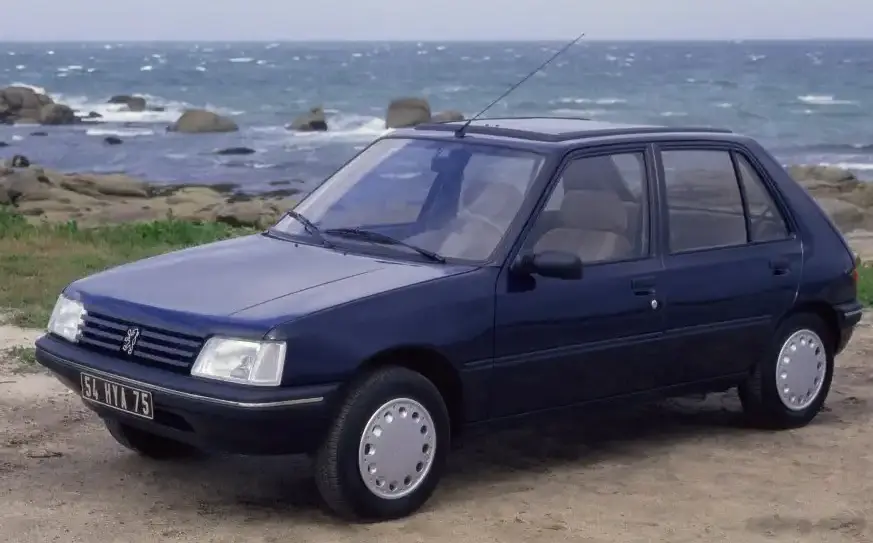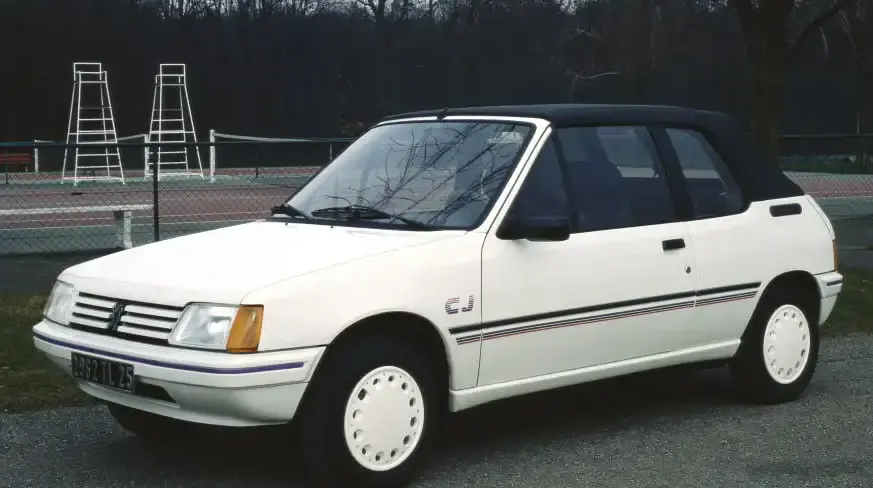
The Peugeot 205 I Cabrio 1.6 CTI (designated chassis codes 741B and 20D) was a popular variant of the iconic 205 series, produced between 1986 and 1990. Positioned as a premium offering within the 205 Cabriolet range, the CTI (Coupé Injection) model combined a lively 1.6-liter fuel-injected engine with a sporty character and open-top motoring. It represented a significant step up from the base-model Cabriolet, appealing to drivers seeking a more engaging and refined driving experience. The 205, in general, was a pivotal model for Peugeot, revitalizing the brand’s image and becoming a cultural icon in Europe.
Technical Specifications
| Brand | Peugeot |
| Model | 205 |
| Generation | 205 I Cabrio (741B,20D) |
| Type (Engine) | 1.6 CTI (113 Hp) |
| Start of production | 1986 |
| End of production | 1990 |
| Powertrain Architecture | Internal Combustion engine |
| Body type | Cabriolet |
| Seats | 4 |
| Doors | 2 |
| Fuel consumption (urban) | 9.2 l/100 km (25.6 US mpg) |
| Fuel consumption (extra urban) | 6 l/100 km (39.2 US mpg) |
| Fuel Type | Petrol (Gasoline) |
| Acceleration 0 – 100 km/h | 9.7 sec |
| Acceleration 0 – 62 mph | 9.7 sec |
| Acceleration 0 – 60 mph | 9.2 sec |
| Maximum speed | 190 km/h (118.06 mph) |
| Weight-to-power ratio | 8.3 kg/Hp |
| Weight-to-torque ratio | 7 kg/Nm |
| Power | 113 Hp @ 6250 rpm |
| Power per litre | 71.5 Hp/l |
| Torque | 134 Nm @ 4000 rpm (98.83 lb.-ft. @ 4000 rpm) |
| Engine layout | Front, Transverse |
| Engine Model/Code | XU5JA |
| Engine displacement | 1580 cm3 (96.42 cu. in.) |
| Number of cylinders | 4 |
| Engine configuration | Inline |
| Cylinder Bore | 83 mm (3.27 in.) |
| Piston Stroke | 73 mm (2.87 in.) |
| Compression ratio | 9.8:1 |
| Number of valves per cylinder | 2 |
| Fuel injection system | Multi-port manifold injection |
| Engine aspiration | Naturally aspirated engine |
| Valvetrain | OHC |
| Engine oil capacity | 5 l (5.28 US qt | 4.4 UK qt) |
| Coolant capacity | 6.6 l (6.97 US qt | 5.81 UK qt) |
| Kerb Weight | 935 kg (2061.32 lbs.) |
| Max. weight | 1265 kg (2788.85 lbs.) |
| Max load | 330 kg (727.53 lbs.) |
| Trunk (boot) space – minimum | 216 l (7.63 cu. ft.) |
| Trunk (boot) space – maximum | 564 l (19.92 cu. ft.) |
| Fuel tank capacity | 50 l (13.21 US gal | 11 UK gal) |
| Length | 3705 mm (145.87 in.) |
| Width | 1589 mm (62.56 in.) |
| Height | 1375 mm (54.13 in.) |
| Wheelbase | 2420 mm (95.28 in.) |
| Front track | 1395 mm (54.92 in.) |
| Rear (Back) track | 1330 mm (52.36 in.) |
| Minimum turning circle | 10.8 m (35.43 ft.) |
| Drivetrain Architecture | Front wheel drive |
| Number of gears | 5 gears, manual transmission |
| Front suspension | Independent, type McPherson with coil spring and anti-roll bar |
| Rear suspension | Torsion |
| Front brakes | Ventilated discs |
| Rear brakes | Drum |
| Steering type | Steering rack and pinion |
| Tires size | 185/60 R14 |
| Wheel rims size | 14 |
INTRODUCTION
The Peugeot 205 I Cabrio 1.6 CTI, produced from 1986 to 1990, was a key variant within the broader 205 range. The 205, launched in 1983, was designed to replace the aging Peugeot 104 and quickly became a sales success. The Cabriolet version, introduced in 1986, added an open-air dimension to the 205’s appeal. The 1.6 CTI sat near the top of the Cabriolet lineup, offering a balance of performance, style, and affordability. It was built on the 205 platform (internally designated 741B/20D) and shared many components with the hatchback versions, but with unique Cabriolet-specific reinforcements to maintain structural rigidity.
Powertrain & Engine Architecture
The heart of the 1.6 CTI was the XU5JA engine, a 1.6-liter (1580cc) inline-four cylinder petrol engine. This engine featured a single overhead camshaft (OHC) valvetrain with two valves per cylinder. Crucially, it utilized Bosch multi-port fuel injection, which contributed to its improved power output and efficiency compared to carbureted versions. The XU5JA produced 113 horsepower at 6250 rpm and 134 Nm (98.83 lb-ft) of torque at 4000 rpm. The engine’s design emphasized drivability and responsiveness, making it well-suited to the front-wheel-drive chassis. The 1.6 CTI was exclusively offered with a five-speed manual transmission, providing precise gear changes and enhancing the driving experience. This transmission was known for its robust construction and smooth operation.
Driving Characteristics
The 1.6 CTI offered a noticeably more spirited driving experience than the base-model Cabriolet. While not a high-performance sports car, its 113 hp and relatively light weight (935 kg / 2061 lbs) allowed for brisk acceleration – 0-60 mph in approximately 9.2 seconds and a top speed of 190 km/h (118 mph). The five-speed manual transmission allowed drivers to keep the engine in its optimal power band. The gear ratios were well-chosen for both city driving and highway cruising. Compared to the lower-powered 1.0-liter or 1.1-liter Cabriolets, the 1.6 CTI felt significantly more capable, especially when carrying passengers or luggage. The handling was typical of the 205 – nimble and responsive, with a tendency towards understeer when pushed hard. The Cabriolet’s reinforced chassis minimized body flex, providing a reasonably rigid feel even with the roof down.
Equipment & Trim Levels
The 1.6 CTI was well-equipped for its time. Standard features typically included power steering, alloy wheels, a more comprehensive instrument cluster, and upgraded interior trim. The interior featured cloth upholstery, and the dashboard layout was functional and driver-focused. Optional extras included a sunroof (in addition to the folding soft top), central locking, and upgraded audio systems. The CTI trim level generally featured a higher level of fit and finish compared to the base models, with attention paid to detail in the interior materials and overall build quality.
Chassis & Braking
The 205 Cabriolet’s chassis was reinforced compared to the hatchback to compensate for the lack of a fixed roof. It utilized independent front suspension with McPherson struts and a coil spring/anti-roll bar setup, providing a comfortable yet controlled ride. The rear suspension employed a torsion beam, a simple and effective design. Braking was handled by ventilated discs at the front and drum brakes at the rear. While adequate for normal driving, the braking system wasn’t particularly powerful by modern standards. The steering was a rack-and-pinion system, providing precise and responsive steering feel.
Market Reception & Comparison
The 1.6 CTI Cabriolet was well-received by automotive critics and buyers alike. It was praised for its stylish design, enjoyable driving dynamics, and relatively affordable price. Compared to the lower-powered Cabriolet models, the 1.6 CTI offered a significant performance upgrade. It also provided a more refined driving experience than some of its competitors, such as the Renault 5 Cabriolet. Fuel economy was reasonable for the time, averaging around 30-40 mpg depending on driving conditions. Reliability was generally good, although regular maintenance was essential to prevent issues with the fuel injection system and cooling system.
Legacy
The Peugeot 205 I Cabrio 1.6 CTI remains a popular classic car today. Its combination of style, affordability, and driving enjoyment has ensured its enduring appeal. The XU5JA engine, while not overly complex, is generally reliable if properly maintained. Parts availability is reasonably good, although some trim-specific components can be difficult to find. The 1.6 CTI is often sought after by enthusiasts looking for a classic French convertible that is both fun to drive and relatively easy to maintain. Well-maintained examples command a premium in the used car market, reflecting their desirability and iconic status.