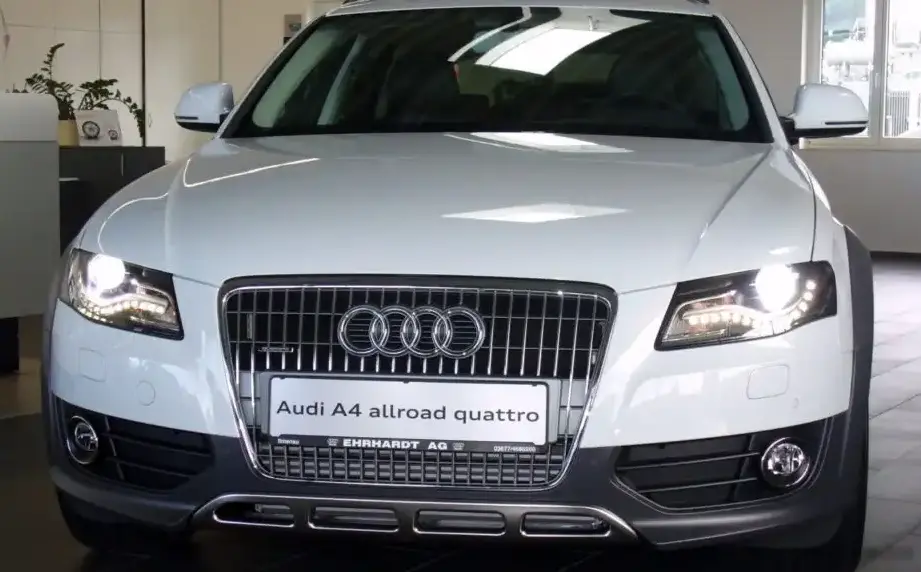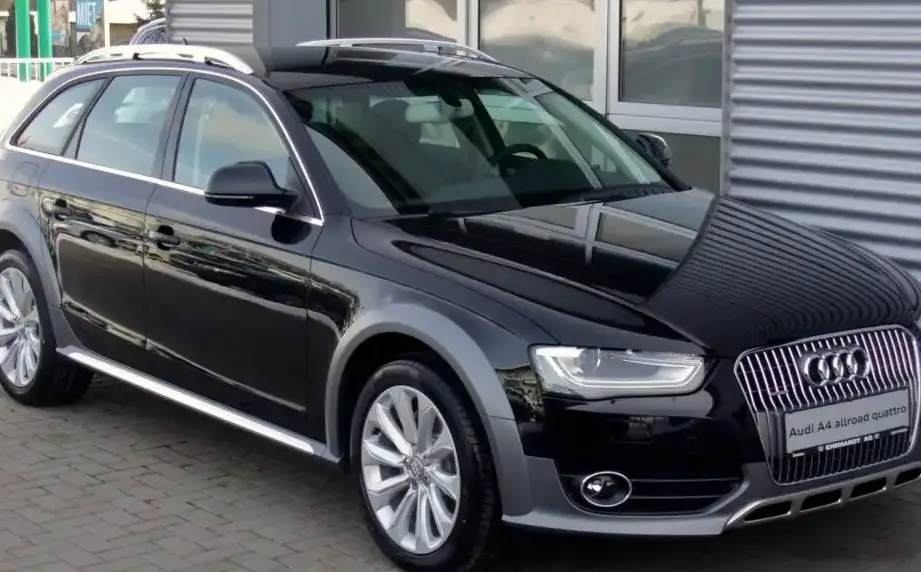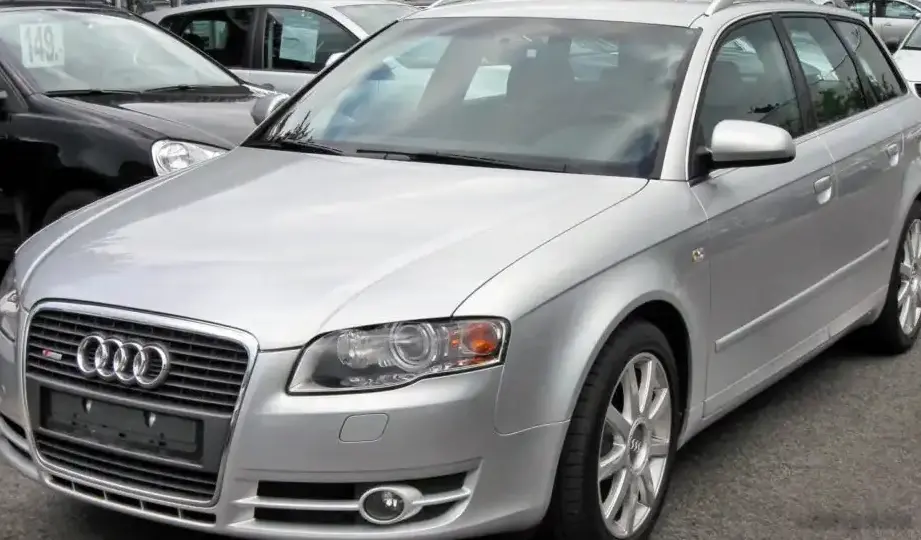
The Audi A4 Avant (B7 8E) 2.0 TFSI quattro, produced from June 2005 to June 2008, represents a compelling blend of performance and practicality within the B7 generation A4 Avant lineup. Positioned as a mid-to-upper range offering, this variant combined Audi’s renowned quattro all-wheel drive system with a potent 2.0-liter turbocharged direct-injection engine. It catered to buyers seeking a more engaging driving experience than the base models, while remaining more accessible than the high-performance S4. The B7 A4 Avant, built on the Volkswagen Group’s B6/B7 platform (shared with models like the VW Passat), aimed to refine the already successful B6 platform with styling updates and improved technology.
Technical Specifications
| Brand | Audi |
| Model | A4 |
| Generation | A4 Avant (B7 8E) |
| Type (Engine) | 2.0 TFSI quattro |
| Start of production | June, 2005 |
| End of production | June, 2008 |
| Powertrain Architecture | Internal Combustion engine |
| Body type | Station wagon (estate) |
| Seats | 5 |
| Doors | 5 |
| Fuel consumption (urban) | 12.7 l/100 km (18.5 US mpg, 22.2 UK mpg, 7.9 km/l) |
| Fuel consumption (extra urban) | 6.9 l/100 km (34.1 US mpg, 40.9 UK mpg, 14.5 km/l) |
| Fuel consumption (combined) | 9 l/100 km (26.1 US mpg, 31.4 UK mpg, 11.1 km/l) |
| CO2 emissions | 214 g/km |
| Fuel Type | Petrol (Gasoline) |
| Acceleration 0 – 100 km/h | 7.1 sec |
| Acceleration 0 – 62 mph | 7.1 sec |
| Acceleration 0 – 60 mph | 6.7 sec |
| Maximum speed | 238 km/h (147.89 mph) |
| Emission standard | Euro 4 |
| Weight-to-power ratio | 7 kg/Hp, 142.9 Hp/tonne |
| Weight-to-torque ratio | 5.1 kg/Nm, 194.8 Nm/tonne |
| Power | 220 Hp @ 5900-6100 rpm |
| Power per litre | 110.9 Hp/l |
| Torque | 300 Nm @ 2200-4000 rpm (221.27 lb.-ft. @ 2200-4000 rpm) |
| Engine layout | Front, Longitudinal |
| Engine Model/Code | BUL |
| Engine displacement | 1984 cm3 (121.07 cu. in.) |
| Number of cylinders | 4 |
| Engine configuration | Inline |
| Cylinder Bore | 82.5 mm (3.25 in.) |
| Piston Stroke | 92.8 mm (3.65 in.) |
| Compression ratio | 10.5:1 |
| Number of valves per cylinder | 4 |
| Fuel injection system | Direct injection |
| Engine aspiration | Turbocharger, Intercooler |
| Valvetrain | DOHC |
| Engine oil capacity | 4.5 l (4.76 US qt | 3.96 UK qt) |
| Coolant | 8 l (8.45 US qt | 7.04 UK qt) |
| Kerb Weight | 1540 kg (3395.12 lbs.) |
| Max. weight | 2090 kg (4607.66 lbs.) |
| Max load | 550 kg (1212.54 lbs.) |
| Trunk (boot) space – minimum | 442 l (15.61 cu. ft.) |
| Trunk (boot) space – maximum | 1354 l (47.82 cu. ft.) |
| Fuel tank capacity | 63 l (16.64 US gal | 13.86 UK gal) |
| Max. roof load | 75 kg (165.35 lbs.) |
| Permitted trailer load with brakes (8%) | 1800 kg (3968.32 lbs.) |
| Permitted trailer load with brakes (12%) | 1600 kg (3527.4 lbs.) |
| Permitted trailer load without brakes | 750 kg (1653.47 lbs.) |
| Length | 4586 mm (180.55 in.) |
| Width | 1772 mm (69.76 in.) |
| Width including mirrors | 1937 mm (76.26 in.) |
| Height | 1453 mm (57.2 in.) |
| Wheelbase | 2642 mm (104.02 in.) |
| Front track | 1519 mm (59.8 in.) |
| Rear (Back) track | 1514 mm (59.61 in.) |
| Drag coefficient (Cd) | 0.33 |
| Minimum turning circle | 11.1 m (36.42 ft.) |
| Drivetrain Architecture | The Internal combustion engine (ICE) drives permanently the four wheels of the vehicle. |
| Drive wheel | All wheel drive (4×4) |
| Number of gears and type of gearbox | 6 gears, manual transmission |
| Front suspension | Independent multi-link suspension |
| Rear suspension | Independent multi-link suspension |
| Front brakes | Ventilated discs |
| Rear brakes | Disc |
| Assisting systems | ABS (Anti-lock braking system) |
| Steering type | Steering rack and pinion |
| Power steering | Hydraulic Steering |
| Tires size | 215/55 R16 |
| Wheel rims size | 7J x 16 |
Powertrain & Engine Architecture
At the heart of the A4 Avant 2.0 TFSI quattro lies the BUL engine code, a 1.984-liter inline-four cylinder engine. This engine utilizes direct fuel injection (FSI) and a single turbocharger with an intercooler to deliver a substantial 220 horsepower and 300 Nm (221 lb-ft) of torque. The direct injection system allows for precise fuel delivery, enhancing both power and efficiency. The engine features a dual overhead camshaft (DOHC) valvetrain with four valves per cylinder, optimizing airflow for improved performance. The six-speed manual transmission was standard, providing drivers with precise control over the engine’s power. The quattro all-wheel-drive system employs a Torsen center differential, distributing torque between the front and rear axles as needed, enhancing traction and stability in various driving conditions.
Driving Characteristics
The 2.0 TFSI quattro Avant offered a noticeably more spirited driving experience compared to lower-powered A4 variants. The turbocharger provides a surge of power in the mid-range, making overtaking maneuvers effortless. While not as brutally fast as the S4, the 2.0 TFSI delivered a satisfying level of performance for everyday driving. The six-speed manual transmission allowed for precise gear selection, maximizing the engine’s potential. The quattro system provided excellent grip, particularly in inclement weather, inspiring confidence on winding roads. The gear ratios were tuned to balance acceleration and fuel economy, offering a good compromise for both city and highway driving.
Equipment & Trim Levels
The 2.0 TFSI quattro Avant typically came well-equipped, reflecting its position as a mid-range offering. Standard features included automatic climate control, power windows and locks, a multi-function steering wheel, and a premium audio system. Upholstery was typically a combination of cloth and leatherette, with full leather options available as an upgrade. Optional extras included sunroof, navigation system, heated front seats, and parking sensors. The interior design was typical of Audi at the time – functional, well-built, and understatedly elegant.
Chassis & Braking
The B7 A4 Avant featured an independent multi-link suspension system at both the front and rear, providing a comfortable ride and precise handling. The front suspension utilized coil springs and shock absorbers, while the rear suspension incorporated a separate spring and damper arrangement. The 2.0 TFSI quattro Avant was equipped with ventilated disc brakes at the front and solid disc brakes at the rear, providing ample stopping power. Anti-lock braking system (ABS) was standard, enhancing safety and control during emergency braking situations. Stabilizer bars were fitted to both axles, reducing body roll during cornering.
Market Reception & Comparison
The Audi A4 Avant 2.0 TFSI quattro was generally well-received by automotive critics. It was praised for its blend of performance, practicality, and refinement. Compared to the base 1.8T models, the 2.0 TFSI offered a significant power upgrade and a more engaging driving experience. While the S4 provided even greater performance, it came at a considerably higher price point. Fuel economy was respectable for a vehicle of its class, although not class-leading. Reliability was generally good, although some owners reported issues with the turbocharger and fuel injectors over the long term.
Legacy
The Audi A4 Avant (B7 8E) 2.0 TFSI quattro remains a popular choice among enthusiasts today. The BUL engine, while not without its potential issues, is generally considered robust and capable. The quattro all-wheel-drive system continues to be highly regarded for its performance and reliability. These vehicles are readily available on the used car market, often at reasonable prices. However, prospective buyers should be aware of potential maintenance costs associated with the turbocharger and fuel injection system. Overall, the A4 Avant 2.0 TFSI quattro represents a well-rounded and enjoyable driving experience, offering a compelling combination of performance, practicality, and Audi’s signature quality.