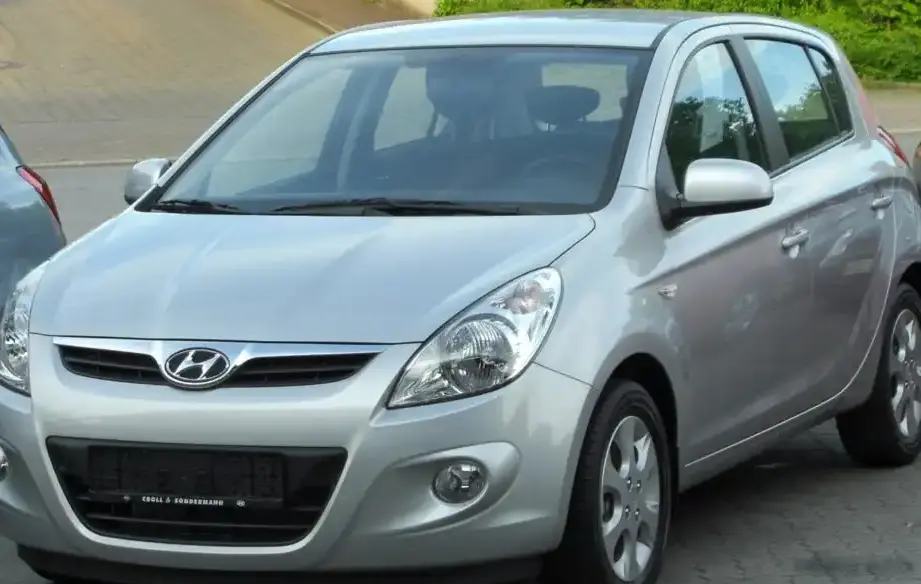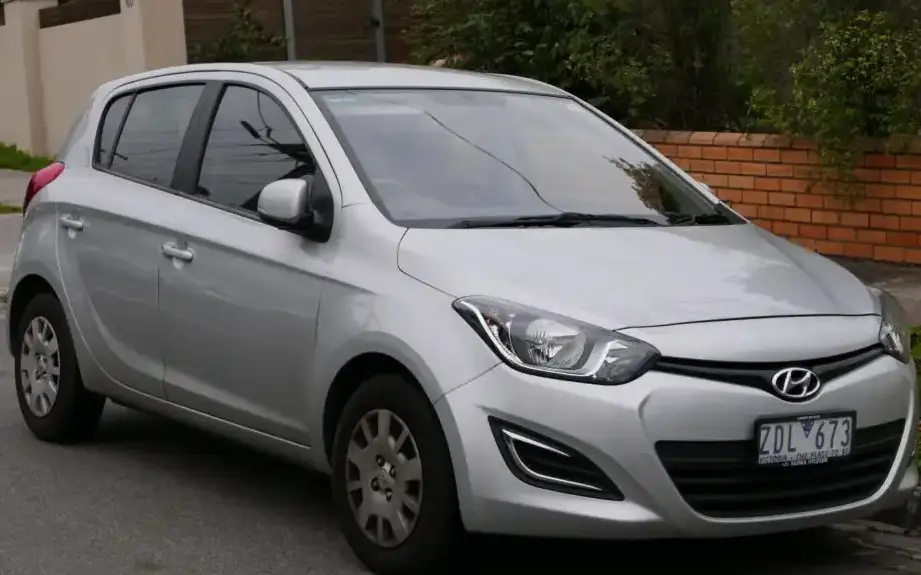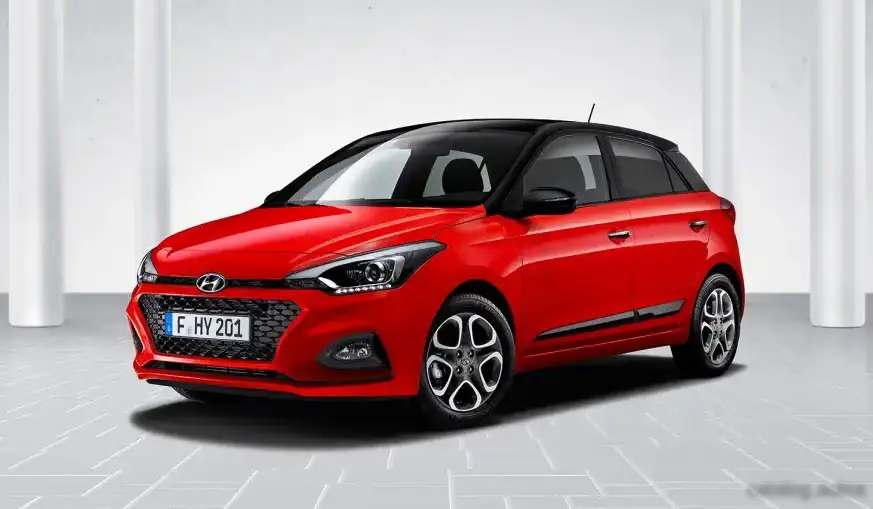
The Hyundai i20 II (GB facelift, produced from 2018 to 2020) 1.0 T-GDI 120 hp variant represents a significant step in Hyundai’s efforts to offer a compelling subcompact hatchback in the European market and beyond. This iteration of the i20, built on the PB platform, aimed to balance fuel efficiency, modern technology, and a relatively sporty driving experience within the competitive B-segment. The “GB” designation refers to the facelift introduced in 2018, bringing styling updates and revised equipment levels. This particular engine and transmission combination – the 1.0-liter turbocharged gasoline direct injection (T-GDI) engine paired with a 7-speed dual-clutch transmission (DCT) – was positioned as a mid-range offering, appealing to buyers seeking a more refined and efficient alternative to the base naturally aspirated engines.
Technical Specifications
| Brand | Hyundai |
| Model | i20 |
| Generation | i20 II (GB facelift 2018) |
| Type (Engine) | 1.0 T-GDI (120 Hp) DCT |
| Start of production | 2018 |
| End of production | 2020 |
| Powertrain Architecture | Internal Combustion engine |
| Body type | Hatchback |
| Seats | 5 |
| Doors | 5 |
| Fuel consumption (urban) | 5.9 l/100 km (39.9 US mpg, 47.9 UK mpg, 16.9 km/l) |
| Fuel consumption (extra urban) | 4.9 l/100 km (48 US mpg, 57.6 UK mpg, 20.4 km/l) |
| Fuel consumption (combined) | 5.3 l/100 km (44.4 US mpg, 53.3 UK mpg, 18.9 km/l) |
| CO2 emissions | 121 g/km |
| Fuel Type | Petrol (Gasoline) |
| Acceleration 0 – 100 km/h | 10.5 sec |
| Acceleration 0 – 62 mph | 10.5 sec |
| Acceleration 0 – 60 mph | 10 sec |
| Maximum speed | 190 km/h (118.06 mph) |
| Emission standard | Euro 6d |
| Weight-to-power ratio | 9.9 kg/Hp, 101.3 Hp/tonne |
| Weight-to-torque ratio | 6.9 kg/Nm, 145.1 Nm/tonne |
| Power | 120 Hp @ 6000 rpm |
| Power per litre | 120.2 Hp/l |
| Torque | 172 Nm @ 1500-4000 rpm (126.86 lb.-ft. @ 1500-4000 rpm) |
| Engine layout | Front, Transverse |
| Engine Model/Code | Kappa II / G3LC |
| Engine displacement | 998 cm3 (60.9 cu. in.) |
| Number of cylinders | 3 |
| Engine configuration | Inline |
| Cylinder Bore | 71 mm (2.8 in.) |
| Piston Stroke | 84 mm (3.31 in.) |
| Compression ratio | 10:1 |
| Number of valves per cylinder | 4 |
| Fuel injection system | Direct injection |
| Engine aspiration | Turbocharger, Intercooler |
| Valvetrain | D-CVVT |
| Engine oil capacity | 3.6 l (3.8 US qt | 3.17 UK qt) |
| Coolant | 6.4 l (6.76 US qt | 5.63 UK qt) |
| Kerb Weight | 1185-1325 kg (2612.48 – 2921.12 lbs.) |
| Max. weight | 1650 kg (3637.63 lbs.) |
| Max load | 325-465 kg (716.5 – 1025.15 lbs.) |
| Trunk (boot) space – minimum | 326 l (11.51 cu. ft.) |
| Trunk (boot) space – maximum | 1024 l (36.16 cu. ft.) |
| Fuel tank capacity | 50 l (13.21 US gal | 11 UK gal) |
| Max. roof load | 70 kg (154.32 lbs.) |
| Permitted trailer load with brakes (12%) | 800 kg (1763.7 lbs.) |
| Permitted trailer load without brakes | 450 kg (992.08 lbs.) |
| Permitted towbar download | 75 kg (165.35 lbs.) |
| Length | 4035 mm (158.86 in.) |
| Width | 1734 mm (68.27 in.) |
| Width including mirrors | 1985 mm (78.15 in.) |
| Height | 1474 mm (58.03 in.) |
| Wheelbase | 2570 mm (101.18 in.) |
| Front track | 1514-1520 mm (59.61 – 59.84 in.) |
| Rear (Back) track | 1513-1519 mm (59.57 – 59.8 in.) |
| Front overhang | 815 mm (32.09 in.) |
| Rear overhang | 650 mm (25.59 in.) |
| Ride height (ground clearance) | 140 mm (5.51 in.) |
| Minimum turning circle (turning diameter) | 10.2 m (33.46 ft.) |
| Drivetrain Architecture | The Internal combustion engine (ICE) drives the front wheels of the vehicle. |
| Drive wheel | Front wheel drive |
| Number of gears and type of gearbox | 7 gears, automatic transmission DCT |
| Front suspension | Independent, type McPherson with coil spring and anti-roll bar |
| Rear suspension | Independent coil spring |
| Front brakes | Ventilated discs |
| Rear brakes | Disc |
| Assisting systems | ABS (Anti-lock braking system) |
| Steering type | Steering rack and pinion |
| Power steering | Electric Steering |
| Tires size | 185/65 R15; 195/55 R16 |
| Wheel rims size | 6.0J x 15; 6.0J x 16 |
INTRODUCTION
The Hyundai i20 II (GB facelift) 1.0 T-GDI 120 hp represents a key offering in Hyundai’s second-generation i20 lineup, produced from 2018 to 2020. This model was designed to appeal to European buyers seeking a stylish, fuel-efficient, and well-equipped supermini. The facelift brought revised front and rear styling, updated interior materials, and enhanced safety features. The 1.0 T-GDI engine, part of Hyundai’s Kappa engine family, was a relatively new addition, offering a balance between performance and economy. Coupled with the 7-speed DCT, it aimed to provide a more engaging driving experience than the base 1.2-liter naturally aspirated engine while remaining more affordable than the higher-output options.
Powertrain & Engine Architecture
The heart of this i20 variant is the Kappa II 1.0 T-GDI engine, designated G3LC. This is a three-cylinder, inline gasoline engine featuring direct fuel injection and a single turbocharger with an intercooler. The engine produces 120 horsepower at 6000 rpm and 172 Nm (126.86 lb-ft) of torque between 1500 and 4000 rpm. The direct injection system optimizes fuel delivery for improved efficiency and power output. The engine also incorporates Hyundai’s D-CVVT (Dual Continuous Variable Valve Timing) technology, which adjusts valve timing on both the intake and exhaust sides to enhance performance and reduce emissions. The 7-speed dual-clutch transmission (DCT) provides quick and smooth gear changes, contributing to a more responsive driving experience. Unlike traditional automatic transmissions, the DCT uses two separate clutches for odd and even gears, allowing for near-instantaneous shifts.
Driving Characteristics
The 1.0 T-GDI 120 hp/DCT combination delivers a noticeable improvement in performance compared to the base i20 models. While not a sports car, the turbocharger provides a useful boost of power, making overtaking and merging onto highways easier. The DCT contributes to a more engaging driving experience, with quick and precise gear changes. However, some drivers have noted that the DCT can occasionally exhibit slight hesitation at low speeds. The gear ratios are tuned for a balance between fuel efficiency and performance, with taller gears for highway cruising and shorter gears for quicker acceleration. Compared to the manual transmission versions of the 1.0 T-GDI, the DCT offers greater convenience, particularly in urban traffic. However, the manual version may provide slightly better fuel economy and a more direct connection to the engine.
Equipment & Trim Levels
The 1.0 T-GDI 120 hp DCT typically came equipped with a reasonable level of standard features. These often included air conditioning, a touchscreen infotainment system with Apple CarPlay and Android Auto compatibility, Bluetooth connectivity, power windows, and central locking. Higher trim levels added features such as alloy wheels, a rear-view camera, parking sensors, automatic climate control, and a more premium interior upholstery. Safety features typically included ABS, ESC (Electronic Stability Control), and multiple airbags. Optional extras could include a panoramic sunroof, navigation system, and advanced driver-assistance systems (ADAS) like lane departure warning and automatic emergency braking.
Chassis & Braking
The i20 II utilizes a McPherson strut front suspension and a torsion beam rear suspension. This setup provides a good balance between ride comfort and handling. The front suspension incorporates a stabilizer bar to reduce body roll during cornering. Braking duties are handled by ventilated discs on the front wheels and solid discs on the rear. ABS (Anti-lock Braking System) is standard, providing enhanced braking performance in emergency situations. The steering is electrically assisted, offering light and precise control.
Market Reception & Comparison
The Hyundai i20 II (GB facelift) 1.0 T-GDI 120 hp DCT was generally well-received by automotive critics. It was praised for its fuel efficiency, stylish design, and well-equipped interior. The DCT was seen as a positive addition, offering a more refined driving experience than the base manual transmission. However, some critics noted that the engine could feel a bit strained at higher speeds, and the ride quality could be slightly firm on rough roads. Compared to rivals like the Volkswagen Polo, Ford Fiesta, and Renault Clio, the i20 offered a competitive package with a strong value proposition. The 1.0 T-GDI offered a good balance between performance and economy, making it a popular choice for buyers seeking a practical and efficient supermini.
Legacy
The Kappa II 1.0 T-GDI engine and 7-speed DCT combination have proven to be relatively reliable in the Hyundai i20. While some owners have reported minor issues with the DCT, such as occasional jerky shifts, these are generally not widespread. Regular maintenance, including oil changes and DCT fluid replacements, is crucial for ensuring long-term reliability. In the used car market, the i20 II (GB facelift) 1.0 T-GDI 120 hp DCT remains a popular choice, offering a good balance of affordability, fuel efficiency, and features. Its relatively modern technology and stylish design continue to appeal to buyers seeking a practical and well-rounded supermini.