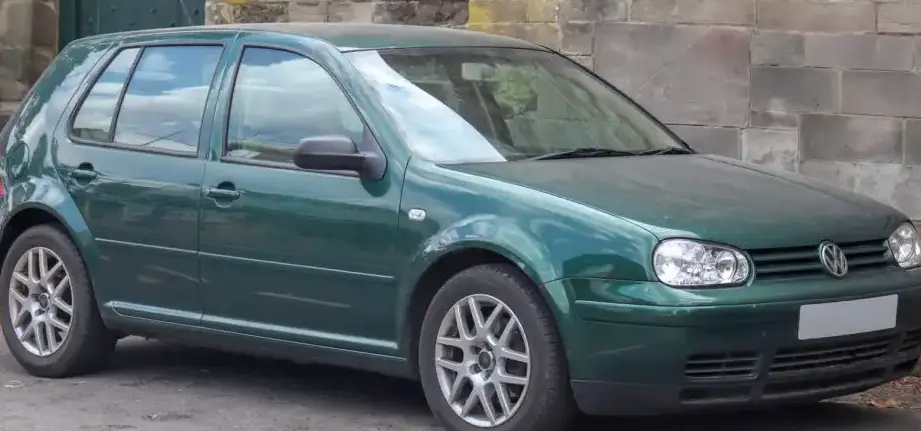
The Volkswagen Golf IV 1.4 16V, produced from 1997 to 2006, represented an entry point into the fourth generation (Mk IV) Golf lineup. Positioned as a fuel-efficient and affordable option, this variant played a significant role in maintaining the Golf’s broad market appeal, particularly in Europe where smaller displacement engines were favored due to taxation and fuel costs. It was available in both 3-door and 5-door hatchback configurations, catering to a range of customer needs. This model was built on the Volkswagen Group’s A4 platform (also known as the 1HX0 platform), shared with other vehicles like the Audi A3, SEAT Leon, and Škoda Octavia.
Technical Specifications
| Brand | Volkswagen |
| Model | Golf |
| Generation | Golf IV |
| Type (Engine) | 1.4 16V (75 Hp) |
| Start of production | 1997 |
| End of production | 2006 |
| Powertrain Architecture | Internal Combustion engine |
| Body type | Hatchback |
| Seats | 5 |
| Doors | 3-5 |
| Fuel consumption (urban) | 9.1 l/100 km (25.8 US mpg, 31 UK mpg, 11 km/l) |
| Fuel consumption (extra urban) | 5.5 l/100 km (42.8 US mpg, 51.4 UK mpg, 18.2 km/l) |
| Fuel consumption (combined) | 6.8 l/100 km (34.6 US mpg, 41.5 UK mpg, 14.7 km/l) |
| Fuel Type | Petrol (Gasoline) |
| Acceleration 0 – 100 km/h | 13 sec |
| Acceleration 0 – 62 mph | 13 sec |
| Acceleration 0 – 60 mph | 12.4 sec |
| Maximum speed | 171 km/h (106.25 mph) |
| Weight-to-power ratio | 14.5 kg/Hp, 69.1 Hp/tonne |
| Weight-to-torque ratio | 8.6 kg/Nm, 116.1 Nm/tonne |
| Power | 75 Hp @ 5000 rpm |
| Power per litre | 54 Hp/l |
| Torque | 126 Nm @ 3800 rpm (92.93 lb.-ft. @ 3800 rpm) |
| Engine layout | Front, Transverse |
| Engine Model/Code | AHW, AKQ, APE, AXP, BCA |
| Engine displacement | 1390 cm3 (84.82 cu. in.) |
| Number of cylinders | 4 |
| Engine configuration | Inline |
| Cylinder Bore | 76.5 mm (3.01 in.) |
| Piston Stroke | 75.6 mm (2.98 in.) |
| Compression ratio | 10:1 |
| Number of valves per cylinder | 4 |
| Fuel injection system | Multi-port manifold injection |
| Engine aspiration | Naturally aspirated engine |
| Valvetrain | OHC |
| Engine oil capacity | 3.2 l (3.38 US qt | 2.82 UK qt) |
| Coolant | 6 l (6.34 US qt | 5.28 UK qt) |
| Kerb Weight | 1085 kg (2392.02 lbs.) |
| Max. weight | 1640 kg (3615.58 lbs.) |
| Max load | 555 kg (1223.57 lbs.) |
| Trunk (boot) space – minimum | 330 l (11.65 cu. ft.) |
| Trunk (boot) space – maximum | 1185 l (41.85 cu. ft.) |
| Fuel tank capacity | 55 l (14.53 US gal | 12.1 UK gal) |
| Length | 4149 mm (163.35 in.) |
| Width | 1735 mm (68.31 in.) |
| Height | 1439 mm (56.65 in.) |
| Wheelbase | 2511 mm (98.86 in.) |
| Front track | 1513 mm (59.57 in.) |
| Rear (Back) track | 1494 mm (58.82 in.) |
| Minimum turning circle | 10.3 m (33.79 ft.) |
| Drivetrain Architecture | Front wheel drive |
| Drive wheel | Front wheel drive |
| Number of gears | 5 gears, manual transmission |
| Front suspension | Independent type McPherson |
| Rear suspension | Dependent, multi-link spring with telescopic shock absorbers |
| Front brakes | Ventilated discs |
| Rear brakes | Disc |
| Assisting systems | ABS (Anti-lock braking system) |
| Steering type | Steering rack and pinion |
| Power steering | Hydraulic Steering |
| Tires size | 175/80 R14 |
| Wheel rims size | 6J x 14 |
Powertrain & Engine Architecture
The heart of the Golf IV 1.4 16V was the 1390cc inline-four cylinder engine, available with several engine codes including AHW, AKQ, APE, AXP, and BCA. These engines featured a single overhead camshaft (SOHC) design operating four valves per cylinder. Fuel delivery was managed by a multi-port fuel injection system, a common setup for the era. The 16-valve configuration, while not offering the outright power of larger engines, contributed to a relatively broad torque curve. The engine’s modest output was designed for efficiency rather than performance. The 5-speed manual transmission was the standard offering, providing adequate gear spacing for everyday driving. While an automatic transmission was available, it often came at the expense of fuel economy and responsiveness.
Driving Characteristics
The 1.4 16V Golf IV offered a predictable and undemanding driving experience. With 75 horsepower, acceleration was leisurely, taking approximately 13 seconds to reach 62 mph (100 km/h). The engine felt most comfortable in the mid-range, providing sufficient power for merging onto highways and overtaking slower traffic, though it required downshifting for more spirited maneuvers. Compared to the more powerful 1.8 and 2.0-liter versions, or the diesel options like the 1.9 TDI, the 1.4 felt noticeably slower. However, its lighter weight and efficient engine contributed to better fuel economy. The manual transmission offered a more engaging driving experience than the optional four-speed automatic, which could feel sluggish and unresponsive.
Equipment & Trim Levels
The 1.4 16V typically served as the entry-level trim in the Golf IV range. Standard equipment generally included power steering, central locking, electric front windows, and an anti-lock braking system (ABS). Interior upholstery was typically cloth, and the dashboard featured a functional, if somewhat basic, design. Optional extras included air conditioning, alloy wheels, a sunroof, and upgraded audio systems. Higher trim levels, such as the Comfortline and Highline, added more features like climate control, heated mirrors, and upgraded interior trim.
Chassis & Braking
The Golf IV 1.4 16V utilized an independent McPherson strut suspension at the front and a semi-independent multi-link suspension at the rear. This setup provided a comfortable ride quality, absorbing bumps and imperfections in the road effectively. Front brakes were ventilated discs, offering adequate stopping power, while rear brakes were typically solid discs. The chassis was well-balanced, contributing to predictable handling characteristics. Stabilizer bars were fitted to both the front and rear axles to reduce body roll during cornering.
Market Reception & Comparison
The Golf IV 1.4 16V was generally well-received as a practical and economical choice. Critics praised its fuel efficiency and comfortable ride, but noted its lack of outright performance. Compared to the more powerful Golf variants, the 1.4 offered a lower purchase price and running costs, making it an attractive option for budget-conscious buyers. The 1.9 TDI diesel models were often favored by those prioritizing fuel economy and torque, while the 1.8 and 2.0-liter petrol engines appealed to drivers seeking more performance. Reliability was generally good, although the engine was known to be sensitive to oil changes and maintenance.
Legacy
The Golf IV 1.4 16V remains a relatively common sight on used car markets today. Its simple engine design and readily available parts contribute to relatively low maintenance costs. While not a performance icon, it represents a solid and dependable choice for those seeking an affordable and practical hatchback. The engine, while not known for its longevity in extreme conditions, generally proves reliable with regular servicing. The Golf IV 1.4 16V’s enduring popularity is a testament to its practicality and the Golf’s overall reputation for quality and durability.