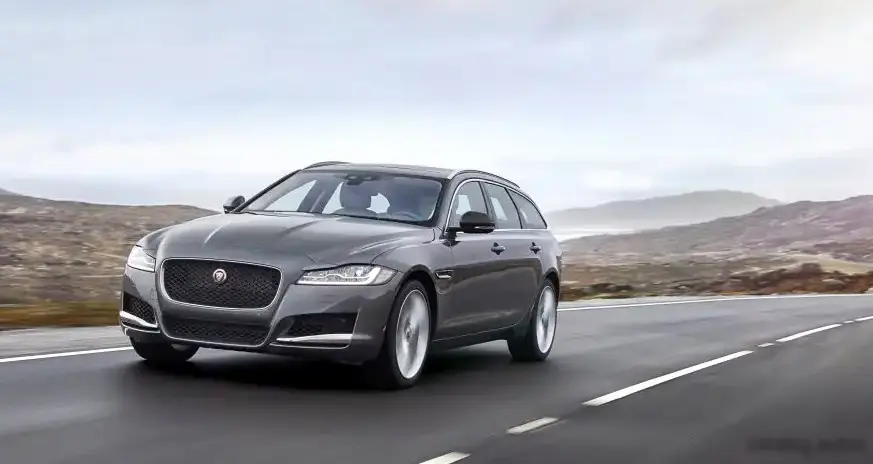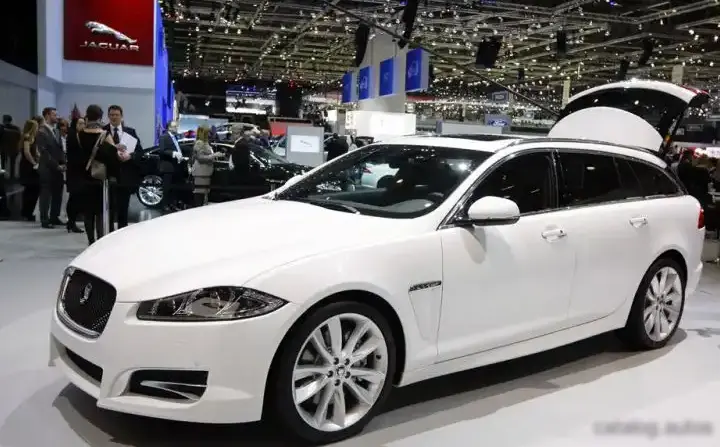
The Jaguar XF Sportbrake (X250) 3.0d, produced from 2012 to 2015, represents Jaguar’s entry into the premium, performance-oriented estate (station wagon) market. Built on the X250 platform – shared with the XF sedan – the Sportbrake aimed to offer the luxury and driving dynamics of the XF with the added practicality of a larger cargo area. This 3.0d variant, equipped with a 240 horsepower diesel engine and an eight-speed automatic transmission, occupied a middle ground in the Sportbrake lineup, positioned between the more economical 2.2d models and the higher-performance petrol options. It was primarily marketed towards European buyers seeking a refined, long-distance touring vehicle with ample space and respectable performance.
Technical Specifications
| Brand | Jaguar |
| Model | XF |
| Generation | XF Sportbrake (X250) |
| Type (Engine) | 3.0d (240 Hp) Automatic |
| Start of production | 2012 |
| End of production | 2015 |
| Powertrain Architecture | Internal Combustion engine |
| Body type | Station wagon (estate) |
| Seats | 5 |
| Doors | 5 |
| Fuel consumption (combined) | 6.1 l/100 km |
| Fuel consumption (US mpg) | 38.6 US mpg |
| Fuel consumption (UK mpg) | 46.3 UK mpg |
| Fuel consumption (km/l) | 16.4 km/l |
| CO2 emissions | 163 g/km |
| Fuel Type | Diesel |
| Acceleration 0 – 100 km/h | 7.1 sec |
| Acceleration 0 – 62 mph | 7.1 sec |
| Acceleration 0 – 60 mph | 6.7 sec |
| Maximum speed | 240 km/h (149.13 mph) |
| Power | 240 Hp @ 4000 rpm |
| Power per litre | 80.2 Hp/l |
| Torque | 500 Nm @ 2000 rpm (368.78 lb.-ft. @ 2000 rpm) |
| Engine layout | Front, Longitudinal |
| Engine Model/Code | 306DT |
| Engine displacement | 2993 cm3 (182.64 cu. in.) |
| Number of cylinders | 6 |
| Engine configuration | V-engine |
| Cylinder Bore | 84 mm (3.31 in.) |
| Piston Stroke | 90 mm (3.54 in.) |
| Fuel injection system | Diesel Commonrail |
| Engine aspiration | Turbocharger, Intercooler |
| Engine oil capacity | 6.6 l (6.97 US qt | 5.81 UK qt) |
| Coolant capacity | 12.53 l (13.24 US qt | 11.02 UK qt) |
| Trunk (boot) space – minimum | 550 l (19.42 cu. ft.) |
| Trunk (boot) space – maximum | 1675 l (59.15 cu. ft.) |
| Fuel tank capacity | 70.1 l (18.52 US gal | 15.42 UK gal) |
| Length | 4966 mm (195.51 in.) |
| Width | 1877 mm (73.9 in.) |
| Wheelbase | 2909 mm (114.53 in.) |
| Front track | 1559 mm (61.38 in.) |
| Rear track | 1605 mm (63.19 in.) |
| Drivetrain | Rear wheel drive |
| Number of gears | 8 |
| Gearbox type | Automatic transmission |
| Front brakes | Ventilated discs |
| Rear brakes | Ventilated discs |
Powertrain & Engine Architecture
The heart of the XF Sportbrake 3.0d is Jaguar’s 306DT engine, a 3.0-liter V6 diesel. This engine utilizes a common rail direct injection system, delivering fuel at extremely high pressure for optimized combustion. A variable geometry turbocharger, coupled with an intercooler, provides enhanced power and torque across a broad rev range. The engine produces 240 horsepower at 4000 rpm and a substantial 500 Nm (368 lb-ft) of torque from as low as 2000 rpm. This torque output is a key characteristic, providing strong acceleration and effortless cruising. The engine is longitudinally mounted, driving the rear wheels. The eight-speed automatic transmission, sourced from ZF, is a crucial component of this powertrain. Its close gear ratios contribute to both performance and fuel efficiency, allowing the engine to operate within its optimal power band. The transmission features a ‘Sport’ mode for more aggressive shifting and a manual override function.
Driving Characteristics
The 3.0d Sportbrake offers a compelling blend of performance and refinement. While not as overtly sporty as the supercharged petrol variants, the diesel engine’s abundant torque provides brisk acceleration. The 0-60 mph time of around 6.7 seconds is respectable for a large estate car. The eight-speed automatic transmission shifts smoothly and responsively, contributing to a relaxed driving experience. Compared to the 2.2d models, the 3.0d offers noticeably more power and a greater sense of effortless performance, particularly when fully loaded or tackling inclines. However, it doesn’t quite match the outright punch of the higher-output petrol engines. The rear-wheel-drive configuration provides a balanced feel, although it can require some caution in slippery conditions.
Equipment & Trim Levels
The XF Sportbrake 3.0d typically came well-equipped as standard. Interior features included leather upholstery, power-adjustable front seats, a touchscreen infotainment system, and dual-zone climate control. Common options included a panoramic sunroof, heated seats, a premium sound system (often Meridian), and advanced driver-assistance systems such as adaptive cruise control and blind-spot monitoring. Trim levels varied slightly depending on the market, but generally offered increasing levels of luxury and technology. The ‘Portfolio’ trim, for example, added more luxurious interior materials and additional features compared to the base ‘SE’ trim.
Chassis & Braking
The XF Sportbrake utilizes a sophisticated chassis design, featuring independent suspension all around – double wishbones at the front and a multi-link setup at the rear. This configuration provides a comfortable ride quality while maintaining good handling characteristics. The 3.0d variant typically featured ventilated disc brakes on all four wheels, providing ample stopping power. Anti-lock Braking System (ABS) and Electronic Stability Control (ESC) were standard safety features. Stabilizer bars were fitted front and rear to reduce body roll during cornering. The suspension tuning was generally geared towards comfort and refinement, rather than outright sportiness, although it remained capable and composed.
Market Reception & Comparison
The Jaguar XF Sportbrake 3.0d was generally well-received by automotive critics. It was praised for its stylish design, luxurious interior, and refined driving experience. The diesel engine was lauded for its power and fuel efficiency. Compared to its rivals – such as the Audi A6 Avant, BMW 5 Series Touring, and Mercedes-Benz E-Class Estate – the XF Sportbrake offered a distinctive British character and a more engaging driving experience. However, some critics noted that the infotainment system could be less intuitive than those offered by German competitors. Fuel economy was competitive for its class, typically achieving around 38 mpg on the combined cycle. Reliability was generally good, although diesel particulate filter (DPF) issues could occasionally arise, particularly with vehicles primarily used for short journeys.
Legacy
The Jaguar XF Sportbrake 3.0d remains a desirable used car option today. The 306DT engine, while requiring regular maintenance, is generally considered robust and reliable. The eight-speed automatic transmission has also proven to be durable. However, potential buyers should be aware of the potential for DPF issues and ensure that the vehicle has been properly maintained. The XF Sportbrake’s combination of luxury, practicality, and driving dynamics continues to appeal to buyers seeking a premium estate car. Its relatively limited production numbers have also contributed to its collectibility, making well-maintained examples increasingly sought after in the used car market.