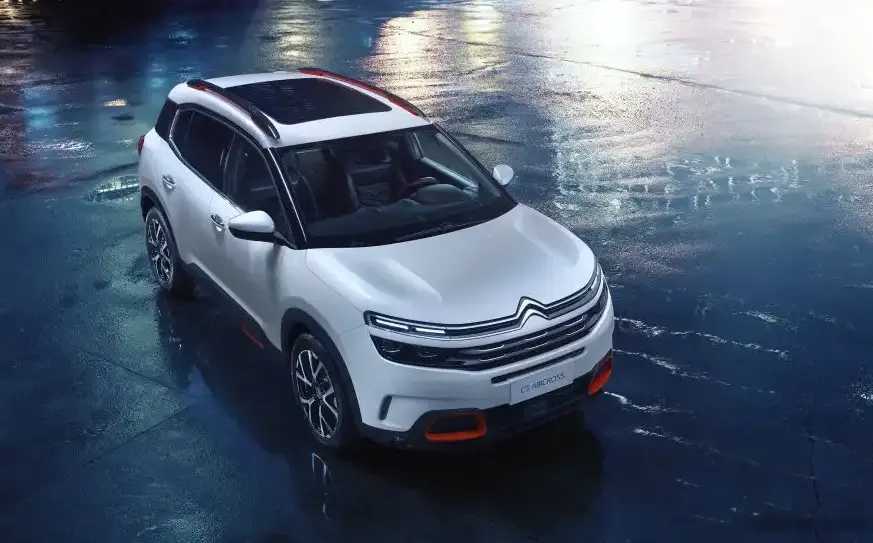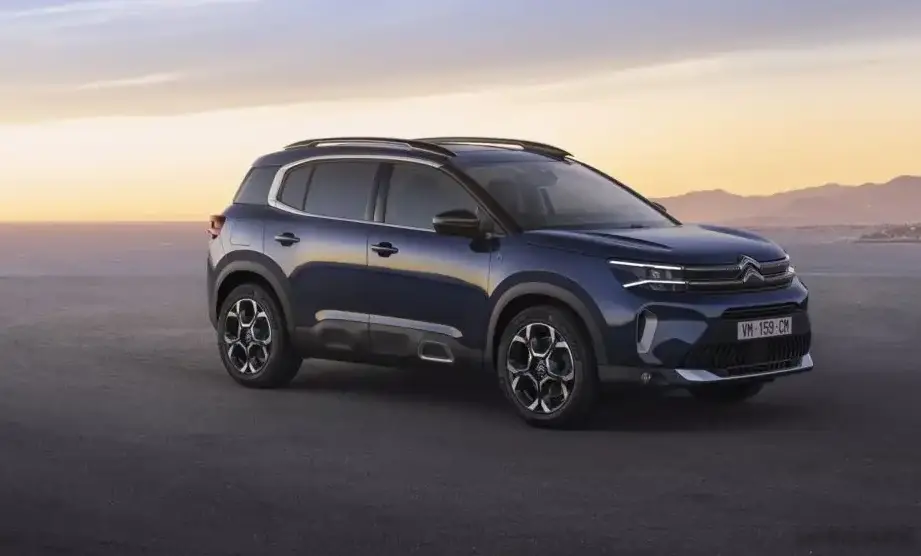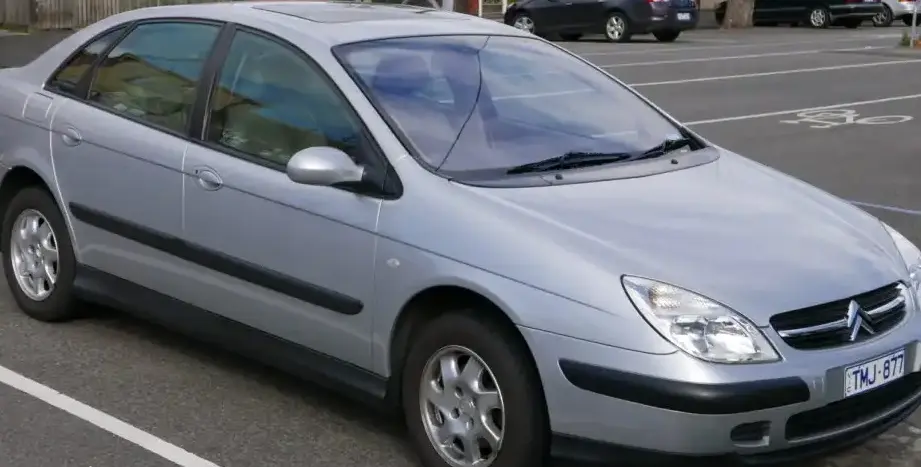
The Citroën C5 I, launched in 2000, represented a significant step forward for the French automaker, aiming to compete directly with established mid-size family cars like the Ford Mondeo and Volkswagen Passat. The first generation C5 (designated X10) offered a blend of comfort, technology, and distinctive styling. Within the C5 range, the 1.8i 16V Automatic variant, produced from 2000 to 2004, occupied a middle ground, providing a more accessible entry point to the model line while still offering a reasonable level of equipment and refinement. This version was particularly popular in European markets where automatic transmissions were gaining traction, offering a comfortable and convenient driving experience.
Technical Specifications
| Brand | Citroen |
| Model | C5 |
| Generation | C5 I (Phase I, 2000) |
| Type (Engine) | 1.8i 16V (116 Hp) Automatic |
| Start of production | 2000 year |
| End of production | 2004 year |
| Powertrain Architecture | Internal Combustion engine |
| Body type | Sedan |
| Seats | 5 |
| Doors | 4 |
| Fuel consumption (economy) – urban | 12.3 l/100 km (19.1 US mpg, 23 UK mpg, 8.1 km/l) |
| Fuel consumption (economy) – extra urban | 6.2 l/100 km (37.9 US mpg, 45.6 UK mpg, 16.1 km/l) |
| Fuel consumption (economy) – combined | 8.4 l/100 km (28 US mpg, 33.6 UK mpg, 11.9 km/l) |
| CO2 emissions | 201 g/km |
| Fuel Type | Petrol (Gasoline) |
| Acceleration 0 – 100 km/h | 14.6 sec |
| Acceleration 0 – 62 mph | 14.6 sec |
| Acceleration 0 – 60 mph | 13.9 sec |
| Maximum speed | 193 km/h (119.92 mph) |
| Emission standard | Euro 3 |
| Weight-to-power ratio | 11.3 kg/Hp, 88.2 Hp/tonne |
| Weight-to-torque ratio | 8.2 kg/Nm, 121.7 Nm/tonne |
| Power | 116 Hp @ 5500 rpm |
| Power per litre | 66.3 Hp/l |
| Torque | 160 Nm @ 4000 rpm (118.01 lb.-ft. @ 4000 rpm) |
| Engine layout | Front, Transverse |
| Engine Model/Code | 6FZ EW7J4 |
| Engine displacement | 1749 cm3 (106.73 cu. in.) |
| Number of cylinders | 4 |
| Engine configuration | Inline |
| Cylinder Bore | 82.7 mm (3.26 in.) |
| Piston Stroke | 81.4 mm (3.2 in.) |
| Compression ratio | 10.8:1 |
| Number of valves per cylinder | 4 |
| Fuel injection system | Multi-port manifold injection |
| Engine aspiration | Naturally aspirated engine |
| Valvetrain | DOHC |
| Engine oil capacity | 4.3 l (4.54 US qt | 3.78 UK qt) |
| Coolant | 8 l (8.45 US qt | 7.04 UK qt) |
| Kerb Weight | 1315 kg (2899.08 lbs.) |
| Max. weight | 1835 kg (4045.48 lbs.) |
| Max load | 520 kg (1146.4 lbs.) |
| Trunk (boot) space – minimum | 456 l (16.1 cu. ft.) |
| Fuel tank capacity | 66 l (17.44 US gal | 14.52 UK gal) |
| Max. roof load | 75 kg (165.35 lbs.) |
| Permitted trailer load with brakes (8%) | 1550 kg (3417.17 lbs.) |
| Permitted trailer load with brakes (12%) | 1500 kg (3306.93 lbs.) |
| Permitted trailer load without brakes | 695 kg (1532.21 lbs.) |
| Permitted towbar download | 75 kg (165.35 lbs.) |
| Length | 4618 mm (181.81 in.) |
| Width | 1770 mm (69.69 in.) |
| Width including mirrors | 2100 mm (82.68 in.) |
| Height | 1476 mm (58.11 in.) |
| Wheelbase | 2750 mm (108.27 in.) |
| Front track | 1544 mm (60.79 in.) |
| Rear (Back) track | 1509 mm (59.41 in.) |
| Front overhang | 971 mm (38.23 in.) |
| Rear overhang | 897 mm (35.31 in.) |
| Minimum turning circle (turning diameter) | 11.39 m (37.37 ft.) |
| Drivetrain Architecture | The Internal combustion engine (ICE) drives the front wheels of the vehicle. |
| Drive wheel | Front wheel drive |
| Number of gears and type of gearbox | 4 gears, automatic transmission |
| Front suspension | Independent type McPherson |
| Rear suspension | Semi-independent, coil spring |
| Front brakes | Ventilated discs |
| Rear brakes | Disc |
| Assisting systems | ABS (Anti-lock braking system) |
| Steering type | Steering rack and pinion |
| Power steering | Hydraulic Steering |
| Tires size | 195/65 R15 |
| Wheel rims size | 6J x 15 |
INTRODUCTION
The Citroën C5 I, launched in 2000, marked a return to form for the brand, offering a comfortable and technologically advanced alternative in the competitive mid-size segment. The 1.8i 16V Automatic variant, produced between 2000 and 2004, was a key component of the initial C5 lineup. Powered by the 6FZ (EW7J4) engine, this version aimed to provide a balance between affordability, fuel efficiency, and ease of driving. It was positioned as a step up from the base 1.6L engine, offering more power and a smoother driving experience thanks to the four-speed automatic transmission. The C5 I, built on the PSA Group’s 1HX0 platform (shared with the Peugeot 406), prioritized ride comfort and interior space.
Powertrain & Engine Architecture
The heart of the C5 1.8i Automatic is the 6FZ (also known as EW7J4) 1.8-liter inline-four cylinder engine. This engine is a naturally aspirated unit featuring a cast iron block and aluminum cylinder head. It utilizes a multi-port fuel injection system and a double overhead camshaft (DOHC) valvetrain with four valves per cylinder. This configuration allowed for a respectable power output of 116 horsepower at 5500 rpm and 160 Nm (118 lb-ft) of torque at 4000 rpm. The engine’s design emphasized smooth operation and reasonable fuel economy rather than outright performance. The four-speed automatic transmission, while not the most modern, provided convenient gear changes and contributed to the car’s comfortable driving experience. It’s a conventional hydraulic automatic, known for its reliability but also for its relatively slow shift speeds compared to later designs.
Driving Characteristics
The C5 1.8i Automatic offered a comfortable, if not particularly sporty, driving experience. The automatic transmission, while smooth, did detract from the engine’s performance, resulting in a 0-60 mph time of around 13.9 seconds. The gear ratios were optimized for fuel efficiency and cruising comfort rather than rapid acceleration. Compared to the five-speed manual version of the 1.8L, the automatic felt noticeably slower. The C5’s renowned hydropneumatic suspension (depending on trim level – some base models had conventional suspension) played a significant role in providing a smooth and composed ride, absorbing bumps and imperfections in the road with ease. Steering was light and precise, making the car easy to maneuver in urban environments.
Equipment & Trim Levels
The C5 1.8i Automatic typically came equipped with a reasonable level of standard features. These included central locking, electric front windows, power steering, and an ABS anti-lock braking system. Higher trim levels, such as Exclusive, added features like alloy wheels, climate control, a CD stereo, and upgraded interior trim. Interior upholstery was typically cloth, with options for leather available on higher-spec models. The dashboard layout was functional and ergonomically designed, with easy-to-read gauges and intuitive controls. Optional extras included a sunroof, rear parking sensors, and a more advanced audio system.
Chassis & Braking
The C5 I featured an independent McPherson strut front suspension and a semi-independent coil spring rear suspension. This setup provided a good balance between ride comfort and handling. Depending on the trim level, some C5s were equipped with Citroën’s advanced hydropneumatic suspension system, which offered an even more refined ride quality and self-leveling capabilities. Braking duties were handled by ventilated discs at the front and discs at the rear, providing adequate stopping power for the car’s weight and performance. The ABS system helped to maintain stability during emergency braking maneuvers.
Market Reception & Comparison
The Citroën C5 1.8i Automatic was generally well-received by critics, who praised its comfortable ride, spacious interior, and distinctive styling. However, some reviewers noted that the engine and automatic transmission combination lacked the performance of some of its rivals, such as the Ford Mondeo and Volkswagen Passat. Fuel economy was considered average for the class. Compared to the more powerful 2.0L and V6 variants of the C5, the 1.8L Automatic offered a more affordable entry point but at the expense of performance. The 1.9 TDI diesel version was also a popular alternative, offering superior fuel economy and torque.
Legacy
The Citroën C5 I 1.8i Automatic has proven to be a relatively reliable car, with the 6FZ engine generally considered durable. However, like any older vehicle, it is prone to age-related issues such as corrosion and wear and tear on suspension components. The automatic transmission, while generally reliable, may require servicing or rebuilding after high mileage. Today, the C5 I 1.8i Automatic can be found on the used car market at affordable prices, making it an attractive option for buyers seeking a comfortable and spacious family car. Its distinctive styling and comfortable ride continue to appeal to enthusiasts of French automobiles.