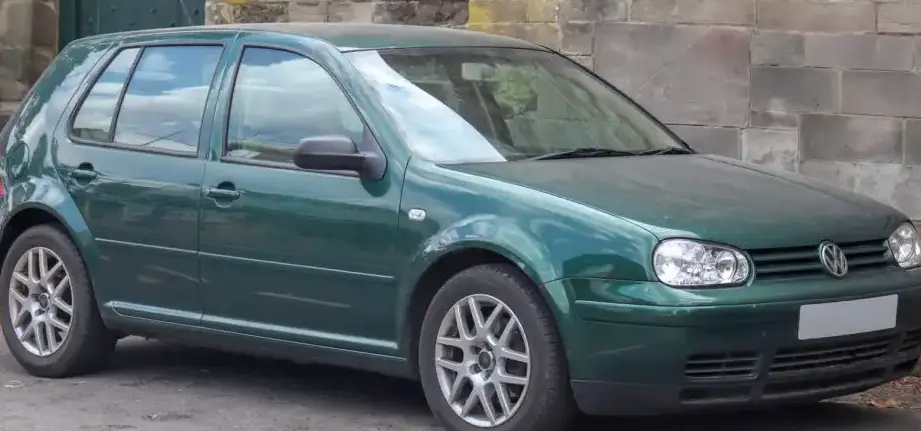
The Volkswagen Golf IV 1.6 16V, produced between 2000 and 2003, represented an entry point into the fourth-generation Golf (Mk IV) lineup. Positioned as a practical and affordable option, this variant utilized a 1.6-liter, 16-valve gasoline engine producing 105 horsepower. It was primarily aimed at buyers seeking a reliable and economical hatchback, particularly in European markets where smaller displacement engines were favored due to tax regulations and fuel costs. The Golf IV chassis (1HX0/A3 platform) offered a significant step up in refinement and build quality compared to its predecessor, the Mk III, and the 1.6 16V model benefited from these improvements while providing a more accessible price point.
Technical Specifications
| Brand | Volkswagen |
| Model | Golf |
| Generation | Golf IV |
| Type (Engine) | 1.6 16V (105 Hp) |
| Start of production | 2000 |
| End of production | 2003 |
| Powertrain Architecture | Internal Combustion engine |
| Body type | Hatchback |
| Seats | 5 |
| Doors | 3-5 |
| Fuel consumption (urban) | 9.6 l/100 km (24.5 US mpg) |
| Fuel consumption (extra urban) | 5.7 l/100 km (41.3 US mpg) |
| Fuel Type | Petrol (Gasoline) |
| Acceleration 0 – 100 km/h | 10 sec |
| Acceleration 0 – 62 mph | 10 sec |
| Acceleration 0 – 60 mph | 9.5 sec |
| Maximum speed | 192 km/h (119.3 mph) |
| Weight-to-power ratio | 10.5 kg/Hp |
| Weight-to-torque ratio | 7.4 kg/Nm |
| Power | 105 Hp @ 5700 rpm |
| Torque | 148 Nm @ 4500 rpm (109.16 lb.-ft. @ 4500 rpm) |
| Engine layout | Front, Transverse |
| Engine Model/Code | AZD, ATN, AUS, BCB |
| Engine displacement | 1598 cm3 (97.52 cu. in.) |
| Number of cylinders | 4 |
| Engine configuration | Inline |
| Cylinder Bore | 76.5 mm (3.01 in.) |
| Piston Stroke | 86.9 mm (3.42 in.) |
| Compression ratio | 11:1 |
| Number of valves per cylinder | 4 |
| Fuel injection system | Multi-port manifold injection |
| Engine aspiration | Naturally aspirated engine |
| Valvetrain | DOHC |
| Engine oil capacity | 3.5 l (3.7 US qt | 3.08 UK qt) |
| Coolant capacity | 6 l (6.34 US qt | 5.28 UK qt) |
| Kerb Weight | 1100 kg (2425.08 lbs.) |
| Max. weight | 1750 kg (3858.09 lbs.) |
| Max load | 650 kg (1433 lbs.) |
| Trunk (boot) space – minimum | 330 l (11.65 cu. ft.) |
| Trunk (boot) space – maximum | 1184 l (41.81 cu. ft.) |
| Fuel tank capacity | 55 l (14.53 US gal | 12.1 UK gal) |
| Length | 4149 mm (163.35 in.) |
| Width | 1735 mm (68.31 in.) |
| Height | 1439 mm (56.65 in.) |
| Wheelbase | 2511 mm (98.86 in.) |
| Front track | 1513 mm (59.57 in.) |
| Rear track | 1494 mm (58.82 in.) |
| Drivetrain Architecture | Front wheel drive |
| Number of gears | 5 |
| Gearbox type | Manual transmission |
| Front suspension | Wishbone |
| Rear suspension | Coil spring |
| Front brakes | Ventilated discs |
| Rear brakes | Disc |
| Assisting systems | ABS (Anti-lock braking system) |
| Steering type | Steering rack and pinion |
| Power steering | Hydraulic Steering |
| Tires size | 175/80 R14 |
| Wheel rims size | 14 |
Introduction
The Volkswagen Golf IV 1.6 16V, launched in 2000, was a key component of the Mk IV Golf range, which represented a significant leap forward in terms of interior quality, ride comfort, and safety features. This variant, powered by the 1.6-liter engine, served as the entry-level offering for buyers prioritizing affordability and fuel efficiency. Available in both 3-door and 5-door hatchback configurations, it aimed to provide a practical and well-rounded package for everyday use. The engine codes associated with this model include AZD, ATN, AUS, and BCB, indicating minor variations in specification depending on the production year and market.
Powertrain & Engine Architecture
The heart of the Golf IV 1.6 16V is the 1.6-liter inline-four cylinder engine. This engine, belonging to the EA827 family, featured a dual overhead camshaft (DOHC) valvetrain with four valves per cylinder, contributing to its relatively efficient power output. Fuel delivery was handled by a multi-port fuel injection system, providing precise fuel metering for optimal combustion. The engine’s 105 horsepower at 5700 rpm and 148 Nm (109 lb-ft) of torque at 4500 rpm were respectable for its displacement, but not particularly sporty. The engine’s design prioritized fuel economy and reliability over outright performance. The 5-speed manual transmission was the standard offering, providing a reasonably direct connection between the engine and the front wheels. While an automatic transmission was available, it often resulted in a noticeable performance decrease.
Driving Characteristics
The Golf IV 1.6 16V offered a comfortable and predictable driving experience. Acceleration was adequate for everyday driving, with a 0-60 mph time of around 9.5 seconds. However, it lacked the punch of higher-powered Golf variants like the 1.8T or the VR6. The 5-speed manual transmission allowed drivers to make the most of the engine’s powerband, while the automatic transmission, though convenient, resulted in slower acceleration and increased fuel consumption. The suspension provided a good balance between comfort and handling, absorbing bumps effectively while maintaining reasonable body control. Steering was light and precise, making the car easy to maneuver in urban environments.
Equipment & Trim Levels
The Golf IV 1.6 16V typically came equipped with a basic but functional set of features. Standard equipment included power steering, central locking, electric front windows, and an adjustable steering column. Interior upholstery was typically cloth, with a relatively simple dashboard layout. Optional extras included air conditioning, alloy wheels, a CD player, and upgraded interior trim. Trim levels varied depending on the market, but generally followed a progressive structure, with higher trims adding more comfort and convenience features. The base trim was fairly spartan, focusing on essential functionality.
Chassis & Braking
The Golf IV utilized a front-wheel-drive layout with independent wishbone suspension at the front and a twist-beam rear suspension. Braking duties were handled by ventilated discs at the front and solid discs at the rear. Anti-lock Braking System (ABS) was standard, enhancing safety by preventing wheel lockup during hard braking. The chassis was designed to provide a stable and predictable platform, contributing to the car’s overall comfort and handling characteristics. The weight distribution was reasonably balanced, further enhancing its driving dynamics.
Market Reception & Comparison
The Golf IV 1.6 16V was generally well-received by critics as a practical and affordable hatchback. It was praised for its comfortable ride, refined interior, and good build quality. However, it was often criticized for its relatively modest performance compared to other Golf variants. Compared to the 1.8T, the 1.6 16V offered significantly less power and acceleration, but it also consumed less fuel and was generally more affordable to insure. The 1.9 TDI diesel variant offered superior fuel economy and torque, but at a higher initial cost. The 1.6 16V appealed to buyers who prioritized economy and practicality over outright performance.
Legacy
The Golf IV 1.6 16V has proven to be a relatively reliable and durable vehicle. The 1.6-liter engine is known for its longevity, provided it is properly maintained. Today, these cars are readily available on the used car market at affordable prices. While not particularly sought after by enthusiasts, they represent a good value for buyers seeking a practical and reliable hatchback. Common issues include wear and tear on suspension components and occasional problems with the central locking system. However, parts are readily available and relatively inexpensive, making them easy to maintain. The Golf IV 1.6 16V remains a testament to Volkswagen’s commitment to building well-engineered and durable vehicles.