
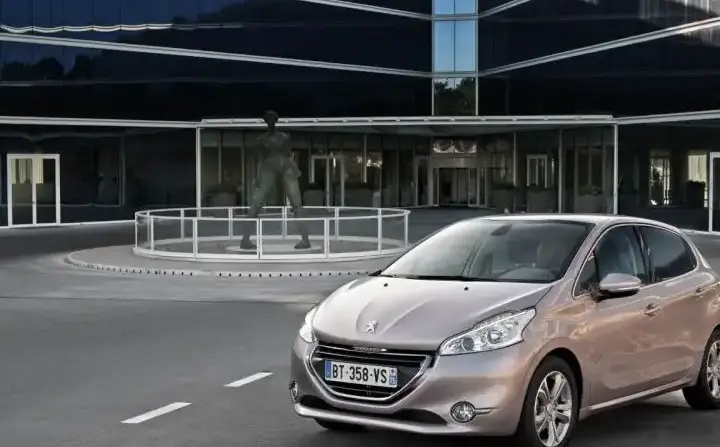
The Peugeot 208, launched in 2012, represented a significant departure for the French automaker, replacing the popular 207. The first generation, designated the T1 series, was available in both 3-door and 5-door hatchback configurations. Among the engine options offered, the 1.2 VTi (82 hp) paired with the BMP5 automated manual transmission was positioned as an entry-level offering, aimed at buyers prioritizing fuel efficiency and affordability. Production of this specific variant ran from 2012 to 2015, forming a key part of the initial 208 lineup.
Technical Specifications
| Brand | Peugeot |
| Model | 208 |
| Generation | 208 I (Phase I, 2012) |
| Type (Engine) | 1.2 VTi (82 Hp) BMP5 |
| Start of production | 2012 |
| End of production | 2015 |
| Powertrain Architecture | Internal Combustion engine |
| Body type | Hatchback |
| Seats | 5 |
| Doors | 3-5 |
| Fuel Type | Petrol (Gasoline) |
| Emission standard | Euro 5 |
| Power | 82 Hp @ 6000 rpm |
| Power per litre | 68.4 Hp/l |
| Torque | 118 Nm @ 2750 rpm (87.03 lb.-ft. @ 2750 rpm) |
| Engine layout | Front, Transverse |
| Engine Model/Code | HMZ EB2F |
| Engine displacement | 1199 cm3 (73.17 cu. in.) |
| Number of cylinders | 3 |
| Engine configuration | Inline |
| Number of valves per cylinder | 4 |
| Fuel injection system | Multi-port manifold injection |
| Engine aspiration | Naturally aspirated engine |
| Engine oil capacity | 3.25 l (3.43 US qt | 2.86 UK qt) |
| Trunk (boot) space – minimum | 285 l (10.06 cu. ft.) |
| Trunk (boot) space – maximum | 1076 l (38 cu. ft.) |
| Fuel tank capacity | 50 l (13.21 US gal | 11 UK gal) |
| Length | 3962 mm (155.98 in.) |
| Width | 1829 mm (72.01 in.) |
| Height | 1460 mm (57.48 in.) |
| Wheelbase | 2538 mm (99.92 in.) |
| Drivetrain Architecture | The Internal combustion engine (ICE) drives the front wheels of the vehicle. |
| Drive wheel | Front wheel drive |
| Number of gears and type of gearbox | 5 gears, automated manual transmission |
| Front suspension | Independent type McPherson |
| Rear suspension | Semi-independent, coil spring |
| Front brakes | Ventilated discs |
| Rear brakes | Drum |
| Assisting systems | ABS (Anti-lock braking system) |
| Steering type | Steering rack and pinion |
Powertrain & Engine Architecture
The heart of this 208 variant is the Peugeot-developed 1.2-liter inline-three cylinder engine, internally designated HMZ EB2F. This engine belongs to the EB family of small displacement petrol engines co-developed with BMW. The 1.2 VTi utilizes a naturally aspirated configuration and multi-point fuel injection. The engine features four valves per cylinder, contributing to improved breathing and efficiency. The 82 horsepower output is achieved at 6000 rpm, while peak torque of 118 Nm (87 lb-ft) arrives at 2750 rpm. This engine is known for its relatively simple design, contributing to its reliability. The engine is paired with a BMP5 (Boîte Manuelle Pilotée 5 rapports) transmission, a 5-speed automated manual gearbox. This system uses sensors and actuators to automatically shift gears, offering a degree of convenience without the full complexity (and cost) of a traditional automatic transmission. However, the BMP5 is often criticized for its somewhat jerky shifts compared to conventional automatics or more modern dual-clutch transmissions.
Driving Characteristics
The 1.2 VTi with the BMP5 transmission delivers modest performance. Acceleration is adequate for urban driving and highway merging, but it’s not a particularly quick vehicle. The 0-60 mph time is estimated to be around 13-14 seconds. The BMP5 transmission, while offering automatic operation, can feel hesitant and occasionally clunky during gear changes. The gear ratios are tuned for fuel economy rather than outright performance. Compared to the more powerful 1.6 VTi variants, the 1.2 VTi feels significantly slower. The manual transmission versions of the 1.2 VTi offer a more engaging driving experience and slightly improved performance due to the driver having full control over gear selection. The relatively light weight of the 208 helps to mitigate the engine’s limited power, making it feel reasonably nimble in city traffic.
Equipment & Trim Levels
The 1.2 VTi BMP5 typically represented the base trim level in the 208 range. Standard equipment generally included air conditioning, power steering, electric front windows, a basic audio system with USB connectivity, and ABS brakes. Interior upholstery was typically cloth, and the dashboard featured a functional but relatively simple design. Optional extras included alloy wheels, a more advanced audio system, parking sensors, and cruise control. Higher trim levels, such as the Active and Allure, added more features like automatic headlights, rain-sensing wipers, and upgraded interior trim.
Chassis & Braking
The Peugeot 208 utilizes a McPherson strut front suspension and a semi-independent coil spring rear suspension. This setup provides a reasonable balance between ride comfort and handling. The front brakes are ventilated discs, offering adequate stopping power, while the rear brakes are drums, a cost-saving measure common in entry-level models. The steering is a rack and pinion system, providing precise and responsive steering feel. The 208’s relatively lightweight construction contributes to its agile handling characteristics.
Market Reception & Comparison
The 1.2 VTi BMP5 variant of the Peugeot 208 was generally well-received as an affordable and fuel-efficient option. Critics praised its low running costs and practicality, but often criticized the BMP5 transmission for its lack of smoothness. Compared to the more powerful 1.6 VTi models, the 1.2 VTi offered significantly lower fuel consumption – typically around 45-50 mpg combined – but at the expense of performance. The 1.6 VTi was favored by drivers seeking a more engaging driving experience, while the 1.2 VTi appealed to those prioritizing economy. Competitors in this segment included the Renault Clio, Volkswagen Polo, and Ford Fiesta.
Legacy
The 1.2 VTi engine, in various iterations, proved to be a relatively reliable unit. The BMP5 transmission, however, has a reputation for being less durable than conventional automatics, with some owners reporting issues with the clutch and actuator mechanisms. In the used car market, the 1.2 VTi BMP5 208 represents an affordable entry point into Peugeot ownership. Its low running costs and practicality continue to make it an attractive option for budget-conscious buyers. However, potential buyers should be aware of the potential issues with the BMP5 transmission and factor in the cost of potential repairs when considering a purchase.
