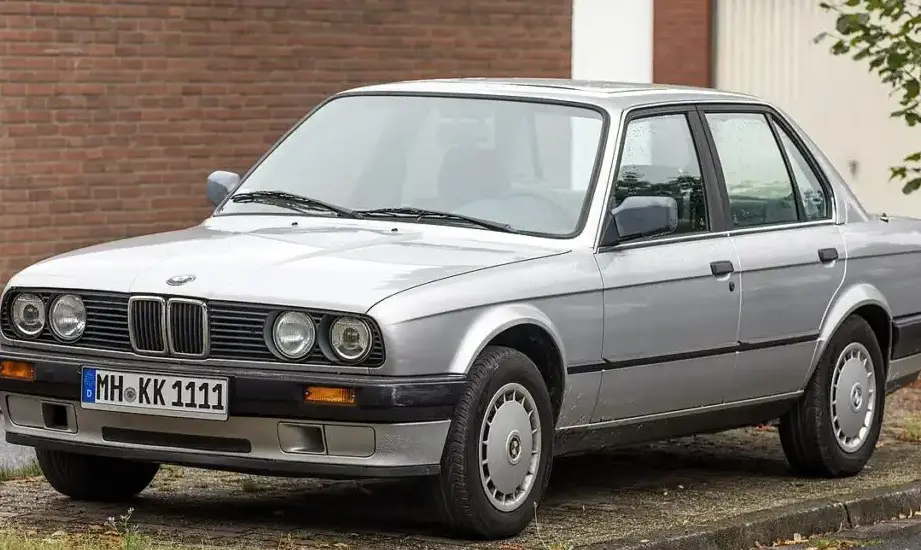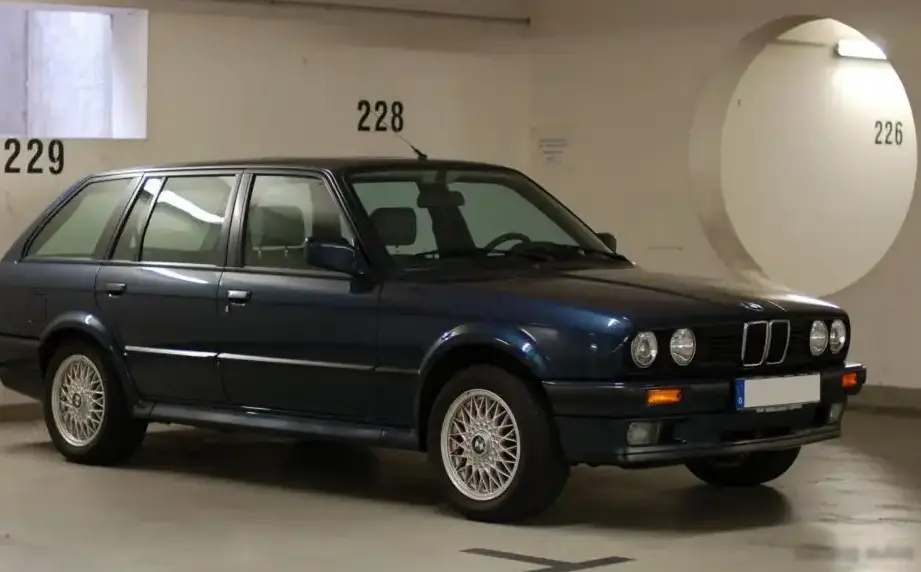
The BMW 3 Series Touring (E30) 320i, produced from 1988 to 1991, represents BMW’s foray into the compact executive touring car segment. Based on the E30 3 Series platform – specifically the facelifted version introduced in 1987 – the 320i Touring offered the practicality of a station wagon (estate) body style combined with BMW’s renowned driving dynamics. This variant occupied a middle ground in the E30 Touring lineup, positioned above the base 318i and below the more potent 325i models. It was primarily marketed in Europe, where the demand for practical, yet premium, vehicles was strong. The 320i Touring aimed to appeal to buyers seeking a balance between performance, fuel efficiency, and cargo capacity.
Technical Specifications
| Brand | BMW |
| Model | 3 Series |
| Generation | 3 Series Touring (E30, facelift 1987) |
| Type (Engine) | 320i (129 Hp) |
| Start of production | 1988 |
| End of production | 1991 |
| Powertrain Architecture | Internal Combustion engine |
| Body type | Station wagon (estate) |
| Seats | 5 |
| Doors | 5 |
| Fuel consumption (economy) – urban | 13 l/100 km (18.1 US mpg, 21.7 UK mpg, 7.7 km/l) |
| Fuel consumption (economy) – extra urban | 7.5 l/100 km (31.4 US mpg, 37.7 UK mpg, 13.3 km/l) |
| Fuel consumption (economy) – combined | 9.5 l/100 km (24.8 US mpg, 29.7 UK mpg, 10.5 km/l) |
| Fuel Type | Petrol (Gasoline) |
| Acceleration 0 – 100 km/h | 11.5 sec |
| Acceleration 0 – 62 mph | 11.5 sec |
| Acceleration 0 – 60 mph | 10.9 sec |
| Maximum speed | 196 km/h (121.79 mph) |
| Weight-to-power ratio | 9.5 kg/Hp, 104.9 Hp/tonne |
| Weight-to-torque ratio | 7.5 kg/Nm, 133.3 Nm/tonne |
| Power | 129 Hp @ 6000 rpm |
| Power per litre | 64.8 Hp/l |
| Torque | 164 Nm @ 4300 rpm (120.96 lb.-ft. @ 4300 rpm) |
| Engine layout | Front, Longitudinal |
| Engine Model/Code | M20B20 |
| Engine displacement | 1991 cm3 (121.5 cu. in.) |
| Number of cylinders | 6 |
| Engine configuration | Inline |
| Cylinder Bore | 80 mm (3.15 in.) |
| Piston Stroke | 66 mm (2.6 in.) |
| Compression ratio | 8.8:1 |
| Number of valves per cylinder | 2 |
| Fuel injection system | Multi-port manifold injection |
| Engine aspiration | Naturally aspirated engine |
| Engine oil capacity | 4.25 l (4.49 US qt | 3.74 UK qt) |
| Coolant | 10.5 l (11.1 US qt | 9.24 UK qt) |
| Kerb Weight | 1230 kg (2711.69 lbs.) |
| Max. weight | 1710 kg (3769.9 lbs.) |
| Max load | 480 kg (1058.22 lbs.) |
| Trunk (boot) space – minimum | 370 l (13.07 cu. ft.) |
| Trunk (boot) space – maximum | 1125 l (39.73 cu. ft.) |
| Fuel tank capacity | 62 l (16.38 US gal | 13.64 UK gal) |
| Length | 4325 mm (170.28 in.) |
| Width | 1645 mm (64.76 in.) |
| Height | 1380 mm (54.33 in.) |
| Wheelbase | 2570 mm (101.18 in.) |
| Front track | 1405 mm (55.31 in.) |
| Rear (Back) track | 1415 mm (55.71 in.) |
| Drivetrain Architecture | The Internal combustion engine (ICE) drives the rear wheels of the vehicle. |
| Drive wheel | Rear wheel drive |
| Number of gears and type of gearbox | 5 gears, manual transmission |
| Front suspension | Coil spring |
| Rear suspension | Coil spring |
| Front brakes | Disc |
| Rear brakes | Drum |
| Assisting systems | ABS (Anti-lock braking system) |
| Power steering | Hydraulic Steering |
| Tires size | 195/65 R14 |
| Wheel rims size | 14 |
Powertrain & Engine Architecture
The 320i Touring was powered by the BMW M20B20 engine, a 2.0-liter inline-six cylinder gasoline engine. This engine was a cornerstone of BMW’s engineering prowess during the 1980s and early 1990s. The M20 featured a cast iron block and an aluminum cylinder head, contributing to its durability and relatively lightweight construction. Fuel delivery was managed by a Bosch Motronic multi-port fuel injection system, optimizing fuel efficiency and emissions. The engine utilized a single overhead camshaft (SOHC) valvetrain with two valves per cylinder. This configuration, while not as sophisticated as later DOHC designs, provided a good balance of performance and reliability. The 5-speed manual transmission was standard, offering precise gear changes and a direct connection to the rear wheels. The engine’s longitudinal mounting and rear-wheel-drive layout were hallmarks of BMW’s driving philosophy, emphasizing balanced handling and driver engagement.
Driving Characteristics
The 320i Touring, with its 129 horsepower and 121 lb-ft of torque, offered a respectable, though not overwhelming, driving experience. Acceleration from 0 to 60 mph took approximately 10.9 seconds, and the top speed was around 122 mph. Compared to the more powerful 325i Touring, the 320i felt less urgent in its acceleration. However, the 320i’s lighter weight and well-tuned chassis provided a nimble and balanced feel. The manual transmission allowed for precise control, and the rear-wheel-drive configuration contributed to predictable handling. The gear ratios were optimized for a blend of fuel efficiency and usable power in everyday driving situations. While not a sports car, the 320i Touring offered a satisfying driving experience for those prioritizing practicality and a refined ride.
Equipment & Trim Levels
The 320i Touring typically came equipped with a reasonable level of standard features. These included power windows, central locking, and a basic stereo system. Interior upholstery was typically cloth, although leather options were available. The dashboard layout was functional and driver-focused, with clear instrumentation. Optional extras included a sunroof, upgraded stereo systems, and air conditioning. The trim level was generally consistent across the 320i Touring models, with variations primarily stemming from individual customer choices regarding optional equipment.
Chassis & Braking
The E30 Touring chassis retained the MacPherson strut front suspension and semi-trailing arm rear suspension of the standard E30 sedan. This setup provided a good balance of ride comfort and handling precision. The 320i Touring featured disc brakes on the front wheels and drum brakes on the rear. While the drum brakes were adequate for normal driving, they lacked the stopping power and fade resistance of disc brakes. Anti-lock braking system (ABS) was available as an option, enhancing safety and control during emergency braking. Stabilizer bars were fitted to both the front and rear axles, reducing body roll during cornering.
Market Reception & Comparison
The 320i Touring was generally well-received by automotive critics. It was praised for its practicality, build quality, and engaging driving dynamics. However, some critics noted that the 320i’s performance was not as exhilarating as that of the 325i. In terms of fuel economy, the 320i offered a slight advantage over the 325i, making it a more economical choice for those covering long distances. Reliability was generally good, although routine maintenance was essential to keep the M20 engine running smoothly. Compared to other station wagons of the time, the 320i Touring stood out for its premium feel and sporty handling.
Legacy
The BMW E30 320i Touring has become a sought-after classic among BMW enthusiasts. The M20 engine is known for its durability and relatively simple maintenance requirements. However, age-related issues such as corrosion and wear on suspension components are common. Well-maintained examples command a premium in the used car market. The 320i Touring represents a significant milestone in BMW’s history, demonstrating the brand’s ability to combine practicality with driving pleasure. Its enduring appeal is a testament to the quality of its engineering and the timelessness of its design.