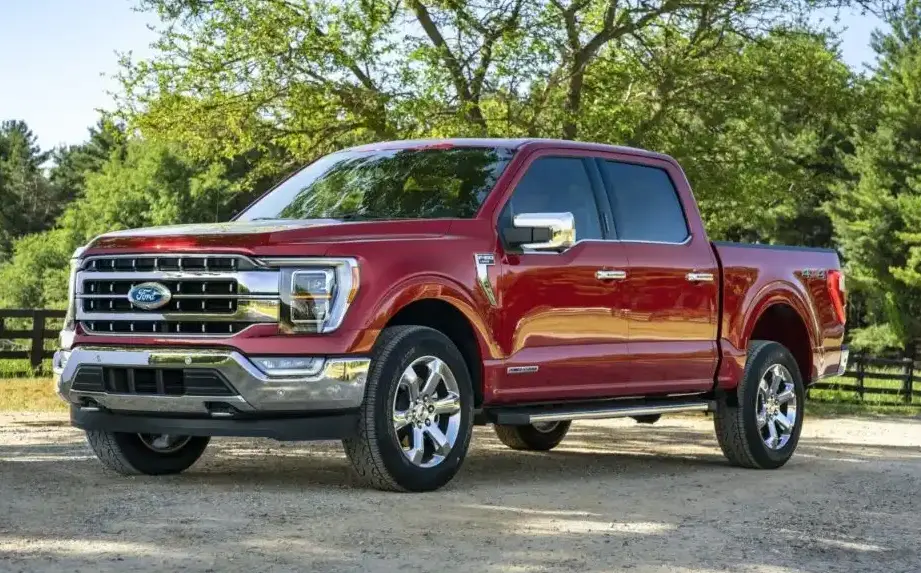
The Ford F-150 XIV SuperCrew, equipped with the 2.7 EcoBoost V6 engine and a 4×4 automatic transmission, represents a significant iteration in Ford’s long-running F-Series lineage. Produced from October 2020 through 2023, this variant occupied a key position in the F-150 lineup, offering a balance between capability, fuel efficiency, and modern technology. It falls within the fourteenth generation (F-150 XIV) of the F-Series, known for its increased use of aluminum alloy body panels and advanced driver-assistance systems. This particular configuration aimed to appeal to buyers seeking a versatile full-size pickup without the higher price tag or fuel consumption associated with larger engines.
Technical Specifications
| Brand | Ford |
| Model | F-Series F-100/F-150 |
| Generation | F-Series F-150 XIV SuperCrew |
| Type (Engine) | 2.7 EcoBoost V6 (325 Hp) 4×4 Automatic |
| Start of production | October, 2020 |
| End of production | 2023 |
| Powertrain Architecture | Internal Combustion engine |
| Body type | Pick-up |
| Seats | 5-6 |
| Doors | 4 |
| Fuel consumption (urban) | 12.4 l/100 km (19 US mpg, 22.8 UK mpg, 8.1 km/l) |
| Fuel consumption (extra urban) | 9.8 l/100 km (24 US mpg, 28.8 UK mpg, 10.2 km/l) |
| Fuel consumption (combined) | 11.2 l/100 km (21 US mpg, 25.2 UK mpg, 8.9 km/l) |
| Fuel Type | Petrol (Gasoline) |
| Weight-to-power ratio | 6.8 kg/Hp, 148.1 Hp/tonne |
| Weight-to-torque ratio | 4 kg/Nm, 247 Nm/tonne |
| Power | 325 Hp @ 5000 rpm |
| Power per litre | 120.4 Hp/l |
| Torque | 542 Nm @ 3000 rpm (399.76 lb.-ft. @ 3000 rpm) |
| Engine layout | Front, Longitudinal |
| Engine displacement | 2700 cm3 (164.76 cu. in.) |
| Number of cylinders | 6 |
| Engine configuration | V-engine |
| Cylinder Bore | 82.98 mm (3.27 in.) |
| Piston Stroke | 82.98 mm (3.27 in.) |
| Compression ratio | 10:1 |
| Fuel injection system | Direct injection and Multi-port manifold injection |
| Engine aspiration | Twin-Turbo, Intercooler |
| Engine oil capacity | 5.7 l (6.02 US qt | 5.02 UK qt) |
| Coolant | 14.3 l (15.11 US qt | 12.58 UK qt) |
| Kerb Weight | 2194 kg (4836.94 lbs.) |
| Max. weight | 3130 kg (6900.47 lbs.) |
| Max load | 936 kg (2063.53 lbs.) |
| Trunk (boot) space – minimum | 1495 l (52.8 cu. ft.) |
| Fuel tank capacity | 87-136 l (22.98 – 35.93 US gal | 19.14 – 29.92 UK gal) |
| Permitted trailer load with brakes (12%) | 4581 kg (10099.38 lbs.) |
| Length | 5885 mm (231.69 in.) |
| Width | 2029 mm (79.88 in.) |
| Width with mirrors folded | 2123 mm (83.58 in.) |
| Width including mirrors | 2431 mm (95.71 in.) |
| Height | 1961 mm (77.2 in.) |
| Wheelbase | 3693 mm (145.39 in.) |
| Front track | 1725 mm (67.91 in.) |
| Rear (Back) track | 1735 mm (68.31 in.) |
| Front overhang | 955 mm (37.6 in.) |
| Rear overhang | 1234 mm (48.58 in.) |
| Ride height (ground clearance) | 239 mm (9.41 in.) |
| Minimum turning circle (turning diameter) | 14.6 m (47.9 ft.) |
| Approach angle | 24.3° |
| Departure angle | 25.3° |
| Ramp-over (brakeover) angle | 20° |
| Drivetrain Architecture | The Internal combustion engine (ICE) drives the rear wheels permanently, and the front wheels are driven through an electrically or mechanically operated clutch if necessary. |
| Drive wheel | All wheel drive (4×4) |
| Number of gears and type of gearbox | 10 gears, automatic transmission SelectShift |
| Front suspension | Double wishbone |
| Rear suspension | Leaf spring |
| Front brakes | Ventilated discs, 350×34 mm |
| Rear brakes | Ventilated discs, 336×20 mm |
| Assisting systems | ABS (Anti-lock braking system) |
| Steering type | Steering rack and pinion |
| Power steering | Electric Steering |
| Tires size | 245/70 R17 110T; 265/70 R17 115T; 265/60 R18 110T; 275/65 R18 116T |
| Wheel rims size | 7.5J x 17; 7.5J x 18 |
Powertrain & Engine Architecture
The heart of this F-150 variant is the 2.7-liter EcoBoost V6 engine, internally designated as the third-generation “Gen 3” 2.7L. This engine utilizes a compact graphite iron cylinder block and aluminum cylinder heads. It employs both direct fuel injection and multi-port fuel injection, optimizing combustion efficiency and power delivery. The twin-turbocharger setup, with electronically controlled wastegates, provides a broad torque curve and minimizes turbo lag. The engine’s compression ratio is 10:1. The 10-speed SelectShift automatic transmission, co-developed with General Motors, is a key component, offering a wide range of gear ratios for both fuel economy and towing performance. This transmission features a sophisticated control system that adapts to driving conditions and driver input.
Driving Characteristics
The 2.7 EcoBoost F-150 delivers a noticeably different driving experience compared to its V8-powered siblings. While lacking the raw power of the 5.0L or 3.5L EcoBoost engines, it provides ample torque for everyday driving and towing. The 10-speed transmission keeps the engine in its optimal power band, resulting in responsive acceleration. The automatic transmission is tuned for smooth shifts, prioritizing comfort over aggressive performance. Compared to a manual transmission equipped F-150, the automatic offers ease of use, particularly in stop-and-go traffic and when towing. However, some drivers may find the automatic less engaging than a manual. The 4×4 system provides confident traction in various conditions, making it suitable for both on-road and off-road use.
Equipment & Trim Levels
The 2.7 EcoBoost SuperCrew was available in a variety of trim levels, including XL, XLT, Lariat, King Ranch, Platinum, and Limited. The base XL trim offered essential features such as air conditioning, a basic infotainment system, and steel wheels. Higher trims, like the Lariat and above, added features such as leather upholstery, heated and ventilated seats, a premium sound system, and advanced driver-assistance technologies like adaptive cruise control and lane-keeping assist. Optional extras included a panoramic sunroof, a power tailgate, and various appearance packages.
Chassis & Braking
The F-150 XIV utilizes a high-strength steel frame with aluminum alloy body panels, contributing to its reduced weight. The front suspension features an independent double-wishbone design, while the rear suspension employs a leaf spring setup. Braking duties are handled by ventilated discs on all four wheels, with larger rotors available on higher trim levels. The anti-lock braking system (ABS) is standard. The suspension is tuned to provide a comfortable ride while maintaining good handling characteristics. The rear leaf springs are designed to support heavy loads without compromising ride quality.
Market Reception & Comparison
The 2.7 EcoBoost F-150 received generally positive reviews from automotive critics. It was praised for its fuel efficiency, smooth ride, and ample torque. Compared to the V8-powered F-150s, the 2.7 EcoBoost offered better fuel economy, making it an attractive option for buyers who prioritize cost savings. However, some critics noted that it lacked the outright power of the larger engines, particularly when towing heavy loads. In terms of reliability, the 2.7 EcoBoost engine has proven to be relatively dependable, although some owners have reported issues with the turbochargers and fuel injectors.
Legacy
The 2.7 EcoBoost engine has become a mainstay in the Ford F-150 lineup, demonstrating its versatility and efficiency. The 2020-2023 F-150 SuperCrew 2.7 EcoBoost 4×4 Automatic remains a popular choice in the used car market, offering a compelling combination of capability, comfort, and value. Its relatively good fuel economy and proven reliability make it a practical option for buyers seeking a full-size pickup truck. The engine’s continued development and refinement suggest that it will remain a key component of the F-150 for years to come.