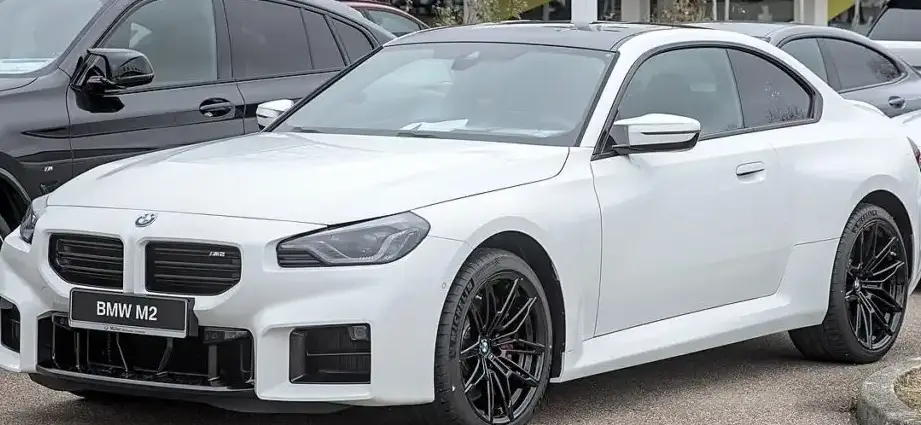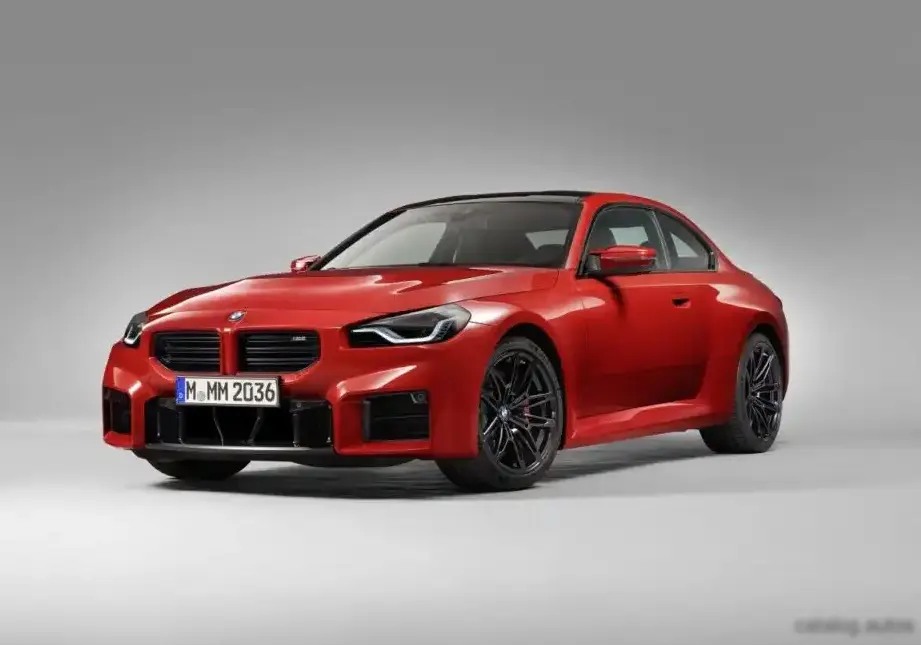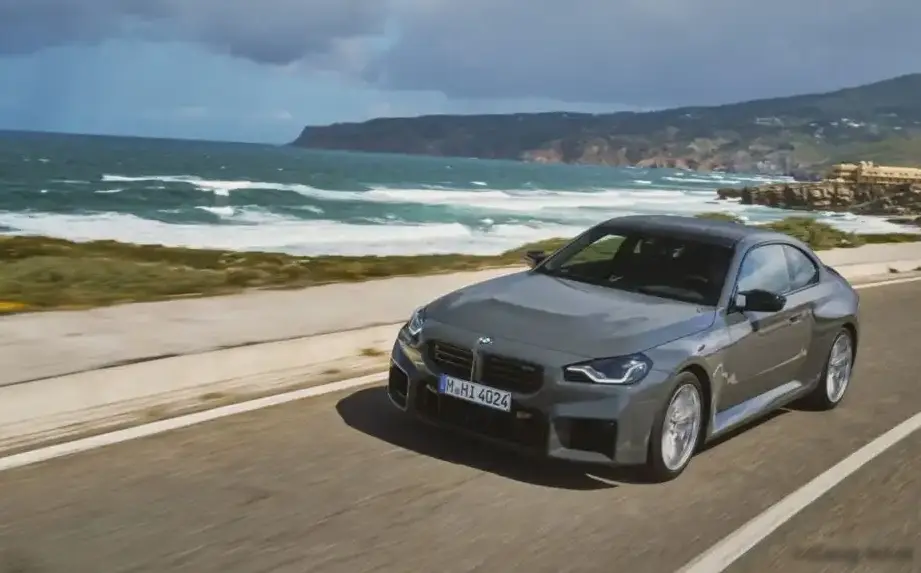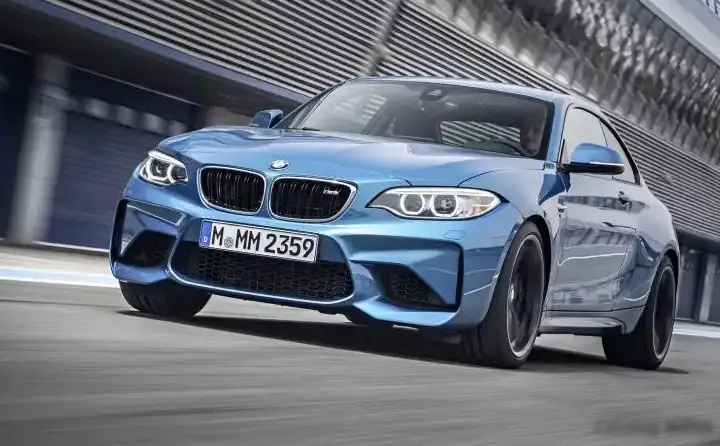
The BMW M2 Competition, produced from September 2018 to July 2021, represented a significant evolution of the F87 M2 coupe. Positioned as the higher-performance variant within the M2 lineup, it addressed criticisms leveled at the original M2’s engine, offering a substantial power increase and enhanced track capability. Built on the BMW 2 Series platform, the M2 Competition aimed to deliver a pure driving experience in a compact, two-door package, appealing to enthusiasts seeking a more engaging alternative to larger, more luxurious BMW models. This variant specifically utilized a 3.0-liter inline-six engine paired with a 7-speed dual-clutch transmission (DCT), establishing itself as the flagship performance model of the F87 generation.
Technical Specifications
| Brand | BMW |
| Model | M2 |
| Generation | M2 coupe (F87) |
| Type (Engine) | Competition 3.0 (410 Hp) DCT |
| Start of production | September, 2018 |
| End of production | July, 2021 |
| Powertrain Architecture | Internal Combustion engine |
| Body type | Coupe |
| Seats | 4 |
| Doors | 2 |
| Fuel consumption (economy) – combined | 9.2 l/100 km |
| Fuel consumption (economy) – combined | 25.6 US mpg |
| Fuel consumption (economy) – combined | 30.7 UK mpg |
| Fuel consumption (economy) – combined | 10.9 km/l |
| CO2 emissions | 209-210 g/km |
| Fuel Type | Petrol (Gasoline) |
| Acceleration 0 – 100 km/h | 4.2 sec |
| Acceleration 0 – 62 mph | 4.2 sec |
| Acceleration 0 – 60 mph | 4 sec |
| Maximum speed | 280 km/h |
| Maximum speed | 173.98 mph |
| Emission standard | Euro 6 |
| Weight-to-power ratio | 3.8 kg/Hp |
| Weight-to-power ratio | 260.3 Hp/tonne |
| Weight-to-torque ratio | 2.9 kg/Nm |
| Weight-to-torque ratio | 349.2 Nm/tonne |
| Power | 410 Hp @ 5250-7000 rpm |
| Power per litre | 137.6 Hp/l |
| Torque | 550 Nm @ 2350-5200 rpm |
| Torque | 405.66 lb.-ft. @ 2350-5200 rpm |
| Engine layout | Front, Longitudinal |
| Engine Model/Code | S55B30A |
| Engine displacement | 2979 cm3 |
| Engine displacement | 181.79 cu. in. |
| Number of cylinders | 6 |
| Engine configuration | Inline |
| Cylinder Bore | 84 mm |
| Cylinder Bore | 3.31 in. |
| Piston Stroke | 89.6 mm |
| Piston Stroke | 3.53 in. |
| Compression ratio | 10.2:1 |
| Number of valves per cylinder | 4 |
| Fuel injection system | Direct injection |
| Engine aspiration | Twin-power turbo, Intercooler |
| Engine oil capacity | 6.5 l |
| Engine oil capacity | 6.87 US qt | 5.72 UK qt |
| Coolant | 14.5 l |
| Coolant | 15.32 US qt | 12.76 UK qt |
| Kerb Weight | 1575 kg |
| Kerb Weight | 3472.28 lbs. |
| Max. weight | 2010 kg |
| Max. weight | 4431.29 lbs. |
| Max load | 435 kg |
| Max load | 959.01 lbs. |
| Trunk (boot) space – minimum | 390 l |
| Trunk (boot) space – minimum | 13.77 cu. ft. |
| Fuel tank capacity | 52 l |
| Fuel tank capacity | 13.74 US gal | 11.44 UK gal |
| Max. roof load | 75 kg |
| Max. roof load | 165.35 lbs. |
| Length | 4461 mm |
| Length | 175.63 in. |
| Width | 1854 mm |
| Width | 72.99 in. |
| Height | 1410 mm |
| Height | 55.51 in. |
| Wheelbase | 2693 mm |
| Wheelbase | 106.02 in. |
| Front track | 1579 mm |
| Front track | 62.17 in. |
| Rear (Back) track | 1601 mm |
| Rear (Back) track | 63.03 in. |
| Ride height (ground clearance) | 118 mm |
| Ride height (ground clearance) | 4.65 in. |
| Drag coefficient (Cd) | 0.36 |
| Minimum turning circle (turning diameter) | 11.7 m |
| Minimum turning circle (turning diameter) | 38.39 ft. |
| Drivetrain Architecture | The Internal combustion engine (ICE) drives the rear wheels of the vehicle. |
| Drive wheel | Rear wheel drive |
| Number of gears and type of gearbox | 7 gears, automatic transmission DCT |
| Front suspension | Double wishbone |
| Rear suspension | Independent multi-link suspension |
| Front brakes | Ventilated discs |
| Rear brakes | Ventilated discs |
| Assisting systems | ABS (Anti-lock braking system) |
| Steering type | Steering rack and pinion |
| Power steering | Electric Steering |
| Tires size | 245/35 ZR19 93Y; 265/35 ZR19 98Y |
| Wheel rims size | 9.0J x 19; 10.0J x 19 |
Powertrain & Engine Architecture
The heart of the M2 Competition is the S55B30A 3.0-liter inline-six engine. This engine, derived from the M3 and M4, replaced the N55 engine found in the original M2. The S55 features a closed-deck engine block, forged crankshaft, and reinforced connecting rods, enhancing its durability for high-performance applications. It utilizes direct fuel injection and a twin-scroll, single-turbocharger setup, delivering 410 horsepower at 5,250-7,000 rpm and 405.66 lb-ft of torque between 2,350-5,200 rpm. The turbocharger placement, along with an upgraded cooling system, minimizes turbo lag and maintains consistent power delivery. The 7-speed dual-clutch transmission (DCT) provides rapid and precise gear changes, contributing to the car’s impressive acceleration. The DCT features a wider gear spread and improved shift logic compared to earlier BMW DCTs.
Driving Characteristics
The M2 Competition’s driving experience is characterized by its responsiveness and balance. The increased power and torque, combined with the DCT, result in a 0-60 mph time of approximately 4 seconds. The engine delivers a broad powerband, making it tractable in everyday driving yet providing exhilarating performance when pushed. The DCT’s quick shifts and launch control system enhance acceleration. While the M2 Competition is more focused than the standard M2, it remains relatively comfortable for daily use. The suspension is firm but not overly harsh, and the steering provides excellent feedback. Compared to the original M2, the Competition feels more planted and confident, particularly during aggressive driving. The manual transmission option, while available, was less common and generally preferred by purists.
Equipment & Trim Levels
The M2 Competition came standard with a comprehensive list of features, including leather upholstery, power-adjustable sport seats, a digital instrument cluster, and a premium sound system. Standard exterior features included M-specific aerodynamic enhancements, such as a revised front bumper, side skirts, and rear diffuser. Optional extras included carbon fiber roof and trim, upgraded interior trim materials, and a head-up display. The Competition also offered a range of driver assistance systems, such as lane departure warning and collision mitigation. The interior design was driver-focused, with controls logically arranged and a sporty aesthetic.
Chassis & Braking
The M2 Competition features a robust chassis with M-specific suspension tuning. The front suspension utilizes a double-wishbone design, while the rear employs an independent multi-link setup. The car is equipped with M Sport brakes, featuring large, ventilated discs at all four corners. The braking system provides excellent stopping power and fade resistance. The M2 Competition also incorporates an electronic limited-slip differential, enhancing traction and cornering performance. The chassis is reinforced compared to the standard 2 Series, providing increased rigidity and improved handling.
Market Reception & Comparison
The M2 Competition was widely praised by automotive critics for its performance, handling, and overall driving experience. It was often lauded as one of the most engaging and rewarding sports cars available. Compared to the original M2, the Competition was considered a significant improvement, addressing concerns about engine power and responsiveness. Against rivals such as the Porsche 718 Cayman and Audi TT RS, the M2 Competition offered a compelling combination of performance, practicality, and value. Fuel economy, while not a primary focus, averaged around 25.6 US mpg in combined driving. Reliability has generally been good, although some owners have reported minor issues with the cooling system.
Legacy
The M2 Competition cemented the F87 M2’s reputation as a modern classic. The S55 engine proved to be a durable and capable powerplant, and the DCT transmission provided a seamless and engaging driving experience. On the used car market, the M2 Competition commands a premium over the original M2, reflecting its increased performance and desirability. Well-maintained examples are highly sought after by enthusiasts. The M2 Competition served as a bridge between the original M2 and the current-generation G87 M2, setting a high bar for future performance coupes from BMW.