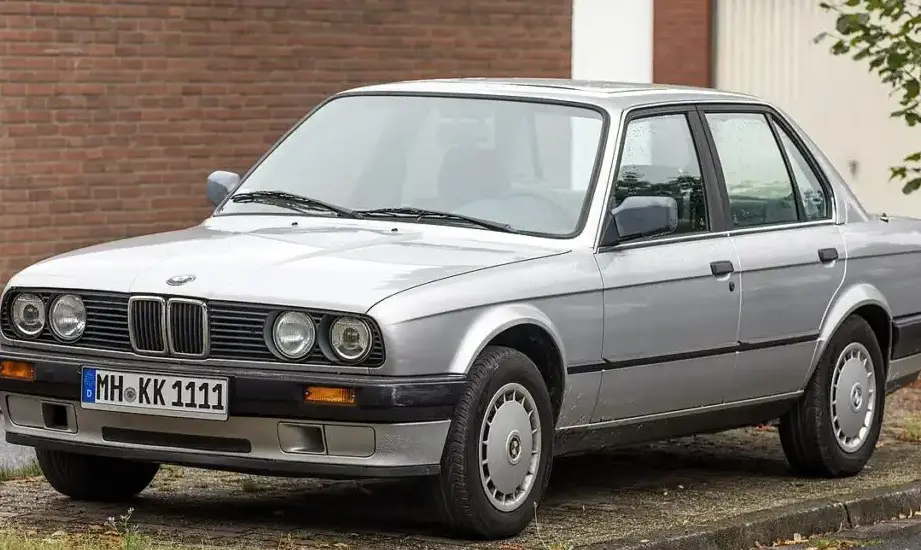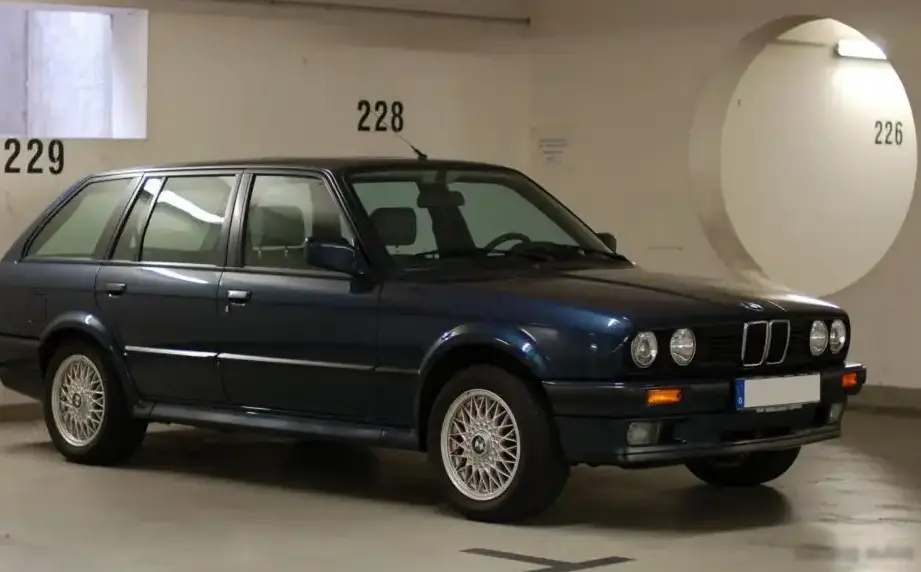
The BMW 3 Series Touring (E30) 320i Automatic, produced from 1988 to 1991, represents a significant expansion of the popular E30 3 Series range. Following the success of the E30 sedan and coupe, BMW introduced the Touring – their designation for station wagons – to cater to buyers seeking practicality without sacrificing the driving experience synonymous with the brand. The facelifted E30, introduced in 1987 (often referred to as the 2.5 model), brought subtle styling updates and, in this case, the M20B20 engine paired with an automatic transmission. This particular variant occupied a middle ground in the E30 Touring lineup, offering a balance between affordability, fuel efficiency, and comfortable cruising, appealing to families and drivers prioritizing ease of use over outright performance.
Technical Specifications
| Brand | BMW |
| Model | 3 Series |
| Generation | 3 Series Touring (E30, facelift 1987) |
| Type (Engine) | 320i (129 Hp) Automatic |
| Start of production | 1988 |
| End of production | 1991 |
| Powertrain Architecture | Internal Combustion engine |
| Body type | Station wagon (estate) |
| Seats | 5 |
| Doors | 5 |
| Fuel consumption (economy) – urban | 13.4 l/100 km (17.6 US mpg, 21.1 UK mpg, 7.5 km/l) |
| Fuel consumption (economy) – extra urban | 7.7 l/100 km (30.5 US mpg, 36.7 UK mpg, 13 km/l) |
| Fuel consumption (economy) – combined | 9.7 l/100 km (24.2 US mpg, 29.1 UK mpg, 10.3 km/l) |
| Fuel Type | Petrol (Gasoline) |
| Acceleration 0 – 100 km/h | 13.2 sec |
| Acceleration 0 – 62 mph | 13.2 sec |
| Acceleration 0 – 60 mph | 12.5 sec |
| Maximum speed | 195 km/h (121.17 mph) |
| Weight-to-power ratio | 9.5 kg/Hp, 104.9 Hp/tonne |
| Weight-to-torque ratio | 7.5 kg/Nm, 133.3 Nm/tonne |
| Power | 129 Hp @ 6000 rpm |
| Power per litre | 64.8 Hp/l |
| Torque | 164 Nm @ 4300 rpm (120.96 lb.-ft. @ 4300 rpm) |
| Engine layout | Front, Longitudinal |
| Engine Model/Code | M20B20 |
| Engine displacement | 1991 cm3 (121.5 cu. in.) |
| Number of cylinders | 6 |
| Engine configuration | Inline |
| Cylinder Bore | 80 mm (3.15 in.) |
| Piston Stroke | 66 mm (2.6 in.) |
| Compression ratio | 8.8:1 |
| Number of valves per cylinder | 2 |
| Fuel injection system | Multi-port manifold injection |
| Engine aspiration | Naturally aspirated engine |
| Engine oil capacity | 4.25 l (4.49 US qt | 3.74 UK qt) |
| Coolant | 10.5 l (11.1 US qt | 9.24 UK qt) |
| Kerb Weight | 1230 kg (2711.69 lbs.) |
| Max. weight | 1710 kg (3769.9 lbs.) |
| Max load | 480 kg (1058.22 lbs.) |
| Trunk (boot) space – minimum | 370 l (13.07 cu. ft.) |
| Trunk (boot) space – maximum | 1125 l (39.73 cu. ft.) |
| Fuel tank capacity | 62 l (16.38 US gal | 13.64 UK gal) |
| Length | 4325 mm (170.28 in.) |
| Width | 1645 mm (64.76 in.) |
| Height | 1380 mm (54.33 in.) |
| Wheelbase | 2570 mm (101.18 in.) |
| Front track | 1405 mm (55.31 in.) |
| Rear (Back) track | 1415 mm (55.71 in.) |
| Drivetrain Architecture | The Internal combustion engine (ICE) drives the rear wheels of the vehicle. |
| Drive wheel | Rear wheel drive |
| Number of gears and type of gearbox | 4 gears, automatic transmission |
| Front suspension | Coil spring |
| Rear suspension | Coil spring |
| Front brakes | Disc |
| Rear brakes | Drum |
| Assisting systems | ABS (Anti-lock braking system) |
| Power steering | Hydraulic Steering |
| Tires size | 195/65 VR14 |
| Wheel rims size | 14 |
Powertrain & Engine Architecture
The heart of the 320i Touring Automatic is the BMW M20B20 engine, a 2.0-liter inline-six cylinder powerplant. This engine, a staple of the E30 range, is known for its smooth operation and relatively robust construction. The ‘B20’ designation refers to the engine’s displacement of 2.0 liters. It utilizes a cast iron block and an aluminum cylinder head, featuring two valves per cylinder operated by a single overhead camshaft. Fuel delivery is managed by Bosch Motronic multi-port fuel injection, providing precise control over the air-fuel mixture. The M20B20 produces 129 horsepower at 6000 rpm and 164 Nm (120.96 lb-ft) of torque at 4300 rpm. Paired with this engine is a four-speed automatic transmission, offering smooth shifts but at the expense of some performance compared to the available five-speed manual. This automatic transmission, while providing convenience, was not known for its sportiness and contributed to slightly slower acceleration times.
Driving Characteristics
The 320i Touring Automatic delivers a comfortable and refined driving experience. The automatic transmission prioritizes smooth gear changes over rapid acceleration. While the 0-60 mph time of around 12.5 seconds isn’t particularly quick by modern standards, the engine provides adequate power for everyday driving and highway cruising. The automatic transmission’s gear ratios are geared towards fuel efficiency and relaxed driving, meaning it doesn’t feel as responsive as the manual version. The rear-wheel-drive layout provides balanced handling, although the Touring’s increased weight compared to the sedan and coupe is noticeable in corners. The suspension, while comfortable, can feel a bit soft, especially when fully loaded.
Equipment & Trim Levels
The 320i Touring Automatic typically came equipped with a reasonable level of standard features for the late 1980s. These included power steering, central locking, and a basic stereo system. Interior upholstery was typically cloth, with options for leather available at extra cost. Optional extras included a sunroof, air conditioning, and upgraded sound systems. The dashboard layout was typical of the E30, with a straightforward design and easy-to-read gauges. The Touring’s defining feature, of course, was its spacious cargo area, accessible through a large rear tailgate. The rear seats could be folded down to further increase cargo capacity.
Chassis & Braking
The E30 Touring shares its chassis with the sedan and coupe models, featuring independent suspension all around. The front suspension utilizes coil springs and MacPherson struts, while the rear suspension employs a semi-trailing arm design with coil springs. Braking duties are handled by disc brakes at the front and drum brakes at the rear. ABS (Anti-lock Braking System) was available as an option, significantly improving braking performance in slippery conditions. The 320i Touring’s stabilizer bars were sized appropriately for its weight class, providing a reasonable balance between comfort and handling.
Market Reception & Comparison
The 320i Touring Automatic was generally well-received by automotive critics as a practical and comfortable family car. However, it was often criticized for its relatively slow acceleration compared to the manual transmission and higher-powered 325i models. Fuel economy was considered reasonable for the time, but not exceptional. Compared to the 325i Touring, the 320i offered a lower purchase price and potentially lower running costs, making it an attractive option for budget-conscious buyers. The 320i also offered a more refined driving experience than the diesel-powered 324d Touring, which was available in some markets.
Legacy
The E30 3 Series Touring, including the 320i Automatic variant, has become a highly sought-after classic car. The M20B20 engine, while not the most powerful in the E30 lineup, is known for its reliability and relatively simple maintenance requirements. However, age-related issues such as corrosion and wear on rubber components are common. The automatic transmission, while comfortable, can be prone to issues if not properly maintained. Today, well-maintained examples of the 320i Touring Automatic command a premium in the used car market, appealing to enthusiasts who appreciate the E30’s timeless design and engaging driving experience.