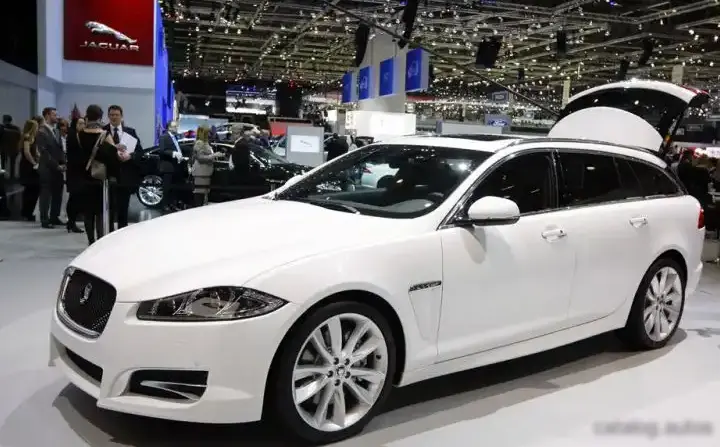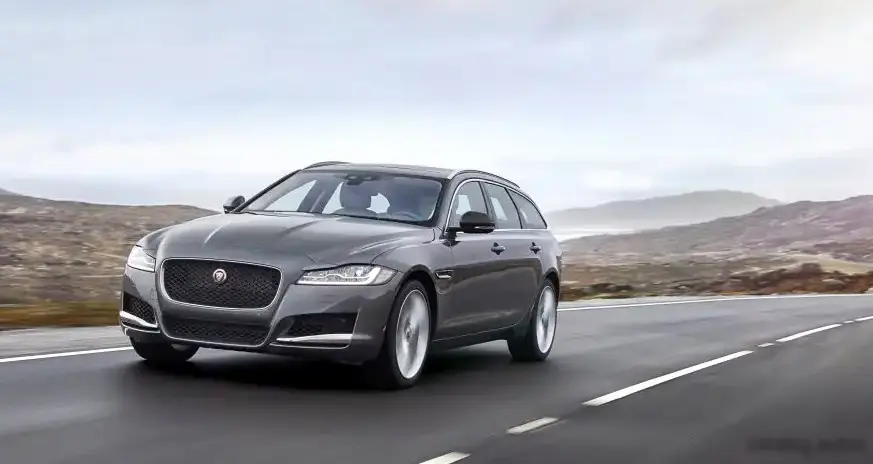
The Jaguar XF Sportbrake (X260) 2.0d, produced between 2015 and 2018, represents Jaguar’s entry into the premium, sporty estate (station wagon) market. Positioned as a more practical alternative to the XF sedan, the Sportbrake offered a compelling blend of luxury, performance, and cargo capacity. This particular variant, powered by the Ingenium 2.0-liter turbocharged diesel engine producing 180 horsepower and paired with an eight-speed automatic transmission and all-wheel drive, served as a mid-range offering within the Sportbrake lineup, appealing to buyers seeking a balance between fuel efficiency and respectable performance. It was designed to compete with established European estates like the BMW 5 Series Touring and Audi A6 Avant.
Technical Specifications
| Brand | Jaguar |
| Model | XF |
| Generation | XF Sportbrake (X260) |
| Type (Engine) | 2.0d (180 Hp) AWD Automatic |
| Start of production | 2015 |
| End of production | 2018 |
| Powertrain Architecture | Internal Combustion engine |
| Body type | Station wagon (estate) |
| Seats | 5 |
| Doors | 5 |
| Fuel consumption (combined) | 5 l/100 km (47 US mpg, 56.5 UK mpg, 20 km/l) |
| CO2 emissions | 132 g/km |
| Fuel Type | Diesel |
| Acceleration 0 – 100 km/h | 8.9 sec |
| Acceleration 0 – 62 mph | 8.9 sec |
| Acceleration 0 – 60 mph | 8.5 sec |
| Maximum speed | 219 km/h (136.08 mph) |
| Emission standard | Euro 6 |
| Weight-to-power ratio | 9.8 kg/Hp, 101.7 Hp/tonne |
| Weight-to-torque ratio | 4.1 kg/Nm, 242.9 Nm/tonne |
| Power | 180 Hp @ 4000 rpm |
| Power per litre | 90 Hp/l |
| Torque | 430 Nm @ 1750-2500 rpm (317.15 lb.-ft. @ 1750-2500 rpm) |
| Engine layout | Front, Longitudinal |
| Engine Model/Code | Ingenium / 204DTH |
| Engine displacement | 1999 cm3 (121.99 cu. in.) |
| Number of cylinders | 4 |
| Engine configuration | Inline |
| Cylinder Bore | 83 mm (3.27 in.) |
| Piston Stroke | 92.4 mm (3.64 in.) |
| Compression ratio | 15.5:1 |
| Number of valves per cylinder | 4 |
| Fuel injection system | Diesel Commonrail |
| Engine aspiration | Turbocharger, Intercooler |
| Valvetrain | DOHC |
| Engine oil capacity | 6.5 l (6.87 US qt | 5.72 UK qt) |
| Kerb Weight | 1770 kg (3902.18 lbs.) |
| Trunk (boot) space – minimum | 565 l (19.95 cu. ft.) |
| Trunk (boot) space – maximum | 1700 l (60.03 cu. ft.) |
| Fuel tank capacity | 66 l (17.44 US gal | 14.52 UK gal) |
| Length | 4955 mm (195.08 in.) |
| Width | 1987 mm (78.23 in.) |
| Width including mirrors | 2091 mm (82.32 in.) |
| Height | 1496 mm (58.9 in.) |
| Wheelbase | 2960 mm (116.54 in.) |
| Front track | 1605 mm (63.19 in.) |
| Rear (Back) track | 1607 mm (63.27 in.) |
| Ride height (ground clearance) | 116 mm (4.57 in.) |
| Drive wheel | All wheel drive (4×4) |
| Number of gears and type of gearbox | 8 gears, automatic transmission |
| Front suspension | Double wishbone |
| Rear suspension | Independent multi-link suspension, Air suspension |
| Front brakes | Ventilated discs |
| Rear brakes | Ventilated discs |
| Assisting systems | ABS (Anti-lock braking system) |
| Steering type | Steering rack and pinion |
| Power steering | Electric Steering |
| Tires size | 245/45 R18 |
| Wheel rims size | 18 |
Powertrain & Engine Architecture
The heart of the XF Sportbrake 2.0d is Jaguar Land Rover’s Ingenium engine family. The 204DTH variant is a 2.0-liter inline-four cylinder diesel engine. This engine utilizes a sophisticated turbocharging system with a low-inertia turbocharger for improved responsiveness. Direct injection, coupled with a high-pressure common rail fuel system (2,200 bar), ensures efficient combustion and reduced emissions. The engine features a double overhead camshaft (DOHC) valvetrain with four valves per cylinder. The eight-speed automatic transmission, sourced from ZF, is a key component of the powertrain. Known for its smooth and quick shifts, it contributes to both performance and fuel economy. The all-wheel-drive system employs a multi-plate clutch to distribute torque between the front and rear axles, enhancing traction and stability, particularly in adverse weather conditions.
Driving Characteristics
The 180 horsepower and 317 lb-ft of torque delivered by the 2.0d powertrain provide adequate, though not exhilarating, performance. Acceleration from 0-60 mph takes around 8.5 seconds, making it competitive within its class. The automatic transmission is well-tuned, offering seamless gear changes and a responsive feel. Compared to the more powerful XF Sportbrake variants (like the 3.0d with over 300 hp), the 2.0d prioritizes fuel efficiency. The gear ratios are optimized for mid-range torque, making it well-suited for everyday driving and long-distance cruising. While the higher-output models offer a more engaging driving experience, the 2.0d provides a comfortable and refined ride, particularly with the optional air suspension.
Equipment & Trim Levels
The 2.0d AWD Automatic typically came standard with a generous level of equipment. Interior features included leather upholstery, power-adjustable front seats, a touchscreen infotainment system with navigation, and a premium sound system. Standard safety features included automatic emergency braking, lane departure warning, and front and rear parking sensors. Optional extras included a panoramic sunroof, heated and ventilated seats, adaptive cruise control, and a head-up display. Trim levels varied by market, but generally offered progressively more luxurious appointments and technology features as you moved up the range.
Chassis & Braking
The XF Sportbrake utilizes a sophisticated chassis design. The front suspension features a double wishbone setup, while the rear employs an independent multi-link suspension. Air suspension was often an optional extra, providing a more comfortable ride and the ability to adjust ride height. Braking duties are handled by ventilated discs on all four wheels, providing ample stopping power. The electronic parking brake with automatic hold assist is standard. The steering is electrically assisted, offering a precise and responsive feel.
Market Reception & Comparison
The Jaguar XF Sportbrake 2.0d was generally well-received by automotive critics. It was praised for its stylish design, comfortable interior, and refined driving experience. The fuel economy of around 47 mpg was a significant selling point. Compared to the higher-output XF Sportbrake models, the 2.0d offered a more affordable entry point into the range, but at the expense of outright performance. It competed directly with premium estates from BMW, Audi, and Mercedes-Benz, offering a compelling alternative with its distinctive British character.
Legacy
The Ingenium engine family has proven to be relatively reliable, although some early examples experienced issues with oil leaks and timing chain tensioners. The eight-speed ZF automatic transmission is known for its durability. Today, the XF Sportbrake 2.0d represents a good value on the used car market, offering a blend of luxury, practicality, and fuel efficiency. Maintenance costs are generally comparable to other premium European estates. Its continued appeal lies in its combination of Jaguar’s brand prestige and the practicality of a station wagon.