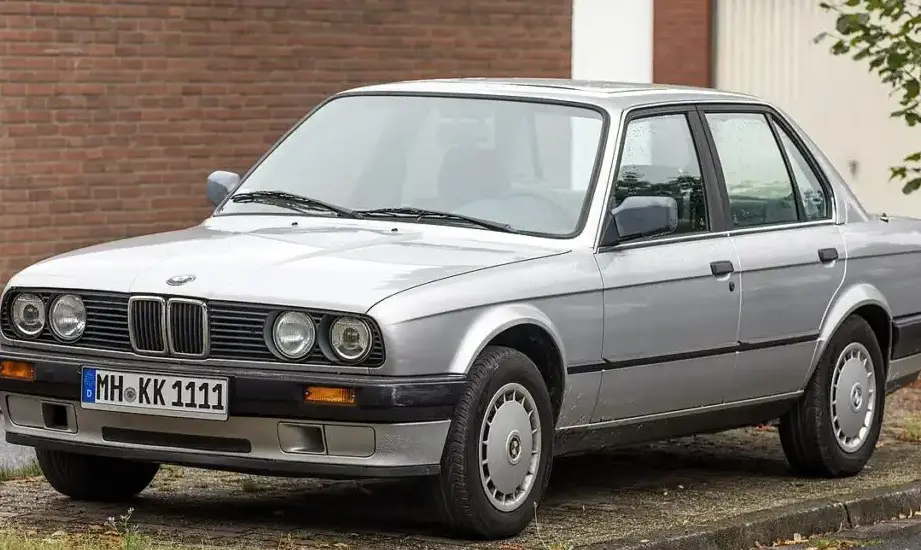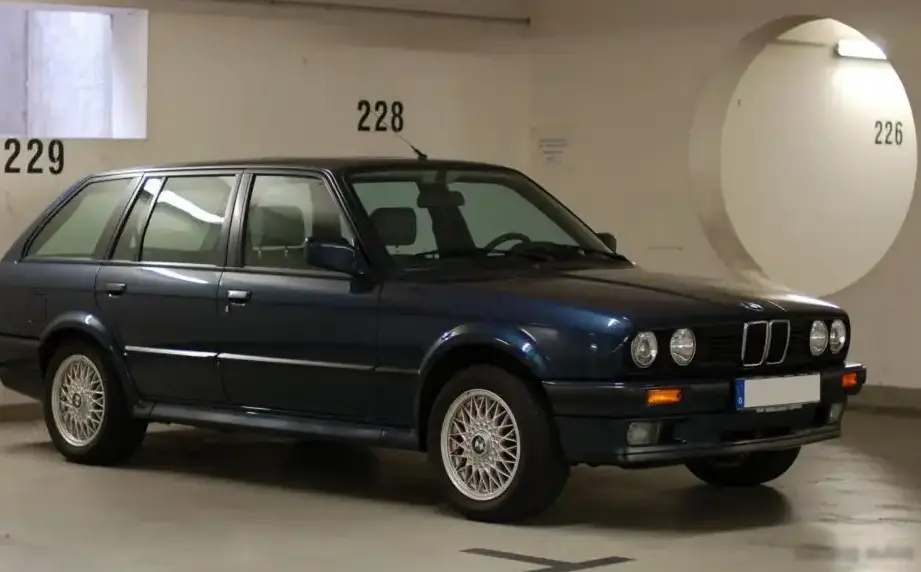
The BMW 3 Series Touring (E30), specifically the 325i variant produced from 1987 to 1993, represents a pivotal moment in BMW’s history. This facelifted version of the E30 platform, introduced in 1987, marked the first time BMW offered a factory-built station wagon (Touring) version of its popular 3 Series. Positioned as a premium, sporty estate car, the 325i Touring aimed to blend practicality with the driving experience BMW was already renowned for. It was a key model in the European market, where estate cars held a significant share of the automotive landscape, and offered a more versatile alternative to the standard 3 Series sedan.
Technical Specifications
| Brand | BMW |
| Model | 3 Series |
| Generation | 3 Series Touring (E30, facelift 1987) |
| Type (Engine) | 325i (170 Hp) |
| Start of production | 1987 |
| End of production | 1993 |
| Powertrain Architecture | Internal Combustion engine |
| Body type | Station wagon (estate) |
| Seats | 5 |
| Doors | 5 |
| Fuel consumption (economy) – urban | 12.9 l/100 km (18.2 US mpg, 21.9 UK mpg, 7.8 km/l) |
| Fuel consumption (economy) – extra urban | 7.2 l/100 km (32.7 US mpg, 39.2 UK mpg, 13.9 km/l) |
| Fuel consumption (economy) – combined | 9 l/100 km (26.1 US mpg, 31.4 UK mpg, 11.1 km/l) |
| Fuel Type | Petrol (Gasoline) |
| Acceleration 0 – 100 km/h | 8.8 sec |
| Acceleration 0 – 62 mph | 8.8 sec |
| Acceleration 0 – 60 mph | 8.4 sec |
| Maximum speed | 214 km/h (132.97 mph) |
| Weight-to-power ratio | 7.5 kg/Hp, 133.9 Hp/tonne |
| Weight-to-torque ratio | 5.7 kg/Nm, 174.8 Nm/tonne |
| Power | 170 Hp @ 5800 rpm |
| Power per litre | 68.2 Hp/l |
| Torque | 222 Nm @ 4300 rpm (163.74 lb.-ft. @ 4300 rpm) |
| Engine layout | Front, Longitudinal |
| Engine Model/Code | M20B25 |
| Engine displacement | 2494 cm3 (152.19 cu. in.) |
| Number of cylinders | 6 |
| Engine configuration | Inline |
| Cylinder Bore | 84 mm (3.31 in.) |
| Piston Stroke | 75 mm (2.95 in.) |
| Compression ratio | 8.8:1 |
| Number of valves per cylinder | 2 |
| Fuel injection system | Multi-port manifold injection |
| Engine aspiration | Naturally aspirated engine |
| Engine oil capacity | 4.25 l (4.49 US qt | 3.74 UK qt) |
| Coolant | 10.5 l (11.1 US qt | 9.24 UK qt) |
| Kerb Weight | 1270 kg (2799.87 lbs.) |
| Max. weight | 1750 kg (3858.09 lbs.) |
| Max load | 480 kg (1058.22 lbs.) |
| Trunk (boot) space – minimum | 370 l (13.07 cu. ft.) |
| Trunk (boot) space – maximum | 1125 l (39.73 cu. ft.) |
| Fuel tank capacity | 55 l (14.53 US gal | 12.1 UK gal) |
| Length | 4325 mm (170.28 in.) |
| Width | 1645 mm (64.76 in.) |
| Height | 1380 mm (54.33 in.) |
| Wheelbase | 2570 mm (101.18 in.) |
| Front track | 1405 mm (55.31 in.) |
| Rear (Back) track | 1415 mm (55.71 in.) |
| Drivetrain Architecture | The Internal combustion engine (ICE) drives the rear wheels of the vehicle. |
| Drive wheel | Rear wheel drive |
| Number of gears and type of gearbox | 5 gears, manual transmission |
| Front suspension | Coil spring |
| Rear suspension | Coil spring |
| Front brakes | Disc |
| Rear brakes | Disc |
| Assisting systems | ABS (Anti-lock braking system) |
| Power steering | Hydraulic Steering |
| Tires size | 195/65 R14 |
| Wheel rims size | 14 |
Powertrain & Engine Architecture
The heart of the 325i Touring was the M20B25 engine, a 2.5-liter inline-six cylinder powerplant. This engine, a hallmark of BMW’s engineering prowess during the 1980s, featured a cast iron block and an aluminum cylinder head. It utilized Bosch Motronic fuel injection, a sophisticated system for its time, and a single overhead camshaft (SOHC) valvetrain with two valves per cylinder. The M20 engine family was known for its smooth power delivery and robust construction. The 325i’s 170 horsepower output at 5800 rpm and 222 Nm (163.74 lb-ft) of torque at 4300 rpm provided a good balance of performance and drivability. The engine was mounted longitudinally in the front of the vehicle, driving the rear wheels. The standard transmission was a Getrag 265 five-speed manual, though a four-speed automatic transmission was also available, impacting performance and fuel economy.
Driving Characteristics
The 325i Touring with the manual transmission offered a genuinely engaging driving experience. Acceleration from 0 to 60 mph took approximately 8.4 seconds, and it could reach a top speed of 133 mph. The inline-six engine provided a linear power delivery, making it easy to modulate throttle and maintain control. The automatic transmission, while offering convenience, noticeably dulled the car’s responsiveness. Gear changes were slower, and the overall acceleration time increased to around 8.8 seconds. The Touring’s suspension, derived from the E30 sedan, provided a comfortable yet sporty ride. The rear-wheel-drive layout contributed to balanced handling, although the added weight of the wagon body compared to the sedan was noticeable in cornering.
Equipment & Trim Levels
The 325i Touring was generally well-equipped for its time. Standard features included power windows, central locking, and an anti-lock braking system (ABS). Interior upholstery was typically cloth, though leather was available as an option. Dashboard configuration was similar to the E30 sedan, with a functional and driver-focused layout. Optional extras included a sunroof, air conditioning, and upgraded sound systems. The Touring trim level itself was a step up from the base 318i, offering a more refined interior and the more powerful engine.
Chassis & Braking
The E30 Touring shared its chassis with the sedan, featuring independent suspension at all four wheels. The front suspension utilized coil springs and MacPherson struts, while the rear employed a semi-trailing arm setup with coil springs. Brakes were disc brakes on all four wheels, providing adequate stopping power. The ABS system enhanced braking performance, particularly on slippery surfaces. Stabilizer bars were fitted front and rear to reduce body roll during cornering. The weight distribution was reasonably balanced, contributing to the car’s handling characteristics.
Market Reception & Comparison
The 325i Touring was well-received by automotive critics, who praised its blend of practicality and driving enjoyment. It was seen as a more sophisticated and sporty alternative to other estate cars on the market. Compared to the 318i Touring, the 325i offered significantly more performance. Against the higher-performance M3, the 325i Touring provided a more comfortable and practical daily driver, albeit with less outright speed. Fuel economy was reasonable for the time, averaging around 26 mpg in combined driving. Reliability was generally good, although like all older BMWs, regular maintenance was crucial.
Legacy
The E30 325i Touring has become a sought-after classic car. Its combination of sporty handling, practical body style, and iconic BMW design has made it a favorite among enthusiasts. The M20 engine is known for its durability, but requires regular maintenance to prevent issues. Today, well-maintained examples command a premium in the used car market. The E30 Touring paved the way for future generations of BMW’s successful Touring models, establishing the brand’s reputation for building high-performance, versatile estate cars. It remains a testament to BMW’s commitment to driving pleasure and innovative engineering.