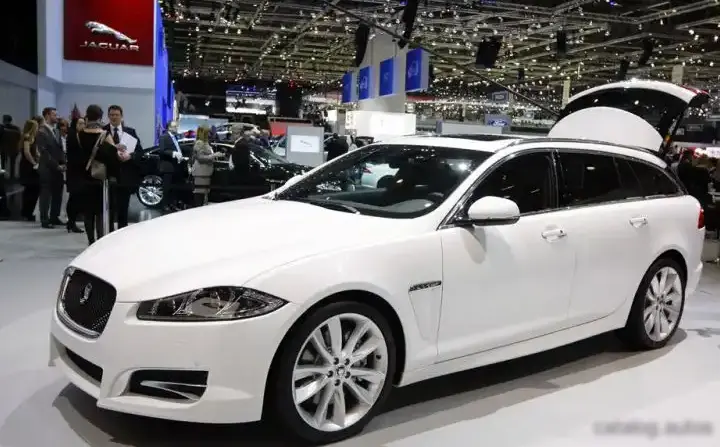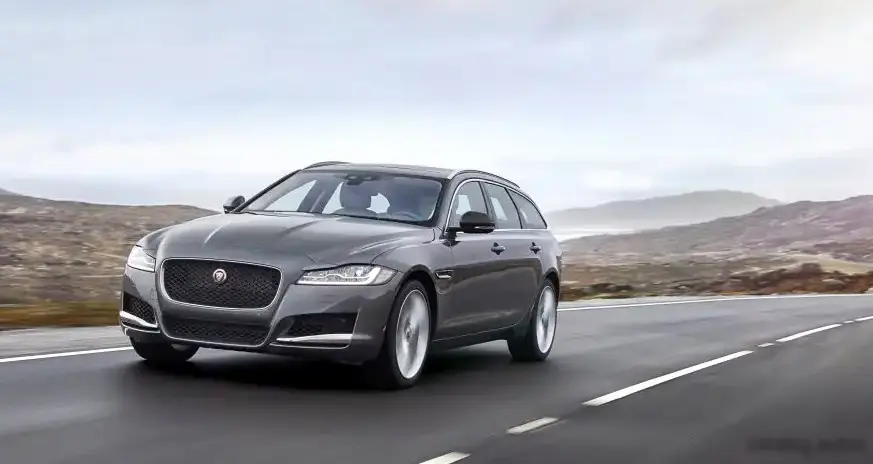
The Jaguar XF Sportbrake (X260) 2.0d, produced from 2015 to 2018, represents Jaguar’s entry into the premium, performance-oriented estate (station wagon) market. Positioned as a more practical alternative to the XF sedan, the Sportbrake offered a compelling blend of luxury, driving dynamics, and cargo capacity. This particular variant, powered by the Ingenium 2.0-liter turbocharged diesel engine producing 240 horsepower and paired with an eight-speed automatic transmission and all-wheel drive, occupied a significant middle ground within the XF Sportbrake lineup, appealing to buyers seeking a balance between performance and fuel efficiency. It was designed to compete with established European estates like the BMW 5 Series Touring and Audi A6 Avant.
Technical Specifications
| Brand | Jaguar |
| Model | XF |
| Generation | XF Sportbrake (X260) |
| Type (Engine) | 2.0d (240 Hp) AWD Automatic |
| Start of production | 2015 |
| End of production | 2018 |
| Powertrain Architecture | Internal Combustion engine |
| Body type | Station wagon (estate) |
| Seats | 5 |
| Doors | 5 |
| Fuel consumption (combined) | 5.8 l/100 km (40.6 US mpg, 48.7 UK mpg, 17.2 km/l) |
| CO2 emissions | 153 g/km |
| Fuel Type | Diesel |
| Acceleration 0 – 100 km/h | 6.7 sec |
| Acceleration 0 – 62 mph | 6.7 sec |
| Acceleration 0 – 60 mph | 6.4 sec |
| Maximum speed | 241 km/h (149.75 mph) |
| Emission standard | Euro 6 |
| Weight-to-power ratio | 7.5 kg/Hp, 133 Hp/tonne |
| Weight-to-torque ratio | 3.6 kg/Nm, 277 Nm/tonne |
| Power | 240 Hp @ 4000 rpm |
| Power per litre | 120.1 Hp/l |
| Torque | 500 Nm @ 1500 rpm (368.78 lb.-ft. @ 1500 rpm) |
| Engine layout | Front, Longitudinal |
| Engine Model/Code | Ingenium / 204DTA |
| Engine displacement | 1999 cm3 (121.99 cu. in.) |
| Number of cylinders | 4 |
| Engine configuration | Inline |
| Cylinder Bore | 83 mm (3.27 in.) |
| Piston Stroke | 92.4 mm (3.64 in.) |
| Compression ratio | 15.3:1 |
| Number of valves per cylinder | 4 |
| Fuel injection system | Diesel Commonrail |
| Engine aspiration | Turbocharger, Intercooler |
| Valvetrain | DOHC |
| Engine oil capacity | 6.5 l (6.87 US qt | 5.72 UK qt) |
| Kerb Weight | 1805 kg (3979.34 lbs.) |
| Trunk (boot) space – minimum | 565 l (19.95 cu. ft.) |
| Trunk (boot) space – maximum | 1700 l (60.03 cu. ft.) |
| Fuel tank capacity | 66 l (17.44 US gal | 14.52 UK gal) |
| Length | 4955 mm (195.08 in.) |
| Width | 1987 mm (78.23 in.) |
| Width including mirrors | 2091 mm (82.32 in.) |
| Height | 1496 mm (58.9 in.) |
| Wheelbase | 2960 mm (116.54 in.) |
| Front track | 1605 mm (63.19 in.) |
| Rear (Back) track | 1607 mm (63.27 in.) |
| Ride height (ground clearance) | 116 mm (4.57 in.) |
| Drive wheel | All wheel drive (4×4) |
| Number of gears and type of gearbox | 8 gears, automatic transmission |
| Front suspension | Double wishbone |
| Rear suspension | Independent multi-link suspension, Air suspension |
| Front brakes | Ventilated discs |
| Rear brakes | Ventilated discs |
| Assisting systems | ABS (Anti-lock braking system) |
| Steering type | Steering rack and pinion |
| Power steering | Electric Steering |
| Tires size | 245/45 R18 |
| Wheel rims size | 18 |
Powertrain & Engine Architecture
The heart of the XF Sportbrake 2.0d is Jaguar Land Rover’s Ingenium engine family. The 204DTA engine is a 2.0-liter inline-four cylinder diesel, featuring a cast aluminum block and cylinder head. It utilizes a sophisticated turbocharger with variable geometry, coupled with an intercooler, to deliver strong torque across a wide rev range. The engine employs a high-pressure common rail direct injection system, operating at pressures up to 2,200 bar, for precise fuel delivery and optimized combustion. The DOHC valvetrain, with four valves per cylinder, further enhances breathing and efficiency. The eight-speed automatic transmission, developed by ZF, is a key component of the powertrain. It provides smooth and responsive gear changes, contributing to both performance and fuel economy. The transmission is programmed for comfort and efficiency in normal driving modes, but can be shifted manually via paddle shifters for a more engaging experience.
Driving Characteristics
The 240 horsepower and 500 Nm (368 lb-ft) of torque produced by the 2.0d engine provide brisk acceleration, with a 0-60 mph time of around 6.4 seconds. While not as overtly sporty as the XF Sportbrake equipped with the 3.0-liter V6 engine, the 2.0d offers ample power for everyday driving and long-distance cruising. The eight-speed automatic transmission is well-matched to the engine’s characteristics, providing seamless gear changes and keeping the engine within its optimal power band. The all-wheel-drive system enhances traction and stability, particularly in adverse weather conditions. Compared to the manual transmission versions of the 2.0d, the automatic offers greater convenience and ease of use, although some enthusiasts may prefer the more direct control of a manual gearbox. The gear ratios are tuned for a balance of acceleration and fuel efficiency, with taller gearing in higher gears for relaxed highway cruising.
Equipment & Trim Levels
The XF Sportbrake 2.0d typically came well-equipped as standard. Common features included leather upholstery, power-adjustable front seats, a touchscreen infotainment system with navigation, automatic climate control, and a suite of safety features such as autonomous emergency braking and lane departure warning. Optional extras included a panoramic sunroof, upgraded sound system, adaptive cruise control, and a heated steering wheel. Trim levels varied depending on the market, but generally included SE, Prestige, and R-Sport. The R-Sport trim added more aggressive styling cues, such as a sportier body kit and unique interior trim.
Chassis & Braking
The XF Sportbrake utilizes a sophisticated chassis design, featuring double wishbone front suspension and an independent multi-link rear suspension. Many models, including the 2.0d, were equipped with optional air suspension, which provided a remarkably comfortable ride and allowed the ride height to be adjusted. The braking system consists of ventilated discs on all four wheels, providing ample stopping power. ABS (Anti-lock Braking System) and electronic stability control are standard features, enhancing safety and control. The XF Sportbrake’s chassis is tuned to provide a balance between comfort and handling, offering a composed and refined driving experience.
Market Reception & Comparison
The Jaguar XF Sportbrake 2.0d was generally well-received by automotive critics. It was praised for its stylish design, luxurious interior, and refined driving dynamics. The 2.0d engine was considered a good compromise between performance and fuel economy, offering a respectable level of power without sacrificing efficiency. Compared to the higher-powered V6 models, the 2.0d was more affordable and offered better fuel economy, making it a more practical choice for many buyers. However, some critics noted that the 2.0d lacked the outright performance of its more powerful siblings. Reliability reports have been generally positive, although some owners have reported minor issues with the infotainment system.
Legacy
The Jaguar XF Sportbrake 2.0d has proven to be a relatively reliable and durable vehicle. The Ingenium engine has generally been well-regarded for its longevity and efficiency. On the used car market, these models represent a good value proposition, offering a luxurious and well-equipped estate car at a reasonable price. Regular maintenance, including oil changes and servicing of the turbocharger and fuel injection system, is crucial for ensuring long-term reliability. The XF Sportbrake, in general, helped Jaguar establish itself as a serious contender in the premium estate car segment, and the 2.0d variant played a key role in broadening the model’s appeal to a wider range of buyers.