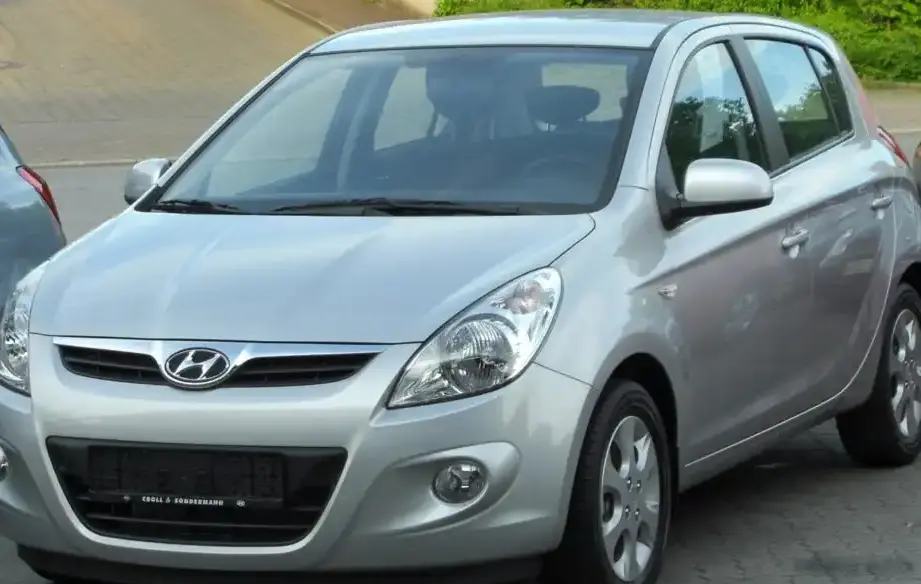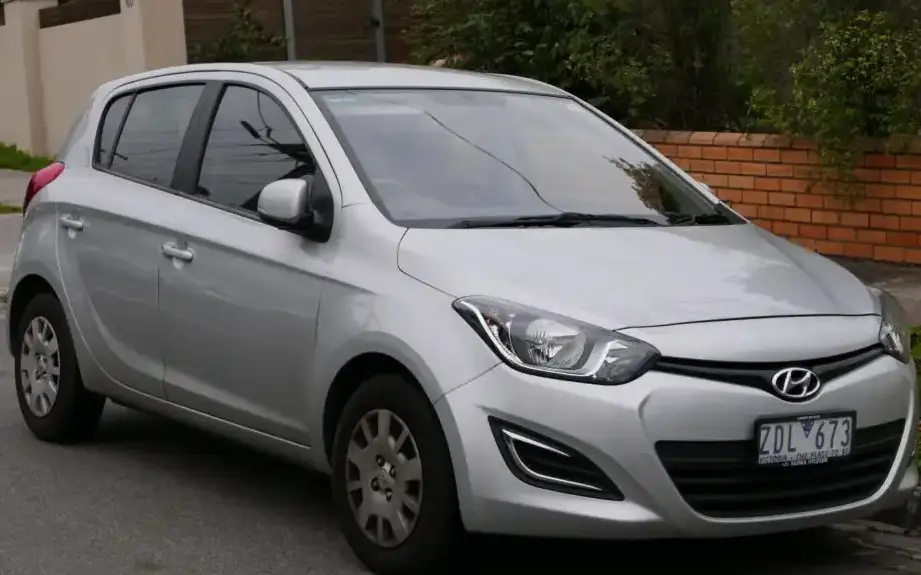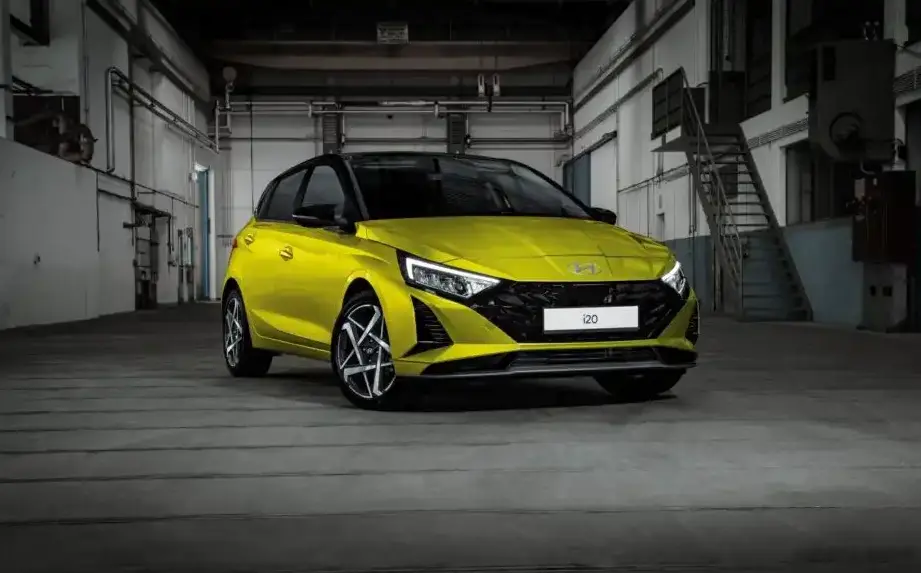
The Hyundai i20 III, specifically the facelifted version introduced in May 2023, represents Hyundai’s continued effort to offer a competitive subcompact hatchback. The 1.0 T-GDI (100 hp) Mild Hybrid iMT variant, produced from May 2023 to May 2024, occupied a key position in the i20 lineup, aiming to balance fuel efficiency with a reasonable level of performance and affordability. This model is part of the broader i20 III generation (launched in 2020), built on the Hyundai-Kia B-platform, and designed primarily for the European market, though it also sees sales in other regions. The “iMT” designation refers to Hyundai’s Intelligent Manual Transmission, a clutchless manual gearbox designed to improve fuel economy and ease of driving.
Technical Specifications
| Brand | Hyundai |
| Model | i20 |
| Generation | i20 III (facelift 2023) |
| Type (Engine) | 1.0 T-GDI (100 Hp) Mild Hybrid iMT |
| Start of production | May, 2023 |
| End of production | May, 2024 |
| Powertrain Architecture | MHEV (Mild Hybrid Electric Vehicle) |
| Body type | Hatchback |
| Seats | 5 |
| Doors | 5 |
| Combined fuel consumption (WLTP) | 5.0-5.4 l/100 km (47 – 43.6 US mpg) |
| CO2 emissions (WLTP) | 113-123 g/km |
| Fuel Type | Petrol (Gasoline) |
| Acceleration 0 – 100 km/h | 10.4 sec |
| Acceleration 0 – 62 mph | 10.4 sec |
| Acceleration 0 – 60 mph | 9.9 sec |
| Maximum speed | 188 km/h (116.82 mph) |
| Emission standard | Euro 6d |
| Weight-to-power ratio | 10.9 kg/Hp |
| Weight-to-torque ratio | 6.3 kg/Nm |
| Battery voltage | 48 V |
| Power | 100 Hp @ 4500-6000 rpm |
| Torque | 172 Nm @ 1500-4000 rpm (126.86 lb.-ft. @ 1500-4000 rpm) |
| Engine layout | Front, Transverse |
| Engine Model/Code | G3LF |
| Engine displacement | 998 cm3 (60.9 cu. in.) |
| Number of cylinders | 3 |
| Engine configuration | Inline |
| Number of valves per cylinder | 4 |
| Fuel injection system | Direct injection |
| Engine oil capacity | 3.6 l (3.8 US qt | 3.17 UK qt) |
| Coolant capacity | 5.77 l (6.1 US qt | 5.08 UK qt) |
| Kerb Weight | 1090-1200 kg (2403.04 – 2645.55 lbs.) |
| Max. weight | 1620 kg (3571.49 lbs.) |
| Max load | 420-530 kg (925.94 – 1168.45 lbs.) |
| Fuel tank capacity | 40 l (10.57 US gal | 8.8 UK gal) |
| Max. roof load | 70 kg (154.32 lbs.) |
| Length | 4065 mm (160.04 in.) |
| Width | 1775 mm (69.88 in.) |
| Height | 1450 mm (57.09 in.) |
| Wheelbase | 2580 mm (101.57 in.) |
| Front track | 1531-1545 mm (60.28 – 60.83 in.) |
| Rear track | 1536-1549 mm (60.47 – 60.98 in.) |
| Number of gears and type of gearbox | 6 gears, manual transmission iMT |
| Front suspension | Independent type McPherson |
| Rear suspension | Torsion |
| Front brakes | Ventilated discs |
| Rear brakes | Disc |
| Steering type | Steering rack and pinion |
| Power steering | Electric Steering |
| Tires size | 185/65 R15; 195/55 R16; 215/45 R17 |
| Wheel rims size | 15; 16; 17 |
Powertrain & Engine Architecture
The heart of this i20 variant is the Hyundai-Kia “Kappa” family 1.0 T-GDI engine, specifically the G3LF code. This is a three-cylinder, turbocharged gasoline engine featuring direct fuel injection. The engine benefits from a mild-hybrid system, incorporating a 48V battery and a belt-driven starter generator (BSG). The BSG assists the engine during acceleration, allowing for engine-off coasting and regenerative braking, contributing to improved fuel economy. The engine produces 100 horsepower at 4,500-6,000 rpm and 172 Nm (126.86 lb-ft) of torque between 1,500 and 4,000 rpm. The iMT (Intelligent Manual Transmission) is a six-speed manual gearbox that operates without a traditional clutch pedal. Instead, it uses sensors and actuators to engage and disengage the clutch automatically, providing a smoother and more convenient driving experience, particularly in stop-and-go traffic.
Driving Characteristics
The 1.0 T-GDI iMT offers a reasonable driving experience for urban and suburban commuting. While not particularly sporty, the turbocharger provides adequate acceleration, with a 0-60 mph time of around 9.9 seconds. The iMT transmission, while novel, can feel slightly hesitant at times, particularly during quick gear changes. Compared to the standard six-speed manual, the iMT prioritizes smoothness and fuel efficiency over outright performance. Higher trims with more powerful engines (like a potential 1.6L option in other markets) offer significantly quicker acceleration, but at the expense of fuel economy. The relatively low weight of the i20 helps to mitigate the modest power output, making it feel reasonably nimble in city driving.
Equipment & Trim Levels
The 1.0 T-GDI Mild Hybrid iMT trim typically falls into the mid-range of the i20 lineup. Standard equipment generally includes air conditioning, a touchscreen infotainment system with Apple CarPlay and Android Auto compatibility, Bluetooth connectivity, and a suite of safety features such as lane keeping assist, forward collision avoidance assist, and automatic emergency braking. Higher trim levels add features like a larger touchscreen, a premium sound system, automatic climate control, and more advanced safety technologies. Interior upholstery is typically cloth, with options for upgraded materials in higher trims. Exterior features include alloy wheels, body-colored door handles and mirrors, and LED headlights.
Chassis & Braking
The i20 III utilizes a McPherson strut front suspension and a torsion beam rear suspension. This setup provides a comfortable ride quality, well-suited for everyday driving. The front brakes are ventilated discs, while the rear brakes are solid discs. ABS (Anti-lock Braking System) is standard. The steering is electrically assisted, providing light and precise control. The suspension tuning is geared towards comfort rather than sporty handling, prioritizing ride quality over cornering performance. Stabilizer bars are present on both axles, helping to reduce body roll during cornering.
Market Reception & Comparison
The Hyundai i20 III, and specifically the 1.0 T-GDI Mild Hybrid iMT variant, received generally positive reviews from automotive critics. It was praised for its fuel efficiency, comfortable ride, and well-equipped interior. However, some critics noted the iMT transmission could feel slightly clunky at times, and the engine, while adequate, wasn’t particularly exciting. Compared to rivals like the Volkswagen Polo, Ford Fiesta (discontinued), and Renault Clio, the i20 offered a strong value proposition, with a generous level of standard equipment and a competitive price point. Fuel economy figures of 5.0-5.4 l/100km were competitive within its class.
Legacy
The 1.0 T-GDI engine, and the iMT transmission, represent Hyundai’s commitment to improving fuel efficiency and reducing emissions. While the iMT is a relatively new technology, it has proven to be a popular option for drivers seeking a more convenient and fuel-efficient driving experience. The Kappa engine family has become a mainstay in Hyundai’s lineup, known for its reliability and efficiency. On the used car market, the i20 III 1.0 T-GDI Mild Hybrid iMT is expected to hold its value reasonably well, thanks to its fuel efficiency and relatively low running costs. Long-term reliability appears to be good, with few widespread reports of major mechanical issues.