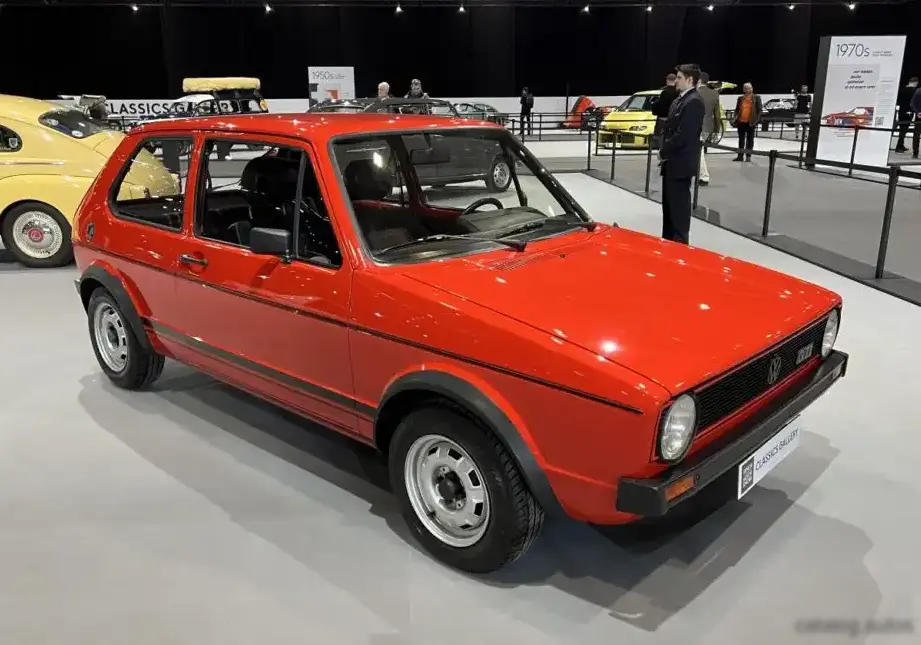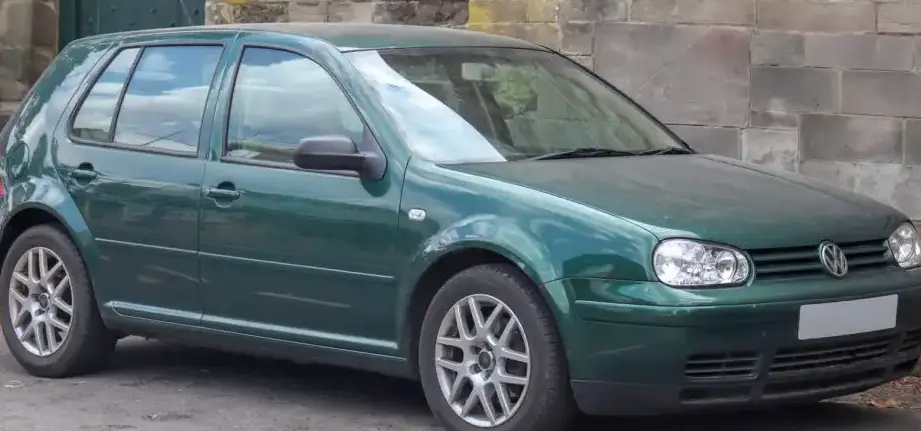
The Volkswagen Golf IV 1.8, produced from 1997 to 2003, represents a significant evolution in the Golf lineage, building upon the success of its predecessors while introducing a new level of refinement and technology. This variant, powered by the 1.8-liter inline four-cylinder engine producing 90 horsepower, was a popular entry-level option in the European market, prized for its affordability, practicality, and ease of use. It occupied the lower end of the Golf IV lineup, offering a compelling balance between cost and functionality, appealing to first-time car buyers and those seeking a dependable daily driver. The Golf IV itself, based on the 1HX0/A3 platform, was a watershed moment for Volkswagen, solidifying its position as a leader in the compact hatchback segment.
Technical Specifications
| Brand | Volkswagen |
| Model | Golf |
| Generation | Golf IV |
| Type (Engine) | 1.8 (90 Hp) |
| Start of production | 1997 |
| End of production | 2003 |
| Powertrain Architecture | Internal Combustion engine |
| Body type | Hatchback |
| Seats | 5 |
| Doors | 3-5 |
| Fuel consumption (urban) | 8.5 l/100 km (27.7 US mpg, 33.2 UK mpg, 11.7 km/l) |
| Fuel consumption (extra urban) | 6.0 l/100 km (39.2 US mpg, 47.1 UK mpg, 16.7 km/l) |
| Fuel consumption (combined) | 7.0 l/100 km (33.6 US mpg, 37.7 UK mpg, 14.3 km/l) |
| Fuel Type | Petrol (Gasoline) |
| Acceleration 0 – 100 km/h | 11.3 sec |
| Acceleration 0 – 62 mph | 11.3 sec |
| Acceleration 0 – 60 mph | 10.9 sec |
| Maximum speed | 178 km/h (110.6 mph) |
| Emission standard | Euro 3 |
| Weight-to-power ratio | 12.7 kg/Hp |
| Power | 90 Hp @ 5500 rpm |
| Torque | 145 Nm @ 3600 rpm (106.7 lb.-ft. @ 3600 rpm) |
| Engine layout | Front, Transverse |
| Engine Model/Code | ADR, APP |
| Engine displacement | 1781 cm3 (108.7 cu. in.) |
| Number of cylinders | 4 |
| Engine configuration | Inline |
| Cylinder Bore | 81 mm (3.19 in.) |
| Piston Stroke | 86.4 mm (3.40 in.) |
| Compression ratio | 10.5:1 |
| Number of valves per cylinder | 2 |
| Fuel injection system | Multi-point fuel injection |
| Engine aspiration | Naturally Aspirated |
| Valvetrain | OHC |
| Engine oil capacity | 4.0 l (4.23 US qt | 3.52 UK qt) |
| Coolant | 6.0 l (6.34 US qt | 5.28 UK qt) |
| Kerb Weight | 1130 kg (2491.23 lbs.) |
| Max. weight | 1680 kg (3704.58 lbs.) |
| Max load | 550 kg (1212.54 lbs.) |
| Trunk (boot) space – minimum | 330 l (11.65 cu. ft.) |
| Trunk (boot) space – maximum | 1185 l (41.85 cu. ft.) |
| Fuel tank capacity | 55 l (14.53 US gal | 12.1 UK gal) |
| Length | 4149 mm (163.35 in.) |
| Width | 1735 mm (68.31 in.) |
| Height | 1439 mm (56.65 in.) |
| Wheelbase | 2511 mm (98.86 in.) |
| Front track | 1513 mm (59.57 in.) |
| Rear (Back) track | 1494 mm (58.82 in.) |
| Minimum turning circle | 10.9 m (35.76 ft.) |
| Drivetrain Architecture | Front wheel drive |
| Drive wheel | Front wheel drive |
| Number of gears | 5 gears, manual or automatic transmission |
| Front suspension | Independent type McPherson |
| Rear suspension | Coil spring |
| Front brakes | Ventilated discs |
| Rear brakes | Disc |
| Assisting systems | ABS (Anti-lock braking system) |
| Steering type | Steering rack and pinion |
| Power steering | Hydraulic Steering |
| Tires size | 195/65 R15 |
| Wheel rims size | 6J x 15 |
The Volkswagen Golf IV 1.8, produced from 1997 to 2003, represents a significant evolution in the Golf lineage. This variant, powered by the 1.8-liter inline four-cylinder engine producing 90 horsepower, served as the entry point into the Golf IV range. It was particularly popular in Europe, where it offered an affordable and practical option for budget-conscious buyers. The Golf IV, built on the 1HX0/A3 platform, was a pivotal model for Volkswagen, cementing its reputation for quality and innovation in the compact hatchback segment.
Powertrain & Engine Architecture
The Golf IV 1.8 utilizes a 1.8-liter (1781 cc) inline four-cylinder petrol engine, typically identified by engine codes ADR and APP. This engine features a naturally aspirated configuration and employs multi-point fuel injection, delivering fuel to each cylinder independently. The engine is equipped with an overhead camshaft (OHC) valvetrain with two valves per cylinder. The 90 horsepower and 145 Nm (106.7 lb-ft) of torque were adequate for everyday driving, though not particularly sporty. The engine is transversely mounted, driving the front wheels. Both five-speed manual and four-speed automatic transmissions were available, catering to different driver preferences. The automatic transmission, while offering convenience, did impact acceleration and fuel economy.
Driving Characteristics
The Golf IV 1.8 with the manual transmission provided a predictable and easy-to-drive experience. Acceleration was modest, taking around 11.3 seconds to reach 62 mph, but the engine offered sufficient power for typical urban and highway driving. The five-speed gearbox was well-suited to the engine’s characteristics, allowing for comfortable cruising. The automatic transmission, while smooth, resulted in slightly slower acceleration and a less engaging driving experience. The gear ratios were optimized for fuel efficiency rather than performance. Compared to the more powerful 1.8T and TDI variants, the 1.8 lacked the punch and responsiveness, but it offered a more affordable and accessible entry point into the Golf IV range.
Equipment & Trim Levels
The Golf IV 1.8 typically came with a basic but functional level of standard equipment. This included power steering, power windows, central locking, and an anti-lock braking system (ABS). Interior upholstery was typically cloth, with a durable and practical design. Higher trim levels offered options such as air conditioning, alloy wheels, and an upgraded audio system. The dashboard layout was clean and straightforward, typical of the Golf IV. Optional extras included features like a sunroof and a CD player.
Chassis & Braking
The Golf IV 1.8 utilized an independent McPherson strut suspension at the front, providing a comfortable ride and decent handling. The rear suspension employed a coil spring setup. The braking system consisted of ventilated discs at the front and solid discs at the rear, providing adequate stopping power for the vehicle’s weight and performance. The steering was rack and pinion with hydraulic power assistance, offering precise and responsive steering feel. The standard tire size was 195/65 R15, providing a good balance of grip and ride comfort.
Market Reception & Comparison
The Golf IV 1.8 was generally well-received by automotive critics as an affordable and practical hatchback. It was praised for its reliability, ease of use, and relatively low running costs. Compared to the more powerful Golf IV variants, such as the 1.8T and TDI, the 1.8 offered a more budget-friendly option, albeit with less performance. The 1.8T provided significantly more power and a sportier driving experience, while the TDI offered superior fuel economy. However, the 1.8 remained a popular choice for buyers who prioritized affordability and practicality.
Legacy
The Volkswagen Golf IV 1.8 has proven to be a durable and reliable vehicle, with many examples still on the road today. The 1.8-liter engine is known for its relatively simple design and ease of maintenance. In the used car market, these Golfs are often sought after by buyers looking for an affordable and dependable vehicle. However, potential buyers should be aware of the age-related issues common to all vehicles of this era, such as corrosion and wear and tear on suspension components. Despite its age, the Golf IV 1.8 remains a popular and respected vehicle, representing a solid and dependable choice in the compact hatchback segment.