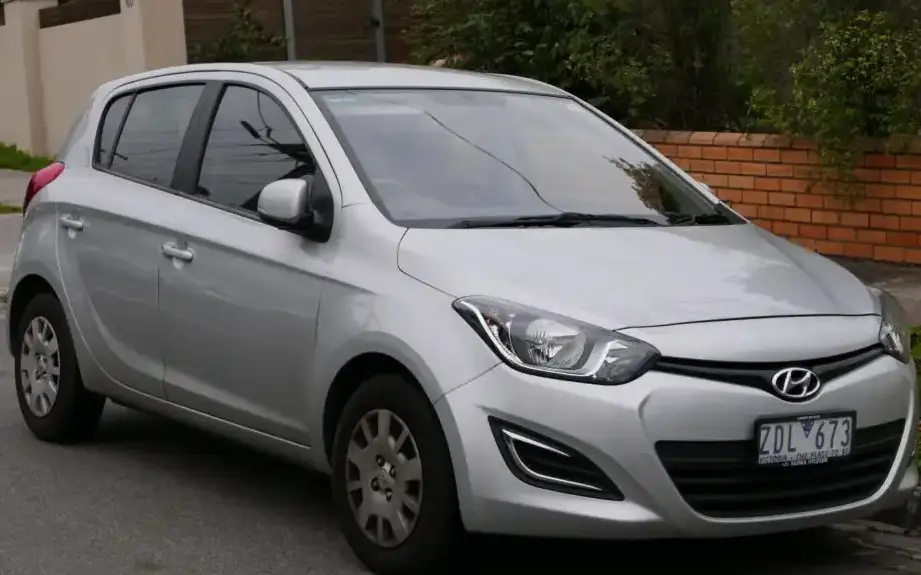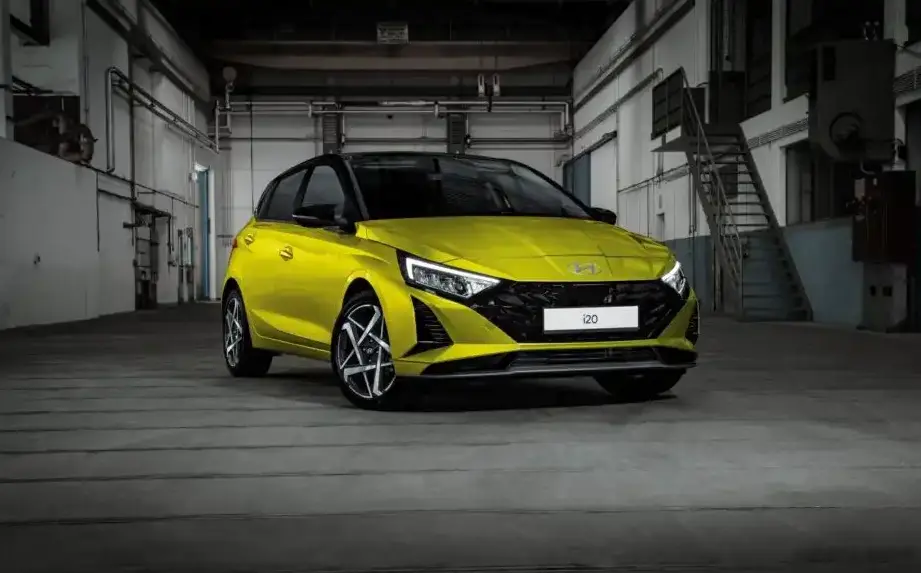
The Hyundai i20 III, specifically the facelifted version introduced in May 2023, represents the third generation of Hyundai’s supermini. The 1.0 T-GDI (120 hp) Mild Hybrid iMT variant was a key offering within the range, positioned as a fuel-efficient and technologically advanced option for buyers seeking a balance between performance and economy. Production of this specific configuration ran through May 2024. This model falls within the broader context of Hyundai’s efforts to expand its presence in the European and global small car segments, offering a competitive alternative to established players like the Volkswagen Polo, Ford Fiesta, and Renault Clio. The i20 III utilizes Hyundai’s K2 platform, shared with the Kia Rio, and the facelift brought updated styling, enhanced safety features, and refinements to the powertrain options.
Technical Specifications
| Brand | Hyundai |
| Model | i20 |
| Generation | i20 III (facelift 2023) |
| Type (Engine) | 1.0 T-GDI (120 Hp) Mild Hybrid iMT |
| Start of production | May, 2023 |
| End of production | May, 2024 |
| Powertrain Architecture | MHEV (Mild Hybrid Electric Vehicle) |
| Body type | Hatchback |
| Seats | 5 |
| Doors | 5 |
| Combined fuel consumption (WLTP) | 5.1-5.5 l/100 km (46.1 – 42.8 US mpg) |
| CO2 emissions (WLTP) | 115-124 g/km |
| Fuel Type | Petrol (Gasoline) |
| Acceleration 0 – 100 km/h | 10.1 sec |
| Acceleration 0 – 62 mph | 10.1 sec |
| Acceleration 0 – 60 mph | 9.6 sec |
| Maximum speed | 190 km/h (118.06 mph) |
| Emission standard | Euro 6d |
| Weight-to-power ratio | 9.1 kg/Hp |
| Weight-to-torque ratio | 6.3 kg/Nm |
| Battery voltage | 48 V |
| Power | 120 Hp @ 6000 rpm |
| Torque | 172 Nm @ 1500-4000 rpm (126.86 lb.-ft. @ 1500-4000 rpm) |
| Engine layout | Front, Transverse |
| Engine Model/Code | G3LF |
| Engine displacement | 998 cm3 (60.9 cu. in.) |
| Number of cylinders | 3 |
| Engine configuration | Inline |
| Number of valves per cylinder | 4 |
| Fuel injection system | Direct injection |
| Engine aspiration | Turbocharger, Intercooler |
| Engine oil capacity | 3.6 l (3.8 US qt | 3.17 UK qt) |
| Coolant capacity | 5.77 l (6.1 US qt | 5.08 UK qt) |
| Kerb Weight | 1090-1200 kg (2403.04 – 2645.55 lbs.) |
| Max. weight | 1620 kg (3571.49 lbs.) |
| Max load | 420-530 kg (925.94 – 1168.45 lbs.) |
| Fuel tank capacity | 40 l (10.57 US gal | 8.8 UK gal) |
| Max. roof load | 70 kg (154.32 lbs.) |
| Length | 4065 mm (160.04 in.) |
| Width | 1775 mm (69.88 in.) |
| Height | 1450 mm (57.09 in.) |
| Wheelbase | 2580 mm (101.57 in.) |
| Front track | 1531-1545 mm (60.28 – 60.83 in.) |
| Rear track | 1536-1549 mm (60.47 – 60.98 in.) |
| Drivetrain Architecture | Front wheel drive, MHEV |
| Number of gears | 6 |
| Type of gearbox | Manual transmission iMT |
| Front suspension | Independent type McPherson |
| Rear suspension | Torsion |
| Front brakes | Ventilated discs |
| Rear brakes | Disc |
| Steering type | Steering rack and pinion |
| Power steering | Electric Steering |
| Tires size | 185/65 R15; 195/55 R16; 215/45 R17 |
| Wheel rims size | 15; 16; 17 |
Powertrain & Engine Architecture
The heart of this i20 variant is the Hyundai-Kia G3LF engine, a 1.0-liter turbocharged three-cylinder gasoline engine. This engine is part of Hyundai’s “Kappa” family and features direct fuel injection, a single scroll turbocharger, and an intercooler. The mild hybrid system incorporates a 48V battery and a belt-driven starter generator (BSG). The BSG allows for extended start-stop operation, regenerative braking to recoup energy during deceleration, and a small power boost during acceleration. The engine produces 120 horsepower at 6000 rpm and 172 Nm (126.86 lb-ft) of torque between 1500 and 4000 rpm. The iMT (Intelligent Manual Transmission) is a 6-speed manual gearbox with an electronically controlled clutch. This system predicts gear changes based on driving style and road conditions, automatically disengaging the clutch for smoother shifts and improved fuel efficiency.
Driving Characteristics
The 1.0 T-GDI 120 hp iMT offers a surprisingly refined driving experience for a supermini. While not overtly sporty, the turbocharger provides adequate power for everyday driving and highway overtaking. The iMT transmission, while aiming for convenience, can feel slightly hesitant at times, particularly during quick downshifts. Compared to higher-output versions of the i20, such as those with the 1.2-liter naturally aspirated engine, this variant offers significantly more responsive acceleration. However, it doesn’t match the performance of the more powerful engines available in some markets. The gear ratios are tuned for fuel efficiency, meaning the engine can feel a bit strained at higher speeds. Overall, the driving experience is comfortable and composed, prioritizing efficiency and ease of use over outright performance.
Equipment & Trim Levels
The 1.0 T-GDI Mild Hybrid iMT trim typically came well-equipped, representing a mid-range offering in the i20 lineup. Standard features generally included air conditioning, a touchscreen infotainment system with Apple CarPlay and Android Auto compatibility, Bluetooth connectivity, and a suite of safety features such as lane keeping assist, forward collision avoidance assist, and automatic emergency braking. Interior upholstery was typically cloth, with options for upgraded materials available. Higher trim levels added features like a larger touchscreen, a digital instrument cluster, automatic climate control, and a sunroof. Optional extras included a premium sound system, parking sensors, and a rear-view camera.
Chassis & Braking
The i20 III utilizes a McPherson strut front suspension and a torsion beam rear suspension. This setup provides a good balance between ride comfort and handling. The facelifted model received minor tweaks to the suspension tuning to further improve ride quality. Braking duties are handled by ventilated discs at the front and solid discs at the rear. ABS (Anti-lock Braking System) is standard, along with Electronic Stability Control (ESC) and Vehicle Stability Management (VSM). The steering is electrically assisted, providing light and precise control.
Market Reception & Comparison
The Hyundai i20 III 1.0 T-GDI Mild Hybrid iMT was generally well-received by automotive critics. It was praised for its fuel efficiency, comfortable ride, and generous equipment levels. However, some reviewers noted that the iMT transmission could be slightly clunky at times, and the engine could feel a bit underpowered when fully loaded. Compared to other trims in the i20 lineup, this variant offered a compelling balance between price and performance. It was more affordable than the higher-output engines but offered significantly better fuel economy and a more refined driving experience than the base models.
Legacy
The G3LF engine, in its various iterations, has proven to be a relatively reliable unit. The mild hybrid system adds complexity, but early reports suggest it has also been dependable. The iMT transmission, while innovative, may require more careful maintenance than a traditional manual gearbox. In the used car market, the 1.0 T-GDI Mild Hybrid iMT i20 is likely to hold its value reasonably well, thanks to its fuel efficiency and modern features. It represents a practical and well-rounded choice for buyers seeking a small, economical, and well-equipped hatchback.