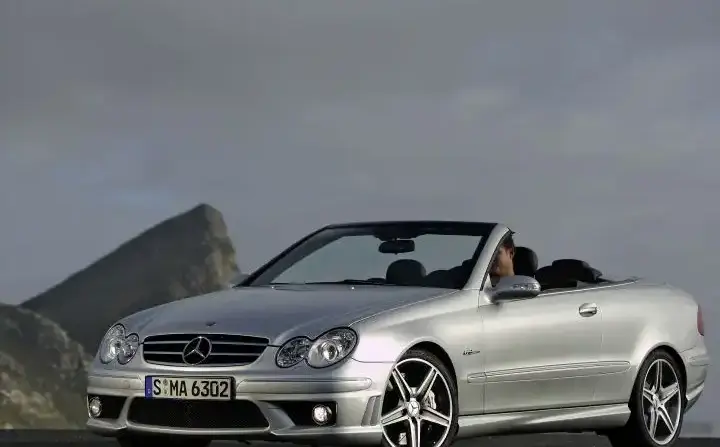
The Mercedes-Benz CLK 350, produced from May 2005 to August 2009 as part of the A209 facelift generation, represented a compelling blend of luxury, performance, and open-air driving enjoyment. Available as a coupe or cabriolet, the CLK series bridged the gap between the more sporting SLK roadster and the larger, more opulent E-Class. The CLK 350, equipped with the M272 V6 engine and the 7G-TRONIC automatic transmission, occupied a mid-to-upper position within the CLK lineup, offering a significant step up in power and refinement compared to the base CLK 280 models. This variant was primarily marketed towards buyers seeking a sophisticated grand tourer with ample power for comfortable highway cruising and spirited driving.
Technical Specifications
| Brand | Mercedes-Benz |
| Model | CLK |
| Generation | CLK (A209, facelift 2005) |
| Type | CLK 350 (272 Hp) 7G-TRONIC |
| Start of production | May, 2005 |
| End of production | August, 2009 |
| Powertrain Architecture | Internal Combustion engine |
| Body type | Cabriolet |
| Seats | 4 |
| Doors | 2 |
| Fuel consumption (urban) | 14.5-14.6 l/100 km (16.2 – 16.1 US mpg, 19.5 – 19.3 UK mpg, 6.9 – 6.8 km/l) |
| Fuel consumption (extra urban) | 7.6-7.7 l/100 km (30.9 – 30.5 US mpg, 37.2 – 36.7 UK mpg, 13.2 – 13 km/l) |
| Fuel consumption (combined) | 10.1-10.2 l/100 km (23.3 – 23.1 US mpg, 28 – 27.7 UK mpg, 9.9 – 9.8 km/l) |
| CO2 emissions | 241 g/km |
| Fuel Type | Petrol (Gasoline) |
| Acceleration 0 – 100 km/h | 6.7 sec |
| Acceleration 0 – 62 mph | 6.7 sec |
| Acceleration 0 – 60 mph | 6.4 sec |
| Maximum speed | 250 km/h (155.34 mph) – Electronically limited |
| Emission standard | Euro 4 |
| Weight-to-power ratio | 6.4 kg/Hp, 156.8 Hp/tonne |
| Weight-to-torque ratio | 5 kg/Nm, 201.7 Nm/tonne |
| Power | 272 Hp @ 6000 rpm |
| Torque | 350 Nm @ 2400-5000 rpm (258.15 lb.-ft. @ 2400-5000 rpm) |
| Engine layout | Front, Longitudinal |
| Engine Model/Code | M 272.960 |
| Engine displacement | 3498 cm3 (213.46 cu. in.) |
| Number of cylinders | 6 |
| Engine configuration | V-engine |
| Cylinder Bore | 92.9 mm (3.66 in.) |
| Piston Stroke | 86 mm (3.39 in.) |
| Compression ratio | 10.7:1 |
| Number of valves per cylinder | 4 |
| Fuel injection system | Multi-port manifold injection |
| Engine aspiration | Naturally aspirated engine |
| Valvetrain | DOHC |
| Engine oil capacity | 8 l (8.45 US qt | 7.04 UK qt) |
| Coolant capacity | 10 l (10.57 US qt | 8.8 UK qt) |
| Kerb Weight | 1735 kg (3825.02 lbs.) |
| Max. weight | 2190 kg (4828.12 lbs.) |
| Max load | 455 kg (1003.1 lbs.) |
| Trunk (boot) space (minimum) | 390 l (13.77 cu. ft.) |
| Fuel tank capacity | 62 l (16.38 US gal | 13.64 UK gal) |
| Permitted trailer load (with brakes) | 1500 kg (3306.93 lbs.) |
| Permitted trailer load (without brakes) | 750 kg (1653.47 lbs.) |
| Permitted towbar download | 75 kg (165.35 lbs.) |
| Length | 4652 mm (183.15 in.) |
| Width | 1740 mm (68.5 in.) |
| Width including mirrors | 1991 mm (78.39 in.) |
| Height | 1415 mm (55.71 in.) |
| Wheelbase | 2715 mm (106.89 in.) |
| Front track | 1497 mm (58.94 in.) |
| Rear track | 1478 mm (58.19 in.) |
| Drag coefficient (Cd) | 0.30 |
| Minimum turning circle | 10.76 m (35.3 ft.) |
| Drivetrain | Rear wheel drive |
| Gearbox | 7 gears, automatic transmission G-TRONIC |
| Front suspension | Independent type McPherson, Transverse stabilizer |
| Rear suspension | Independent multi-link suspension, Transverse stabilizer |
| Front brakes | Ventilated discs |
| Rear brakes | Disc |
| Assisting systems | ABS (Anti-lock braking system) |
| Steering type | Steering rack and pinion |
| Power steering | Hydraulic Steering |
| Tires size (Front) | 225/45 R 17 |
| Tires size (Rear) | 245/40 R 17 |
| Wheel rims size (Front) | 7.5 J x 17 |
| Wheel rims size (Rear) | 8.5 J x 17 |
Powertrain & Engine Architecture
The heart of the CLK 350 is the M272.960 3.5-liter naturally aspirated V6 engine. This engine, a cornerstone of Mercedes-Benz’s mid-2000s lineup, features a 60-degree V-angle and utilizes a three-valve-per-cylinder (two intake, one exhaust) design with double overhead camshafts (DOHC). The M272 is known for its smooth operation and relatively high specific output. Fuel delivery is managed by a multi-port fuel injection system, and the engine benefits from a variable intake manifold for optimized torque across the rev range. Paired with this engine is the 7G-TRONIC automatic transmission, a seven-speed unit that offered smoother shifts and improved fuel efficiency compared to its predecessors. The 7G-TRONIC features a torque converter lock-up clutch that engages in most gears, minimizing slippage and enhancing efficiency. The transmission also offered a manual shift mode for more driver control.
Driving Characteristics
The CLK 350 Automatic delivers a refined and comfortable driving experience. While not as overtly sporty as some of its rivals, the 272 horsepower and 350 Nm (258 lb-ft) of torque provide ample power for confident acceleration and effortless highway cruising. The 7G-TRONIC transmission contributes to this smoothness, offering seamless gear changes. Compared to the CLK 280, the 350 offers a noticeable performance boost, with a 0-60 mph time of around 6.4 seconds. However, it doesn’t quite match the responsiveness of the CLK 500 or the more focused handling of a comparable BMW 3 Series. The automatic transmission, while refined, can feel slightly less engaging than a manual gearbox, and its shift programming prioritizes comfort over outright performance.
Equipment & Trim Levels
The CLK 350 typically came well-equipped, reflecting its position in the Mercedes-Benz lineup. Standard features included leather upholstery, automatic climate control, power-adjustable seats, a premium sound system, and alloy wheels. Optional extras were plentiful, including a panoramic sunroof, navigation system, upgraded audio, heated seats, and various cosmetic enhancements. Interior trim options ranged from wood veneers to aluminum accents, allowing buyers to personalize the cabin to their tastes. The cabriolet version featured a fully automatic retractable hardtop, providing coupe-like security and refinement when closed, and open-air enjoyment when lowered.
Chassis & Braking
The CLK 350 utilizes a sophisticated chassis design, featuring an independent McPherson strut suspension at the front and a multi-link suspension at the rear. This setup provides a good balance between ride comfort and handling precision. Stabilizer bars are fitted to both axles to reduce body roll during cornering. Braking duties are handled by ventilated discs at the front and solid discs at the rear, with ABS (Anti-lock Braking System) as standard. The hydraulic power steering provides a weighted feel and accurate steering response.
Market Reception & Comparison
The CLK 350 was generally well-received by automotive critics, who praised its comfortable ride, refined interior, and strong engine performance. However, some reviewers noted that its handling wasn’t as sharp as some of its competitors, and the automatic transmission could feel a bit sluggish at times. Compared to the CLK 280, the 350 offered a significant performance upgrade, justifying the higher price tag for buyers prioritizing power. Against rivals like the BMW 3 Series Convertible and Audi A4 Cabriolet, the CLK 350 offered a more luxurious and comfortable experience, but often at the expense of outright sportiness.
Legacy
The M272 engine, found in the CLK 350, is generally considered a reliable powerplant, although preventative maintenance is crucial. Common issues include oil leaks from the valve cover gaskets and potential problems with the balance shaft. The 7G-TRONIC transmission is also generally durable, but requires regular fluid changes to ensure smooth operation. Today, the CLK 350 represents a relatively affordable entry point into the Mercedes-Benz luxury car market. Well-maintained examples are sought after by enthusiasts who appreciate their classic styling, comfortable ride, and robust powertrain. The CLK 350 remains a stylish and capable grand tourer, offering a blend of luxury and performance that continues to appeal to a wide range of drivers.