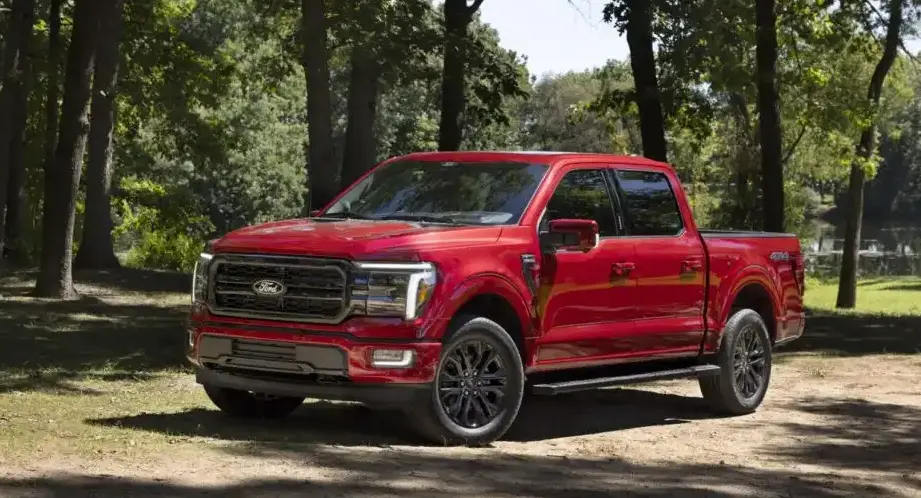
The Ford F-150 is a full-size pickup truck manufactured by Ford Motor Company, and has been the best-selling vehicle in the United States for over four decades. The fourteenth generation, designated F-150 XIV, launched in 2021 and received a significant facelift for the 2023 model year. Among the various engine and drivetrain configurations offered, the 2.7 EcoBoost V6 paired with the 4×4 SelectShift automatic transmission represents a popular balance of capability, efficiency, and affordability. Production of this specific configuration began in September 2023, and it occupies a mid-range position within the F-150 lineup, appealing to buyers who need more than a base model but don’t require the higher performance or luxury features of the top-tier trims.
Technical Specifications
| Brand | Ford |
| Model | F-Series F-150 |
| Generation | F-Series F-150 XIV SuperCrew (facelift 2023) |
| Type (Engine) | 2.7 EcoBoost V6 (325 Hp) 4×4 SelectShift |
| Start of production | September, 2023 |
| Powertrain Architecture | Internal Combustion engine |
| Body type | Pick-up |
| Seats | 5-6 |
| Doors | 4 |
| Fuel consumption (urban) | 13.1 l/100 km (18 US mpg, 21.6 UK mpg) |
| Fuel consumption (extra urban) | 10.2 l/100 km (23.1 US mpg, 27.7 UK mpg) |
| Fuel consumption (combined) | 11.8 l/100 km (19.9 US mpg, 23.9 UK mpg) |
| Fuel Type | Petrol (Gasoline) |
| Weight-to-power ratio | 6.9 kg/Hp, 145 Hp/tonne |
| Weight-to-torque ratio | 4.1 kg/Nm, 241.9 Nm/tonne |
| Power | 325 Hp @ 5000 rpm |
| Power per litre | 120.4 Hp/l |
| Torque | 542 Nm @ 3000 rpm (399.76 lb.-ft. @ 3000 rpm) |
| Engine layout | Front, Longitudinal |
| Engine Model/Code | EcoBoost |
| Engine displacement | 2700 cm3 (164.76 cu. in.) |
| Number of cylinders | 6 |
| Engine configuration | V-engine |
| Cylinder Bore | 83 mm (3.27 in.) |
| Piston Stroke | 83 mm (3.27 in.) |
| Compression ratio | 10:1 |
| Number of valves per cylinder | 4 |
| Fuel injection system | Direct injection and Multi-port manifold injection |
| Engine aspiration | Twin-Turbo, Intercooler |
| Valvetrain | DOHC, Ti-VCT |
| Engine oil capacity | 5.7 l (6.02 US qt | 5.02 UK qt) |
| Coolant capacity | 14.3 l (15.11 US qt | 12.58 UK qt) |
| Kerb Weight | 2241 kg (4940.56 lbs.) |
| Max. weight | 3016 kg (6649.14 lbs.) |
| Max load | 775 kg (1708.58 lbs.) |
| Trunk (boot) space (minimum) | 1495 l (52.8 cu. ft.) |
| Fuel tank capacity | 136 l (35.93 US gal | 29.92 UK gal) |
| Permitted trailer load with brakes (12%) | 3629 kg (8000.58 lbs.) |
| Length | 5893 mm (232.01 in.) |
| Width | 2029 mm (79.88 in.) |
| Width with mirrors folded | 2123 mm (83.58 in.) |
| Width including mirrors | 2431 mm (95.71 in.) |
| Height | 1958 mm (77.09 in.) |
| Wheelbase | 3693 mm (145.39 in.) |
| Front track | 1725 mm (67.91 in.) |
| Rear track | 1735 mm (68.31 in.) |
| Front overhang | 950 mm (37.4 in.) |
| Rear overhang | 1250 mm (49.21 in.) |
| Ride height (ground clearance) | 249 mm (9.8 in.) |
| Minimum turning circle | 14.6 m (47.9 ft.) |
| Approach angle | 24.2° |
| Departure angle | 21° |
| Ramp-over angle | 19.8° |
| Drivetrain Architecture | All wheel drive (4×4). ICE drives rear wheels, front wheels engaged via clutch. |
| Number of gears | 10 |
| Gearbox type | Automatic transmission SelectShift |
| Front suspension | Double wishbone, Independent coil spring |
| Rear suspension | Rigid axle suspension, Leaf spring |
| Front brakes | Ventilated discs, 350×34 mm |
| Rear brakes | Ventilated discs, 336×20 mm |
| Assisting systems | ABS (Anti-lock braking system) |
| Steering type | Steering rack and pinion |
| Power steering | Electric Steering |
| Tires size | 245/70 R17; 265/70 R17; 265/60 R18; 265/70 R18; 275/65 R18; 275/60 R20; 275/50 R22 |
| Wheel rims size | 17; 18; 20; 22 |
INTRODUCTION
The 2023 Ford F-150 2.7 EcoBoost 4×4 SuperCrew represents a significant offering in the full-size pickup truck segment. Built on the F-150 XIV platform, which debuted in 2021, the 2023 facelift brought updated styling, enhanced technology, and refined interior appointments. This particular configuration, combining the 2.7-liter EcoBoost V6 engine with a ten-speed automatic transmission and a four-wheel-drive system, is positioned as a versatile option for both work and personal use. It caters to buyers who prioritize a balance between power, fuel efficiency, and towing capacity without the premium price tag of the higher-output engines like the 3.5L EcoBoost or the 5.0L V8.
Powertrain & Engine Architecture
The heart of this F-150 variant is the 2.7-liter EcoBoost V6 engine. This engine, part of Ford’s EcoBoost family, utilizes a combination of direct injection and multi-port fuel injection to optimize combustion efficiency and power delivery. The engine code is generally identified within Ford’s internal systems, but isn’t prominently displayed to consumers. It features a twin-turbocharger setup with an intercooler, which helps to reduce intake air temperature and increase power output. The valvetrain employs a double overhead camshaft (DOHC) design with variable valve timing (Ti-VCT) on both intake and exhaust valves, further enhancing efficiency and responsiveness. The ten-speed SelectShift automatic transmission is a crucial component, offering a wide range of gear ratios to keep the engine operating in its optimal power band. This transmission is known for its smooth shifting and contributes to improved fuel economy compared to older automatic transmissions.
Driving Characteristics
The 2.7 EcoBoost V6, producing 325 horsepower and 400 lb-ft of torque, provides ample power for everyday driving and moderate towing needs. While not as quick as the higher-output engines, the 2.7L offers a smooth and refined driving experience. The ten-speed automatic transmission is well-tuned, providing quick and decisive shifts. The 4×4 system offers enhanced traction in various conditions, making it suitable for both on-road and off-road use. The gear ratios are optimized for both acceleration and fuel efficiency, with lower gears providing strong pulling power and higher gears allowing for relaxed highway cruising. Compared to the 3.5L EcoBoost, the 2.7L feels less urgent in acceleration, but it offers a more manageable power delivery for drivers who prefer a less aggressive feel.
Equipment & Trim Levels
The 2.7 EcoBoost 4×4 SuperCrew is typically available in several trim levels, including XL, XLT, Lariat, and King Ranch. Standard equipment on the base XL trim includes basic features like air conditioning, a rearview camera, and a basic infotainment system. Higher trims, such as the Lariat, add features like leather upholstery, heated and ventilated front seats, a larger touchscreen display, and advanced driver-assistance systems. Optional extras include a panoramic sunroof, a premium sound system, and various off-road packages. The SuperCrew configuration provides a spacious cabin with seating for up to six passengers, making it a practical choice for families.
Chassis & Braking
The F-150 XIV utilizes a high-strength steel frame and an aluminum-alloy body, contributing to its overall durability and reduced weight. The front suspension features an independent double wishbone design with coil springs, while the rear suspension employs a traditional leaf spring setup. This combination provides a comfortable ride and good load-carrying capacity. The braking system consists of ventilated discs on all four wheels, providing ample stopping power. Anti-lock brakes (ABS) are standard, along with electronic stability control. The 2.7 EcoBoost models typically feature slightly smaller brake rotors compared to the higher-output engines, but they are still more than adequate for most driving situations.
Market Reception & Comparison
The 2.7 EcoBoost F-150 has been well-received by critics and consumers alike. It’s praised for its blend of power, efficiency, and affordability. Fuel economy figures of around 19 mpg combined are competitive for a full-size pickup truck. Compared to the 3.5L EcoBoost, the 2.7L offers slightly lower performance but significantly better fuel economy. The 5.0L V8 provides more raw power but sacrifices fuel efficiency. Reliability has been generally good, with the 2.7 EcoBoost engine proving to be a durable and dependable powerplant. Some owners have reported minor issues with the turbochargers, but these are relatively rare.
Legacy
The 2.7 EcoBoost engine has become a popular choice for F-150 buyers, establishing itself as a reliable and efficient option. The combination of the 2.7L engine and the ten-speed automatic transmission has proven to be a winning formula, offering a compelling balance of performance and fuel economy. In the used car market, these models hold their value well, particularly those in good condition with a well-maintained service history. As Ford continues to innovate in the pickup truck segment, the 2.7 EcoBoost is likely to remain a significant part of the F-150 lineup for years to come.