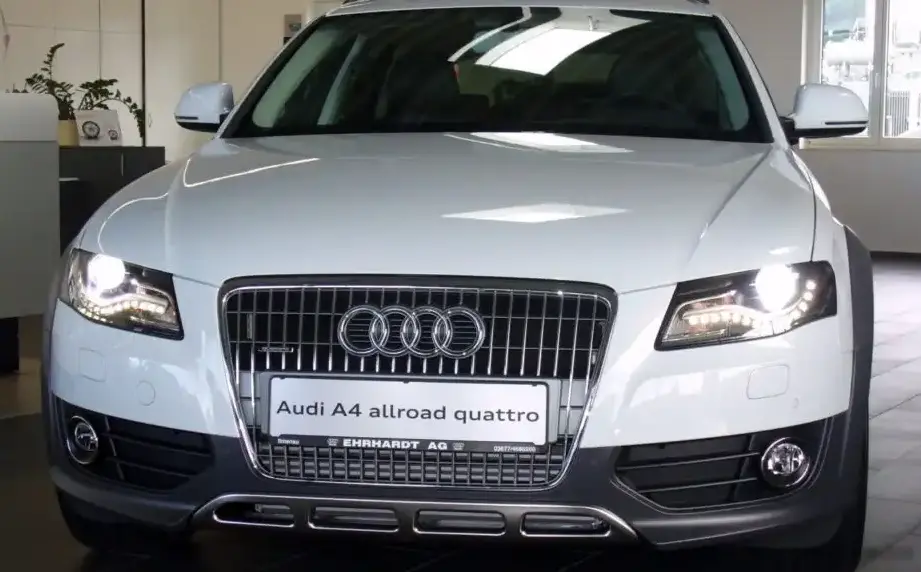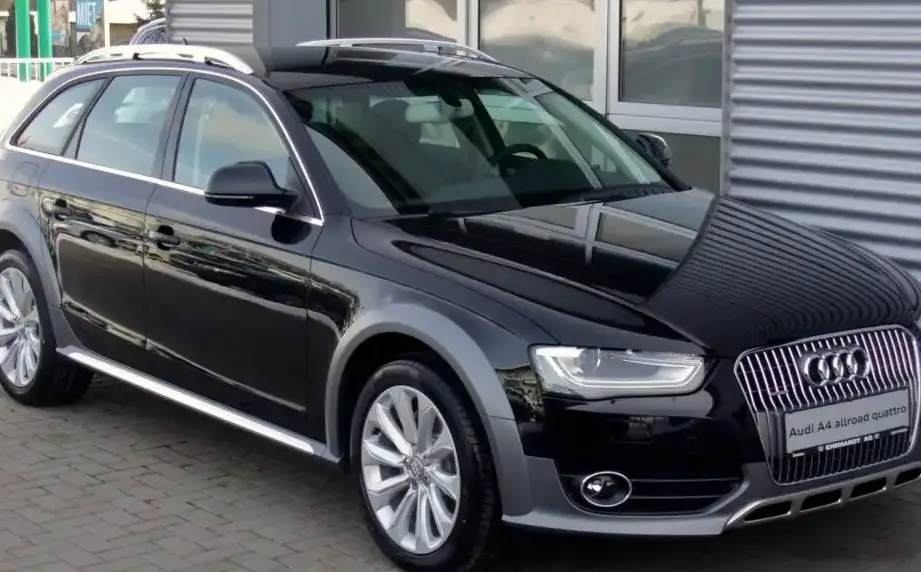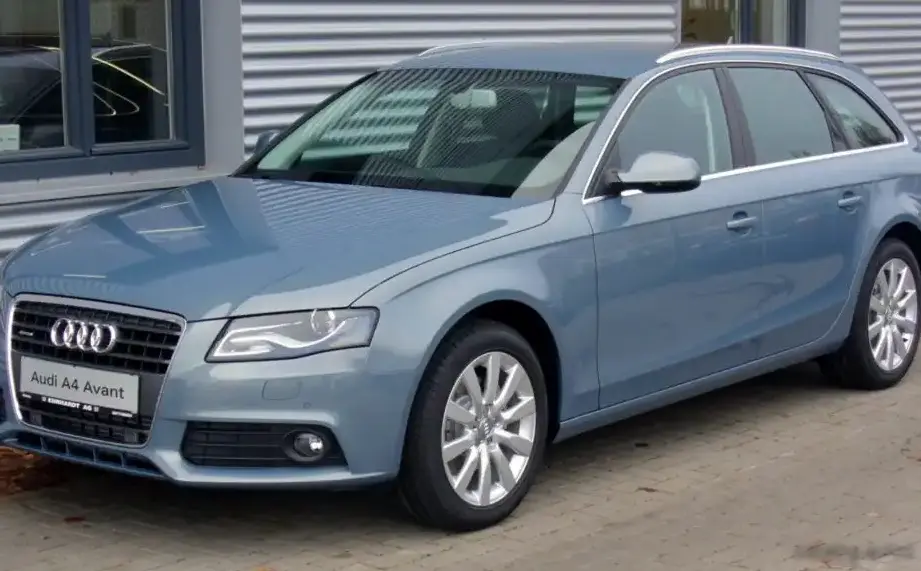
The Audi A4 Avant (B8 8K) 2.0 TDI 120 hp, produced between 2008 and 2011, represented an entry point into the premium wagon segment for European buyers. Positioned within the broader B8 A4 Avant range – which included more powerful gasoline and diesel variants – this model prioritized fuel efficiency and affordability without entirely sacrificing the Audi brand’s reputation for refinement. It was a key offering in markets where diesel station wagons, or ‘estates’ as they are often called, were highly popular, offering a practical and economical choice for families and individuals alike. This variant utilized a front-wheel-drive configuration and a six-speed manual transmission, making it a common sight on European roads.
Technical Specifications
| Brand | Audi |
| Model | A4 |
| Generation | A4 Avant (B8 8K) |
| Type (Engine) | 2.0 TDI (120 Hp) |
| Start of production | 2008 |
| End of production | 2011 |
| Powertrain Architecture | Internal Combustion engine |
| Body type | Station wagon (estate) |
| Seats | 5 |
| Doors | 5 |
| Fuel consumption (urban) | 6.8 l/100 km (34.6 US mpg, 41.5 UK mpg, 14.7 km/l) |
| Fuel consumption (extra urban) | 4.5 l/100 km (52.3 US mpg, 62.8 UK mpg, 22.2 km/l) |
| Fuel consumption (combined) | 5.3 l/100 km (44.4 US mpg, 53.3 UK mpg, 18.9 km/l) |
| CO2 emissions | 134 g/km |
| Fuel Type | Diesel |
| Acceleration 0 – 100 km/h | 11.2 sec |
| Acceleration 0 – 62 mph | 11.2 sec |
| Acceleration 0 – 60 mph | 10.6 sec |
| Maximum speed | 197 km/h (122.41 mph) |
| Emission standard | Euro 4 |
| Weight-to-power ratio | 12.7 kg/Hp, 78.9 Hp/tonne |
| Weight-to-torque ratio | 5.2 kg/Nm, 190.8 Nm/tonne |
| Power | 120 Hp @ 4200 rpm |
| Power per litre | 61 Hp/l |
| Torque | 290 Nm @ 1750-2500 rpm (213.89 lb.-ft. @ 1750-2500 rpm) |
| Engine layout | Front, Longitudinal |
| Engine Model/Code | EA189 / CAGC |
| Engine displacement | 1968 cm3 (120.09 cu. in.) |
| Number of cylinders | 4 |
| Engine configuration | Inline |
| Cylinder Bore | 81 mm (3.19 in.) |
| Piston Stroke | 95.5 mm (3.76 in.) |
| Compression ratio | 16.5:1 |
| Number of valves per cylinder | 4 |
| Fuel injection system | Diesel Commonrail |
| Engine aspiration | Turbocharger, Intercooler |
| Valvetrain | DOHC |
| Engine oil capacity | 5 l (5.28 US qt | 4.4 UK qt) |
| Kerb Weight | 1520 kg (3351.03 lbs.) |
| Max. weight | 2090 kg (4607.66 lbs.) |
| Max load | 570 kg (1256.63 lbs.) |
| Trunk (boot) space – minimum | 490 l (17.3 cu. ft.) |
| Trunk (boot) space – maximum | 1430 l (50.5 cu. ft.) |
| Fuel tank capacity | 65 l (17.17 US gal | 14.3 UK gal) |
| Length | 4703 mm (185.16 in.) |
| Width | 1826 mm (71.89 in.) |
| Height | 1436 mm (56.54 in.) |
| Wheelbase | 2808 mm (110.55 in.) |
| Front track | 1564 mm (61.57 in.) |
| Rear (Back) track | 1551 mm (61.06 in.) |
| Drag coefficient (Cd) | 0.32 |
| Minimum turning circle | 11.4 m (37.4 ft.) |
| Drivetrain Architecture | Front wheel drive |
| Number of gears | 6 gears, manual transmission |
| Front suspension | Double wishbone |
| Rear suspension | Independent multi-link spring suspension with stabilizer |
| Front brakes | Ventilated discs |
| Rear brakes | Ventilated discs |
| Assisting systems | ABS (Anti-lock braking system) |
| Steering type | Steering rack and pinion |
| Power steering | Hydraulic Steering |
| Tires size | 225/65 R16; 225/50 R17 |
| Wheel rims size | 7.5J 16; 7.5J 17 |
Powertrain & Engine Architecture
The heart of the A4 Avant 2.0 TDI 120 hp is the EA189 series engine, specifically the CAGC code. This 1968cc inline-four cylinder diesel engine utilizes common rail direct injection, a technology that allowed for precise fuel delivery and improved combustion efficiency. The engine features a single turbocharger with an intercooler, boosting power output while managing turbo lag. The double overhead camshaft (DOHC) valvetrain, with four valves per cylinder, further enhances breathing and contributes to the engine’s overall performance. The six-speed manual transmission was the standard offering, providing a balance between fuel economy and driver engagement. The transmission’s gear ratios were tuned to maximize the engine’s torque output, particularly in the mid-range, making it suitable for everyday driving and highway cruising.
Driving Characteristics
The 120 hp output, coupled with 290 Nm (213.89 lb-ft) of torque, provided adequate, though not exhilarating, performance. Acceleration from 0-100 km/h (0-62 mph) took around 11.2 seconds. The engine’s strength lay in its usable torque, available from as low as 1750 rpm, making it easy to navigate city traffic and maintain comfortable speeds on the highway. Compared to the more powerful 2.0 TDI variants (170 hp or higher) or the gasoline-powered A4s, this version felt noticeably slower, especially during overtaking maneuvers. However, the manual transmission allowed drivers to make the most of the available power, and the front-wheel-drive configuration provided decent traction in most conditions. The gear ratios were relatively long, prioritizing fuel economy over outright acceleration.
Equipment & Trim Levels
The 2.0 TDI 120 hp Avant typically came with a reasonable level of standard equipment, reflecting its position as an entry-level model. This included features like air conditioning, power windows, central locking, and an Audi Concert radio system. Interior upholstery was typically cloth, and the dashboard featured a straightforward design. Optional extras included features like alloy wheels, a sunroof, parking sensors, and upgraded audio systems. Higher trim levels, such as SE or Sport, added more luxurious features like leather upholstery, sport seats, and automatic climate control. The base model focused on providing essential comfort and convenience features at an accessible price point.
Chassis & Braking
The B8 A4 Avant featured a well-engineered chassis, providing a comfortable and controlled ride. The front suspension utilized a double wishbone setup, while the rear employed an independent multi-link spring suspension with a stabilizer bar. This configuration minimized body roll and provided good handling characteristics. Brakes consisted of ventilated discs on all four wheels, offering adequate stopping power for the vehicle’s weight and performance. ABS (Anti-lock Braking System) was standard, enhancing safety during emergency braking situations. The suspension tuning was generally geared towards comfort, making it a pleasant vehicle for long journeys.
Market Reception & Comparison
The A4 Avant 2.0 TDI 120 hp was well-received in markets where diesel station wagons were popular. Critics praised its fuel efficiency, practicality, and comfortable ride. However, some noted that the engine lacked the punch of more powerful alternatives. Compared to the 170 hp 2.0 TDI, the 120 hp version offered significantly lower running costs but at the expense of performance. The 1.8 TFSI gasoline engine provided a smoother and more responsive driving experience, but it was less fuel-efficient. The 2.0 TDI 120 hp appealed to buyers who prioritized economy and practicality over outright performance.
Legacy
The EA189 engine, while generally reliable, has been subject to recalls related to potential issues with the diesel particulate filter (DPF) and exhaust gas recirculation (EGR) systems. Proper maintenance, including regular oil changes and DPF regeneration, is crucial for ensuring the longevity of this powertrain. In the used car market, the A4 Avant 2.0 TDI 120 hp remains a relatively affordable option, offering a good balance of practicality, fuel efficiency, and Audi refinement. However, potential buyers should be aware of the potential maintenance costs associated with the DPF and EGR systems and ensure that any necessary recalls have been addressed.